SKU: 46042426972
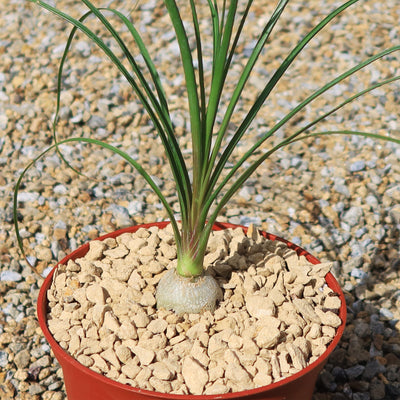
beaucarnea ponytail palm

beaucarnea ponytail palm Shop 'Ponytail palm - Beaucarnea recurvata' Care and Info

Sale price$18.05 Regular price$20.05
Save 10%

Pay in installments of $5.01 with ShopPay, AfterPay and Klarna

Shipping Estimate
USA
  • USA
  • CAN

Ships within 48 hours · Estimated delivery Sep 8 - Sep 13

Promo Codes Available:

For Your Every Summer RSVP, with Code: SUMMER15

Description

beaucarnea ponytail palm Shop 'Ponytail palm - Beaucarnea recurvata' Care and InfoIntroducing the ponytail palm, known as Beaucarnea recurvata. Native to Southern Brazil, the ponytail palm is also known as the "elephant's foot palm or elephant foot tree" because of its enlarged lower trunk, which resembles an elephant's foot. Within the agave family, the ponytail palm is a distinct plant that, despite its name, is not a true palm. Its cascading, strap like leaves resemble a ponytail, adding to its unique and elegant appearance.

Introducing the ponytail palm, known as Beaucarnea recurvata. Native to Southern Brazil, the ponytail palm is also known as the "elephant's foot palm or elephant foot tree" because of its enlarged lower trunk, which resembles an elephant's foot.

Within the agave family, the ponytail palm is a distinct plant that, despite its name, is not a true palm. Its cascading, strap-like leaves resemble a ponytail, adding to its unique and elegant appearance. This misconception often arises because its bulbous trunk and graceful foliage evoke the look of a palm tree. Ponytail palms are actually succulents, despite popular belief. Whether it's a succulent or a true palm itself, it adds a touch of tropical flair and botanical fascination to every area of your home. 

This stunning ponytail palm succulent boasts unique features, such as long, slender leaves that cascade gracefully from its bulbous trunk.

Ponytail palms grown in gardens as landscape plants typically grow no taller than 11 feet, while indoors, they rarely exceed 4 feet in height.

The Ponytail Palm is a popular houseplant with a distinctive appearance and a thick, bloated brown stem that stores water at its thick, swollen stem and trunk base, often called a bulb or caudex.

The flowers of the ponytail palm rarely bloom when grown as a houseplant. When it blooms in late winter to early spring, it has small, nocturnal, pure white flowers that appear on long stalks that emerge from the center of your ponytail palm succulent.

The ponytail palm is a slow-growing plant with an impressive lifespan, reportedly living up to 150–200 years. Its longevity and ease of care make it a popular choice for indoor plants, offering beauty and companionship that can last for generations.

The ponytail palm Beaucarnea recurvata, is more closely related to desert plants in the Agave and Yucca genera.

When and How to Water Your Ponytail Palm

Like succulents, the ponytail palm is drought-tolerant with its fleshy, water-storing stems that can hold a lot of water.  However, their root structure is easily susceptible to overwatering, so make sure that you don't overwater, as it can lead to root rot and fungal infections.

In the spring and summer, during the growing season, the ponytail palm prefers regular watering. You'll want to keep the soil evenly moist but not soggy. Allow the top few inches of soil to dry out between waterings to prevent overwatering, which can lead to root rot.

In fall and winter, during the dormant period, to reduce the frequency of watering. The Beaucarnea recurvata growth slows down, so it won't require as much water. In spite of the right watering frequency of about 2–3 weeks, ponytail palm Beaucarnea recurvata roots can be damaged if the soil is not fast-draining. 

If you need to pot up a new ponytail palm, choose a container with enough drainage holes. Allow the soil to dry out more between waterings, but don't let it completely dry out. Aim for a balance where the soil is slightly moist but not overly wet. 

Light Requirements - Where to Place Your Ponytail Palm

When growing Ponytail palm indoors, it thrives in bright, indirect light but can also tolerate lower light levels. Placing it near a sunny window or in a well-lit room is ideal. However, be cautious of exposing your ponytail palm to direct, intense sunlight, as it may scorch the leaves. If they don't receive enough bright light, their stems may grow leggy, become paler, and develop curly leaves. So make your ponytail palm happy and give it plenty of light.

If you are growing your ponytail palm outdoors, it can withstand full sun, but it prefers to grow in areas with some partial shade and avoid prolonged direct sunlight.

Learn to adjust your ponytail palm plant to avoid burns if the location where you have Beaucarnea recurvata is exposed to too much direct sunlight. Gradually increase the exposure until it can handle the full sun.

It's critical to remember that during a heatwave or periods of extreme heat, your Beaucarnea recurvata ponytail palm could still sustain sun damage or get sunburned. In this situation, you can protect your ponytail palm by moving it indoors or to a shaded area. 

Optimal Soil & Fertilizer Needs 

When it comes to choosing the right soil for your adorable ponytail palm, you need to be careful. You see, the amount of moisture in the soil can literally make or break your little green friend. You've got root and stem rot faster than you can say "cactus." That's why we at Planet Desert have got your back with our Soil cactus mix blend 1 gal 4 qt cacti succulent dirt compost growing media. This organic mycorrhiza helps grow a healthy root system that makes all those thick, swollen stems stand tall and proud.  As an okay alternative, you can create your own succulent mix by combining equal portions of perlite, coarse sand, and good natural potting soil. 

Ideally, you should look for a natural fertilizer with an approximate blend of 5-10-15 that is higher in phosphorus than nitrogen. The best choice is to use natural fertilizer, as ponytail palm Beaucarnea recurvata lasts longer and keeps your soil alive by adding other beneficial compounds and microbes that encourage ponytail palm health and nutrient absorption. 

Hardiness Zones & More

When it comes to indoor care, this Beaucarnea recurvata ponytail palm prefers average room temperatures between 65 and 75°F, making it suitable for most indoor settings. It can tolerate slightly cooler temperatures, but it's best to avoid extreme cold drafts or sudden temperature fluctuations.

The ponytail palm Beaucarnea recurvata can tolerate average indoor humidity levels, but it appreciates a bit of dry air from time to time. Misting the leaves occasionally or placing the pot on a tray filled with pebbles and water can help create a slightly more humid microclimate around the ponytail palms.

If you are living in USDA zones 9–11, you can grow your ponytail palm outdoors year-round. It thrives in warm climates and can tolerate full sun to partial shade outdoors.

 In terms of temperature, it can withstand temperatures as low as 30°F for short periods, but it's generally recommended to protect it from frost and freezing temperatures.

 It can tolerate low humidity levels, making it a great choice for outdoor landscapes in drier regions. However, it's important to note that excessive humidity or prolonged exposure to high humidity can lead to fungal issues or root rot.

Remember, the ponytail palms, as slow-growing species, can't stand frost or too much humidity; therefore, they need warm, dry conditions. A balanced ponytail palm care will help you maintain temperatures and prevent too much moisture.

Wildlife - Ponytail Palm Attracts the Following Friendly Pollinators

The Ponytail Palm has small, fragrant flowers that can attract pollinators such as bees, butterflies, or hummingbirds. While it’s primarily grown as an ornamental indoor plant, providing outdoor exposure during flowering can support local pollinator populations and enhance the plant’s natural beauty.

Butterflies
Bees
Hummingbirds
Lady Bugs
Multi Pollinators
Other Birds

According to the ASPCA, the Ponytail Palm is non-toxic to humans, cats, dogs, and other common household pets. Its pet-friendly nature makes it an excellent choice for homes with animals, as it poses no significant health risk if leaves are chewed or ingested.

How to Propagate Your Ponytail Palm

The ponytail palm can be propagated through seeds or by offshoots that develop around the base of the ponytail palm plant. This method allows for quicker growth and ensures that the new plant retains the same characteristics as the parent plant. Repotting Ponytail palms is best done in the spring when the plant is actively growing. Be sure to use a well-draining potting mix to prevent root rot.

Key Takeaways

  1. The Ponytail Palm features a large, bulbous base known as a caudex, which stores water, making it highly efficient in surviving extended periods of drought.
  2. This plant is exceptionally low-maintenance and thrives in dry conditions, requiring infrequent watering and minimal care, making it perfect for busy individuals.
  3. Its long, narrow, and arching leaves cascade from the top of the trunk, resembling a ponytail, giving the plant its signature look and adding elegance to any space.
  4. The Ponytail Palm is a slow-growing plant, making it ideal for indoor settings, as it maintains its compact size for years with proper care.
  5. The Ponytail Palm is a slow-growing plant, making it ideal for indoor settings, as it maintains its compact size for years with proper care. (duplicate)

Final Thoughts

Overall, the Ponytail Palm (Beaucarnea recurvata) is a versatile and low-maintenance plant that can be a wonderful addition to both indoor and outdoor spaces. With its unique appearance and ability to adapt to different light conditions, it can brighten up any room or garden. Indoors, it prefers bright, indirect light and average room temperatures. Outdoors, it thrives in warm climates and can tolerate full sun to partial shade. Don't miss out on this opportunity to add something truly exceptional to your garden. Order your very own Beaucarnea recurvata, or ponytail palm, today!

Shipping Notes
  • Free Standard Shipping on $100+ Orders to the USA.
  • Except Preorder products are shipped in 48 hours.
  • Delivery to the USA:
  1. Standard Shipping : 3-10 business days
  • If time is of the essence, please consider selecting expedited delivery for faster service.
Exchange/Return Notes
  • We offer a 30-day return/exchange service after receiving.
  • Final sale items are not eligible for returns or exchanges.
  • To process your return/exchange, please contact us at [email protected]
  • Please click here for more details>>> Return & Exchange Policy
SKU: 46042426972

Discover Niche Categories That Outsell beaucarnea ponytail palm

Top-Converting Item to Boost Your Average Order

4.9 ★★★★★
Based on 9 reviews
Sort
Highest Rating
Newest First
Oldest First
Product Reviews
G
Ghost Mutt
Grantham, US
★★★★★ 2
Not that great
Huge "The Simpsons" fan. I watched all the episodes and read a lot of the comics and enjoy most. This one however was quite boring. Turns out I'm just not a big fan of Chief Wiggum. I really enjoyed The "Homer" and "Bart" book. But not this one. Maybe if you love Wiggum you'll love it. If you're not too fond of him then I wouldn't buy it.
WAS THIS REVIEW HELPFUL?YesReportShare
Reviewed in the United States on March 28, 2013
J
Justine
Belleville, US
★★★★★ 3
Good for my collection.
Format: Hardcover
This was another quick and entertaining read. This instalment wasn't as enjoyable as some of the other books but it was still good. I'm glad to have it in my collection.
WAS THIS REVIEW HELPFUL?YesReportShare
Reviewed in the United States on May 27, 2014
V
Verified Purchase
Vance
Lexington, US
★★★★★ 5
Alan Moore Does it Right, and Bolland Art Revision is Amazing
Format: Hardcover
The Killing Joke was a comic spawned shortly after the work of Frank Miller, and is probably the comic that established The Joker as one of the most important fictional villains of the 20th century. Batman had become a well thought out, complex character in recent years, primarily due to the work of skilled writer Frank Miller. Batman had been brought into a gritty, modern world of comic books, but I always felt that Miller's The Dark Knight Returns failed to bring the antagonistic Joker into a new light...well it did, but not in the way the character was meant to be. Alan Moore, with the help of Brian Bolland's stunning artwork helped bring to life what is widely accepted as today's standard for the famous Harlequin of Hate. He's crazy, he kills people simply for his own twisted sense of humor, but always has a very zany, cartoonish attitude, which I felt was lacking in Miller's interpretation, where Joker seemed much too serious in appearance, dialogue, and action. The Joker presented in this graphic novel truly is a fiendish jester of fate, who for the most part is truly frightening, but never really acts like anything more than a loon. Bolland's art is very helpful in this aspect, not only bringing the Joker's exaggerated, skeletal body to life, but making it perhaps the most anatomically correct Joker ever seen, while still following the style of the 1970s Joker appearances. The story revolves around the long struggle between Batman and his foe, and their never ending conflict. Joker, having escaped from Arkham Asylum (again), has decided to prove that one bad day can transform any sane man into a monster, such as himself. Taking possession of an old carnival he's ready to do whatever it takes to prove his point, with the assistance of a circus freak show. Meanwhile The Dark Knight questions himself on how this fight will end; coming to the realization that sooner or later one of them would kill the other, unless they tried to reason it out. A hopeless plan by our hero, but he has to at least try a single time to reason with his arch-nemesis, just so he can say he tried. While Batman leads the hunt for the psychotic clown, Joker decides to prove his theory, kidnapping Commissioner Gordon, and shooting Barbara Gordon (Batgirl) through the spine (she never walks again). This is one of the most villainous acts in the history of comics; simply because of how pointless the shooting was, considering Barbara wasn't even in the character of Batgirl. She was just a bystander who Joker decided to use as a tool for his plot. Everyone is a puppet, or tool in his mind. He does this act all of this while wearing a stereotypical beach-going tourist's attire, complete with a large camera, the only exception being his wide-brimmed, purple hat, which conceal his eyes. These are the eyes of a madman, and in one of the comic's final pages his eyes are concealed in shadow once again, before they come out and you see him for the hopeless case he truly is. The story sets the stage for the most widely accepted Joker back-story through a series of flashbacks, showing him as a failed comedian with a pregnant wife, and soon winds up assisting criminals, and falling victim to tragedy. The character is shown to have had one bad day and that is how he ended up as the smiling super villain who has plagued Gotham City for decades. Of course this back-story isn't necessarily true, being that it comes from flashbacks spawned from Joker's mind, and as he famously states in his confrontation with Batman "If I'm going to have a past, I prefer it to be multiple choice!" Gordon's capture and torture leads to a fight between these two iconic characters, where Batman tries to see if it is possible to reason with Joker logically, but the villain doesn't even try to lie about what is obviously in store for them. He can never be reasoned with, and won't stop until he's dead, and Batman refuses to kill him so it's a sick cycle that goes round and round. In the end of The Killing Joke the roller coaster has only been reset and it will only be a matter of time before Joker is back on the streets, killing again with some new, random scheme which will only make sense to him alone, depending on the mood he's in at the time, or which version of his past he remembers. Alan Moore's story is sick, it's disturbing, and doesn't fail to leave the reader in a state of awe. The only problem is that by the end you crave for more! The story practically brings you to the point of begging for a sequel, or expansion which will probably never come. This is a one-shot story, and should remain that way, or else the original's impact may be lost. I don't have a single friend who doesn't think The Killing Joke is one of the most twisted, sick, most perfect stories of the comic medium. It's short, but it delivers a powerful punch! Brian Bolland's art makes this short graphic novel a masterpiece, providing some of the best art ever seen in the characters' long history, only rivaled (in my opinion) by the art of Alex Ross. Joker really is frightening to look at here, because he doesn't look like a real person in most aspects, but Bolland manages to make this character incredibly believable in appearance, without taking any liberties of changing the body type into something more universal. The tall, skeletal body of the 1970s comics is preserved for the most part, except for the narrowing of the chin, which improves the look even further (hence why it's universally used in today's comics). Recently I got the hardcover anniversary edition of The Killing Joke, with the artwork being edited by Brian Bolland, and re-colored by Bolland personally the way he intended it to be seen. I must say that I love the changes to the colors, more so than the cheery, bright colors of the original, which I felt distracted from Bolland's line-art, because the colors were way too traditional comic book, not fitting the intensity of the art. These colors are dark, gritty, and really captures to mood of the story more effectively than the bright colors of the original release. I especially love the flashbacks being in black and white, except for concentrating on objects that reflect the color red, which leads up to him taking on the garb of The Red Hood, before his first confrontation, leading to his ultimate disfigurement and insanity. This is a seriously talented artist and I only wish he was presented with more opportunities to draw these characters. Batman and Joker look their very best in these images, and I'd be hard pressed to find a comic with better consistency of art quality. The Killing Joke is one, if not THE best story in the history of Batman comics, and rightfully earns my rating of 10/10 stars.
WAS THIS REVIEW HELPFUL?YesReportShare
Reviewed in the United States on November 11, 2008
T
Verified Purchase
trashcanman
Waukegan, US
★★★★★ 5
One REALLY bad day.
Format: Hardcover
"The Killing Joke" is widely considered to be the be-all-end-all of Joker stories, so what better way to pay homage to the greatest comic book villain of all time near the eve of his re-unveiling in than by reviewing his definitive story? This is the comic that (sort of) revealed the origin of The Clown Prince of Crime, humanizing him to an extent never before, and truly examined -with pictures rather than words- the antagonistic symbiosis that exists between Joker and his arch nemesis, The Batman. A beloved Gotham regular will never be the same and another will be put through hell before this story is done. Oh, and there are creepy little henchmidgets as well. Gotta love the henchmidgets. The art is outstanding, the storytelling superb, and the character examinations are vital to understanding both combatants. The "one bad day" premise highlights the "two sides of the same coin" argument that Batman and Joker are in fact more alike than dissimilar. As if Bruce Wayne took a right when his arch-nemesis took a left. The controversial ending leaves little doubt as to Alan Moore's take on the debate, and I like it like that. While many critics have strongly resisted both the comparison and the somewhat sympathetic look at The Joker's past, the truth is that every great character -villain or hero- needs that sort of intricacy to their story to remain relevant in the world of modern fiction. Comics are no longer for children and adults realize that the world is seldom black and white, that all monsters were once men, and that unspeakable darkness and insanity resides deep inside each human mind. It can take years of suffering to bring them out or it can take one bad day. One bad day could ruin your very existence and everything you were; it's a frightening reality that cannot be overlooked while reading this comic. The more the reader is willing to ponder the ideas put forth by this story, the more you are likely to appreciate "The Killing Joke". An outstanding achievement in storytelling any way you look at it. I was tempted to knock this down to four stars because with this book you are buying a single issue of a comic for what you could easily pay for a full trade paperback or graphic novel of equal quality like, say, Frank Miller's , which is so good it may very well cure cancer (can you prove it doesn't?). But the fact is no Batman fan should be without "The Killing Joke" and I would rather stick to reviewing based on quality rather than haggling over price. The bonus story at the end (written and illustrated by TKJ artist Brian Bolland) is a killer little mini-comic that serves as a perfect companion piece to the main story and definitely sweetens the pot for those wondering if they should get this hardcover edition. "The Killing Joke" is an absolute mindless must-have for fans of the comic book medium and even more so if you claim to be a follower of The Caped Crusader or his twisted nemesis. End of story.
WAS THIS REVIEW HELPFUL?YesReportShare
Reviewed in the United States on July 14, 2008
Z
Verified Purchase
Z. Shinder
Charlottesville, US
★★★★★ 5
Alan Moore does it again
Format: Hardcover
Batman: The Killing Joke is by far one of the greatest one-shot graphic novels ever written, Moore is fortunate that it was of such caliber as to deserve inclusion in the mainstream Batman canon. The Joker is the single most evil non-superpowered being in the DC universe, and almost nothing is known about who he was before becoming the arch-nemesis of Batman. While curiosity abounds for fans, even more prefer that he maintain this aura of mystery since it is believed that his pre-villain life was not one that would have been considered anything worth writing about; it is because of he IS the Joker that he means anything in the DCU at all. All that aside, Alan Moore - the creative genius behind such works as , , , , and many others - took a chance and in 1988 presented the comic community with what DC has accepted as the official Joker origin story. WARNING: SPOILERS AHEAD The Killing Joke is about madness. The Joker has escaped from Arkham Asylum and is setting about a new and truly evil scheme; unrivaled since he murdered Jason Todd/Robin #2 in . While Batman is frantically trying to track him down, the Joker has purchased a dilapidated carnival (like something you'd expect to find in a 21st century teen slasher flick, but in his hands is decidedly worse) and is now off to secure his "main attraction". Later at the home of Commissioner Gordon, Barbara answers the door to find a sick fixed smile shooting her through her spine, crippling her; after several off-color disabled jokes, Gordon is kidnapped and spirited away to the the Joker's carnival of horrors. (Moore and DC received a hailstorm of praise and criticism for rendering Batgirl a parapellegic, but the decision stuck and arguably many good, if not great, stories came from it.) Gordon regains consciousness to find himself being stripped down by a host of sideshow freaks and lead at the Joker's behest to a House of Horrors ride filled with the Joker's own snap-shots of Barbara fully undressed and in pain and filled with the Joker and his cronies singing a sardonic song about lunacy (GOD I WISH I KNEW THE TUNE!!!); all of this intended to drive Gordon insane. Batman uncovers the Joker's plot and rushes to the carnival to stop him; a chase ensues through a booby-trap-laden house of mirrors in which the Joker states that he's proven his point with Gordon's unquestionable descent into madness: "All it takes is one bad day to reduce the sanest man alive to lunacy!" The joker goes on in his analysis with Batman, stating that he too is crazy, but won't admit it and tries to get him to accept it. The final confrontation between them is left a mystery, but it is clear that the Joker - after decades of campy portrayals - has most definitely re-earned the title of most evil comic book villain. Throughout the story, the Joker offers flashbacks to his life before becoming the monster he is today. He was once a technician at the ACE Chemical Plant who quit his job to become a stand-up comedian. Unfortunately he fails miserably and worries about how he's going to support his very pregnant-in-the-late-trimester wife and soon-to-arrive baby. He decides to make fast, easy money by throwing in his lot with criminals looking to rip off a playing card company next door to the chemical plant and he offers his services to get through unnoticed. So as to protect his own identity, the gangsters present him with his disguise: The Red Hood. While in discussion for the crime, a couple of cops show up to tell him that his wife has died while operating a defunct bottle heater. In his shock, he tries to back out of the crime since he no longer has a reason to go through with it; but the gangsters hold him to it. Later on, they break into the plant, but everything goes wrong as the cops show up and take down the gangsters and that Batman appears to apprehend who he believes to be the Red Hood. Whether he jumped, fell or was pushed is unclear, but the man landed in a vat of chemicals that washed him out of the factory. When he reaches shore and removes his disguise and sees his reflection in a puddle of rainwater, he begins to laugh, turns and reveals himself as the Joker. At the end of this story follows another one from the mini-series called here "An Innocent Guy" about a man - clearly disturbed, making the judgment that if anyone is to truly live a life devoted to good, then they must commit an act of evil to know that that is what they really want. After laying out his basic concept, he arrives at the conclusion that he must kill Batman. He lays out his plan in disturbing detail and closes with the a that after this one act of evil, he can go on to live a thoroughly good life and go to heaven when he dies. Masterfully written by Alan Moore and beautifully illustrated by Brian Bolland, Batman: The Killing Joke is a must have for all comic collectors.
WAS THIS REVIEW HELPFUL?YesReportShare
Reviewed in the United States on November 5, 2009

recommand products