Pay in installments of $6.57 with
 ,
,
 and
and

Shipping Estimate
USA
- USA
- CAN
- USA
- CAN
Ships within 48 hours · Estimated delivery Sep 13 - Sep 18
 Promo Codes Available:
For Your Every Summer RSVP, with Code: SUMMER15
Description
sage lavender plant Blue Sage ‘Salvia farinacea’The Blue sage, known as Salvia farinacea, is a popular perennial or annual plant known for its stunning violet blue flowers and ease of care. Due to its long lasting vibrant flowers and low maintenance, Blue Sage is widely used in ornamental gardens, borders, and pollinator gardens, making it a favorite among gardeners. Native to Mexico, the Salvia farinacea has several other common names such as Mealycup Sage, Mealy Blue Sage, Blue Salvia, and Texas
The Blue sage, known as Salvia farinacea, is a popular perennial or annual plant known for its stunning violet-blue flowers and ease of care. Due to its long-lasting vibrant flowers and low maintenance, Blue Sage is widely used in ornamental gardens, borders, and pollinator gardens, making it a favorite among gardeners.
Native to Mexico, the Salvia farinacea has several other common names such as Mealycup Sage, Mealy Blue Sage, Blue Salvia, and Texas Blue Sage. Salvia farinacea is called Mealycup Sage because of the powdery or "mealy" texture found on the plant’s stems and calyces (the small cups that hold the flowers).
The word "farinacea" itself is derived from the Latin word farina, meaning "flour" or "meal," which refers to this flour-like, whitish coating. his mealy appearance is a distinctive characteristic of the plant and is more pronounced on the flower spikes and stems, giving it the common name Mealycup Sage.
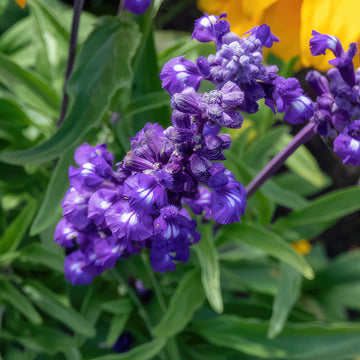
One of the standout features of Salvia farinacea is its tall, slender spikes covered in tubular, violet-blue flowers.
The plant’s leaves are lance-shaped, grayish-green, and have a somewhat rough texture. The Blue Sage typically grows to 3 feet tall, with a spread of about 1.5 feet.
This upright, bushy growth habit makes it an excellent choice for adding vertical interest to garden beds or containers.
The size can vary slightly depending on the growing conditions, with more robust growth in warm, sunny environments.
When it comes to flowers, this plant is highly valued for its long blooming period, which often starts in late spring and can last well into the fall in warmer climates. These flowers are produced in abundance throughout the growing season, attracting a variety of beneficial insects and pollinators. The vibrant violet-blue flowers are tubular and have a slightly aromatic scent. Deadheading spent flowers will encourage even more blooms and extend the flowering period.
When and How to Water Your Blue Sage
The Blue Sage, known for its drought tolerance, thrives with minimal water once established. In its early growth stages, regular watering is essential to help the plant develop a strong root system. During the first few weeks after planting, water deeply and consistently, keeping the soil slightly moist but not waterlogged. This helps the roots settle into their new environment and ensures a healthy start.
Once established, Blue Sage becomes quite resilient to drought, requiring significantly less frequent watering. A general rule of thumb is to water your Mealycup sage deeply about once a week during hot, dry periods typically in summer. Allow the soil to dry between waterings, as it is susceptible to root rot if left in consistently soggy conditions. Overwatering is a common mistake, especially in regions with high humidity or cooler temperatures, where the plant doesn’t need as much moisture.
During the cooler months or rainy seasons, Mealycup Blue Sage needs even less water, sometimes only requiring occasional watering if the soil becomes particularly dry. In regions with sufficient rainfall, supplemental watering might not be necessary at all. Always monitor the plant for signs of stress; if the leaves begin to wilt or droop, that could be an indication that the plant needs water.
In container gardening, Blue Sage might need slightly more frequent watering, as pots tend to dry out faster than garden beds. However, ensure the pot has proper drainage to avoid water buildup. It is highly adaptable to various watering conditions, making it an ideal low-maintenance choice for xeriscapes and drought-prone gardens.
Light Requirements – Where to Place Your Blue Sage
When growing your Blue Sage indoors, ensure it receives ample sunlight or bright, indirect light. Placing the plant near a south-facing window where it can soak up sunlight for at least 6 hours a day is beneficial. If natural light is limited indoors, supplementing with a grow light can help mimic the intensity and duration of sunlight needed for optimal growth.
For outdoor cultivation of Salvia farinacea Blue Sage, choose a planting location that receives full sun exposure. Blue Sage thrives in bright sunlight, so aim to plant it in an area where it can bask in direct sunlight for most of the day. Providing a minimum of 6-8 hours of sunlight is crucial for the plant to flourish and produce abundant blooms.
Ensure there are no obstructions like tall trees or buildings that can shade the plant and hinder its access to sunlight. By selecting a sunny spot in your outdoor garden, you can create an ideal environment for your blue salvia plant to thrive and showcase its stunning blue flowers.
Optimal Soil & Fertilizer Needs
The Salvia farinacea thrives in well-draining soil that is rich in organic matter. A sandy loam soil with good drainage is ideal for this plant. Ensure the soil pH is slightly acidic to neutral, around 6.5 to 7, to promote healthy growth.
Instead, make or buy a well-draining potting mix, or ideally use our specialized potting mix that contains 5 natural substrates and mycorrhizae to promote the development of a strong root system that helps your sage plant to thrive.
To meet the fertilizer requirements of Salvia farinacea Blue Sage, opt for a balanced (5-10-5) NPK fertilizer. During the growing season, which is typically spring you can feed your Salvia blue with a slow-release fertilizer, or a liquid fertilizer diluted to half strength.
Apply the fertilizer once a year to provide a steady supply of nutrients for the plant's development and blooming. Avoid over-fertilizing, as this can lead to excessive foliage growth at the expense of flower production.
Hardiness Zones & More
When growing Blue Sage indoors, aim to maintain a moderate room temperature between 60-75°F. Avoid placing the plant in areas with extreme temperature fluctuations or drafts, as this can stress the plant. Additionally, indoor humidity levels of around 40-50% are suitable for Blue Sage, as it thrives in moderate humidity environments.
For outdoor cultivation of Salvia farinacea, it is typically hardy in USDA zones 8-10, where the minimum winter temperatures range from 10°F to 40°F. It's essential to protect the plant from frost in colder regions by providing mulch or covering during winter months. In terms of temperature, Blue Sage enjoys warm weather and thrives in temperatures above 50°F. As for humidity, Blue Sage is relatively tolerant of varying humidity levels but prefers moderate humidity for optimal growth and flowering.
How to Propagate Blue Sage
To propagate Salvia farinacea, you can use methods like stem cuttings. Take a cutting from a healthy Mealycup Blue Sage plant, ensuring it has at least a couple of leaf nodes. Remove the lower leaves and dip the cut end in a rooting hormone to promote root growth. Plant the cutting in a well-draining potting mix and keep it moist but not waterlogged. Place the pot in a warm, bright location but avoid direct sunlight. With proper care and attention, the cutting should develop roots and grow into a new Blue Sage plant ready for transplanting into the garden.
Wildlife - Blue Sage attracts the following Friendly-Pollinators
Blue Sage is highly attractive to pollinators such as bees, hummingbirds, and butterflies, making it a fantastic addition to any wildlife-friendly garden. In addition to supporting local pollinator populations, Salvia farinacea plays a role in biodiversity, helping to sustain ecosystems by providing food and habitat for these beneficial species.
Toxicity: Salvia farinacea is generally considered non-toxic to humans and pets, making it a safe option for gardens where children or pets may roam. This is a key feature that distinguishes it from some other Salvia varieties, which may have mild toxicity if ingested. However, it's still a good idea to monitor animals around any new plants in the garden, especially if they are prone to chewing.
Key Takeaways
- The plant offers long-lasting blooms, with vibrant violet-blue flowers that bloom from late spring to fall.
- The Blue Sage is drought-tolerant, making it an excellent choice for dry climates or water-wise gardens.
- It is a low-maintenance plant, thriving with minimal care and requiring only occasional watering and deadheading.
- Its tall, attractive flower spikes are particularly effective at drawing in pollinators like bees, butterflies, and hummingbirds.
- The Blue Sage is deer and rabbit-resistant, helping to prevent damage from common garden pests.
- It is highly versatile in landscaping, thriving in garden beds, borders, containers, and cottage-style gardens.
- Blue Sage also fits well in rock gardens and waterwise gardens, where its hardy nature and visual appeal complement dry, rugged environments.
Final Thoughts
Overall, the blue sage (Salvia farinacea) is a versatile and low-maintenance plant that features vibrant violet-blue flowers on tall spikes, making it perfect for adding height and color to any garden. Growing up to 2-3 feet tall, this hardy perennial thrives in full sun and well-drained soil, with moderate drought tolerance once established. It's ideal for attracting bees, butterflies, and hummingbirds, offering long-lasting blooms from spring to fall. Non-toxic to pets and humans, Blue Sage requires minimal care—just occasional watering, especially in hot climates, and deadheading to encourage more blooms, making it a great choice for gardeners of all levels.
Shipping Notes
- Free Standard Shipping on $100+ Orders to the USA.
- Except Preorder products are shipped in 48 hours.
- Delivery to the USA:
- Standard Shipping : 3-10 business days
- If time is of the essence, please consider selecting expedited delivery for faster service.
Exchange/Return Notes
- We offer a 30-day return/exchange service after receiving.
- Final sale items are not eligible for returns or exchanges.
- To process your return/exchange, please contact us at [email protected]
- Please click here for more details>>> Return & Exchange Policy