SKU: 46686319584
apple blossom geranium seeds

apple blossom geranium seeds Appleblossom Rosebud Geranium Seeds ~ Plants ~ Garden ~ Grow Your Own ~ Spring Flowers ~ Instead of Flowers ~ Pink ~ Fresh Cut Flowers

Sale price$26.28 Regular price$29.20
Save 10%

Pay in installments of $7.30 with ShopPay, AfterPay and Klarna

Shipping Estimate
USA
  • USA
  • CAN

Ships within 48 hours · Estimated delivery Sep 16 - Sep 21

Promo Codes Available:

For Your Every Summer RSVP, with Code: SUMMER15

Description

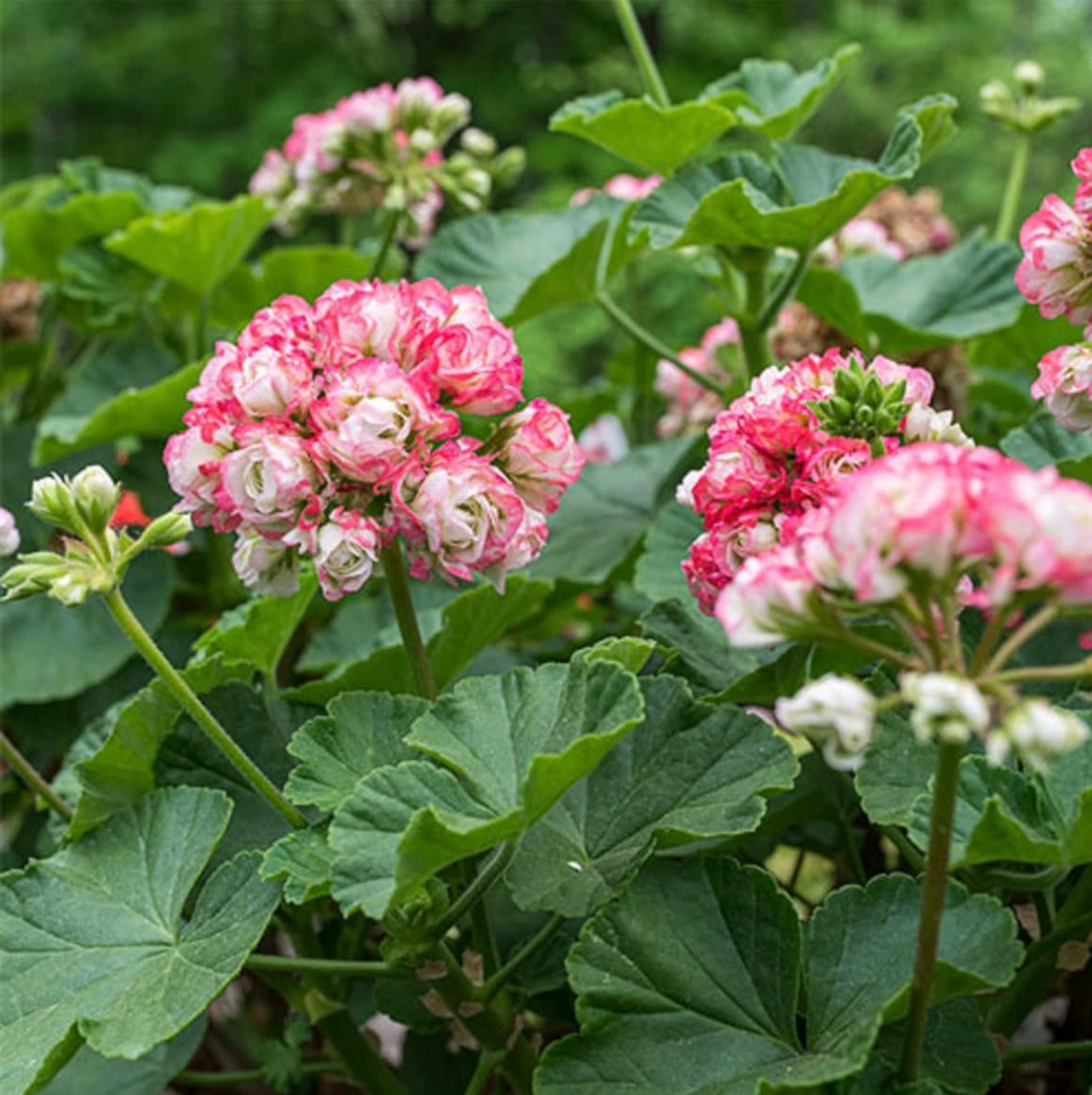
apple blossom geranium seeds Appleblossom Rosebud Geranium Seeds ~ Plants ~ Garden ~ Grow Your Own ~ Spring Flowers ~ Instead of Flowers ~ Pink ~ Fresh Cut FlowersAppleblossom Rosebud' (Zonal Geranium) with gorgeous rounded clusters, densely packed with fully double rose shaped flowers of white tipped with rose pink. Resembling miniature rosebuds, they bloom from summer to frost. This geranium is perfectly named, for "inspire" is just what its bouquets of pastel pink and blush do to your mood. This heirloom Zonal Geranium is absolutely perfect for every garden!!! ~ Includes ~ ~ Quantity of Seeds (Your Choice) ~

‘Appleblossom Rosebud' (Zonal Geranium) with gorgeous rounded clusters, densely packed with fully double rose-shaped flowers of white tipped with rose-pink. Resembling miniature rosebuds, they bloom from summer to frost. This geranium is perfectly named, for "inspire" is just what its bouquets of pastel pink and blush do to your mood. This heirloom Zonal Geranium is absolutely perfect for every garden!!!

~ Includes ~ 

~ Quantity of Seeds (Your Choice) ~

~ 10 Seeds.
~ 15 Seeds.
~ 20 Seeds.


🍎 Appleblossom Rosebud Geranium Grow and Care Instructions 🍎

~ Grow Instructions ~

  1. Fill your pots or planting cells with moistened potting soil. The ideal size is about 2-3". Eventually, you will have to "pot up" your seedlings. In other words, you will transplant them to a larger pot once they have about three sets of leaves and the roots have filled the starter pot. Although it might seem wise to start with a larger pot, it's not. Seedlings seem to do better in close quarters.
  2. Place one tiny seed in each pot and cover with a thin layer of moistened soil, just enough to cover the seed.  Cover the pots with a piece of plastic wrap or — if you're using a seed-starter — put the clear cover on top.
  3. Place the whole setup in a place that's warm, with bright, indirect light. Geranium seeds germinate best at 75 degrees F., so consider putting them on top of a refrigerator or using a Heat Mat. If the soil surface gets dry, use a mister to moisten it with water.
  4. Watch for germination, which can take as few as three days or as long as four weeks.  As soon as you see the first shoots of green, remove the covering and moisten the soil if it looks dry.
  5. Move the tiny plants to a place that gets bright light, with temperatures in the 70s during the day and no lower than 60 degrees F. at night. Although you can grow them on a sunny, south-facing window, grow lights are best. Keep the bulbs no more than 6" above the plants, adjusting as they grow. Leave the lights on for 12 to 16 hours a day.
  6. Begin fertilization at this stage: once a week with liquid fertilizer that's mixed at half strength.
  7. When the plants have three sets of leaves, transplant them to a 3-1/2" to 4" pot. Self-watering Pop Out Pots work well, but you can use anything that's about 4".
  8. Use fresh potting soil, such as our Transplant Mix, which is sterile and drains freely. Continue fertilizing the seedlings, but mix it at full strength and apply it at the rate recommended on the package.
  9. When frost-free weather arrives, it's time to "harden off" the seedlings. Hardening off is simply acclimating plants to outdoor conditions. Seedlings grown indoors have been coddled — you've been giving them just the right amount of light, moisture and nutrients. Outdoor conditions are more challenging, with fluctuating temperatures and light levels, more variable soil moisture and wind. About a week before you plan to set the seedlings into the garden, start hardening them off. Place them in a protected spot outdoors (partly shaded, out of the wind) for a few hours, bringing them in at night. Gradually, over the course of a week to 10 days, expose them to more and more sunshine and wind.

~ Care Instructions ~

Fertilizing : Fertilization for Annuals and Perennials

Annuals and perennials may be fertilized using:

1. Water-soluble, quick release fertilizers; or 2. temperature controlled slow-release fertilizers; or 3. organic fertilizers such as fish emulsion. Water soluble fertilizers are generally used every two weeks during the growing season or per label instructions. Controlled, slow-release fertilizers are worked into the soil ususally only once during the growing season or per label directions. For organic fertilizers such as fish emulsion, follow label directions as they may vary per product.

Light Conditions : Full Sun for Houseplants. Don't underestimate the light needs of houseplants that require full sun -- they are often tropicals. Place them within 2 feet of a southern exposure window, or at the very minimum, a room that stays bright. Bright rooms have light colored walls, allowing for light reflection.

Watering Conditions : Normal Watering for Houseplants. Houseplants that require normal watering should be watered so that soil is completely saturated and excess water runs out the bottom of the pot. Never water just a little bit; this allows mineral salts to build up in the soil. The key to normal watering is to allow the top inch or two of potting soil to dry out between waterings. Check frequently as certain times of the year may dictate that you water more frequently. Also, some plants that require normal watering during the growing season, may require less during the winter months when they are dormant.

💕Please come visit me YourPlantBitchcom to see my newest items!!! Rest assured, my main concern is my customers always!!! I try to provide the best customer service and strive to create a positive shopping experience in my shop. I’m always available to answer any questions or concerns you may have before and after your purchase. Custom orders are welcome!!! I can even include a handwritten gift card for no additional cost. Feel free to send me an offer since I will always do my absolute best to work with my customer’s offers. Contact me with any questions or if you’re interested in my sold~out items or need different quantities.

Thank you so very much for supporting my small business!!!

✨ Follow Me ✨

Instagram: YourPlantBitch

Facebook: Your Plant Biitch

💚 Best Wishes, Your Plant B*tch (Quinn)


Shipping Notes
  • Free Standard Shipping on $100+ Orders to the USA.
  • Except Preorder products are shipped in 48 hours.
  • Delivery to the USA:
  1. Standard Shipping : 3-10 business days
  • If time is of the essence, please consider selecting expedited delivery for faster service.
Exchange/Return Notes
  • We offer a 30-day return/exchange service after receiving.
  • Final sale items are not eligible for returns or exchanges.
  • To process your return/exchange, please contact us at [email protected]
  • Please click here for more details>>> Return & Exchange Policy
SKU: 46686319584

Discover Niche Categories That Outsell apple blossom geranium seeds

Top-Converting Item to Boost Your Average Order

4.8 ★★★★★
Based on 16 reviews
Sort
Highest Rating
Newest First
Oldest First
Product Reviews
P
Verified Purchase
Paula Cappa Reviews
Dallas, US
★★★★★ 5
If you can only afford one craft book on Dialogue, this one is it.
Format: Hardcover
The art of dialogue. How does a writer get it just right to be effective, yet original, dramatic but not too dramatic, captivating and satisfying, and most important of all convincing? The thrust of this book is how McKee spends time on characterizations and the art of the subtext—vital to thrilling and effective dialogue. McKee explains how subtext works, the thinking behind it, shows you its most effective moments, why it works well or poorly, and gives you the tools to make it work. The result: amazingly clear insight. No kidding, if you want to fully understand subtext in dialogue and sharpen your skills, this is the writing book to get. Conflict in dialogue, turning points, even sentence designs techniques. McKee describes the “suspense sentence” and the “periodic sentence.” Because prose is a natural medium for storytelling, you will learn how Charles Dickens used ‘counter pointing exposition’ and its effectiveness for the reader. I hadn’t seen this kind of hook in writing before, hadn’t heard this term before. Very powerful technique; of course none of us writes like Dickens, but what an example on how to swoop the reader in. What’s one of the takeaways in Dialogue by Robert McKee? “Quality storytelling inspires quality dialogue.” Which inspires a read of McKee’s other remarkable craft book “Story”—a great companion read as both books belong on any serious writer’s bookshelf.
WAS THIS REVIEW HELPFUL?YesReportShare
Reviewed in the United States on July 28, 2016
B
Verified Purchase
Bookworm
Los Angeles, US
★★★★★ 5
It's All Right Here. All of it.
Format: Hardcover
I shouldn't even be writing this review because doing so only creates my competition. I'm writing it for Robert McKee out of respect and love for him as one of the best instructors I've never met. I have both STORY and now, DIALOGUE in hardcover, on my Kindle, and the audio version (he narrates his books) in my headphones. I read it, I listen to it and take it with me when I travel. Sometimes I listen and read at the same time. Most nights I listen to the audio version in my sleep. In other words, I eat, sleep and breathe this book. I did the same thing with Story, his other book. I may go to my grave never fully comprehending the vast wealth of knowledge contained in these two books. That's OK. What I can tell you is this. With nothing but STORY as my guide, my very first screenplay took seven months and thirty-five drafts from start to finish. But. That screenplay became a Hallmark Movies and Mysteries feature film. The producers liked it so much they gave me another assignment. That one took six weeks, and they bought the first draft. I'm now working on my fifth script; this one is in the six-figure category, with five figures upfront just for the Treatment. And I owe it all to everything I've learned from studying Robert McKee, supplemented by what I learned from everyone else. Over the past thirty years, I’ve studied with forty plus instructors and highlighted hundreds of books and listened to dozens of recorded seminars. All that information is summed up and thoroughly explained in Robert McKee's two books STORY and now DIALOGUE. I won't live long enough to absorb everything he teaches. And I still study two hours a day as a warm up for my writing. I’d recommend Aaron Sorkin, Warner Hertzog, William Goldman (both Sorkin and McKee say he's the greatest), Blake Synder, Chris Vogler, Michael Hauge, William Akers, and anybody else you can find who’s willing to share their knowledge. Because you never know when a concept you didn’t realize you didn’t understand or needed is going to show up. Especially when presented from a different perspective. Having said that, if you are serious, and I mean dead serious, about becoming a working screenwriter, or any other kind of fiction writer for that matter, then you have no choice but to study McKee like your literary life depends on it. Buy the hardcover, buy the Kindle version, and buy the audio version of DIALOGUE and STORY. And supplement these two works with any other material that speaks to you. If you do this, you will become a first class screenwriter or novelist or playwright, because all three genres are only different ways of presenting a Story. If you can’t commit to this, unless you’re a genius or prodigy, you’re wasting valuable time which could be spent following your true life calling. But if your heart’s desire is to become a working writer, then sooner or later you’ll have to know everything in McKee’s two books. So, you might as well bite the bullet and jump in head first. It's all right here in STORY and DIALOGUE. All of it. Thank you, Mr. McKee. You, sir, changed my life.-- Jimmy Hager
WAS THIS REVIEW HELPFUL?YesReportShare
Reviewed in the United States on September 21, 2016
J
Verified Purchase
jk Smiles
Bozeman, US
★★★★★ 5
A book on dialogue should be experienced first as a book on tape
Format: Audio CD
I think of this more as a great master class lecture. Dialogue should be seemingly simple (we all talk), but McKee defines its essence and differences for prose, stage and cinema. The bulk is narrated by McKee, but the scene examples are read by voice actors and they do quite well. Even the roots of the English language are examined in order to make better decisions on your character's particular use of words. After listening the 10 hours twice while commuting, I finally picked up the book and read it. The book on tape is a better way to initially absorb the material, while the actual book helps to clarify the info. A must for all writers, especially screenwriters.
WAS THIS REVIEW HELPFUL?YesReportShare
Reviewed in the United States on August 30, 2018
L
Verified Purchase
Lori T. Sly
Los Angeles, US
★★★★★ 4
Helpful, but not as good as "Story" by same author, and it disses certain genres
Format: Hardcover
This book contains a lot of helpful information on how to write dialogue. It's dense with dialogue analysis and insights, tough to take in by just reading it through once. But it is helpful. McKee covers the three dialogue tiers (said, unsaid, unsayable) as well as how dialogue ties into story turning points and scene conflict type. I still have lots of practice ahead of me to figure out how best to do this in my story. I will definitely use his advice as a guide. He understands dialogue at a much deeper level than I do. However, many of McKee's dialogue examples did not speak to me. While I liked reading the dialogue examples for Breaking Bad, 30 Rock, The Sopranos, Frasier, A Raisin in the Sun, and The Great Gatsby, and agreed they were good, I disliked the dialogue from Shakespeare, Elmore Leonard, Sideways, Fraulein Else, and Lost in Translation. McKee says fine dialogue turns the reader/audience into a mind reader; I guess I'm not interested in movies which expect me to be as much of a mind reader as those latter examples did. I totally missed the subtext of the dialogue in those until he explained it to me as an aside. And that's after I already saw most of those movies! If I have to guess what every character means with every line, that's too much work and too little entertainment for me. Maybe mystery lovers liked the dialogue in "Lost in Translation"; I'm not a mystery lover. McKee quoted one novelist as saying that the crux of good writing is to, "Make em laugh, make em cry, make em wait." Lost In Translation and its dialogue did none of that for me. The subtext was so confusing and subtle that I lost interest in the movie. I can't even remember what it was about anymore, only that it won some award and I had no clue why. McKee says that with rare exceptions, a scene should never be outwardly and entirely about what it seems to be about. Dialogue should imply, not explain, its subtext. An ever-present subtext is the guiding principle of realism. Nonrealism, on the other hand, employs on-the-nose dialogue in all its genres and subgenres: myth and fairytale, science fiction and time travel, animation, the musical, the supernatural, Theatre of the Absurd, action/adventure, farce, horror, allegory, magical realism, postmodernism, dieselpunk retrofuturism, and the like. It's a bit unclear how, if at all, anyone writing in any of these "nonreal" genres should take his dialogue advice. It seems to me that even sci fi scenes need some good dialogue with subtext to be engaging. With McKee, all the accolades go to what is implied and unsaid over what is said. I agree that subtext matters, but for me, he's out of proportion with how much it matters to most people and how hard audiences are willing to work to discover the intended subtext. Also, memorable spoken character lines can elevate movie themes and characterization like nothing else. In the end, I think this book is geared more toward writers who want other advanced writers as their audience rather than the average reader or movie watcher. And McKee admits it is definitely not geared toward sci fi, fairytales/myths, action/adventure, horror or allegory. It's almost as if he's saying those genres can't have excellent dialogue. I disagree. But it was still a helpful book to read, and one I will be thinking about and trying to more fully understand for a long time. McKee understands how character's subconscious drives can deepen what they say or avoid saying, and how dialogue interacts with many other aspects of a story to make it all work together.
WAS THIS REVIEW HELPFUL?YesReportShare
Reviewed in the United States on December 12, 2019
R
Verified Purchase
Ray Pryor
Grantham, US
★★★★★ 5
Amazing.
Format: Kindle
Just like a good movie, the first 10 pages = mind blown. Wow, such really, really good material here. If you're new, this will help you a ton. If you're experienced, this book will help you realize WHY great dialogue is so great, enabling you to create the magic again and again. I love how McKee covers several medias ( screen, theater, novel ) but still stays true and clear on the concept. A virtual masterclass on the subject. One of the best screenwriting books out there, and Yes, it's well worth all the hype.
WAS THIS REVIEW HELPFUL?YesReportShare
Reviewed in the United States on April 18, 2017

recommand products