Pay in installments of $5.45 with
 ,
,
 and
and

Shipping Estimate
USA
- USA
- CAN
- USA
- CAN
Ships within 48 hours · Estimated delivery Sep 10 - Sep 15
 Promo Codes Available:
For Your Every Summer RSVP, with Code: SUMMER15
Description
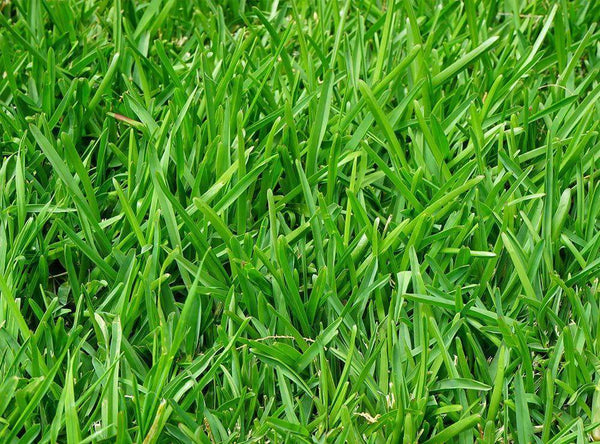
perennial ryegrass herbicide Hancock's Perennial Forage Ryegrass SeedCheck out a great option here! Hancock's Perennial Forage Ryegrass Seed is more persistent than annual Ryegrass Seed, but less persistent in the midwest than other cool season grass species. Perennial Ryegrass can behave as an annual, short lived perennial, or perennial, depending on environmental conditions. It resembles annual Ryegrass (Lolium multiflorum Lam.), although perennial Ryegrass has more leaves in lower parts of the plant canopy, its
Check out a great option here! Hancock's Perennial Forage Ryegrass Seed is more persistent than annual Ryegrass Seed, but less persistent in the midwest than other cool season grass species. Perennial Ryegrass can behave as an annual, short-lived perennial, or perennial, depending on environmental conditions. It resembles annual Ryegrass (Lolium multiflorum Lam.), although perennial Ryegrass has more leaves in lower parts of the plant canopy, its collar and blade are more narrow, and lemmas are awnless.~~~
Hancock's Perennial Forage Ryegrass Seed is more persistent than annual Ryegrass Seed, but less persistent in the midwest than other cool season grass species. Perennial Ryegrass can behave as an annual, short-lived perennial, or perennial, depending on environmental conditions. It resembles annual Ryegrass (Lolium multiflorum Lam.), although perennial Ryegrass has more leaves in lower parts of the plant canopy, its collar and blade are more narrow, and lemmas are awnless.
Product Information
- Application or Use: Pasture, Cattle Forage, Livestock Grazing, Cover Crop, Erosion Control
- Germination Time: 7 - 10 days, under optimal conditions
- Growing Locations: Warm Season, Transition Zone, Cool Season
- Height: 1 - 3 feet
- Sunlight Requirements: 4+ hours
- Advantages: Highly nutritious hay or forage; quick germination and growth.
- When to Plant: Recommended planting time is fall and winter when night time temperatures are consistently below 65 degrees.
Product Detail
- Endophyte Free
- Lower growing
- Erosion control
- Sports fields, lawns and pastures
- Reducing soil erosion
- Fertile, well drained soils
Product Information
Hancock's Perennial Forage Ryegrass Seed tillers more profusely but is lower growing than annual Ryegrass, and will not form a seed head in the seeding year. It is more susceptible to a summer slump than annual Ryegrass. Perennial Ryegrass will head early under dry conditions after the seeding year. Perennial Ryegrass seed is used for erosion control, sports, lawns, and pastures.
In the United States, perennial ryegrass is used predominately for forage in the coastal northwest, irrigated intermountain valleys of the west, the midwest, and Northeast.
Perennial Ryegrass is grown primarily for pasture and silage. It can be grown for hay in the pacific northwest, but typically will provide only one hay cutting, and little regrowth. It also is used for reducing soil erosion, recycling nutrients from manure and biosolids, wildlife feed, and turf.
There are many important perennial Ryegrass varieties. All are reproduced by seed.
Many types of Ryegrass exist, because most varieties do not self-pollinate but easily cross with other Lolium and Festuca species. Persistence of perennial and annual hybrids falls between that of annual and perennial varieties. As a result, these crosses are called intermediate, or short-rotation Ryegrasses.
There are both diploid and tetraploid forage-type varieties. Tetraploids have fewer, but larger tillers with wider leaves, resulting in more open sods. Both the seed and seedlings of tetraploids are larger, but growth rate is greater for diploids. Tetraploids are less winter-hardy and less persistent than diploids.
Including both forage and turf types, many varieties are listed in grass varieties of the United States. Information on varieties also is available from the Oregon Ryegrass Growers Seed Commission and through the Germplasm Resources Information Network.
Perennial Ryegrass varieties are grouped into three maturity categories: early, intermediate, and late. These groupings are somewhat helpful, but there is substantial overlap among them.
Perennial Ryegrass is best adapted to cool, moist climates where winter kill is not a problem. Its primary use for forage in the United States is in the pacific northwest. There also is considerable use in irrigated intermountain valleys, the midwest, and the northeast.
Ryegrass is a cool season variety, plant once nighttime temperatures are consistently 65 degrees and below.
*Product packaging may appear different than what is pictured.~~~
Planting:
- Lawns: 5-10 lbs. per 1000 sq. ft.
- Pasture: 20-40 lbs. per acre
- Apply 250 lbs. of 16-04-08 fertilizer per acre.
Perennial Ryegrass grows best on fertile, well-drained soils but has a wide range of soil adaptability. It is suited for use in soil drainage classes ranging from well-drained to poorly drained. It will tolerate long periods of flooding (15 to 25 days) when temperatures are below 80 degrees fahrenheit. A minimum precipitation range is 18 to 25 in. Perennial Ryegrass tolerates both acidic and alkaline soils, with a pH range of 5.1 to 8.4. Best growth occurs when soil pH is maintained between 5.5 and 7.5.
Spring and fall are the seasons of best growth, during the hot summer months, perennial Ryegrass becomes dormant. Maximum growth occurs between 68 and 77 degrees fahrenheit. Perennial Ryegrass is adapted to shade in the warmer portions of a cool, humid climate.
Perennial Ryegrass is more sensitive to temperature extreme and drought than annual Ryegrass. Even with irrigation or abundant rainfall, production suffers when daytime temperatures exceed 87 Fahrenheit and nighttime temperatures exceed 77 Fahrenheit.
Perennial Ryegrass is less winter-hardy than Orchardgrass and Tall Fescue and less drought-tolerant than smooth Bromegrass. Studies in Wisconsin, however, suggest that perennial ryegrass is able to overwinter in colder climates, even where snow cover is unreliable. In the pacific northwest, perennial Ryegrass will survive most winter weather conditions. However, during very harsh winters, it may winter kill. Thus, it should be considered a short-lived perennial.
Perennial Ryegrass often is harvested for silage. It makes up a considerable portion of dairy-quality grass silage in coastal regions of the pacific northwest.
As with all forage species, silage quality is influenced greatly by maturity stage. For the optimal compromise between quality and quantity, cut perennial Ryegrass in the boot stage. Harvesting perennial Ryegrass for hay is not recommended in high rainfall/humidity areas such as the coastal. Good hay curing weather typically occurs too late in the pacific northwest for producing high-quality Ryegrass hay.
Ryegrass is a cool season variety, plant once nighttime temperatures are consistently 65 degrees and below.
Shipping Notes
- Free Standard Shipping on $100+ Orders to the USA.
- Except Preorder products are shipped in 48 hours.
- Delivery to the USA:
- Standard Shipping : 3-10 business days
- If time is of the essence, please consider selecting expedited delivery for faster service.
Exchange/Return Notes
- We offer a 30-day return/exchange service after receiving.
- Final sale items are not eligible for returns or exchanges.
- To process your return/exchange, please contact us at [email protected]
- Please click here for more details>>> Return & Exchange Policy