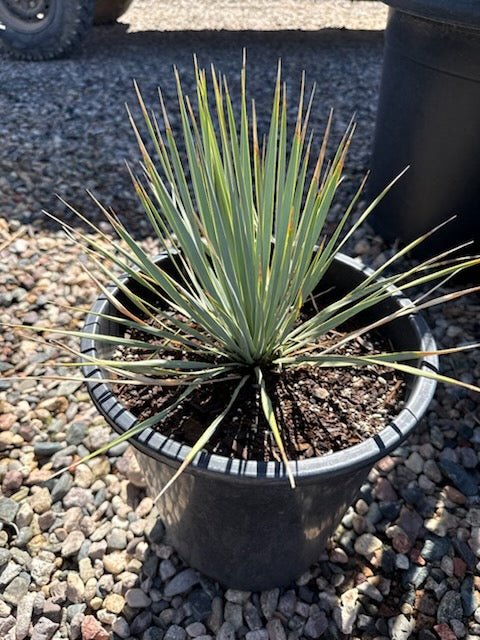
SKU: 47802605291
where can i buy yucca

where can i buy yucca Buy Beaked Yucca Phoenix, AZ | Yucca rostrata

Sale price$18.39 Regular price$20.43
Save 10%

Pay in installments of $5.11 with ShopPay, AfterPay and Klarna

Shipping Estimate
USA
  • USA
  • CAN

Ships within 48 hours · Estimated delivery Sep 8 - Sep 13

Promo Codes Available:

For Your Every Summer RSVP, with Code: SUMMER15

Description

where can i buy yucca Buy Beaked Yucca Phoenix, AZ | Yucca rostrataPhoenix's Most Dramatic Sculptural Desert Tree for Modern Landscapes Beaked Yucca (Yucca rostrata) is the crown jewel of desert landscaping a stunning, single trunked tree topped with a symmetrical pom pom of silvery blue green leaves that catches every eye in the neighborhood. Growing 815 feet tall, this architectural powerhouse is the go to specimen tree for modern desert homes across Scottsdale, Paradise Valley, Chandler, and Mesa. It handles

Phoenix's Most Dramatic Sculptural Desert Tree for Modern Landscapes

Beaked Yucca (Yucca rostrata) is the crown jewel of desert landscaping — a stunning, single-trunked tree topped with a symmetrical pom-pom of silvery blue-green leaves that catches every eye in the neighborhood. Growing 8–15 feet tall, this architectural powerhouse is the go-to specimen tree for modern desert homes across Scottsdale, Paradise Valley, Chandler, and Mesa. It handles brutal Phoenix summers, reflected heat, caliche soil, and extreme drought without breaking a sweat. If you want one plant that transforms your entire landscape, Beaked Yucca is it.

Beaked Yucca Plant Details

Attribute Detail
Scientific Name Yucca rostrata
Common Names Beaked Yucca, Big Bend Yucca, Silver Yucca
Mature Height 8–15 feet (can reach 20 feet)
Mature Width 4–6 feet
Growth Rate Slow to moderate — 6–12 inches per year in Phoenix
Sun Full sun (6+ hrs). Thrives in reflected heat from walls and pavement.
Water Very low once established. Extremely drought-tolerant.
USDA Zones 5–11 (Phoenix is Zone 9b–10a)
Soil Well-draining. Thrives in rocky, sandy, and Arizona caliche soils.
Foliage Evergreen — silvery blue-green symmetrical rosette year-round
Bloom Color Creamy white — large showy clusters on tall stalks in spring
Trunk Single or multi-trunk; develops character with age

Beaked Yucca Uses in Phoenix Landscapes

Signature Specimen Tree

Nothing commands attention like a mature Beaked Yucca. Its perfect pom-pom crown on a textured trunk creates an instant focal point in front yards, courtyards, and entryways. Plant one as a standalone specimen near your front door or driveway for maximum curb appeal in Scottsdale and Paradise Valley homes.

Modern Desert Design

Beaked Yucca's clean, architectural silhouette is tailor-made for contemporary desert landscapes. Use it alongside concrete planters, steel edging, and decomposed granite for a high-end modern look. Plant in groups of 3 at staggered heights for a designer desert grove effect. Pair with Agave, Desert Spoon, and ornamental grasses for textural contrast.

Pool-Friendly Landscaping

The upright, contained form and minimal leaf drop make Beaked Yucca an excellent poolside plant. Its non-invasive root system won't damage hardscaping, and the dramatic silhouette looks stunning reflected in pool water, especially when uplighted at night.

Drought-Tolerant Streetscape

Beaked Yucca is increasingly popular for Phoenix streetscapes, medians, and commercial properties. Its extreme drought tolerance means virtually zero irrigation once established, and its striking form elevates any commercial landscape in Tempe, Gilbert, or Mesa.

Best Time to Plant Beaked Yucca in Phoenix

Fall (October–November) is the ideal planting window. Warm soil promotes root establishment while cooler air temperatures reduce transplant stress, giving your Beaked Yucca 6–8 months to settle in before its first Phoenix summer. Spring (February–April) is the second-best window. Avoid planting in peak summer if possible, especially for larger specimens.

How to Plant Beaked Yucca

  1. Dig wide, not deep — 2–3x the root ball width, same depth as the container.
  2. Check for caliche — break through any hardpan layer for drainage. Beaked Yucca will rot in standing water.
  3. Backfill with native soil — no amendments needed. Lean, well-draining soil is ideal.
  4. Spacing — 6–8 feet apart for grouped plantings; 10+ feet from structures for mature spread.
  5. Water basin — build a 3–4 inch ring of soil around the planting hole to direct water to roots during establishment.
  6. Mulch — 2–3 inches of gravel or decomposed granite. Avoid organic bark mulch near the trunk to prevent rot.

Watering Beaked Yucca in Phoenix

First Year Watering Schedule

  • Weeks 1–2: Every 3–4 days, deep and slow (20–30 min)
  • Month 1–2: Every 5–7 days
  • Month 3–6: Every 10–14 days (7–10 days in peak summer)
  • After Year 1: Every 3–4 weeks in summer; little to no supplemental water in winter

Drip Irrigation

Place one 2-GPH emitter 18–24 inches from the trunk. Beaked Yucca is extremely drought-tolerant once established — overwatering is the number one killer. Established plants in the ground rarely need supplemental irrigation in the Phoenix Valley.

How fast does Beaked Yucca grow in Phoenix?
Expect 6–12 inches of trunk height per year in optimal conditions. Larger nursery specimens (25 gallon and 30" box) give you a head start with an already-developed trunk and crown.

Is Beaked Yucca drought tolerant?
Extremely. Once established, it can survive on rainfall alone in most Phoenix Valley locations. It's native to the Chihuahuan Desert of Texas and Mexico — one of the most arid regions in North America.

Will Beaked Yucca develop a trunk?
Yes. Over time, the lower leaves naturally dry and can be trimmed to reveal a beautiful textured trunk. Larger nursery sizes (25 gallon and 30" box) already have visible trunk development.

Can Beaked Yucca handle full reflected heat?
Absolutely. It thrives against south- and west-facing walls where reflected heat would stress most plants. It's one of the toughest ornamental trees for extreme Phoenix heat.

What's the difference between Beaked Yucca and Beaked Yucca with trunk?
Both are the same species (Yucca rostrata). "With trunk" specimens are older, more established plants that already show significant trunk development — perfect if you want instant height and character without waiting years.

You May Also Like

  • Beaked Yucca with Trunk — Pre-trunked specimens for instant dramatic impact.
  • Desert Spoon — A silvery-blue rosette that pairs beautifully with Beaked Yucca in desert groupings.
  • Blue Palo Verde — A native desert tree that provides filtered shade alongside Beaked Yucca's vertical form.
  • Banana Yucca — A compact ground-level yucca that complements Beaked Yucca's height.
  • Agave Americana — Bold blue rosettes that echo Beaked Yucca's color palette at ground level.

How Many Beaked Yucca Do I Need?

Beaked Yucca is a specimen tree, so plan around grouping and clearance rather than a hedge. At a mature width of 4 to 6 feet, use this guide:

Planting Goal Spacing & Count
Single focal point 1 specimen, 10 ft from walls and structures
Designer desert grove Group of 3 at staggered heights, 6 to 8 ft apart
Repeating streetscape rhythm About 1 plant every 7 ft along the run

The upright form and clean trunk keep it well clear of walkways, making it one of the few yuccas that suits tight, high-traffic spaces.

Beaked Yucca Season-by-Season in Phoenix

  • Spring (Feb–Apr): Tall stalks of creamy-white flower clusters rise above the silver crown, drawing pollinators. A strong second planting window before summer.
  • Summer (May–Sep): Thrives in extreme and reflected heat against south and west walls. Needs only an occasional deep soak through the hottest months.
  • Fall (Oct–Nov): The prime planting season. Warm soil and mild air let roots settle before the next summer. Steady trunk growth continues.
  • Winter (Dec–Jan): Fully evergreen and exceptionally cold-hardy (USDA Zone 5). The silver pom-pom crown holds all winter and never needs frost protection in the Valley.

At a Glance

✔ Heat-Loving (Reflected-Heat Tolerant)   ✔ Drought-Tolerant   ✔ Pool-Friendly (Low-Litter)   ✔ Evergreen   ✔ Low-Maintenance   ✔ Pollinator-Friendly   ✔ Deer & Rabbit-Resistant   ✔ Cold-Hardy to -10°F

Plant It With

  • Beaked Yucca with Trunk: a pre-trunked specimen to add instant height and staggered character.
  • Desert Spoon: a silver-blue rosette that echoes the crown color at ground level.
  • Banana Yucca: a compact blue yucca that fills in beneath the tall trunk.
  • Red Yucca: coral flower spikes for color and motion around the base.

Is Beaked Yucca Right for Your Yard?

Beaked Yucca thrives in full sun and reflected heat, needs sharply draining soil (break through caliche), and asks for almost no water once established. Its clean upright form and low litter make it a rare yucca that works poolside and in tight modern beds. Not a fit if your site stays wet or poorly drained, since the roots and trunk base will rot in standing water.

Shipping Notes
  • Free Standard Shipping on $100+ Orders to the USA.
  • Except Preorder products are shipped in 48 hours.
  • Delivery to the USA:
  1. Standard Shipping : 3-10 business days
  • If time is of the essence, please consider selecting expedited delivery for faster service.
Exchange/Return Notes
  • We offer a 30-day return/exchange service after receiving.
  • Final sale items are not eligible for returns or exchanges.
  • To process your return/exchange, please contact us at [email protected]
  • Please click here for more details>>> Return & Exchange Policy
SKU: 47802605291

Discover Niche Categories That Outsell where can i buy yucca

Top-Converting Item to Boost Your Average Order

4.9 ★★★★★
Based on 23 reviews
Sort
Highest Rating
Newest First
Oldest First
Product Reviews
C
Christopher West
Massapequa, US
★★★★★ 5
A Seasoned Developer's Fresh Perspective on Game Development
Format: Paperback
Finally, a game dev book that respects your existing programming knowledge As someone who's spent two decades architecting enterprise web applications in C# and ASP.NET, I approached game development with what I thought was a solid foundation. I was wrong—not about C#, but about how differently it's applied in game engines. After five frustrating years of trying to bridge that gap through scattered tutorials and documentation, Harrison Ferrone's eighth edition finally gave me the structured path I needed. What This Book Gets Right for Experienced Developers: The pacing is deceptive. Yes, it starts with programming fundamentals, but don't skip ahead. Ferrone's approach to OOP in the context of Unity's component architecture was revelatory. In web dev, I'd been writing services, repositories, and dependency injection for years. Here, the MonoBehaviour lifecycle and component-based thinking required a genuine mental shift that the book handles exceptionally well in chapters 5-6. Chapter 10's revisit of types and methods isn't redundant—it's strategic. By this point, you've written enough Unity scripts to appreciate why game code patterns differ from traditional enterprise patterns. The discussion of value types vs reference types hits differently when you're optimizing frame rates instead of HTTP response times. The Unity 6 Update Matters: Having struggled with outdated Unity tutorials for years, the Unity 6-specific content is invaluable. The screenshots are comprehensive (full-screen mode can make text small, but the GitHub repo and graphics bundle solve this). More importantly, the code samples reflect current Unity APIs and best practices, not deprecated approaches that still litter Stack Overflow. Where It Shines for Career Transitioners: Chapters 11-13 are worth the price alone. LINQ in Unity isn't just about querying collections—it's about performance considerations I never had to think about in web apps. The coverage of generics, delegates, and events finally connected how Unity's event system relates to patterns I already knew, but in a real-time context where every allocation matters. The serialization chapter (12) bridged my understanding of data persistence from databases and JSON APIs to Unity's PlayerPrefs and ScriptableObjects. This practical grounding is what most tutorials skip. Minor Quibbles: The FPS prototype is solid for learning, but I wish there was more discussion of common anti-patterns experienced developers bring from other domains. I still catch myself over-engineering solutions when Unity's component system offers simpler approaches. Also, while the book touches on performance, those coming from async/await-heavy web development will need supplementary resources on Unity's coroutines and the Job System for more complex scenarios. Bottom Line: If you're a professional developer trying to break into game development, stop collecting random Udemy courses. This book provides the structured progression and context-appropriate examples that respects your intelligence while teaching you to think like a game developer. The C# you know is necessary but not sufficient—Ferrone bridges that gap methodically. After years of false starts, I finally have a working game prototype and, more importantly, the mental models to keep building. That's worth significantly more than the cover price. Disclosure: I received an advance review copy from Packt Publishing. This honest review reflects my genuine experience as a career-changing developer.
WAS THIS REVIEW HELPFUL?YesReportShare
Reviewed in the United States on October 21, 2025
B
Blake Lynch
Carnegie, US
★★★★★ 5
A Worthy Touchstone for Anyone Who Wants to Master Unity
Format: Paperback
Harrison Ferrone’s Learning C# by Developing Games with Unity 6 is one of the strongest beginner-to-intermediate Unity guides I’ve read: carefully structured, patient in its explanations, and quietly packed with insight about how Unity 6 and C# truly work together. I read the physical edition while sitting in front of a blank Unity project, and the experience felt like having a seasoned sailor point out the currents of a river I’ve been navigating for years. You see the familiar terrain differently. The book’s early decision to spend real time on C# fundamentals is a welcome choice. Most Unity books skip past the language; Harrison slows down, defines concepts, and gives you enough clarity that when you finally enter Unity, you understand why things behave the way they do. Those chapters are dense in the best way: they prep beginners to stand on solid ground and give experienced users a clean, refreshed mental model of the language under the engine. Ferrone’s real strength is his voice. He strikes a balance I rarely see in technical writing: conversational introductions that explain what you’re about to learn and why it matters, followed by crisp, accessible technical walkthroughs. The pacing (explanation → example → implementation) is excellent. And the inclusion of ready-to-use assets removes one of the biggest barriers for new developers who want to understand systems without getting lost creating placeholder art. The book doesn’t talk down to anyone. It makes Unity feel more accessible without flattening its complexity. Beginners will come away with genuine competence; advanced users will appreciate the clear framing of new Unity 6 tools and the subtle recognition of how AI-assisted coding is shaping modern workflows. It’s a guide you can read once for understanding, then keep at your desk as a reference. If you’re a serious hobbyist, a technically inclined beginner, or someone who’s ready to work through your first real project, this is the Unity book I’d hand you first. It bridges concept and execution with clarity and confidence, and it does so with a tone that feels patient, practical, and quietly encouraging. In a space crowded with copy-paste tutorials, Harrison Ferrone has written a Unity 6 guide with real staying power.
WAS THIS REVIEW HELPFUL?YesReportShare
Reviewed in the United States on December 16, 2025
M
Mel
Charlottesville, US
★★★★★ 4
Pretty good beginner book, very user friendly covers Development and Design
Format: Paperback, Format: Paperback
I enjoy learning Game Dev, but I research books because many authors promise a lot and deliver half or not at all and I have to put the book down. This book was pretty good. I appreciate the author explaining things, and remember he's writing a book for beginners. There's also a good amount of pics in the book, and I dislike a book with no pics. Also, he breaks it down very simply and explains that you're not going to learn the entire Unity ecosystem, but rather a beginner-level understanding to get a person started. I enjoyed this book and will definitely go over particular info again. They have a Discord group and a newsletter with tips and it also goes over Game Design. I was surprised to see this, and maybe it's new to me, and I like the analogy of explaining complex terms. A con of the book is that as it progresses, it starts to come off as advanced in scripting, and I turned to AI for additional explanations. Still, the author did explain in advance that it's about to get more advanced, but that's me going deeper into the meaning and explanations. Other than that, it's a good read that you will go to more than once and has practical info to help you on your Unity journey.
WAS THIS REVIEW HELPFUL?YesReportShare
Reviewed in the United States on December 1, 2025
S
SkyGuardian
Whiting, US
★★★★★ 5
This is a game changer in Unity!
Format: Paperback
The amazing part about this book is how it begins. It tells you which Unity, VS (Visual Studios), and which C# versions you should use for best results. This in my thoughts are the most important part when programming, know which ones to use to make your experience the best it can be. There are exclusives in this as well. This book has some major pics to show those who are visual learners and that is a great asset as most people need to see it and use it in order to understand what they are doing. Books sometimes leaves this important thing and some get lost in the reading and put those types of books down and never pick them up again. I read through this book and found things that intrigue me and make me want to literally just get into it until I'm done reading and using the pics to guide me through. This book also works with MacOS as well. I'm not much into that operating system but I know many who prefer that and that is awesome that this teaches this way as well. This even has pop quizzes for you to do to enhance the effects of learning and I am sure this would be a book that would be used in schools if it were offered as a preferred reading/teaching structuring the class for success. I have said it before in my reviews that this is again another great book to add to your collection. Each book of this type is something that should be purchased or gifted to someone to make their lives easier when it comes to programming and the way this book does it's teaching style it makes programming that much easier and more fun. So many things in this book I don't have enough room or a way of putting it into words. Best tog eab this book and enjoy every part of it and I promise it won't be a waste of money.
WAS THIS REVIEW HELPFUL?YesReportShare
Reviewed in the United States on November 15, 2025
J
Jason Skillman
San Leandro, US
★★★★★ 5
Great for getting into Unity and mastering it
Format: Paperback
Sometimes I mentor students who are just getting started in Unity. This is a great resource I can use to help them along. The book has a great start by covering topics like what is a variable, how to call a function, classes, and OOP. There is even some tricks on how to debug your code which a lot of people struggle with. For statements this books covers all of them, if, else, for, switches, etc. Other books don't explain OOP well enough but with book goes over it very well and explains what the difference between a value and reference type is. Towards the end there are a bunch of project examples like making a player, shooting projectiles, and creating a user interface. This book is very up to date and uses Unity 6. If you just started learning Unity then this is a must have book.
WAS THIS REVIEW HELPFUL?YesReportShare
Reviewed in the United States on November 13, 2025

recommand products