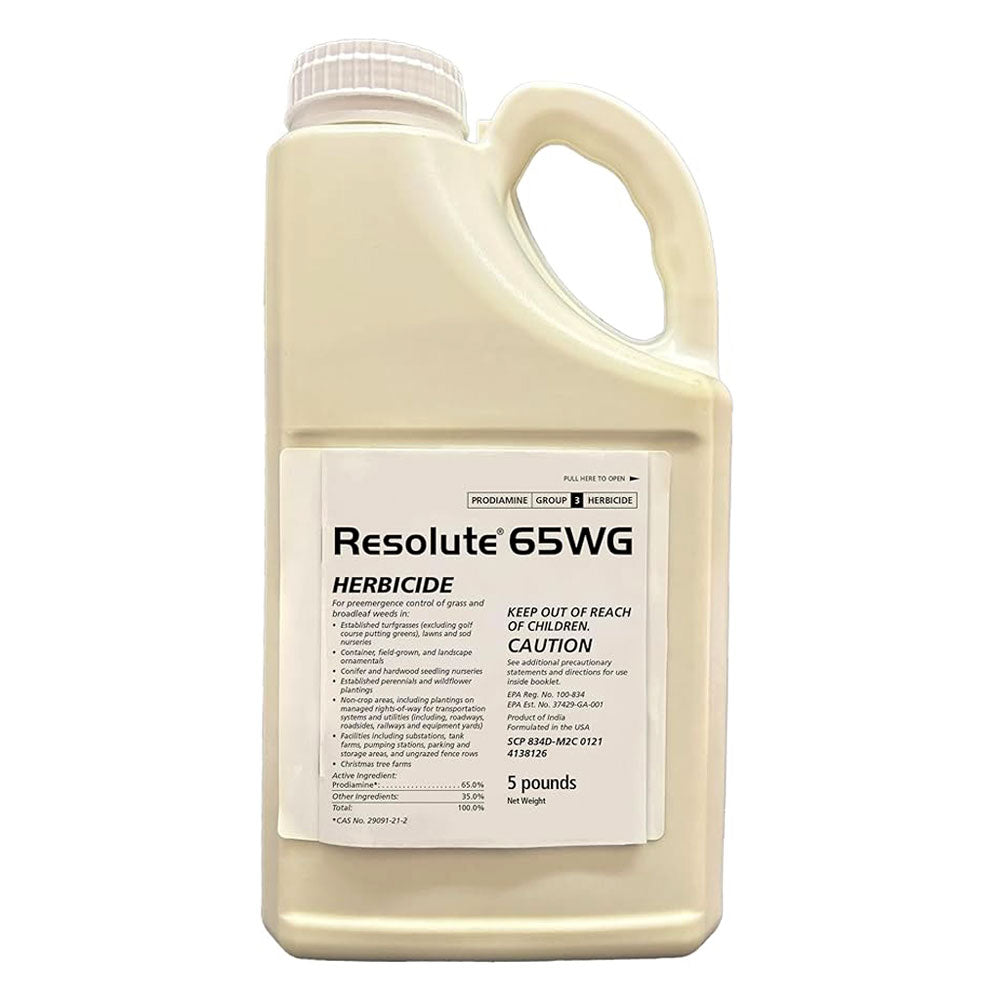
SKU: 49373791049
best time to spray pre emergent herbicide

best time to spray pre emergent herbicide Prodiamine 6D5 WDG (brand alternative

Sale price$26.38 Regular price$29.31
Save 10%

Pay in installments of $7.33 with ShopPay, AfterPay and Klarna

Shipping Estimate
USA
  • USA
  • CAN

Ships within 48 hours · Estimated delivery Oct 13 - Oct 18

Promo Codes Available:

For Your Every Summer RSVP, with Code: SUMMER15

Description

best time to spray pre emergent herbicide Prodiamine 6D5 WDG (brand alternativeImportant Shipping Restrictions: Alaska, Hawaii, and New York. Prodiamine 65 WG Pre Emergent Herbicide (generic Barricade) is a pre emergent weed control designed to stop weeds in the lawn, such as crabgrass, annual bluegrass (poa annua), bittercress, chickweed, and henbit. This is a dry product you mix in water to make a liquid to apply via backpack battery sprayer. One 5 lb bottle covers 4 5 acres, depending on mix rates 65% Prodiamine is the active

Important Shipping Restrictions: Alaska, Hawaii, and New York.

Prodiamine 65 WG - Pre-Emergent Herbicide (generic Barricade) is a pre-emergent weed control designed to stop weeds in the lawn, such as crabgrass, annual bluegrass (poa annua), bittercress, chickweed, and henbit. This is a dry product you mix in water to make a liquid to apply via backpack/battery sprayer.

  • One 5 lb bottle covers 4-5 acres, depending on mix rates
  • 65% Prodiamine is the active ingredient
  • Great for preventing crabgrass, poa annua (annual bluegrass), and more

Product Description:
Prodiamine 65 WG is a professionally formulated pre-emergent to be mixed in water and sprayed out as a liquid.

Most DIYers use this product in spring to stop crabgrass. Crabgrass is an annual grassy weed that germinates in spring, grows lime green and large during summer, then, towards the later fall, drops seeds. The following spring the process starts all over again. This is why crabgrass is called an “annual” grassy weed. The good news is that it can be stopped very effectively using this product.

The best time to apply Prodiamine is in the spring or fall, as soil temperatures are between 55F to 70F. This will give you approximately 3 months of pre-emergence protection.

For more details, you can check out the FREE Pre-Emergent Guide. If you download our FREE app, it will tell you when your soil temps cross these milestones. For cool and warm-season lawns, our recommendation is two applications in spring if the target is crabgrass.

Application Information:
DO NOT use Prodiamine if you are seeding or reseeding, as it will keep your seed from germinating.

This product should be applied via a pump sprayer or battery-powered hand can. NOT recommended to be applied via a hose-end sprayer. Always read the label and follow safety equipment recommendations.

We recommend weighing this product on a scale to be accurate, and grams will be the easiest. See the following table for the application rates we recommend. The product must be watered in within 48 hours; the sooner, the better with ½” of water from irrigation or rainfall.

  • 1 oz = 28.35 grams
Grass Type Application Rate
Kentucky Bluegrass, Perennial Ryegrass
  • 5.2g/1000 sq ft, Early Spring
  • 5.2g/1000 sq ft, Mid Spring
  • 5.2g/1000 sq ft, Early Fall (if not seeding)
  • Total 15.6g yearly

Following this yearly plan, (1) 5 lb bottle will cover 145,385 sq ft for a year's worth of applications.

Fine Fescue
  • 11.9 g per calendar year
(1) 5 lb bottle will cover190,588 sq ft for a year's worth of applications
Bermudagrass, Bahiagrass, Centipedegrass, St Augustinegrass, Tall Fescue, Zoysia
  • 5.2g/1000 sq ft, Early Spring
  • 5.2g/1000 sq ft, Mid Spring
  • 13g/1000 sq ft, Early Fall
  • Total 23.5g/1000 sq ft, Yearly

Following this yearly plan, (1) 5 lb bottle will cover 96,923 sq ft for a year's worth of applications.


Prodiamine WG can be used on established turfgrasses, golf courses (excluding putting greens), sod farms, and lawns.

 Coverage/Gallon

(1) 5 lb bottle covers 4-5 acres, depending on mix rates

SEE TABLE ABOVE

Application  Details See the table above for specific application details and instructions
Water-In  Instructions

Water into the soil within 24 hours with 1/2" of rainfall or irrigation

Manufactured by

EPA Reg. No. 100-834
EPA Est. No. 37429-GA-001

  • Label/Specs/SDS: Resolute Prodiamine Info
  • Package Includes: (1) 5 lb bottle
  • Storage: Store in dry conditions away from moisture. Can be stored for up to 3 years.

Shipping Information:

Shipping Costs

Included for most states within the U.S.
NO P.O. Boxes

State Restrictions
Alaska (AK), Hawaii (HI), New York (NY)
Stickers

Sorry, no stickers with this item

Typical Delivery Time

4 - 7 business days

Product Type Water Dispersible Granular
Cancel | Return | Exchange

All sales are final; no cancellations, returns, or exchanges

Shipping Notes
  • Free Standard Shipping on $100+ Orders to the USA.
  • Except Preorder products are shipped in 48 hours.
  • Delivery to the USA:
  1. Standard Shipping : 3-10 business days
  • If time is of the essence, please consider selecting expedited delivery for faster service.
Exchange/Return Notes
  • We offer a 30-day return/exchange service after receiving.
  • Final sale items are not eligible for returns or exchanges.
  • To process your return/exchange, please contact us at [email protected]
  • Please click here for more details>>> Return & Exchange Policy
SKU: 49373791049

Discover Niche Categories That Outsell best time to spray pre emergent herbicide

Top-Converting Item to Boost Your Average Order

4.6 ★★★★★
Based on 6 reviews
Sort
Highest Rating
Newest First
Oldest First
Product Reviews
G
Verified Purchase
Goldry Bluzco
Waukegan, US
★★★★★ 5
Sheds Light On A Dimly Perceived Period
Format: Kindle
This book is clearly intended for those of us (non-historians) curious about what is a dimly perceived period of North American colonial history. Living as I do in Tidewater Virginia, I consider myself fairly well versed with the earliest years of English settlement or invasion, depending on your point of view. But, I was wrong. I had, of course, read about the wretched first two years of the Jamestown enterprise, but I had no idea just how ghastly the conditions of the first twenty years of the English colonial period were. Wave after wave of newcomers simply starved or died of disease in those years. The mortality rate was shocking. So many people were dying off that the local Indians did not even think it necessary to kill these newcomers (which proved a mistake, of course). And this was not just at Jamestown. For example, the author says that in any given year in one county 30 to 40% of the children under the age of eight were orphans. And the origins of many of these earliest colonists -- orphans dumped by local churches, beggars snatched off of urban streets, prisoners marched from gaol to waiting ships, many poor people literally kidnapped or tricked into emigrating -- was eye-opening. Talk about the refuse of British society. (As an aside, anyone whose humble immigrant ancestors came to Virginia in those years can forget about doing any genealogical research. You will never find the answers to your questions.) This does tend to be a bleak read. One of the things that jumped out at me was the sad, repetitive tale of European-Indian relations. It mattered not where one was. Virginia, Maryland, Delaware, New Amsterdam, New York, the pattern is always the same. Trade and early friendly relations were quickly undermined by misunderstandings, stupidity, devious tricks, alcohol, and land disputes that led to attack and counter attack and massacres on both sides. One of the things I did enjoy was the Indians' views of Christianity. Those mentioned by the author viewed it as little more than a strange dream. When the concept of a universal god was explained to them they laughed and called it a silly fable. I can only agree. My respect for their powers of reasoning and perspicacity rose immeasurably. Just who was the savage?
WAS THIS REVIEW HELPFUL?YesReportShare
Reviewed in the United States on July 30, 2013
J
Verified Purchase
J. Grattan
New York, US
★★★★★ 4
Interesting, but a little scattershot (3.75*s)
Format: Paperback
One thing is for certain, in this highly detailed work by the author, there is no attempt to sugarcoat the European experience in emigrating to America in the 17th century. He examines Virginia, the Chesapeake area, New York, and New England. In the initial stages merely surviving was an accomplishment. Most of the early settlers were clueless about overcoming the harsh conditions that they found, not to mention the savagery that the natives unleashed upon them without warning. A large supply of the weak and vulnerable facilitated this peopling of America, despite the dreadful conditions. In addition, as the author shows in great detail, are the conflicts among the settlers. America was settled during a time of great political and religious clashes in England. Most of the settlers were Protestants, but held widely differing, contentious views about religious practice. Much of the governance of the colonies was autocratic, inept, and harsh. A good many of the settlers were indentured by contract for years and thereby were practically slaves, in contrast to the well connected who were granted huge estates. But even then, the author points out that the living standards for even the rich were terrible by European standards. The book is definitely more sociology than historical. One learns about the origins of the settlers across America and the implications for the possibility of robust communities. The author definitely does not hold back on naming thousands of settlers across the colonies; it is difficult to slog through all of that. The book does seem a little scattershot in its organization and subject matter.
WAS THIS REVIEW HELPFUL?YesReportShare
Reviewed in the United States on June 10, 2017
G
Verified Purchase
Gordon Hastings
Lake Worth, US
★★★★★ 5
UNDERSTANDING THE COLONIAL POPULATING OF THE NEW WORLD. AN ACADEMIC WORK.
Format: Paperback
Pulitzer Prize winning author Bernard Bailyn writing The Barbarous Years opens a sweeping and authoritative discourse into the peopling of North American between 1600 and 1675. From Jamestown, Virginia to Plymouth and the Massachusetts Bay Colony, who were these individuals who braved three plus months voyages on small, crowded and disease infested ships to arrive at the edge of the American wilderness? You will learn not only who they were but why some succeeded while others were destined to fail. images No one needs tout Bailey's credentials as historian and researcher. He is brilliant. However, what is most remarkable is his ability to keep the subject flowing, fascinating and understandable for the lay reader. Bailyn delivers in brilliant digital display the complexity and challenges of the people responsible for the early settlement of North America. Think of this: Why did the Jamestown fail numerous times? Why did the Catholics establish a foothold in Maryland and the Finns and Swedes in Delaware? Why did The Massachusetts Bay Colony begin to work from day one.? Was it religious fervor or the composition of the settlers themselves? What role did the varied Native American tribes play in the success or failure of early settlement. How did the Pilgrims differ from the Puritans and the aforementioned from the Quakers and the Dutch? Were indentured servants a precursor to slavery? Winthrop, Bradford ,Stuyvesant, Keift, Underhill, King Philips War. The Barbarous Years that marked the original settling of America is a most accurate title for the book. Adventurers, scoundrels, orphans, preachers, doctors, lawyers, Native Americans, politicians, merchants and perhaps most important, the hundreds of unnamed families with children who came to America during the Great Migration of the 1630s , bringing with them the skills and the ethic to permanently settle on the land. The " New World" was British North America during its early settlement but Bailyn clearly identifies the complexity of cultures, trade and geography that would eventually become America. The Barbarous Years is a fabulous foundation for understanding colonial America's formative years. Also by Bernard Bailyn: The Ideological Origins of the American Revolution, The Ordeal of Thomas Hutchinson, and Voyages to the West, which won a Pulitzer. A wonderful different perspective of the settlement of the Massachusetts Bay Colony comes from reading Anya Seton's historical novel Winthrop Women. A second suggestion is Philbrick's book Mayflower. Search Gordonsgoodreads.com for overviews of both.
WAS THIS REVIEW HELPFUL?YesReportShare
Reviewed in the United States on April 30, 2014
D
Verified Purchase
Dr. Kevin M. Derby
Fort Morgan, US
★★★★★ 5
A Sweeping, Memorable Book From One of America's Greatest Historians
Format: Paperback
Bernard Bailyn offered this third volume of his “Peopling of British North America” by looking back at a far earlier period. Instead of looking at the 1760s and 1770s, Bailyn turned his attention to the seventeenth century. Always a fine writer, especially for an academic, Bailyn presented a sweeping look at the founding of Virginia, Maryland, New York, New England and other parts of the Atlantic coast. Bailyn was able to cover a great deal of ground, looking at Native Americans, Swedes, the Dutch and a host of various religious groups from England from the Pilgrims to Catholics. Scholars and general readers alike will profit from this look at the rough, often bloody, birth of America. It is easily one of the most memorable additions to colonial American history in recent years. Highly recommended.
WAS THIS REVIEW HELPFUL?YesReportShare
Reviewed in the United States on April 15, 2020
S
Verified Purchase
Sheldon Sharray
Louisville, US
★★★★★ 5
Perfect for law students taking criminal procedure
Format: Paperback
Goes perfectly with the textbook for law students and for anyone that needs to know the rules of criminal procedure. Very well put together.
WAS THIS REVIEW HELPFUL?YesReportShare
Reviewed in the United States on November 5, 2025

recommand products