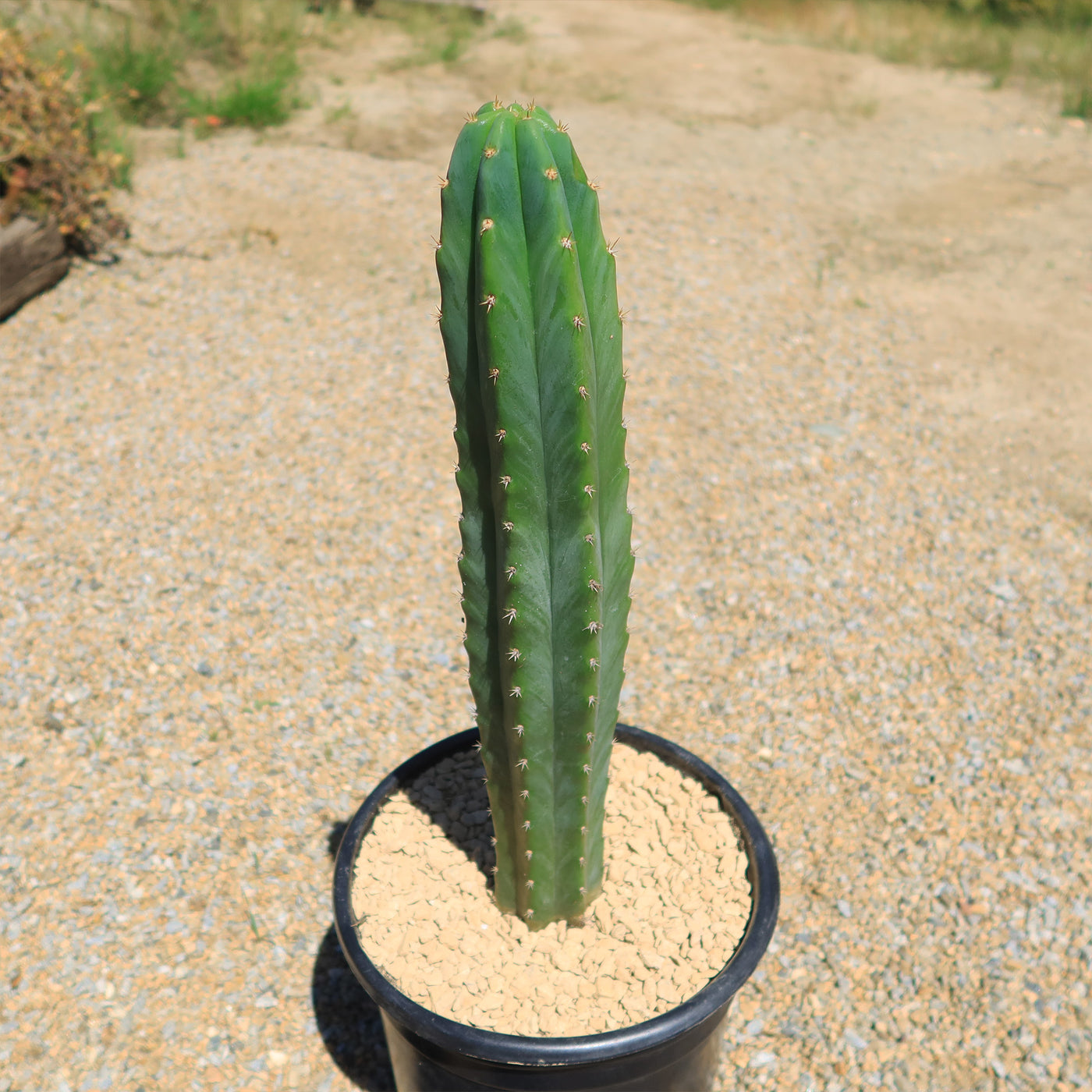
SKU: 49679587228
cactus de san pedro

cactus de san pedro Shop 'San Pedro Cactus - Echinopsis pachanoi' Care and Growing Guide

Sale price$19.93 Regular price$22.15
Save 10%

Pay in installments of $5.54 with ShopPay, AfterPay and Klarna

Shipping Estimate
USA
  • USA
  • CAN

Ships within 48 hours · Estimated delivery Jul 18 - Jul 23

Promo Codes Available:

For Your Every Summer RSVP, with Code: SUMMER15

Description

cactus de san pedro Shop 'San Pedro Cactus - Echinopsis pachanoi' Care and Growing GuideIntroducing the San Pedro cactus, also known as Echinopsis pachanoi (Syn. Trichocereus pachanoi) or Trichocereus Echinopsis pachanoi, which is among the superstars of the cactus world. This fast growing columnar cactus is also known as the Wachuma and Huachuma. Standing tall and proud, this magnificent San Pedro cactus columnar beauty can reach heights of up to 20 feet and spread its branches wide, up to six feet! With stems that range from vibrant

Introducing the San Pedro cactus, also known as Echinopsis pachanoi (Syn. Trichocereus pachanoi) or Trichocereus Echinopsis pachanoi, which is among the superstars of the cactus world. This fast-growing columnar cactus is also known as the Wachuma and Huachuma. 

Standing tall and proud, this magnificent San Pedro cactus columnar beauty can reach heights of up to 20 feet and spread its branches wide, up to six feet! With stems that range from vibrant green to mesmerizing blue-green shades, San Pedro is a true showstopper in any landscape. As your San Pedro cactus plant matures, its colors deepen and intensify, adding even more charm to its already captivating presence.  


When the San Pedro cactus flowers bloom, they emit a sweet fragrance that attracts pollinators like bees and butterflies.

The flowers are usually large and trumpet-shaped and come in various colors, including white, cream, and yellow. The petals have a delicate texture and often have a waxy appearance.

The fragrant flowers usually open during the day and close at night. They have a short blooming period, typically lasting for a day or two.

During the blooming season, which usually occurs in late spring or early summer, multiple flowers can bloom at once, creating a captivating sight.

The San Pedro cactus flowers are not only visually appealing but also have cultural significance. In some indigenous cultures, the flowers are used in traditional ceremonies and rituals. They are believed to have spiritual and healing properties.

The San Pedro cactus also has Pitahaya red San Pedro cactus fruits. These fruits are known for their sweet and refreshing flavor, making them a popular choice for consumption. Additionally, they are rich in antioxidants and vitamins, providing numerous health benefits.  

When and How to Water Your San Pedro Cactus 

San Pedro cactus is a drought-tolerant plant that can survive in dry conditions for long periods of time. However, regular watering is still needed to stay healthy. Generally, the San Pedro needs to be watered once every two weeks. During the summer months, when temperatures are high and the plant is actively growing, it may need to be watered more frequently.  

When watering your Trichocereus Echinopsis pachanoi, be sure to soak the soil thoroughly and allow it to drain completely. To prevent root rot and other issues, avoid overwatering.The leaves may become dry and brittle, and the cactus may stop growing if it is underwater. Over time, the San Pedro cacti may start to lose their shape and become misshapen.  

In addition to these physical symptoms, underwatering can also make the cactus more susceptible to pests and diseases. To keep your San Pedro cactus healthy and thriving, it is important to water it regularly and provide it with the right growing conditions. 

Light Requirements - Where to Place Your San Pedro Cactus

When grown indoors, your San Pedro cactus should be placed in a bright, sunny location where it can receive at least six hours of direct sunlight each day.

For outdoor cultivation, the San Pedro cactus requires a lot of sunlight to grow and thrive.

In its natural habitat, this cactus is exposed to direct sunlight for 4-6 hours each day.

If you live in an area with a lot of cloud cover or limited sunlight, you may need to supplement your cactus's light with artificial grow lights.

So, let's give your San Pedro cactus plant what it deserves—just the right amount of light to bloom into the ultimate showstopper! 

But beware; too much sun can lead to burns, so make sure you gradually increase exposure or bring it indoors during a heatwave. And if your Echinopsis pachanoi isn't getting enough light, it'll start stretching toward its source.

Optimal Soil & Fertilizer Needs 

Use well-drained soil that is designed specifically for your Echinopsis pachanoi cactus. These specialty soil mixes have been precisely developed to imitate well-draining desert soils. Commercial cactus soil is affordable and available online or at Home Depot.

Planet Desert specializes in cacti and has a specialty cactus potting mix that contains 5 natural substrates and organic mycorrhizae to promote the development of a strong root system that helps your San Pedro cactus thrive. 

When it comes to fertilizing your San Pedro cactus plant, it only needs a small amount of fertilizer applied once a year in the spring. Cacti prefer fertilizer with lower doses of NPK, with a maximum ratio of 5-10-5 which is higher in phosphorus than nitrogen. Remember, overfertilization can lead to root rot or even the death of the plant, so be cautious! 

Hardiness Zones & More 

San Pedro cactus is a hardy plant that can grow in a variety of different climates. It is native to the Andes Mountains, where it can be found growing at high altitudes in a range of temperatures. In the United States, San Pedro cactus is typically grown in warm, dry climates such as those found in the southwestern states. 

When growing indoors, the San Pedro cactus prefers a warm and dry environment. It thrives in temperatures ranging from 55°F to 75°F. Aim for a humidity level of around 40% to 50% to create an ideal indoor environment for your San Pedro cactus.

For outdoor cultivation, this cactus is hardy in USDA zones 8–11, which means that it can tolerate temperatures as low as 20 degrees Fahrenheit.

If you live in an area with extreme temperatures, you may need to take extra precautions to ensure that your San Pedro cactus Echinopsis pachanoi, stays healthy. 

In addition to its hardiness zone, it is also important to consider the humidity requirements of the San Pedro cactus. This cactus is adapted to dry, arid environments and does not require a lot of humidity to grow. In fact, high levels of humidity can be detrimental to the health of the plant, as they can promote the growth of mold and fungal diseases. 

When growing San Pedro cactus, it is important to provide good air circulation and avoid overwatering to prevent the buildup of excess moisture around the base of the plant.

Wildlife - San Pedro Cactus Attracts the Following Friendly Pollinators

The San Pedro Cactus flowers attract several friendly pollinators such as bees, butterflies, and hummingbirds. These pollinators are essential for the reproduction of the cactus and play a crucial role in maintaining the ecosystem's biodiversity.

Butterflies
Bees
Hummingbirds
Lady Bugs
Multi Pollinators
Other Birds

According to ASPCA, the San Pedro Cactus is safe for humans but can be mildly toxic to cats and dogs if ingested in a large amount. However, it is safe to touch and handle, making it a popular choice for ornamental cactus gardens. However, it is important to keep San Pedro Cactus out of reach of pets to prevent accidental ingestion.

How to Propagate Your San Pedro Cactus

Propagating the San Pedro cactus can be done through seeds or cuttings, but each method has its pros and cons. While cuttings are a quicker option, this method involves cutting off the top of the plant, which permanently alters its tall, elegant columnar form. For this reason, propagation by cuttings is only recommended if the plant has already broken or been damaged. In such cases, you can take a healthy segment, allow it to be callous for about a week, and plant it in well-draining soil to root. However, this approach is less ideal for those who wish to maintain the plant's natural aesthetics.

Seed propagation is a method for cultivating new cacti plants, and preserving their beauty. Harvested from mature cacti's fruit, seeds are cleaned, dried, and sown onto a well-draining soil mix. Despite the patience required, this method allows for healthy plants without compromising the parent cactus's appearance, despite the need for indirect sunlight or grow light.

Key Takeaways

  1. Unlike many other cacti, the San Pedro grows quickly, often reaching heights of 10–20 feet under ideal conditions, making it a popular choice for ornamental gardens.
  2. This cactus is highly adaptable, thriving in a variety of climates and requiring minimal care. It is drought-tolerant, hardy in USDA zones 8–11, and grows well in nutrient-rich, well-draining soil.
  3. San Pedro Cactus is a drought-tolerant that thrives in arid conditions and requires minimal watering. It is a popular choice for xeriscaping and landscaping in dry climates due to its ability to store water in its fleshy stems.

Final Thoughts

Overall, the San Pedro cactus (Echinopsis pachanoi) is a remarkable plant with unique features. It is characterized by its tall, columnar shape and beautiful white or yellow flowers. The cactus can grow to impressive heights, reaching up to 20 feet in optimal conditions. Its spines are relatively short and are arranged in clusters along the ridges of the cactus. The San Pedro cactus is a low-maintenance plant that thrives in well-draining potting soil and enjoys ample sunlight. It prefers a dry environment and can tolerate drought, so it should be watered sparingly, allowing the soil to dry out between waterings.

Don't miss out on this opportunity to add something truly exceptional to your garden. Buy San Pedro cactus for sale today to enhance your collection! 

Shipping Notes
  • Free Standard Shipping on $100+ Orders to the USA.
  • Except Preorder products are shipped in 48 hours.
  • Delivery to the USA:
  1. Standard Shipping : 3-10 business days
  • If time is of the essence, please consider selecting expedited delivery for faster service.
Exchange/Return Notes
  • We offer a 30-day return/exchange service after receiving.
  • Final sale items are not eligible for returns or exchanges.
  • To process your return/exchange, please contact us at [email protected]
  • Please click here for more details>>> Return & Exchange Policy
SKU: 49679587228

Discover Niche Categories That Outsell cactus de san pedro

Top-Converting Item to Boost Your Average Order

4.4 ★★★★★
Based on 23 reviews
Sort
Highest Rating
Newest First
Oldest First
Product Reviews
D
Verified Purchase
Dustin
Draper, US
★★★★★ 5
Forgotten Civilization: An astounding book not easily forgotten
'Forgotten Civilization' is a paradigm-shattering book which won't be easily forgotten. Dr. Robert Schoch possesses a rare talent for writing and public speaking which is backed up by and informed with all the intellectual rigor of a true scientist, but easily comprehensible and accessible to the general public. His passion for the subject of ancient civilizations is inspiring, and his courage and dedication unquestionable. For those of you interested in the mysteries surrounding ancient civilizations, 'Forgotten Civilization' is one of the best books ever written about the subject. Like most everyone else, I first heard about Dr. Robert Schoch when I saw the television show "The Mysterious Origins of Man," where he presented persuasive evidence of weathering and erosion on the Sphinx, showing that it must have been built during a much earlier time than what most Egyptologists believed. Back then a lot of Egyptologists laughed and ridiculed the notion that the Sphinx could be any older than a couple of thousand years. Twenty years later, few of them are still laughing. In 'Forgotten Civilization,' Dr. Robert Schoch turns his attention to the paradigm-busting site of Gobekli Tepe, a sophisticated megalithic complex unearthed in southeast Turkey, which dates back more than 10,000 years ago. Nobody knows who built it, but its age and existence irrefutably points to the presence of a highly sophisticated yet unknown culture who obviously possessed a great deal of technological knowledge and social organization at a time when most archeologists believed the human race was little more than nomadic cave men, capable of nothing more interesting than eking out a primitive, subsistence mode of survival through hunting and foraging. The discovery of Gobleki Tepe has turned the world of ancient civilizations and human history on its head, forcing what will eventually amount to a complete rewriting of human history. 'Forgotten Civilization' is a ground-breaking book which is vastly entertaining to read. Through the course of the book, which unravels like a globe-trotting mystery adventure-thriller, Schoch also reveals credible scientific evidence which shows how a previous high civilization could have been completely destroyed by massive solar outbursts and coronal mass ejections from the Sun, which would have scorched the surface of the planet and touched off natural disasters all over the world, plunging humanity back into a dark age which would take thousands of years to recover from. More chillingly, he shows how the Sun goes through natural cycles of activity over the course of thousands of years--and how history could repeat itself and this same fate could happen again, and destroy much of our modern civilization. Dr. Robert Schoch's book 'Forgotten Civilization' is for anyone who has ever wondered about the origins of civilization, the questions it raises about both the past and the future will remain with you long after you read the last page.
WAS THIS REVIEW HELPFUL?YesReportShare
Reviewed in the United States on November 26, 2013
D
Verified Purchase
Drew B.
Draper, US
★★★★★ 5
Perhaps the most interesting book that I have ever read...
Format: Paperback
This book is perhaps the most fascinating piece of non-fiction that I have ever read. Dr. Schoch is a Yale educated professor at Boston University who presents information in a manner that is enjoyable and truly educational. If human history is a subject of interest for you, then you will recognize him immediately, as he has appeared on many television shows on the subject. When I bought his first book, I had the "oh, THAT guy" moment when I read the section about the author. He's the geologist/geophysicist who, back in the mid-1990's, studied the Sphinx enclosure and determined that it was condensation that smoothed the sides- rather than wind. This requires the dating of the construction of the Sphinx to draw back by many thousands of years due to the timeline of such rainfall. As such, he threw the discipline of human anthropology on it's ear. This met with much resistance from from anthropologists but, as he says, "I'm sorry if my findings contradict your theory but..." This book flows VERY smoothly and, without giving spoilers about his extensive research, provides more of an epiphany than anything that I have ever read before. Even when reading it for the second time, the book is very hard to put down. Schoch is a true educator and has a genuine talent for presenting his findings. As an author, he is clear and concise. He builds a powerful and enthralling case, the explanation of which incorporates the solving of the mysteries of the Rongorongo glyphs on Easter Island, the ancient vitrified stone castles in Scotland and the dating of the Sphinx into a plausible, scientifically supported timeline that is nothing less than completely fascinating. I have no question that my grandchildren will study human history that conforms to his research and discoveries. The irony is that he will be considered one of the "fathers of modern anthropology" for the next generation, and he's a GEOLOLOGIST! Get this book, you will NOT be disappointed!
WAS THIS REVIEW HELPFUL?YesReportShare
Reviewed in the United States on February 20, 2018
K
Verified Purchase
K. Ryan Kane
Bozeman, US
★★★★★ 4
I enjoyed this book immensely
Format: Paperback
A pioneering book! It breaks new ground and proposes new ideas that are plausible. I enjoyed this book immensely. But with every pioneering book comes beliefs that may not always be what they seem. I withheld one star because there are some ideas proposed that I found hard to believe entirely. I like the fact that Dr. Schoch includes Biblical passages but I don't agree with the majority of his interpretations. For example, Ezekiel's writings and visions are not about shapes he saw in the sky that Dr. Schoch thinks are from solar outbursts or auroral displays. Instead, most of those are visions he had of the "Last Days." But he didn't know exactly what he was seeing so he did his best to describe the things he saw. The other point I would like to make is that not all of the glyphs from thousands of years ago could be describing auroral displays or solar outbursts. I would imagine that if solar flares were racing toward Earth, (1) there wouldn't be enough time to look at them and study their shapes because you would be racing for cover, (2) they would be too bright whereas nobody could actually look at them long enough to study their shapes even if they had modern sunglasses, and (3) there would be a lot more evidence of scorched and burned areas of Earth so that it would be more obvious if solar activity was what had set society back thousands of years. But I don't recall Dr. Schoch theorizing about these things. Overall the book is great and I think he right about a lot of things. Highly recommended!
WAS THIS REVIEW HELPFUL?YesReportShare
Reviewed in the United States on October 1, 2014
C
Verified Purchase
Carol E.
Charlottesville, US
★★★★★ 5
WHY YOU SHOULD BUY THIS BOOK
Format: Paperback
Forgotten Civilization by Dr. Robert Schoch Why should you buy this book? 1) You're already looking at it so you must have some interest in this topic. 2) Dr. Schoch has a great ability to take his, or others, theories and support them with well researched scientific data. This is helpful to those of us who are curious about alternative explanations but are still dependent on the "scientific thinking" paradigm. (He doesn't make statements like "when humans bred with aliens in 20,823 BC..."). 3) He always makes you think about conventional wisdom in a new way. For instance, in this book - the age of Easter Island statues (moai). How DID they get buried so deeply when they (conventionally) only go back to a South Pacific Polynesian settlement times?? I have stood in front of the moais on Easter Island and read many books on it's history and it never occurred to me to question the timeline. It takes that unique geologist perspective which Dr Schoch brings to his writings. 4) He introduces you to other researchers or writers that you will want to know more about. Like Thomas Brophy, Anthony Peratt, Paul LaViolette and many others. 5) The Appendices. Some excellent information on multiple topics included at the end of the book. 6) Because Dr. Schoch has gone where many others SHOULD go - against conventional archeological/historical wisdom which makes no sense. His initial theories on the age of the Sphinx as a young academic were very daring and absolutely correct. The geological community had no problem with his ideas - but Egyptologists did, and they have been after him ever since. Choosing a controversial research path has meant some changes in his academic career I'm sure, as "Academics," for all it's spouting of tremendous support for new knowledge and research is very much mired in politically correct concrete. (Go to Egypt and look for yourself. Even a casual tourist will see how wrong standard academic theories are currently). 7) I guarantee you will learn new and interesting things that just may change your life - or at the very least, change the way you think about the future. -C. Engel
WAS THIS REVIEW HELPFUL?YesReportShare
Reviewed in the United States on September 27, 2012
K
Verified Purchase
Kindle Customer
Chelsea, US
★★★★★ 3
A Book About Everything and Nothing
This was a great idea for a book and it's too bad that Mr. Schoch decided not to write it. Some of the ideas about solar events, the way the plasma manifested in the sky as it relates to ancient petroglyphs is fascinating. Mr. Schoch spent very little time in this space however (in spite of the book's title). Instead we got a brief, incomplete overview coupled with a survey of every piece of fringe science out there from the memory of water, to quantum entanglement to telepathy. There was the obligatory chapter on his work with the Sphinx of course. It always comes back to the Sphinx with this guy. Not an original thought in the book, but there was plenty of promotion of fringe science, especially the work of Paul LaViolette whose confusing and widely ignored and self-published work got several chapters. I gave the book 3 stars for its entertainment value and docked it two for not staying on point. This is still a great and fascinating subject. I wish Mr. Schoch thought so too.
WAS THIS REVIEW HELPFUL?YesReportShare
Reviewed in the United States on March 30, 2015

recommand products