Pay in installments of $5.89 with
 ,
,
 and
and

Shipping Estimate
USA
- USA
- CAN
- USA
- CAN
Ships within 48 hours · Estimated delivery Sep 17 - Sep 22
 Promo Codes Available:
For Your Every Summer RSVP, with Code: SUMMER15
Description
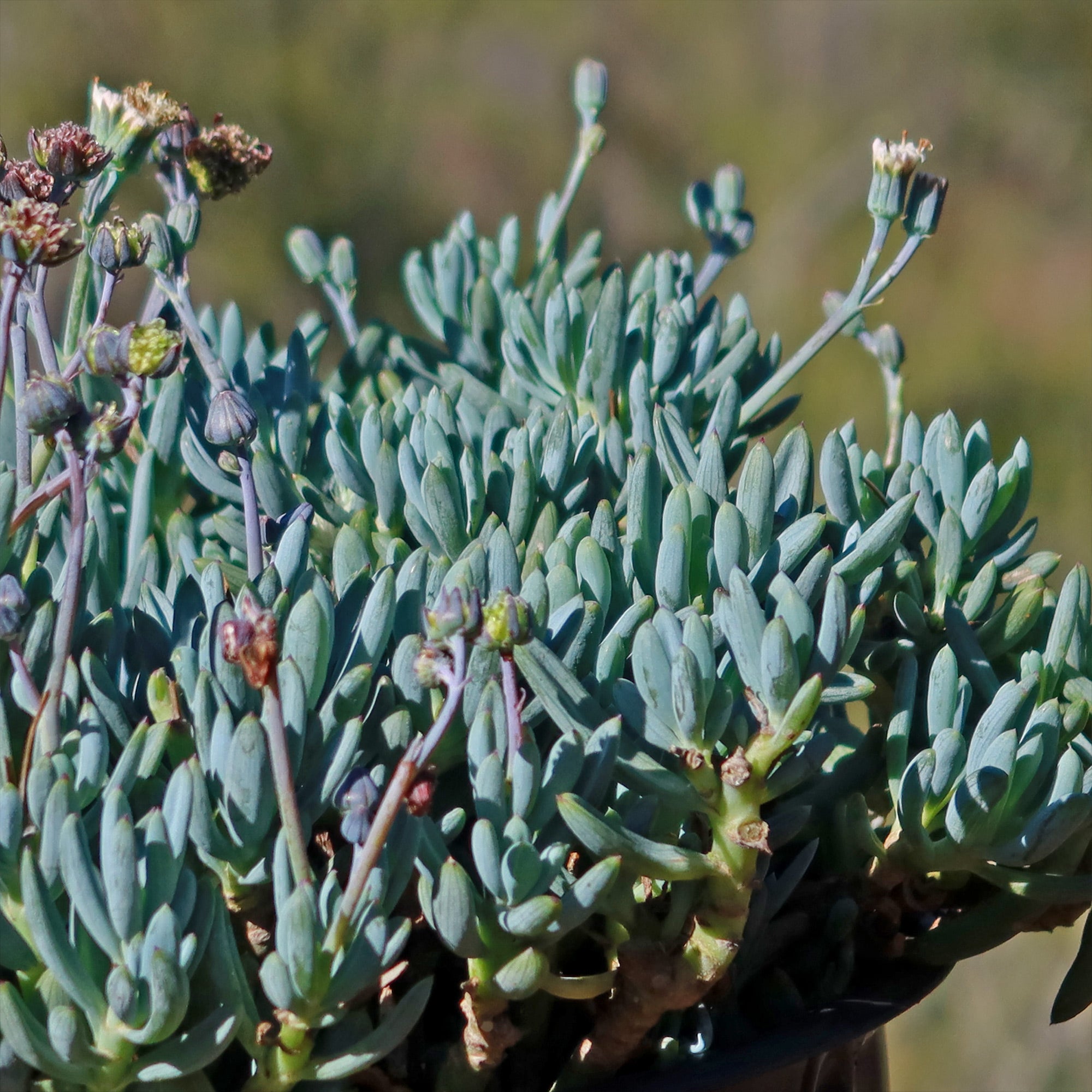
blue lady finger succulent Dwarf Blue Chalk SticksIntroducing the dwarf blue chalk sticks, known as Senecio serpens; with its blue grey color is a popular choice for gardens. It adds a great accent and gives a unique touch to any garden. Originating from South Africa, this Senecio serpens succulent plant has several other common names such as mini blue chalk stick, Curio repens, blue chalk fingers, compact blue chalk sticks, Cacalia repens, and Senecio serpens f. cristatus. The Mini blue chalk sticks
Introducing the dwarf blue chalk sticks, known as Senecio serpens; with its blue-grey color is a popular choice for gardens. It adds a great accent and gives a unique touch to any garden. Originating from South Africa, this Senecio serpens succulent plant has several other common names such as mini blue chalk stick, Curio repens, blue chalk fingers, compact blue chalk sticks, Cacalia repens, and Senecio serpens f. cristatus. The Mini blue chalk sticks Senecio serpens tend to have a more compact and mounding growth habit compared to the trailing habit of large blue chalk sticks Senecio mandraliscae.
Senecio serpens is a dwarf semi-trailing succulent with short, cylindrical blue-green, finger-like fleshy leaves, branching from the base, suckering from roots, and rooting along prostrate stems. The Senecio serpens protective farina coating thickens in bright sunlight, causing it to take on a more silvery hue in summer. It has a low-growing and spreading habit, forming dense mats of foliage that can reach a height of about 12 inches and spread up to 3 feet wide. Its unique texture and color make it a popular choice for rock gardens, succulent arrangements, or as a ground cover.
The Senecio serpens blooms in late spring or mid-summer, with small, daisy-like yellow or small white flowers on tall stalks. The flowers attract pollinators like bees and butterflies, making them a great addition to any garden.
Senecio serpens can be propagated through stem cuttings or by division. To propagate through stem cuttings, simply take a healthy stem and let it dry for a few days to form a callus. Then, insert the stem into well-drained soil and keep it slightly moist until the roots develop. Division can be done by carefully separating the plant into smaller sections, ensuring each section has roots attached.
Watering Needs
Senecio serpens is a drought-tolerant succulent that requires minimal watering. It is critical to follow the "soak and dry" technique. This means that you should thoroughly water your dwarf blue chalk sticks until water drains out of the bottom of the pot and then allow the soil to dry out completely before watering again. Overwatering can lead to root rot, so it's best to err on the side of underwatering with this Senecio succulent.
In the spring and summer, during the growing season, you'll typically water Senecio serpens about once every two to three weeks. However, it's important to adjust the watering schedule based on the specific conditions of your environment.
During the dormant period in winter, you can reduce watering to once a month or even less. When watering, make sure to water the soil directly and avoid getting water on the leaves, as this can cause them to rot.
Remember, it's always better to underwater than to overwater when it comes to succulents like Senecio serpens blue chalksticks. By providing just the right amount of water and allowing the soil to dry out between waterings, you'll help ensure the health and longevity of your dwarf blue chalk sticks plant.
Light Requirements
When it comes to light requirements for Senecio serpens, it thrives in bright, indirect light, whether you choose to grow it indoors or outdoors. When growing indoors, place your Senecio serpens in a location where it can receive bright, indirect sunlight for several hours a day. A south-facing window is usually a great spot, as it provides ample sunlight without the risk of scorching the leaves. If you don't have a south-facing window, east or west-facing windows can also work well. Just make sure to rotate the plant occasionally to ensure even growth.
If you prefer to grow dwarf blue chalk sticks Senecio serpens outdoors; then it loves basking in full sun or partial shade. Ideally, find a spot that receives at least six hours of sun exposure per day. However, be cautious of intense afternoon sun, especially in hot climates, as it can cause sunburn on the leaves. Providing some light shade during the hottest part of the day can help protect the Senecio serpens plant.
Remember, finding the right balance of light is crucial for the health and growth of Senecio serpens. With proper lighting, your Senecio serpens will thrive and display its beautiful blue-gray foliage for you to enjoy!
Optimal Soil & Fertilizer
Senecio serpens likes very airy, porous, nutrient-rich soil with a pH of 5.6 - 7.5. Senecio succulent requires fast-draining soil that dries completely between waterings. Your soil must have a sandy texture and a low water-holding capacity, just like desert soil. Soggy wet soil can damage your dwarf blue chalk sticks and contribute to bacterial and fungal rot.
As an alternative, you can create your own potting mix by combining equal portions of perlite, coarse sand, and good natural potting soil. Ideally, you want to use our specialized succulent potting mix that contains 5 natural substrates and organic mycorrhizae to promote the development of a strong root system that helps your Senecio serpens plant to thrive.
As for fertilizer needs, Senecio serpens doesn't require heavy feeding. A balanced (5-10-5), water-soluble NPK fertilizer formulated for succulents can be applied once a year during the growing season, which is typically spring. Follow the instructions for the correct dilution and frequency of application. Be cautious not to over-fertilize, as this can lead to salt build-up in the soil, harming the Senecio plant.
By providing well-draining soil and a balanced fertilizer regimen, you'll help ensure that your Senecio serpens receives the nutrients it needs without risking overfeeding. This will contribute to its overall growth and vibrancy.
Hardiness Zone & More
If you are growing these beautiful succulents indoors, Senecio serpens prefer temperatures between 65°F to 75°F. It can tolerate slightly cooler temperatures, but it's important to avoid exposing it to extreme cold or drafts. As for humidity, this dwarf blue chalk sticks succulent is adaptable and can handle average indoor humidity levels without any issues.
If you are living in USDA zones 9-11, you can grow your Senecio serpens blue chalk sticks outdoors year-round. This means that it thrives in warmer climates and may not tolerate freezing temperatures well. If you live in a colder region, it's best to grow Senecio serpens as an indoor plant or provide it with protection during the winter months.
The Senecio serpens blue chalksticks are heat tolerant up to 100°F without any problems. However, it's important to note that it may not tolerate frost or prolonged exposure to freezing temperatures. If you live in a region with colder winters, it's best to bring your Senecio serpens indoors or provide them with protection during the colder months.
Remember, understanding the hardiness zone and temperature preferences of Senecio serpens is essential for its overall health and well-being. By providing the right conditions, whether indoors or outdoors, you'll help ensure that your plant thrives and continues to display its stunning blue-gray foliage.
The Bottom Line
Overall, the Senecio serpens (dwarf blue Chalksticks) is a captivating plant with its striking blue-green foliage and low-growing, spreading habit. Originating from South Africa, it thrives in arid conditions and is a popular choice for rock gardens, succulent arrangements, or as a ground cover. It produces small yellow flowers in late spring or early summer, adding a beautiful touch to its overall appearance. However, it's important to note that Senecio serpens, like other succulents in the Senecio genus, contains toxic alkaloids if consumed. This low-maintenance succulent prefers minimal water, well-drained soil, and bright light. It can be grown outdoors in USDA zones 9–11. Don't miss out on adding the dwarf blue chalk sticks Senecio serpens to your garden! Order now and enjoy its beauty for years to come.
Shipping Notes
- Free Standard Shipping on $100+ Orders to the USA.
- Except Preorder products are shipped in 48 hours.
- Delivery to the USA:
- Standard Shipping : 3-10 business days
- If time is of the essence, please consider selecting expedited delivery for faster service.
Exchange/Return Notes
- We offer a 30-day return/exchange service after receiving.
- Final sale items are not eligible for returns or exchanges.
- To process your return/exchange, please contact us at [email protected]
- Please click here for more details>>> Return & Exchange Policy