Pay in installments of $5.10 with
 ,
,
 and
and

Shipping Estimate
USA
- USA
- CAN
- USA
- CAN
Ships within 48 hours · Estimated delivery Jul 27 - Aug 1
 Promo Codes Available:
For Your Every Summer RSVP, with Code: SUMMER15
Description
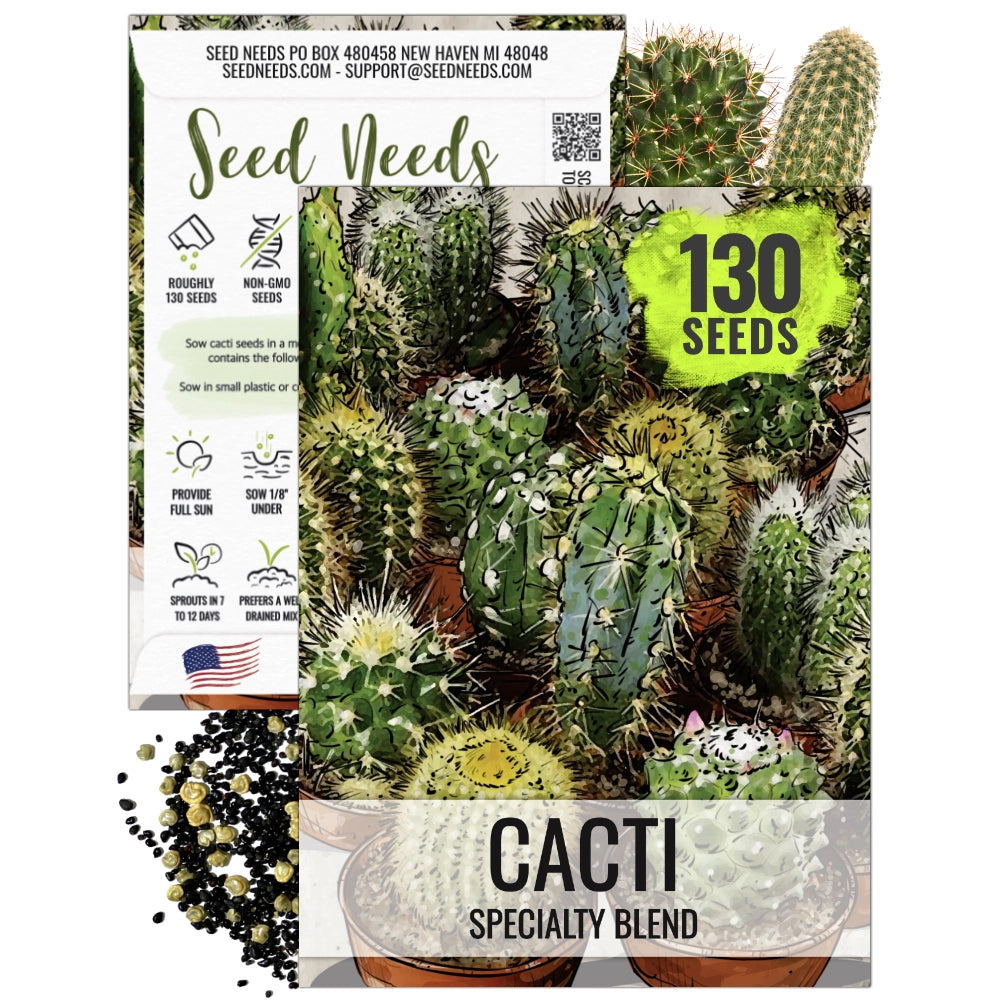
types of cactus with names Cacti Blend / Cactus Seeds For Planting130 Seeds Growing your own cacti from seed is easier than you think! We selected several attractive species with compatible growing requirements for our Seed Needs cacti mixture. While you may recognize the cactus plants on our packaging as being similar to the potted varieties at your local garden stores, you might not know that many of them eventually grow into the iconic cacti of the American Southwest and other arid, semi desert regions of South
130 Seeds
Growing your own cacti from seed is easier than you think! We selected several attractive species with compatible growing requirements for our Seed Needs cacti mixture. While you may recognize the cactus plants on our packaging as being similar to the potted varieties at your local garden stores, you might not know that many of them eventually grow into the iconic cacti of the American Southwest and other arid, semi-desert regions of South and Central America.
As long as you have a sunny windowsill, you can grow our cacti mixture anywhere, any time of the year. If you live where outdoor cactus gardens thrive you can start your own collection for transplanting. Keep them for yourself, give them to friends, or grow them to sell at your local farmer's market. Each time you plant a cactus seed, you'll get to guess which species will emerge! Here are the core cactus species you're most likely to receive with the Seed Needs cacti mixture:
Saguaro (Carnegiea gigantea)
The saguaro is most recognizable cactus species of all. No Southwestern tourist shop is complete without knick-knacks and coffee mugs emblazoned with the upturned-armed, towering saguaro. Yet in the wild, C. carnegiea only grows in southwestern Arizona, southeastern California, and the northern reaches of the Mexican state of Sonora. Young potted saguaro are strictly vertical, with 5-8 prominent, spiny ribs and smooth, dark green skin. They add height to multi-species container cactus gardens.
Golden barrel (Echinocactus grusonii)
Named for their neat vertical rows of yellow spines and stoutly columnar shape, these Mexican natives are more often found on windowsills and garden landscapes than in their vanishing native habitat. Other common (but not very nice) names for the golden barrel cactus are "Mother-In-Law's-Seat" and "Mother-In-Law's-Cushion".
Assorted Mammillaria species
The Mammillaria genus includes nearly 200 species, most notably the wispy-spined varieties called the "powder puffs" or "puffballs". Many cacti within this genus tend to produce flowers within a couple years of germination; a blink of the eye as compared to most other cacti. Mammillaria may be bulbous, clustered, oblong, or many-branched.
Assorted Paddle Cactus (Opundia genus)
Delicious "prickly pear" cacti are among this genus, as are varieties from which the paddles are prepared as vegetables; in Mexico, the dish is called Nopales. The Opundia cacti are among the most hardy and easiest to grow.
Sowing the Seeds
For an ideal cactus seedling mix, combine and sterilize the following:
- 25% Crushed granite
- 25% Crushed limestone
- 10% Perlite
- 40% Screened aged compost, screened potting mix, or screened cactus mix
Use a clear-domed, double-layer nursery tray, found at most hardware stores. The bottom tray should have channels to permit brief bottom-soaking and drainage. Fill each cell to just beneath the top with the sterilized and cooled soil mix; don't tamp down. Fill the bottom tray with 1" of water; soak nursery tray for 20 minutes until substrate is moist. Drain lower tray, replace cell tray. Surface-sow seeds 1-2 per cell, mist with a hand sprayer, and replace the dome.
Place the trays on a heat mat set between 70F° and 75°F with a 100-watt (minimum) fluorescent plant light 8" to 10" above the trays. Or, place them in a sunny window in a room that doesn't fall below 65F°. Your baby cacti will require 8-12 hours of light each day. Mist-soak them daily, but watch out for algae and fungus. Removing the dome for an hour or so a day will let the trays "breathe".
Growing Conditions
Most cacti, including the species in our mixture, do not tolerate frost. Potted cacti can be brought indoors in wintertime, provided they're given plenty of artificial sunlight or a sunny spot near a window. Humidity helps them germinate but once they're established, young cacti prefer hot, arid climates. While they can withstand drought, they don't tolerate standing water; completely drench their substrate when the top 1" to 2" inches is dry to the touch.
Cactus roots are shallow to take advantage of rare, brief rains. Wide, shallow containers work great, especially for multi-species plantings. Feed with a quality cactus fertilizer 2-3 times each year.
If you wish to transplant your cacti outdoors (in no-frost areas only) amend the planting spot with a mix similar to that described above. Choose a site with 8-10 hours of direct sunlight, and take care to follow watering guidelines.
Germination & Growth
Cacti species germinate at different rates, and cultivation conditions further influence emergence. Expect tiny bright green "blobs" to poke up from the plant surface in about 7-12 days, but don't give up on them until 30 days has passed.
If you get two or more baby cacti in a cell, separate them with pebbles or small rocks to shape a "tiny cactus garden". Or, you can gently transplant them to their own cells. Cacti can learn to cohabitate when they're grown in containers.
Shipping Notes
- Free Standard Shipping on $100+ Orders to the USA.
- Except Preorder products are shipped in 48 hours.
- Delivery to the USA:
- Standard Shipping : 3-10 business days
- If time is of the essence, please consider selecting expedited delivery for faster service.
Exchange/Return Notes
- We offer a 30-day return/exchange service after receiving.
- Final sale items are not eligible for returns or exchanges.
- To process your return/exchange, please contact us at [email protected]
- Please click here for more details>>> Return & Exchange Policy