Pay in installments of $6.00 with
 ,
,
 and
and

Shipping Estimate
USA
- USA
- CAN
- USA
- CAN
Ships within 48 hours · Estimated delivery Jul 24 - Jul 29
 Promo Codes Available:
For Your Every Summer RSVP, with Code: SUMMER15
Description
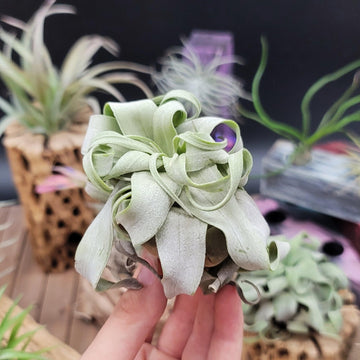
air plant for sale Shirley Temple 'Tillandsia streptophylla'Looking for a unique and striking addition to your curly epiphytic plant collection? Look no further than the 'Tillandsia streptophylla. The common name of this beautiful plant is Shirley Temple. T. streptophylla, which belongs to the Bromeliaceae family, develops much faster than most air plants. This magnificent air plant has delicate, contorted leaves that resemble the famous child actress with the curly hair of the same name. Her soft, flowing
Looking for a unique and striking addition to your curly epiphytic plant collection? Look no further than the 'Tillandsia streptophylla’. The common name of this beautiful plant is “Shirley Temple”. T. streptophylla, which belongs to the Bromeliaceae family, develops much faster than most air plants. This magnificent air plant has delicate, contorted leaves that resemble the famous child actress with the curly hair of the same name. Her soft, flowing tresses are known for their curls.
Tillandsia streptophylla is a wonderful air plant native to Mexico. Growing from 6 to 8 inches in height, this variety is noted for its unique curly ringlet pastel green leaves that cascade downward in a mesmerizing fashion. As it matures, these tightly curled leaves gradually unfurl to reveal a stunning rosette shape, adding an extra touch of elegance to its already ethereal appearance.
Some people have remarked that because of its diminutive size, Streptophylla resembles a small Xerographica. Both the Xerographica and Tillandsia Streptophylla air plants have contrasting leaves, with Xerographica having wider, thicker leaves with a rosette-like appearance and Tillandsia having thinner, flexible leaves.
Streptophylla air plant is relatively fast-growing. It is easy to grow and care for. The Tillandsia streptophylla air plant flower has a lovely pink tint. The center of the plant turns pink in color throughout the blooming time, earning it the name blushing plant.
You can propagate these air plants by seeds or by separating offsets known as pups. When the leaves of Shirley Temple are dehydrated, the edges curl outwards towards the base and make tighter ringlets. Streptophylla care is easy to manage, making it a must-have even for beginners. Add one to your collection right away! Here at Planet Desert you can get air plants for sale online with fast shipping.
Watering Needs
As they thrive well in dry conditions, these Tillandsia streptophylla do not need frequent watering. It prefers misting or gentle rinsing that reaches the base of the leaves and the center of the rosette. You can mist them a couple of times a week if the climate is mild. On the contrary, if you live in dry arid regions, it is best to soak your Shirley Temple in water for five minutes once every week! Do not forget to let the curly plant dry out after watering to prevent rot. Remember, it's better to underwater than overwater this curly succulent plant.
After watering, make sure to shake off any excess water and allow your Tillandsia to dry in a well-ventilated area. It will absorb the morning dew drops through its leaves or trichomes. If given less moisture, its leaves curl inwards.
It's important to monitor the humidity levels in your environment, and local weather conditions as it can affect the watering needs of Tillandsia Streptophylla. If the air is too dry, you can provide additional humidity by misting the plant more frequently or placing it near a humidifier.
Light Requirements
Tillandsia streptophylla plants grow at their best in indoor settings. They prefer moderate to bright indirect sunlight. Avoid placing them outside in direct sunlight, as it can scorch the leaves. This Shirley temple does well in spaces with bright, filtered light, such as near a window with a sheer curtain or in a well-lit room.
If you're unsure about the light levels in your space, you can observe the plant's leaves. If they start to turn brown or yellow, it may be an indication that the light is too intense. On the other hand, if the leaves become elongated and stretch toward the light source, it may be a sign that it needs more light.
Remember, each plant is unique, so it's important to find the right balance of light for your Tillandsia Streptophylla. If you notice any changes in the plant's appearance, you can adjust its placement accordingly.
Optimal Soil & Fertilizer Needs
Tillandsia Streptophylla is an air plant that doesn't require soil. It actually absorbs nutrients and moisture through its leaves. Instead of soil, you can place the plant in a well-draining container or attach it to a piece of driftwood, cork, or other decorative objects. This allows the plant to thrive in a variety of creative displays.
When it comes to fertilizing your Shirley temple, it's important to use a specialized air plant fertilizer. These fertilizers are formulated to provide the necessary nutrients without harming your succulent. You can dilute the fertilizer according to the instructions on the package and apply it to the plant's leaves during its regular watering routine. However, be careful not to over-fertilize, as it can lead to damage or burn the Tillandsia plant.
Remember, air plants like Tillandsia Streptophylla are low-maintenance and don't require frequent fertilization.
Hardiness Zone & More
The Tillandsia Streptophylla is native to Central America and thrives in warm and tropical climates. It is generally recommended for hardiness zones 9-11, which are regions with mild winters and high temperatures year-round. These air plants prefer temperatures between 60°F and 80°F. It can tolerate slightly higher temperatures but may struggle in extreme heat or cold. It's important to protect your Shirley Temple plant from frost or freezing temperatures, as it is not frost-tolerant.
In terms of humidity, Tillandsia Streptophylla air plant prefers moderate to high humidity levels. It is adapted to the humid environments of its native habitat. To provide optimal humidity, you can mist it with water regularly or place it in a humid location such as a bathroom or near a humidifier. However, be careful not to overwater the plant, as it can lead to rot or other issues.
Don't miss out on this opportunity to add something truly exceptional to your garden. Order your very own Tillandsia streptophylla - Shirley Temple plant today!
Shipping Notes
- Free Standard Shipping on $100+ Orders to the USA.
- Except Preorder products are shipped in 48 hours.
- Delivery to the USA:
- Standard Shipping : 3-10 business days
- If time is of the essence, please consider selecting expedited delivery for faster service.
Exchange/Return Notes
- We offer a 30-day return/exchange service after receiving.
- Final sale items are not eligible for returns or exchanges.
- To process your return/exchange, please contact us at [email protected]
- Please click here for more details>>> Return & Exchange Policy