Pay in installments of $6.04 with
 ,
,
 and
and

Shipping Estimate
USA
- USA
- CAN
- USA
- CAN
Ships within 48 hours · Estimated delivery Sep 14 - Sep 19
 Promo Codes Available:
For Your Every Summer RSVP, with Code: SUMMER15
Description
purple plant pots indoor Shop 'African Violet Plant – Saintpaulia ionantha' Care & InfoThe African Violet, known as Saintpaulia ionantha, is one of the most beloved and widely grown indoor flowering plants across the world, cherished for its compact size, long lasting blooms, and ease of care. Known for brightening up windowsills and tabletops, this plant is ideal for both beginners and avid plant lovers alike. Its ability to flower year round under proper conditions makes it a rewarding addition to any indoor garden. Native to the
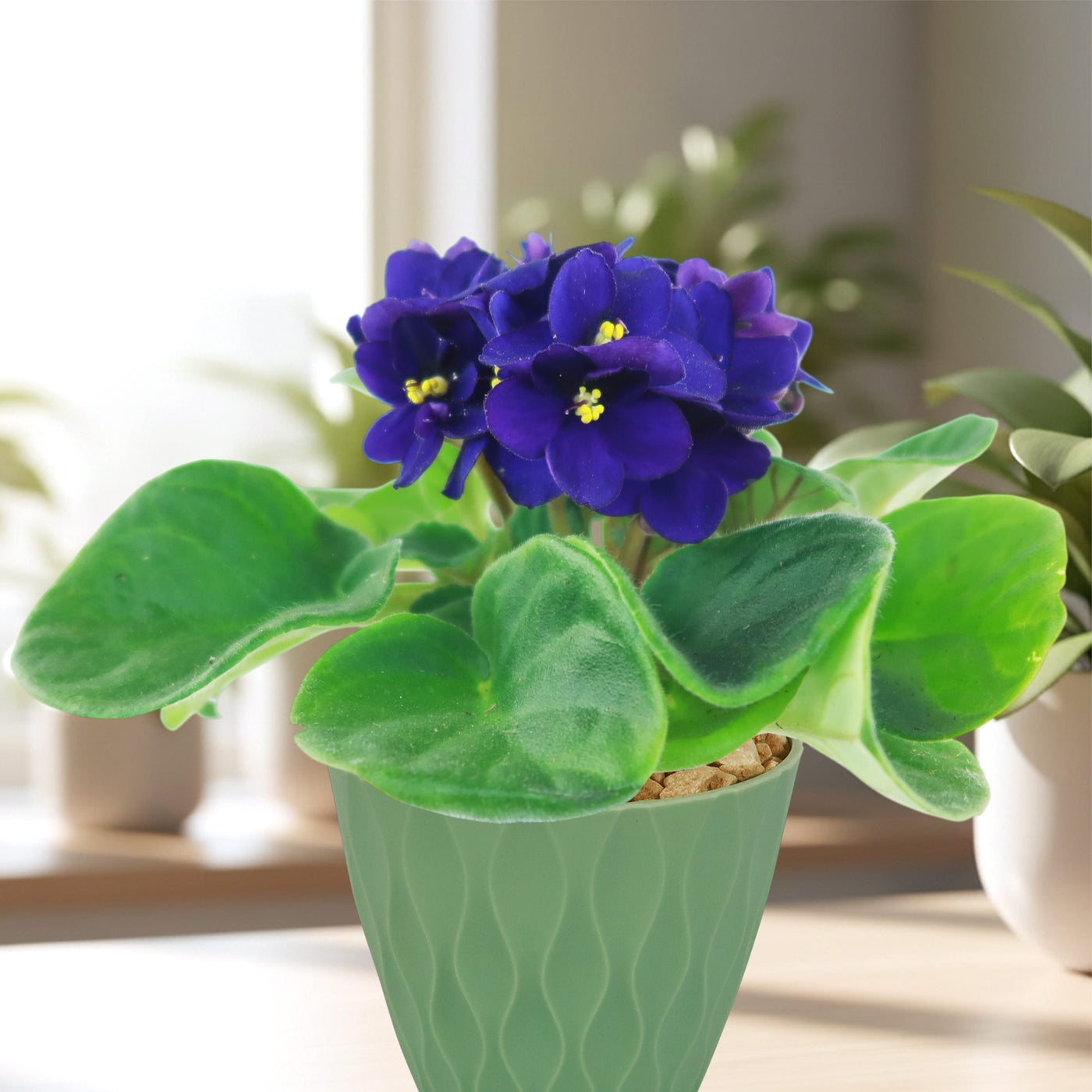
The African Violet, known as Saintpaulia ionantha, is one of the most beloved and widely grown indoor flowering plants across the world, cherished for its compact size, long-lasting blooms, and ease of care. Known for brightening up windowsills and tabletops, this plant is ideal for both beginners and avid plant lovers alike. Its ability to flower year-round under proper conditions makes it a rewarding addition to any indoor garden.
Native to the cloud forests of Tanzania and Kenya, the long-lasting blooms of the African Violets come in a variety of colors such as burgundy, purple, pink, and white.
African Violets are compact perennials with fuzzy, dark green, oval leaves that form a dense, symmetrical rosette.
The soft, velvety texture of the foliage gives the plant an appealing tactile quality.
The leaves not only store water but also help the plant adapt to lower light conditions, making it one of the best flowering plants for indoor environments.
At maturity, most African Violets remain small, can grow up to 12 inches tall and 12 inches wide, depending on the variety.
This manageable size makes them suitable for small spaces, windowsills, shelves, and decorative containers. Miniature varieties are even smaller, while trailing or larger hybrid cultivars can grow slightly wider.
How to keep your African Violets Blooming All year round
African violets can bloom year-round when provided with consistent light, warmth, moisture, and feeding. These vibrant houseplants naturally cycle through blooming every 6–8 weeks, but with the right indoor care, you can encourage nearly constant flowering throughout the year.
To keep them blooming, provide 12–14 hours of bright, indirect light daily—supplement with LED or fluorescent grow lights if needed. Maintain indoor temperatures between 65°F and 75°F, and avoid drafts or dry air. Water from the bottom with room-temperature, filtered or dechlorinated water, keeping the soil evenly moist but never soggy. Avoid getting water on the leaves to prevent spotting.
Feed regularly with a diluted, high-phosphorus fertilizer once a year in spring and remove faded blooms to redirect energy. Repot annually using well-draining African violet soil, and keep humidity around 40–50% to support bud formation. With this steady care, your African violets can reward you with continuous, vibrant flowers all year long.
When and How to Water Your African Violet Plant
African Violets are not true succulents and appreciate evenly moist, not soggy soil. Letting them dry out too long can stunt flowering, but overwatering can cause root rot. Always avoid splashing water on the fuzzy leaves to prevent leaf spots and rot. African Violets are mildly drought-tolerant but should be watered thoroughly every 5–7 days during the growing season and every 10–14 days during the dormant season.
From spring through summer, during the growing season, water your African Violet every 5 to 7 days with about 1/4 to 1/2 cup of water, depending on pot size, making sure the top inch of soil has dried out before rewatering. This is when the plant is actively producing blooms and needs steady moisture. Bottom watering works best; place the pot in a tray with water for about 20 minutes, then remove it. This ensures roots absorb moisture without wetting the leaves.
From fall through winter, in the dormant season, water less frequently, about every 10 to 14 days, and use around 1/4 cup or less. The plant’s growth slows, and overwatering becomes more dangerous during this time. Let the soil dry a bit deeper than usual before watering. Keep humidity levels steady to prevent the leaves from wilting in dry indoor air.
Light Requirements – Where to Place Your African Violet Plant
When grown indoors, the African Violets thrive near bright, filtered light and should receive about 10–12 hours of indirect light per day. A north or east-facing window is ideal, or you can use fluorescent grow lights placed 12–15 inches above the plant. Avoid harsh, direct sunlight, which can scorch the velvety foliage.
For outdoor cultivation, the African Violets can be placed in shaded patios or under tree canopies where they receive bright but filtered light for 6–8 hours daily. Outdoor growing is only suitable in warm climates and should mimic their native, humid environment. Never expose them to the full sun or intense heat, as it will cause rapid dehydration and leaf damage.
Artificial lighting works very well, especially in low-light homes. Use fluorescent or LED lights for 12–14 hours per day. Keep them on a timer to simulate natural daylight and rotate the pot regularly to encourage even growth and flowering.
Optimal Soil & Fertilizer Needs
The African violet plants need light, well-draining soil rich in organic matter with a slightly acidic pH of 6.0–6.5, and should be fertilized once a year. A mix designed for African Violets, or one made from peat moss, perlite, and vermiculite, is best. Avoid compact soils, which prevent root oxygenation. Instead, make or buy a well-draining potting mix, or ideally use our specialized potting mix, opens in a new tab that contains 5 natural substrates and mycorrhizae to promote the development of a strong root system that helps your plant to thrive.
Fertilize your African Violet once a year in spring during its active growing season with a balanced water-soluble NPK fertilizer. Use one high in phosphorus (like 5-10-5) to promote flowering. Avoid fertilizing dry soil to prevent root burning.
Do not fertilize during winter unless the plant is actively growing indoors under lights. Over-fertilization in the dormant season can lead to salt buildup and root damage. Flush the soil occasionally with water to prevent salt accumulation.
Indoor African Violet Growing Requirements
When grown indoors, African Violets thrive in stable temperatures between 65–75°F with 50–60% humidity, bright indirect light, and protection from cold drafts or direct heat. This makes them ideal houseplants for year-round enjoyment. For best results, place them near an east- or north-facing window where they can receive gentle, filtered sunlight for about 10–12 hours a day. If natural light is limited, they also respond well to fluorescent or LED grow lights. Keep them away from drafty windows, heating vents, or air conditioners, as sudden temperature changes can stress the plant and reduce flowering. Use a humidity tray or small room humidifier if indoor air is particularly dry, especially in winter.
Hardiness Zones & More
In the United States, this is mostly an indoor plant, but if you live in southern Florida or Hawaii, then you can cultivate it outdoors in USDA zones 11-12.
Even in these zones, they should be planted in shaded areas that protect them from direct sunlight, which can scorch their soft, fuzzy leaves.
Because they are sensitive to temperatures below 60°F, it’s best to grow them in containers that can be brought indoors during unexpected cool spells.
Outdoor humidity should be consistently high to prevent leaf dehydration, and they should never be exposed to wind or sudden temperature shifts.
Wildlife – African Violet Flowers Attract the Following Friendly Pollinators
The African Violet flowers can attract small indoor pollinators like fungus gnats or fruit flies, but are not known for being major pollinator magnets like outdoor blooms. They are mostly grown indoors for ornamental purposes and rarely attract outdoor wildlife.
According to the ASPCA, African Violets are non-toxic to humans, cats, dogs, and other household pets, making them an excellent and safe choice for homes with animals. Their safety, combined with compact growth, makes them popular for windowsills and tabletops.
How to propagate African Violet
African Violets are easily propagated from leaf cuttings, making them a favorite among beginner and advanced growers alike. Choose a healthy, mature leaf and snip it with about 1 inch of stem. Let it callus for a few hours, then place it in moist, light soil or water. In 3–4 weeks, tiny plantlets will begin forming at the base. Once they develop roots and 3–4 small leaves, they can be separated and potted individually.
Key Takeaways
- African Violets are one of the most popular indoor flowering plants worldwide, admired for their compact size and ability to bloom multiple times a year under the right conditions.
- They are capable of blooming all year round and come in a variety of flower colors, including violet, pink, blue, and white, making them one of the most beloved flowering houseplants across the world.
- Native to the cloud forests of Tanzania and Kenya, African Violets thrive in warm, humid environments, making them ideal for terrariums and indoor plant lovers.
- Despite their delicate appearance, African Violets are relatively drought-tolerant and can survive brief periods without water, especially during dormancy.
- These plants are non-toxic to cats, dogs, and birds, making them a pet-safe choice for households with furry or feathered companions.
The Bottom Line
Overall, the African Violets (Saintpaulia ionantha) are charming, easy-care houseplants that bloom in shades of purple, pink, and white almost year-round. With their compact size, velvety leaves, and non-toxic nature, they’re ideal for pet owners and apartment dwellers alike. Their minimal water needs, tolerance to lower light, and ease of propagation make them perfect for windowsills and tabletops. With the right soil, lighting, and seasonal care, they reward growers with continuous, cheerful blooms.
Shipping Notes
- Free Standard Shipping on $100+ Orders to the USA.
- Except Preorder products are shipped in 48 hours.
- Delivery to the USA:
- Standard Shipping : 3-10 business days
- If time is of the essence, please consider selecting expedited delivery for faster service.
Exchange/Return Notes
- We offer a 30-day return/exchange service after receiving.
- Final sale items are not eligible for returns or exchanges.
- To process your return/exchange, please contact us at [email protected]
- Please click here for more details>>> Return & Exchange Policy