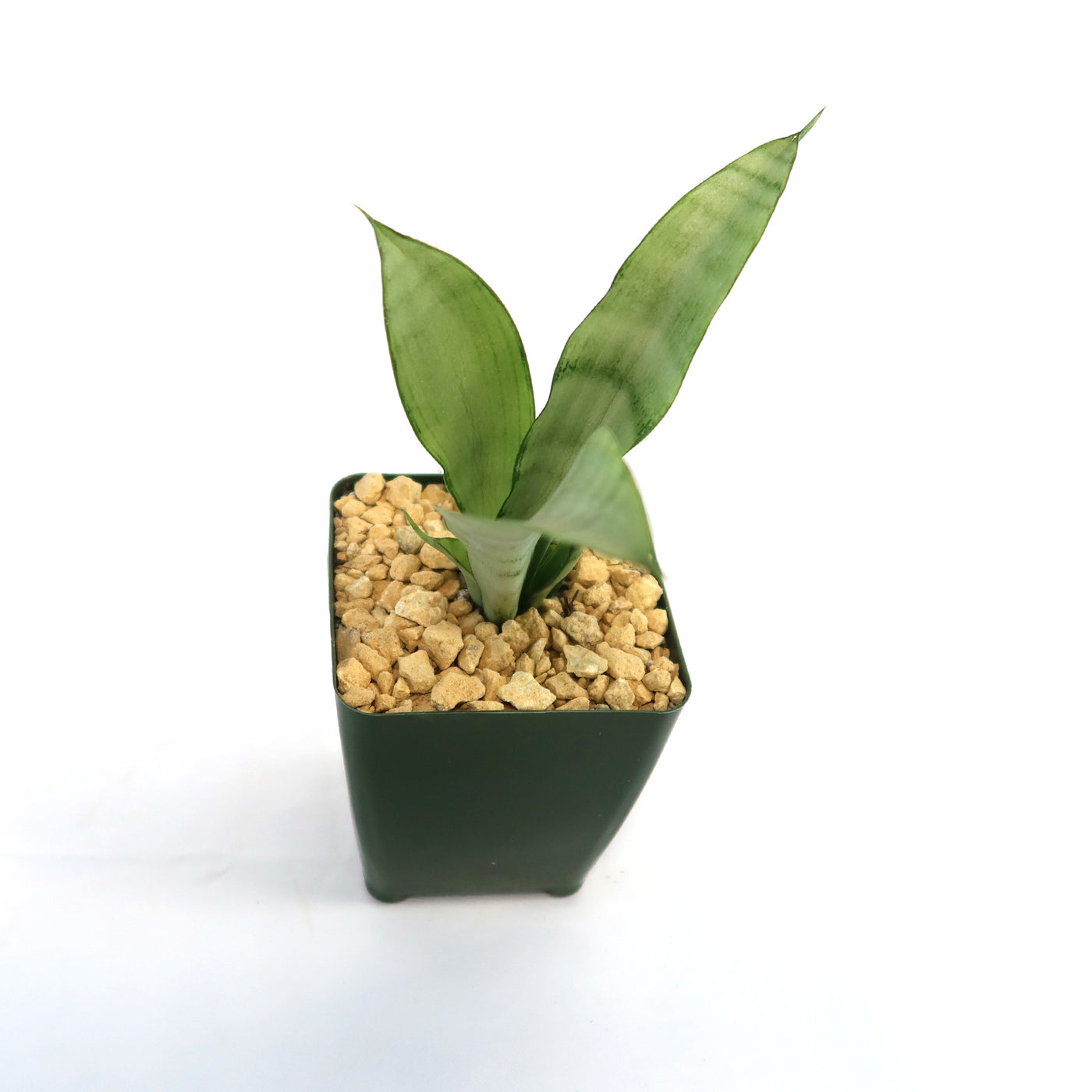
SKU: 54815190814
sansevieria green moon

sansevieria green moon Shop 'Moonshine Snake Plant - Sansevieria moonshine' Care and Info

Sale price$24.25 Regular price$26.95
Save 10%

Pay in installments of $6.74 with ShopPay, AfterPay and Klarna

Shipping Estimate
USA
  • USA
  • CAN

Ships within 48 hours · Estimated delivery Jul 25 - Jul 30

Promo Codes Available:

For Your Every Summer RSVP, with Code: SUMMER15

Description

sansevieria green moon Shop 'Moonshine Snake Plant - Sansevieria moonshine' Care and InfoIntroducing, the moonshine snake plant, known as Sansevieria Moonshine, a popular houseplant that belongs to the Sansevieria genus. Native to West Africa, it is a variety of the Sansevieria trifasciata. It has several other common names such as the Sansevieria trifasciata Moonshine, Silver Snake Plant, Silver Sansevieria, Sansevieria moonglow, or Dracaena moonshine, highlighting its attractive silver coloration. The Moonshine Snake Plant is a popular

Introducing, the moonshine snake plant, known as Sansevieria Moonshine, a popular houseplant that belongs to the Sansevieria genus. Native to West Africa, it is a variety of the Sansevieria trifasciata. It has several other common names such as the Sansevieria trifasciata Moonshine, Silver Snake Plant, Silver Sansevieria, Sansevieria moonglow, or Dracaena moonshine, highlighting its attractive silver coloration. The Moonshine Snake Plant is a popular choice for indoor plant enthusiasts, with its silvery-green leaves that have a moonlight glow. 

This moonshine snake plant features long, upright leaves that grow in a rosette pattern. The leaves are thick with a smooth texture of a beautiful silvery-green hue and bold green edges. They have a unique cylindrical shape, narrowing towards the tips, which adds to their visual appeal. The Moonshine Snake Plant can grow up to 4 feet tall in its natural habitat and 2 feet tall indoors, making it suitable for both small and large spaces. 

Sansevieria Moonshine blooms in spring and summer, with fragrant green and white flowers on tall spikes. These sweet-smelling flowers will last 2 to 3 weeks. While the blooms are not the main attraction of these indoor plants, they can add a touch of elegance to their overall appearance. 

Propagating Snake Plant moonshine is relatively easy. It can be propagated through leaf cuttings or by dividing the plant's rhizomes. Leaf cuttings can be placed in water or directly in well-draining soil until they develop roots. Dividing the plant involves separating the offshoots or rhizomes and planting them in separate pots to get new plants. 

Moonshine Snake plants, known for their hardiness, low maintenance, and style, are commonly found in offices, lobbies, stores, and homes. The most common types of snake plants include Sansevieria trifasciata (Mother in law’s tongue plant), Sansevieria trifasciata 'Laurentii' (Variegated snake plant), and Sansevieria zeylanica (Zeylanica snake plant), which is gaining popularity in various settings. 

Watering Needs 

Like other tropical plants, this drought-tolerant Sansevieria Moonshine prefers moderate watering. Allow the soil line to completely dry out between waterings. Overwatering can lead to root rot, so it's best to err on the side of underwatering rather than overwatering. Before watering, check the moisture level of the soil by sticking your finger about an inch deep into the soil. If it feels dry at that depth, it's time to water. If it's still slightly moist, wait a bit longer. 

In the spring and summer months, during the growing season, water your Sansevieria Moonshine every 2-3 weeks. While in the fall and winter months, during the dormant period, reduce watering to once every 4-6 weeks. 

When watering, make sure to thoroughly saturate the soil in the pot, allowing water to seep out of the drainage holes. This ensures that the roots receive adequate moisture without sitting in stagnant water. 

These moonshine snake plants are known for their ability to tolerate drought, so they can handle periods of dryness. Observing the moisture level of the soil and adjusting your watering accordingly will help keep your Sansevieria Moonshine happy and healthy. 

Light Requirements 

If you are growing your Sansevieria moonshine indoors, it prefers bright, indirect light for at least 4-6 hours a day. If you have a spot near a window with filtered or indirect sunlight, that would be ideal. However, this moonshine snake plant can also thrive in areas with medium light, making it a perfect choice for those with less sunny spaces in their homes. 

If you decide to move your Sansevieria Moonshine outdoors, it's important to consider its light requirements. Your moonshine snake plant can tolerate full sunlight, but it's best to provide it with bright indirect light or partial shade. Too much direct sun can scorch the leaves, so finding a spot with filtered sunlight or placing it under a shade structure would be beneficial. If you live in a region with intense sunlight, it's a good idea to acclimate the plant gradually to prevent leaf burn. 

Remember, finding the right balance of light is crucial for this beautiful plant. Too little light can result in leggy growth, while too much direct sunlight can cause leaf damage. Observing your snake plant's moonshine response to its current light conditions and adjusting accordingly will help ensure its health and growth. 

Optimal Soil & Fertilizer Needs 

The Sansevieria moonshine prefers very airy, porous, nutrient-rich soil with a pH of 6.5 - 7.5. Succulents require fast-draining soil that dries completely between waterings. Your soil must have a sandy texture and a low water-holding capacity, just like desert soil. Soggy wet soil can damage your moonshine snake plant and contribute to bacterial and fungal rot. In addition, because of a lack of oxygen, soggy soil substitutes air pockets with water, resulting in an anaerobic environment that can kill your snake plant. 

As an alternative, you can create your own potting mix by combining equal portions of perlite, coarse sand, and good natural potting soil. Ideally, you want to use our specialized succulent potting mix that contains 5 natural substrates and organic mycorrhizae to promote the development of a strong root system that helps your succulent to thrive. 

The Sansevieria Moonshine is a relatively low-maintenance plant when it comes to fertilizing. During the growing season in the spring, you can feed your Moonshine Snake Plant with a balanced (5-10-5), water-soluble NPK fertilizer once a year. However, be careful not to over-fertilize, as it can lead to salt buildup in the soil. 

It's important to note that the Sansevieria Moonshine is a slow-growing snake plant, so it doesn't have high nutrient requirements. As long as you provide it with well-drained soil and occasional fertilization during the growing season, it should thrive. 

Remember, it's always a good idea to observe your plant's response to the soil and fertilizer you provide. Adjusting the watering and fertilizing routine based on its growth and overall health will help ensure its well-being. 

Hardiness Zones & More 

When growing indoors, the Sansevieria Moonshine can tolerate a warm temperature between 60°F to 85°F. It's important to avoid exposing it to extreme temperature fluctuations, as this can stress the plant. Keep it in a spot where the temperature remains relatively stable throughout the day. 

If you decide to move your Sansevieria Moonshine outdoors, it can thrive in USDA zones 10-11, where the average temperature stays above 50°F. If you live in a colder zone, it's important to protect the plant from freezing temperatures by keeping it indoors during the winter months. It can tolerate higher temperatures, but it's important to protect it from scorching direct sunlight, especially in hotter climates. 

The Sansevieria Moonshine is a relatively low-humidity plant. It can tolerate a range of humidity levels, from dry to moderate. It's well-suited for indoor environments with average humidity levels. If you live in a particularly dry climate, you can increase humidity around the plant by placing a tray of water nearby or using a humidifier. This snake plant is one of the hardiest houseplants and is extremely adaptable. 

Remember, providing the Sansevieria Moonshine with the appropriate temperature and humidity conditions will contribute to its overall health and growth. Whether you choose to keep it indoors or move it outdoors, maintaining a suitable environment will help ensure its well-being. 

Final Thoughts 

Overall, the Sansevieria Moonshine (Moonshine Snake Plant) is a low-maintenance snake plant for succulent plant lovers of all levels. With its striking silvery-green leaves, easy propagation methods, and ability to thrive in various indoor conditions, this moonshine snake plant adds a touch of elegance to any space. While it occasionally produces small, fragrant flowers, its main allure lies in its unique foliage. It thrives in bright, indirect light and only needs to be watered when the top inch of soil is dry. Additionally, it is important to avoid overwatering as this can lead to root rot. You can grow your plant indoors in warm temperatures between 60°F to 85°F, and outdoors in USDA zones 10-11. We think you will love this snake plant order your very own Sansevieria moonshine snake plant for sale today and start enjoying its beauty in no time! 

Shipping Notes
  • Free Standard Shipping on $100+ Orders to the USA.
  • Except Preorder products are shipped in 48 hours.
  • Delivery to the USA:
  1. Standard Shipping : 3-10 business days
  • If time is of the essence, please consider selecting expedited delivery for faster service.
Exchange/Return Notes
  • We offer a 30-day return/exchange service after receiving.
  • Final sale items are not eligible for returns or exchanges.
  • To process your return/exchange, please contact us at [email protected]
  • Please click here for more details>>> Return & Exchange Policy
SKU: 54815190814

Discover Niche Categories That Outsell sansevieria green moon

Top-Converting Item to Boost Your Average Order

4.1 ★★★★★
Based on 27 reviews
Sort
Highest Rating
Newest First
Oldest First
Product Reviews
S
Verified Purchase
Shannon Latham
Los Angeles, US
★★★★★ 5
Obsessed with these boards!!
Color: Carbonized, Size: 3-piece
I love these cutting boards! It’s one of those items you don’t even know you need until you get them. Three perfect smaller sizes that can be used for so many different serving ideas. Great quality, great price. Definitely worth the buy!!!!
WAS THIS REVIEW HELPFUL?YesReportShare
Reviewed in the United States on May 24, 2026
B
Verified Purchase
BF J.V.
Phoenix, US
★★★★★ 5
Economical and descent for price
Color: Carbonized, Size: 3-piece, Color: Carbonized, Size: 3-piece
Pleased with price, style, color, and the 3 sizes of these carbonized bamboo cutting boards. Based on the reviews had the expectation of the "smell", which is the oil used to seal the cutting boards. (I suspect linseed oil was used based on the lingering smell, as the off-gasing process is longer. It's also cheaper than Tung oil and food grade mineral oil.) I work with wood and various oil sealants so the smell is a non-issue. As there are natural ways to speed that process up and minimize the smell. In addition, I will be using fractionated coconut oil or food grade mineral oil to seal cutting boards on a regularly basis (monthly or more frequent). As we live in a dry climate, hard water, and frequent use. Appreciate the other reviews which lead to our purchase and reasonable expectation of these cutting boards.
WAS THIS REVIEW HELPFUL?YesReportShare
Reviewed in the United States on May 28, 2026
B
Verified Purchase
briana canterino
Charlottesville, US
★★★★★ 4
Good but wood smell
Color: Carbonized, Size: 3-piece
These came with a woodsy smell but the price was great for the quality
WAS THIS REVIEW HELPFUL?YesReportShare
Reviewed in the United States on May 8, 2026
M
Verified Purchase
Mike
Grantham, US
★★★★★ 5
Fantastic book! Great introduction to some of the current misunderstandings about the Bible.
Format: Kindle
As a believer, I have wrestled with the issue of why I trust the Bible to be God’s defining word. After all, simply saying that I have faith in God and Jesus and therefore the Bible must be true creates an ever-tightening inward spiral based on nothing more than a belief that it’s true. Probably not the best standard to be waiving. Why I Trust The Bible by Dr. William Mounce answers not only this question, but also whether or not Jesus was real and why the different Bible translations are so different. We live in an age where we are bombarded with half-truths and deceptions by purported experts whose only requirement is to have a YouTube page. The Bible is no more immune from these barrages of untested and ill-researched ideas than is science or politics, but the stakes are higher. While many refute the authenticity and truthfulness of the Bible, one name stands out among the rest: Bart Ehrman. He seems to be very good at nuancing just the right word to cause a reaction in support of his unfounded claims. Fortunately Dr. Mounce is superb at refuting the often-ridiculous claims as well as correcting minor misunderstandings. What I especially liked about Why I Trust The Bible was the way Dr. Mounce not only disproved the inaccuracies touted by Ehrman, but revealed the underlying false premises and sensationalist comments that Ehrman uses. Dr. Mounce’s corrective approach was very helpful. Why I Trust The Bible easily counters the common claims and misrepresentations against the Bible’s inspiration. If you want to understand the background of how and why our Bible is accurate, real, truthful, and God’s inspired word, this resource is for you. Dr. Mounce systematically addresses key issues originating from contradictory arguments presented by unbelievers while at the same time answers questions many believers have about their Bible. I especially appreciated the way Dr. Mounce included enough material for each section so that I was able to understand the issue without feeling overburdened. It is an enjoyable read: comprehensive and coherent. This book opens by evaluating the reality of Jesus, then moves to dismantle common criticisms against the Bible, examines the processes and decisions necessary when translating from the original languages into English, and finishes by addressing some of the perceived claims against the nature of God. While these issues tend to be technical, Dr. Mounce expertly navigates the waters to keep the reader engaged as he addresses the Bible’s history, fundamentals of textual criticism, and interpretative and translation principles. Whether you begin this book with a blank slate in these areas or already understand these issues, the book will fill the gaps. Too often people confuse their faith in the Bible with how faith (in any proposition) reinforces beliefs and closes one’s mind to other possibilities. Much of what we believe is actually an outgrowth from our paradigms. Dr. Mounce points out that we all have faith-beliefs. For example, if I believe God is able to alter the laws of nature to perform a miracle, then that is my faith-belief. But if I believe there is no God or that miracles cannot happen, then that is also my faith belief. We each assess everything by our paradigms. Although we live in a world that seeks to accept every idea as a relative truth, only one of these propositions can be correct; in the case of miracles, they can either happen or they cannot. One thing that stood out was the tendency for the non-believers to try to make the believer prove them wrong. Dr. Mounce flips the script and places the onus on the non-believer to prove that miracles can happen. He can do that because through his systematic approach to answer the critical questions about the Bible, he shows that it is not a work of fiction and that the events in the Bible were not late additions or were not the result of conspiracies perpetrated by a cabal of nefarious theologians of the past. His book documents the veracity and reliability of the Bible that we now have, and while we may not have the first-edition autographed copy, we are confident we have what the original authors wrote. There are some who attempt to use the faith-belief premise as an argument against the truthfulness and accuracy or our Bible, but that is the wrong approach because it does not accurately represent the stalemate that exists between believers and non-believers. The problem is much deeper and is more centered on the belief that just because we don’t have the original documents, and that because there are too many discrepancies in the Bible itself, that it is untrustworthy. These are unfounded or inaccurate statements which are not backed by any facts, but are simply distortions, untested by any historic or scientific means. Why I Trust The Bible breaks through the unfounded arguments against authenticity by providing the documentation and proof that it is real, that what it says happened actually did happen, and that those who so diligently protected the text for us through the many generations did so with the utmost respect for God and his word. Yes there are what appear on the surface to be discrepancies. Yes there are variants between the 5,600 plus manuscripts (less than 1/10 of 1 percent even warrant further research). But Dr. Mounce shows how it is not the number of textual differences that matter, but whether or not the differences are significant in any way that they alter the basic understanding of God, Jesus, or salvation. He guides the reader in understanding that although there seems to be a lot of discrepancies, only a small number are viable; they do not alter any truth in the Bible. He proves that, “there is not a single viable variant that calls into question any point of biblical theology, major or minor.” This book is an excellent choice for anyone wanting to understand how we got our Bible, why we can trust it to be true, that it is the faithful word of God, and how Bible translators struggle with real issues relevant to helping us understand what God said. I have many of the resources listed in the footnotes of this book and have studied these issues in the past, but as in most books I read, I discover new insights and information. This book is not just for the person beginning this study, but is applicable for even those who have studied these concepts. If you don’t have the foundation necessary to believe that the Bible we now have “is the very words of God” or want to learn more about the processes involved in interpreting words and phrases and the various theories of Bible translation, then this is the book for you. Mike F., MDiv, Theology
WAS THIS REVIEW HELPFUL?YesReportShare
Reviewed in the United States on October 7, 2021
B
Verified Purchase
Bryan Catherman
Carnegie, US
★★★★★ 5
It's Great, but Maybe a Little More on the Topic than Some Might be Ready For
Format: Paperback
Dr. William Mounce's new book, "Why I Trust the Bible: Answers to Real Questions and Doubts People Have About the Bible," is a bit different than his typical work. This book is not specific to learning biblical Greek. Instead, it's a series of arguments for the reliability of the Bible with a much broader audience in mind. Mounce addresses this historicity of Jesus, contradictions in the Bible, how we have the biblical canon, issues of textual criticism, aspect of translation, and how the Old Testament supports our trust in the Bible more than you might think. "Why I Trust the Bible" is an accessible introduction to a selection of apologetic matters but goes deeper and beyond an introduction. For one seeking to explore these topics--for the first time or deeper study--Mounce does an outstanding job with each of these arguments. Each chapter (corresponding to a question) is well-argued and contains an excellent bibliography of references. Even without any theological knowledge, the book is easy to read, and it stands upon excellent theological study and solid academic work. While I highly recommend "Why I Trust the Bible," I found the scope of the "questions" and "doubts" limited. As a pastor, there are many questions about the historical Jesus, contradictions, how we got the revelation of God, and issues of translations. Sure. But they often come as more of an attempt to reject the Bible. Mounce's answers are excellent but address the reality of the situation rather than the questioner's heart. It's not something I'd expect to find someone with doubts and totally new to the Bible would pick up this book. Therefore, this book is better suited for the person who handles the questions and doubts of others. It provides the foundation and information to the pastor, Sunday school, teacher, friend, or family member in doubt. "Why I Trust the Bible" is also a helpful book for the seminary student, budding apologists, and preachers of God's Word. The chapters on textual criticism supply a fantastic framework (complete with charts and history). As we would expect from Bill Mounce, these chapters are a resource every pastor should have on his shelf, ready for when the tough challenges come. I found the book good and helpful and I have a Doctorate of Ministry and more than a decade of pastoral ministry under my belt. My twelve-year-old son is reading the book and also finding it in formative and helpful (although he also thumbs through my commentaries). My point: there's a little for everyone.
WAS THIS REVIEW HELPFUL?YesReportShare
Reviewed in the United States on September 15, 2021

recommand products