SKU: 55009017819
prayer plant big

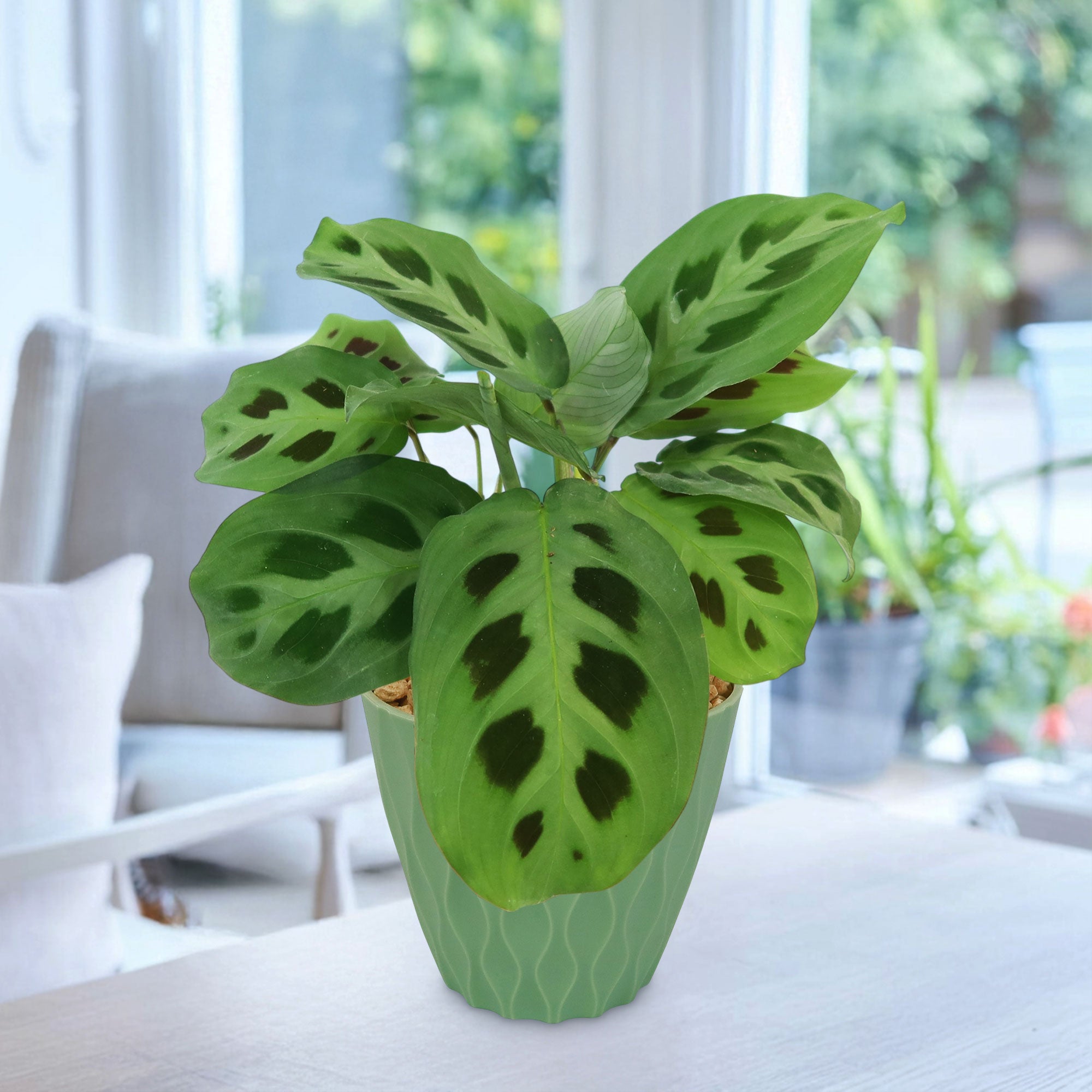
prayer plant big Prayer Plant ‘Maranta leuconeura’ 6" Pot / Light Green / With Pot

Sale price$22.57 Regular price$25.08
Save 10%

Pay in installments of $6.27 with ShopPay, AfterPay and Klarna

Shipping Estimate
USA
  • USA
  • CAN

Ships within 48 hours · Estimated delivery Jul 15 - Jul 20

Promo Codes Available:

For Your Every Summer RSVP, with Code: SUMMER15

Description

prayer plant big Prayer Plant ‘Maranta leuconeura’ 6" Pot / Light Green / With PotThe Prayer plant, known as Maranta leuconeura, is a popular choice among houseplant enthusiasts due to its stunning foliage and relatively easy care needs. Known for its uniquely patterned and colorful leaves, this plant adds a vibrant touch to indoor spaces, making it one of the most sought after houseplants. Those looking for a pet friendly plant will be pleased to know that prayer plants are non toxic to both pets and humans. The Prayer Plant is so

The Prayer plant, known as Maranta leuconeura, is a popular choice among houseplant enthusiasts due to its stunning foliage and relatively easy-care needs. Known for its uniquely patterned and colorful leaves, this plant adds a vibrant touch to indoor spaces, making it one of the most sought-after houseplants. Those looking for a pet-friendly plant will be pleased to know that prayer plants are non-toxic to both pets and humans.   

The Prayer Plant is so named for its unique habit of folding its leaves upward in the evening, as if in prayer. This remarkable movement is a natural circadian rhythm known as “nyctinasty,” in which the leaves respond to light levels by opening flat during the day and curling up at night. In addition to being closely related to the red prayer plant, this intriguing behavior gives any indoor garden a dynamic and lively feel. 

Native to South America, it is also called the “Rabbit Tracks” plant. The Green Maranta Prayer Plant is renowned for its unique patterned leaves, featuring light green backgrounds and dark green blotches along the central vein.

These distinctive spots create a visually appealing contrast and resemble animal tracks. This eye-catching foliage, combined with the plant's low-growing habit, makes it a perfect choice for table displays, shelves, or hanging baskets.

The Maranta leuconeura is a compact plant that typically reaches a mature size of 12 inches tall and 12 inches wide. In its natural environment, it grows as a ground cover, spreading low along the forest floor under the shade of taller trees.  

The Prayer plant flowers bloom in the spring with small, delicate, white, or pale lavender flowers on thin stalks. While not as showy as the foliage, these flowers add a delicate charm to the plant’s overall appearance. However, many people grow the Maranta green prayer plant primarily for its decorative foliage, as the blooms are typically short-lived and less prominent.  

When and How to Water Your Prayer Plant  

Even though your prayer plant can withstand some dry conditions, it still requires regular watering to thrive. These prayer plants are not highly drought tolerant, so do not allow them to completely dry out. It is critical to keep the soil moist but not soggy. Water the plant once the top inch of soil feels dry to the touch. Make sure the pot has a drainage hole to avoid waterlogging, which can lead to root rot. Avoid getting water on the leaves to prevent fungal diseases.

According to one theory, the prayer plant movement is intended to maximize water capture. During the day, they lower their leaves to absorb moisture and rain water, while at night, they move inward to retain water and direct any water to the center of the plant.   

In the spring and summer, during the growing season, you may need to water your prayer plant more frequently, possibly every 1-2 weeks, depending on the humidity levels in your home. In contrast, in the fall and winter, when the plant is in its dormant phase, you can reduce watering, allowing the soil to dry out slightly between waterings.

It's crucial to use room temperature water when watering your prayer plant, as cold water can shock the roots. Additionally, consider using distilled or filtered water to prevent the build-up of salts and chemicals from tap water, which can harm the plant over time. By following these watering guidelines and paying attention to your plant's moisture needs, you can help your Maranta leuconeura thrive and display its beautiful, patterned leaves.

Light Requirements – Where to Place Your Prayer Plant 

When growing indoors the prayer plant prefers bright, indirect light for at least 4-6 hours daily. Place your prayer plant near a window where it can receive filtered bright light or in a room with ample ambient light. Direct sunlight can scorch the leaves, so it's best to avoid placing them in harsh, direct light.

Additionally, they can tolerate low light conditions, though not extremely low ones. If your indoor space lacks natural light, you can supplement this houseplant with artificial grow lights to provide the necessary light intensity for your plant.

When considering outdoor conditions for your prayer plant, it's essential to replicate its preferred indoor environment.

If you choose to move your Maranta leuconeura outdoors, ensure it is placed in a shaded or partially shaded area. Direct sun light can be too intense for the prayer plant's delicate leaves and may lead to leaf burn.

By providing a sheltered spot with dappled sunlight or indirect light, you can create a suitable outdoor environment for your prayer plant to thrive. Remember to monitor the plant's response to its new outdoor location and adjust as needed to maintain optimal light conditions for healthy growth.   

Optimal Soil & Fertilizer Needs

The prayer plant thrives in well-draining, peat-based potting acidic soil that retains moisture without becoming waterlogged. A mix that includes peat moss, perlite, or sand can help maintain the ideal balance of moisture and aeration for your plant's roots. Instead, make or buy a well-draining potting mix, or ideally, use our specialized potting mix, opens in a new tab that contains 5 natural substrates and mycorrhizae to promote the development of a strong root system that helps your houseplant to thrive. Ensure the pot has drainage holes to prevent water from pooling at the bottom, which can lead to root rot. 

In terms of fertilizing your prayers plant, it's best to use a balanced, water-soluble NPK fertilizer with a ratio of 5-10-5. During the growing season in spring, you can fertilize your Maranta leuconeura once a year to provide essential nutrients for healthy growth. However, reduce fertilization frequency or stop altogether during the plant's dormant period in fall and winter. Over-fertilizing can cause salt build-up in the soil, leading to nutrient imbalances and potential damage to the plant.  

Hardiness Zones & More

For indoor growing prayer plants, they prefer average room temperatures ranging from 65-75°F. It's essential to avoid exposing the plant to temperature extremes or drafts, as they can stress the plant and affect its growth. Maintaining a consistent temperature within this range will help your plant flourish indoors. 

For outdoor cultivation, the prayer plant is typically suited for USDA zones 11-12, where temperatures remain consistently warm throughout the year. If you live in a region within these zones, you can consider growing your Maranta leuconeura outdoors in a shaded or partially shaded area. Ensure the plant is protected from direct sunlight to prevent leaf burn and maintain optimal growth conditions. By selecting a suitable spot in your garden or patio that mimics the plant's preferred indoor environment, you can provide a conducive outdoor setting for your prayer plant. 

When it comes to humidity requirements, the prayer plant thrives in moderate to high humidity levels. Indoor environments can often be dry, especially during the winter months when heating systems are in use. To increase humidity around your Maranta leuconeura, you can place a humidifier nearby, use a pebble tray filled with water, or group plants together to create a microclimate with higher humidity. Regularly misting the plant's leaves can also help increase humidity levels and prevent them from drying out.

Wildlife – Prayer Plant Attracts the Following Friendly Pollinators 

The prayer plant, Maranta leuconeura, attracts pollinators and insects through its unique and vibrant flowers. The plant produces small, white flowers with delicate purple spots that are visually appealing to pollinators like bees, hummingbirds, and butterflies. These insects are drawn to the flowers' nectar and play a crucial role in pollinating the plant, facilitating the production of seeds for future growth. Additionally, the plant's foliage, with its striking patterns and colors, can also attract other beneficial insects like ladybugs and lacewings, which help control pest populations in the surrounding environment. 

Butterflies
Bees
Hummingbirds
Lady Bugs
Multi Pollinators
Other Birds

Toxicity: According to the ASPCA, Maranta leuconeura is non-toxic to cats and dogs, and humans. This makes it a pet-friendly option for homes with pets, as it doesn’t pose a risk of toxicity if accidentally ingested by cats, dogs, or other pets. This feature, along with its beautiful foliage, makes the Prayer Plant a popular choice for pet owners who want to add greenery to their homes without worrying about harmful effects on their animals. 

How to Propagate a Prayer Plant 

To propagate the prayer plant, you can use division or stem cuttings. Division involves separating the plant at the roots into smaller sections, each with a healthy root system and growth points. When taking stem cuttings, select a healthy stem with several leaves and nodes, then place it in water or a moist potting mix to encourage root development. Ensure the cuttings have adequate humidity and warmth to support root growth. With proper care and attention, you can successfully propagate your prayer plant to expand your collection or share it with fellow plant enthusiasts. 

Key Takeaways

  1. The prayer plant, known for its striking foliage and unique leaf movements, is a popular indoor plant due to its vibrant colors and slow growth rate.
  2. According to the ASPCA, it is safe for homes with cats and dogs, as it is non-toxic.
  3. Its leaves fold up at night as if in prayer, a fascinating response to light levels.
  4. Though it does not prefer prolonged drought-tolerance, it can withstand short dry periods and prefers consistently moist, well-draining soil.
  5. It produces small, delicate white or lavender flowers, though it rarely blooms indoors.

The Bottom Line 

Overall, the prayer plant (Maranta leuconeura) is a captivating houseplant known for its stunning foliage with intricate patterns that fold up at night, resembling praying hands, hence its name. This plant not only adds a touch of elegance to indoor spaces but also attracts pollinators with its charming flowers. To care for your prayer plant, ensure it receives indirect light, consistent moisture, and high humidity levels. Avoid direct sunlight and overwatering to prevent root rot. Regularly misting these indoor plants and occasionally wiping their leaves with a damp cloth can help maintain their lush appearance. By providing the right conditions and attention, you can enjoy the beauty of the prayer plant while creating a healthy environment for it to thrive in your home. Order your very own prayer plant for sale today! 

Shipping Notes
  • Free Standard Shipping on $100+ Orders to the USA.
  • Except Preorder products are shipped in 48 hours.
  • Delivery to the USA:
  1. Standard Shipping : 3-10 business days
  • If time is of the essence, please consider selecting expedited delivery for faster service.
Exchange/Return Notes
  • We offer a 30-day return/exchange service after receiving.
  • Final sale items are not eligible for returns or exchanges.
  • To process your return/exchange, please contact us at [email protected]
  • Please click here for more details>>> Return & Exchange Policy
SKU: 55009017819

Discover Niche Categories That Outsell prayer plant big

Top-Converting Item to Boost Your Average Order

4.8 ★★★★★
Based on 1661 reviews
Sort
Highest Rating
Newest First
Oldest First
Product Reviews
L
Verified Purchase
Levi Turek
Massapequa, US
★★★★★ 5
A must read
Format: Kindle
This series is a must read if you love Star Wars post Endor. The galaxy is still in a struggle to see who is on top. With many a individual falling through the cracks in galactic society.
WAS THIS REVIEW HELPFUL?YesReportShare
Reviewed in the United States on October 23, 2025
L
Verified Purchase
L. W. Swint
Omaha, US
★★★★★ 4
One man's quest for vengeance
Format: Hardcover
"A long time ago in a galaxy far, far away..." It is the time of a falling empire, a time of betrayal and vengeance. This is the story of the last of the mysterious Imperial Guards of the Emperor Palpatine. It is the story of his quest to seek justice for the galactic ruler he served, and for his fellow comrades in arms, who gave their lives in that service. "Star Wars: The Crimson Empire Saga," tells the tale of Kir Kanos, the sole survivor of the scarlet clothed guardians of the Emperor, first shown in "Star Wars, Episode VI: Return of the Jedi." Over more than a decade of Dark Horse Comics publishing history, starting in 1997 to its long awaited conclusion in 2012, "Crimson Empire" reveals the history of these elite soldiers, "the best of the best," trained for one purpose: to serve the Emperor of "the first Galactic Empire." This 504 paged hardcover book collects the following stories: Star Wars: Crimson Empire #1-6 (1997) Star Wars: The Bounty Hunters (Kenix Kil) (1999) Star Wars: Crimson Empire II: Council of Blood #1-6 (1999) Star Wars: "Hard Currency" (Dark Horse Extra #21-24) (2000) Star Wars: Crimson Empire III: "The Third Time Pays for All" (Dark Horse Presents #1) (2011) (Note: The above is also the opening passage to Crimson Empire III #1) Star Wars: Crimson Empire III: Empire Lost #1-6 (2011) Star Wars Handbook Volume 2: Crimson Empire (1999) "The Crimson Empire Saga" begins with an ending; the final defeat of the Emperor Palpatine by his long-time foes, the Rebel Alliance, led by the legendary siblings, Luke Skywalker and Leia Organa Solo. But unbeknownst to those fighting to free the galaxy from Palpatine's tyranny, treachery also played a role in the Emperor's downfall. In a stunning turn of events it is revealed that one of those thought to be most loyal to Palpatine, a member of the Imperial Guard itself, betrayed his master in an attempt to seize power for himself. To insure the success of his treason, Carnor Jax also ordered the assassination of all the surviving Imperial Guard. But in his arrogance, the traitor underestimated the skill of the warriors he had trained with. Though faced with the overwhelming force of an army of stormtroopers sent to eliminate them on their training world Yinchorr, one Imperial Guard survived the massacre. Kir Kanos, the last of Emperor Palpatine's Imperial Guard lived on, to seek vengeance on Carnor Jax, and all those who had betrayed his Emperor. The core "Crimson Empire" trilogy is the creation of writers Mike Richardson and Randy Stradley, and artist Paul Gulacy, and they have produced an exciting adventure of Star Wars action, intrigue and emotion. The first "Crimson Empire" 6 issue comic mini-series was published in 1997, in the early years of what came to be called the "Star Wars Expanded Universe." The "EU" is an ongoing showcase for the continuing "adventures of Luke Skywalker" in novels, comics, computer games and more, as well as for other characters and worlds from the movie and now television saga envisioned by George Lucas. But the Expanded Universe also highlights original ideas based on characters and situations created by Mr. Lucas. "Crimson Empire" represents a prime example of talented imaginations thinking, 'what if we told a story about the red cloaked guards seen in "Return of the Jedi?"' In Kir Kanos, Richardson, Stradley, and Gulacy have created a classic Star Wars anti-hero/hero. Along with such Expanded Universe creations as Grand Admiral Thrawn, Mara Jade, Quinlan Vos, and Asajj Ventress, he is one of the most intriguing characters in the Star Wars Universe. Kanos is a highly trained warrior with a steadfast moral code, whose quest for vengeance anchors "The Crimson Empire Saga." It is this focus on the lead character's ultimate goal that is one of the achievements of the series. This dramatic strength, when adhered to, allows the comic creators to truly delve into their original characters and concepts without having to include or depend on the more famous Star Wars heroes and villains, although some appear in supporting roles. It is a testament to the makers' storytelling abilities that as the reader follows this tale of Kir Kanos' road to revenge, one becomes sympathetic to the character's cause to avenge the death of one of the most evil men who ever lived in any galaxy! A special highlight of "Crimson Empire" is the artistry of Paul Gulacy. Mr. Gulacy has a distinctive style in the sequential art medium; a clean precise vision that combines traditional comic book panel progression with simulated photographic technique. For example, Mr. Gulacy rarely uses motion lines in his comic art, except to depict the movement of a lightsaber, or in the case of Kir Kanos' preferred weapon, the force pike, a doubled-bladed long staff. This style gives Mr. Gulacy's work a heightened sense of realism. In the first "Crimson Empire" mini-series, Mr. Gulacy is inked by P. Craig Russell. In "Crimson Empire II: Council of Blood," he is embellished by Randy Emberlin. "Crimson Empire III: Empire Lost" saves the best for last as Mr. Gulacy produced full pencil and ink artwork for the third mini-series. He was always his best inker. This "Crimson Empire" collection also offers the reader the opportunity to see the evolution and advancement of comic coloring from 1997 through to 2012, the year of this special compendium's release. Dave Stewart created the color art for Mr. Gulacy's pencil work on the first two installments of the prime comic trilogy and the results display a marked improvement over the flat colors long produced in comics of the past. But with "Crimson Empire III," the most recent part of the saga, the color rendering of Michael Bartolo shows an even more nuanced use of tone and hue over Mr. Gulacy's art. Thanks in no small part to the computer age, comic coloring has come a long way from the days of newsprint. Another highlight of "The Crimson Empire Saga" is the inclusion of two addition stories within the thick hardcover. "How the Mighty have Fallen" is a tale written by Randy Stradley, and illustrated by Javier Saltares and Christopher Ivy. Published in 1999 as part of the Star Wars: The Bounty Hunters comic series, it relates how Kir Kanos created the secret bounty hunter identity Kenix Kil,to better hide from members of the fallen Galactic Empire that were hunting for him across the stars. The second adventure, the short story, "Hard Currency," was published in Dark Horse Extra, a newspaper-like fanzine released from 1998-2002, and features Kenix Kil teaching an enemy the cost of betrayal. It was scripted by Mr. Stradley, and drawn by Isaac Buckminster Owens. There is a great deal to enjoy in this "Crimson Empire" collection but it is not without flaws. While the premiere "Crimson Empire" mini-series succeeds in being an enthralling adventure on every level, "Crimson Empire II: Council of Blood" sometimes suffers from a story that concentrates too much on subterfuge and political power-plays; so much so that the series' starring character, Kir Kanos, seems rather to be a supporting player in his own story. The long-awaited third part in the "Crimson Empire" trilogy, "Empire Lost," improves on the faults of its predecessor but still has a sometimes convoluted plotline. Another flaw in the multi-part saga is the character arc of Mirith Sinn, the brave and beautiful Rebel Alliance commander who plays a major part in most of Kir Kanos' exploits. The series writers, Mr. Richardson and Mr. Stradley, showcase the evolution of the relationship between these two driven individuals, a relationship that has an undeniable chemistry. Mirith and Kir Kanos share a bond, a bond that is complicated by violent loss. But the complexities of their relationship are sometimes handled in conflicting ways from story to story, resulting in confusion for the reader in understanding the otherwise strong character of Mirith Sinn. Still another flaw in this collection is the editorial decision not to include all the striking covers painted by artist Dave Dorman for the 18 individual comics in the "Crimson Empire" trilogy of mini-series. While it is gratifying to see 6 of Mr. Dorman's contributions to the saga, notably his special wrap-around cover painting to the first "Crimson Empire" trade paperback reprint volume, as well as the "Crimson Empire Handbook" cover, this reviewer regrets the omission of the artist's 13 other paintings. Nor was the sole "variant" cover to "Crimson Empire III" number 1, drawn by Mr. Gulacy included, and it was the only cover he created for the entire series. It is doubly disappointing when the collection showcases Mr. Dorman's cover to that same comic issue twice in the book! This reviewer would have also been appreciative of a written introduction or history of the creation of the "Crimson Empire" series; and a feature that explained the long wait of 13 years before the concluding chapter in the trilogy was finally released for fans of the saga to enjoy. These editorial choices could have then given this hardcover collection the more appropriate title, "The Complete Crimson Empire Saga." Despite the above shortcomings, this is a very special Star Wars comic collection. From one Star Wars fan to any who read this review, I highly recommend you put on some of John Williams' immortal Star Wars music, sit back, open this hardcover and let yourself be taken away to that "galaxy far, far away" we love so much!
WAS THIS REVIEW HELPFUL?YesReportShare
Reviewed in the United States on September 18, 2012
J
Verified Purchase
Jonathan Miller
Fort Morgan, US
★★★★★ 5
One of the best Star Wars comic series of all time.
Format: Kindle
Crimson Empire was the first Star Wars comic that I read. Stories like these are what kept Star Wars alive and fresh during the nearly 20 years between films. I love the stories about those minor characters that you see in the films. When you saw the Crimson Guard with the Emperor for the first time, you knew there was something fascinating about these guardians of the most powerful being in the universe. This story delves into some of those characters. The art is fantastic, sort of that stylized 90's colorful art. Awesome battle scenes. It really captures the imagination. Great story, give it a try. I highly recommend getting a paper copy of this trade.
WAS THIS REVIEW HELPFUL?YesReportShare
Reviewed in the United States on August 10, 2015
S
Verified Purchase
steven
Massapequa, US
★★★★★ 5
Top Notch!
Format: Hardcover
A lot of the time when your reading SW books your imagination doesn't quite fill in the gaps that the author leaves. A lot of SW books have little to no detail because they are movie or game based. This is where the top notch illiustrations took this story line to a whole new level! Richardson does a great job on developping the main character. I was very impressed with the quality of the story and blown away with the illustrations. Great read for all!
WAS THIS REVIEW HELPFUL?YesReportShare
Reviewed in the United States on September 23, 2013
D
Verified Purchase
Darth Caedus
Massapequa, US
★★★★★ 5
Great saga!
Format: Kindle
I love this series! It is beautifully painted, has good dialogue, and has a very compelling narrative. I cannot help but like the protagonist, Kir Kanos. He is brave, unselfish, noble, determined, and deadly. Even if his primary goal is to exact vengeance for the killing of the truly evil Palpatine, I cannot help but cheer for him. This is truly a compelling read that refuses to be put down.
WAS THIS REVIEW HELPFUL?YesReportShare
Reviewed in the United States on October 21, 2016

recommand products