SKU: 55071485981
animal crossing money tree not growing

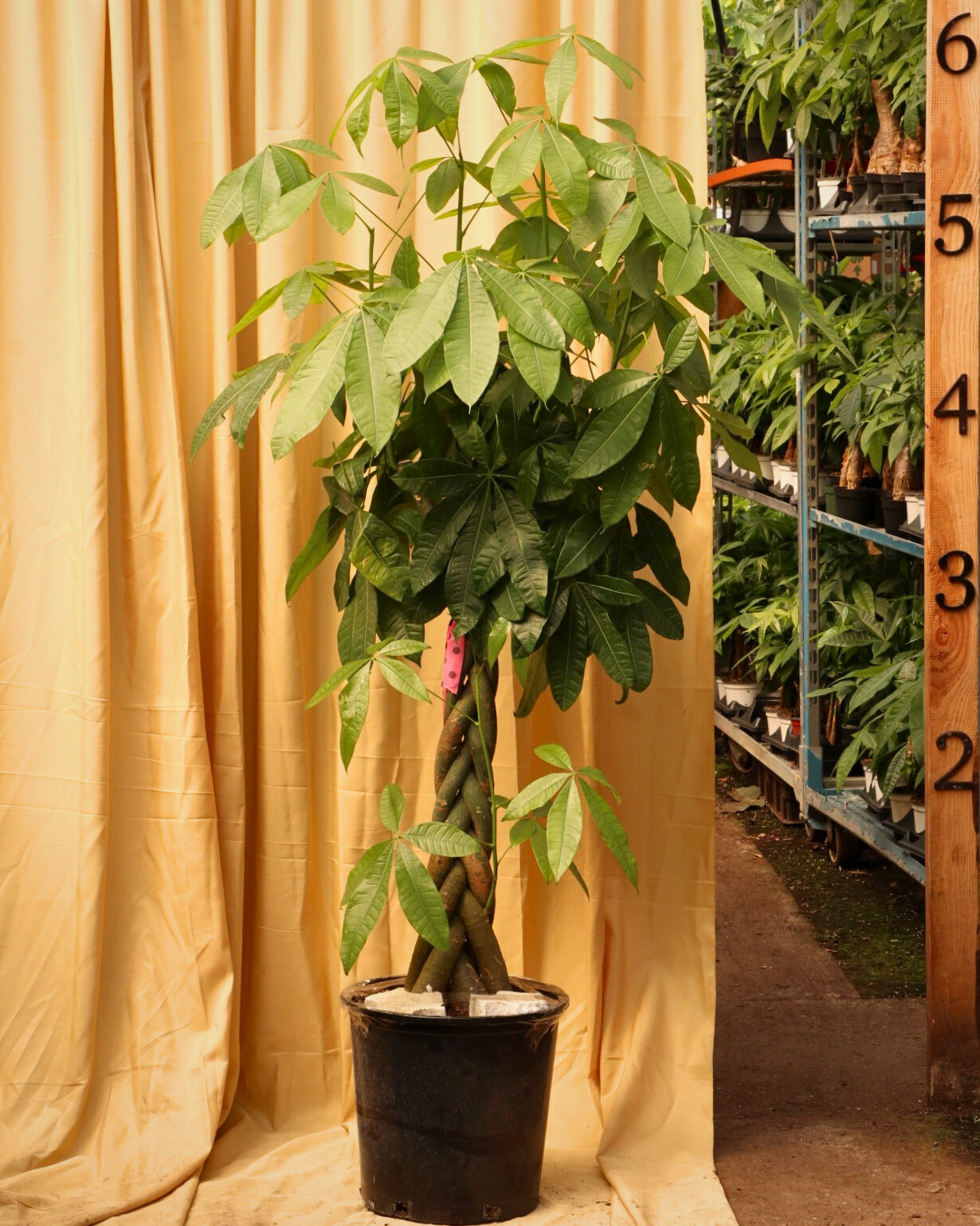
animal crossing money tree not growing Full Size Money Tree

Sale price$23.81 Regular price$26.46
Save 10%

Pay in installments of $6.62 with ShopPay, AfterPay and Klarna

Shipping Estimate
USA
  • USA
  • CAN

Ships within 48 hours · Estimated delivery Jul 21 - Jul 26

Promo Codes Available:

For Your Every Summer RSVP, with Code: SUMMER15

Description

animal crossing money tree not growing Full Size Money TreeIf youre looking for good luckand a large houseplantthen look no further. Mr. Money Trees beautifully braided, swirling trunk traps good fortune. Not just good luck, but also a good income. Its leaves grow in groups of six, possibly representing six figures. Plus, the whole thing just looks striking. Money Tree benefits Some say a Money Tree can even promote healthier sleep, reduce stress, and decrease conflict in the home. We cant confirm the science

If you’re looking for good luck—and a large houseplant—then look no further. Mr. Money Tree’s beautifully braided, swirling trunk traps good fortune. Not just good luck, but also a good income. Its leaves grow in groups of six, possibly representing six figures. Plus, the whole thing just looks striking.


Money Tree benefits

Some say a Money Tree can even promote healthier sleep, reduce stress, and decrease conflict in the home. We can’t confirm the science behind those beliefs, but research does suggest that the Money Tree is an effective air purifier.


Place this adorable plant beside your bed at night, and take a deep breath. You just might sleep better and feel at ease, and you’ll definitely be breathing in cleaner air!


The Money tree looks cool

Scientifically known as the Pachira Aquatica, the Money Tree is a wetland plant native to Central and South America. Each “Money tree” is actually made up of multiple Pachira Aquaticas, gently hand woven together as they grow to maturity. Thanks to the Money Tree’s umbrella-like foliage, the plant’s swirling trunks look like they’re dancing in the rain, adding whimsy and romance to your indoor garden.


The Money Tree is pet-friendly and non-toxic

Money Trees are non-toxic to cats and dogs. We can’t stop your pet from nibbling on your precious Money Tree, but it won’t end in their demise. (We’ll send all the good vibes to your devoured Money Tree, though).


Lighting

Money Trees love low-light spots, even really low light, and they’ll bring you joyful thoughts even from a shady corner—or in bright indirect light. Money can’t buy happiness, but it can buy plants, which is almost the same thing?


Watering

Most houseplants can’t tolerate much trial and error when it comes to watering. But the Money tree is flexible! Money trees kinda like damp soil (they’re native to swampland after all), so overenthusiastic watering generally won’t kill them.


Pick your exact Money tree 


Now that you're an expert with the Money Tree, order this plant by 7pm ET to get this plant shipped out of our greenhouse in New Jersey tomorrow. (Wondering when it will arrive? Check with the zip code validator on top of the “Add To Cart” button.) We’ll deliver your Money Tree in our sustainable, super-secure packaging system, no matter where you live in the U.S. Your plants will arrive safe and intact!


Hop on a video call to select your Money Tree, and we WILL send out the EXACT plant that you picked out, just like if you picked it up at a local nursery or garden center. Except we have more and fresher plants to choose from, and you can't find our PAFE fine ceramic planter options anywhere other than our website. :)


For any other questions or concerns, please don't hesitate to reach out to us at [email protected] or call/text (609)-968-7063! Or if you want to learn more about the Money Tree, keep scrolling!


Money tree benefits


What is a Money tree good for?

The Money tree looks awesome, purifies the air, brightens your home, and—maybe—brings good fortune. That’s a legend, but nobody said legends can’t be based on truth! You should probably test it out, to be on the safe side.


Does the Money tree clean the air or give oxygen?

The Money tree cleans carbon dioxide from the air and replaces it with nice fresh oxygen for us to breathe. It also sucks up chemicals like formaldehyde and benzene, plus other synthetic chemicals from cleaning products, leaving the air cleaner.


Are Money trees easy to keep alive?

Money trees are very low maintenance. They’re not too fussy about their watering schedules or their lighting. However, everyone has something, and Money trees do prefer a narrow range of temperatures (65-75). They also want some humidity. But that’s all.


Money tree care


How often should I water my Money tree?

Water your Money tree every week or two—more often during the spring and summer, and less often in the fall and winter. The Money tree tolerates overwatering better than underwatering, but make sure you’re using well-draining soil.


How do I keep my Money tree happy?

It’s pretty easy to keep a Money tree happy! Water every week or two. Put it anywhere indoors except in direct sun. And sing it a lullaby every night at bedtime. Even easy-care plants don’t mind a little pampering.


Where should a Money tree be placed in the house?

Most importantly, place the Money tree wherever it can get the right lighting—anywhere from bright indirect light to truly low light. But traditionally, for the best luck, the Money Tree is placed in the southeast section of your home.


Do I need to fertilize my Money tree?

Fertilize your Money tree once a month during spring and summer, when it’s really growing. You can use a general-purpose fertilizer—it’s not a picky eater—but dilute it to half-strength and make sure the soil is wet before applying.


What temperature do Money trees like?

The Money tree is a bit fussy, liking a narrow range of indoor temperatures: 65 to 75 degrees. So keep your home at moderate temps year-round. (Finally, you can tell your spouse or Dad to turn up the heat.)


Can Money trees grow without sunlight?

Money trees can live happily in a dark room with little natural light. So if you have a room with teeny tiny windows, or your neighbor’s way-too-close apartment blocks the sun always, it’s ok—Mr. Money tree will be fine.


Should I spray water on my Money tree?

The Money tree does enjoy humidity, and its leaves will get crinkly in low humidity. However, there’s some debate over whether misting helps or not. To be on the safe side, if you live in low humidity, get a humidifier.


Money tree factoids


Why does the Money tree have 6 leaves?

Some say the six leaves symbolize six figures—in other words, the luck from the Money tree might lead to your next promotion. (It’s us, we’re the ones who say that.) No promises, but work really hard just in case.


What is the superstition about Money trees?

Legend says that having a Money tree in your home will bring good luck and possibly even financial fortune. We prefer “legend” over “superstition” because it sounds fancier and makes us look cooler for believing in it.


Is there a difference between a Money tree and a Money plant?

Yes, the Money tree and the Money plant are totally different species. The Money tree is officially Pachira Aquatica, and the most common money plant, the Chinese Money plant, is Pilea Peperomioides—and it’s a small plant, not a tree.


Is the Money tree good for feng shui?

The Money tree is powerful and meaningful in feng shui, especially if you place it in the southeast area of your home. It symbolizes personal and professional growth and is said to bring good fortune to you and your family.


Do Money trees bloom?

In the wild, Money trees often boast glorious fluffy orange blossoms. But that only happens because they’re pollinated by bats. Assuming you don’t keep any bats inside (weirdo), your Money tree is very unlikely to bloom indoors.


How often do Money trees grow money?

Sadly, the legend that Money trees bring wealth and fortune is more of a metaphor than a practical promise. None of our Money trees have ever grown cash, and if they start, we won’t sell them to you anymore!


Why is it called a Money tree?

The Money tree gets its name from the legend, myth, or superstition that it brings financial luck to its owner or household. However, it’s not literal; Money trees don’t grow money (and no one will pay you to own one).


How long do Money trees live indoors?

Even indoors, a Money tree can live ten years or even longer. Of course, it requires TLC, but it’s an easy-care plant so that’s not a tall order. The Money tree will be your botanical companion for a decade.

Shipping Notes
  • Free Standard Shipping on $100+ Orders to the USA.
  • Except Preorder products are shipped in 48 hours.
  • Delivery to the USA:
  1. Standard Shipping : 3-10 business days
  • If time is of the essence, please consider selecting expedited delivery for faster service.
Exchange/Return Notes
  • We offer a 30-day return/exchange service after receiving.
  • Final sale items are not eligible for returns or exchanges.
  • To process your return/exchange, please contact us at [email protected]
  • Please click here for more details>>> Return & Exchange Policy
SKU: 55071485981

Discover Niche Categories That Outsell animal crossing money tree not growing

Top-Converting Item to Boost Your Average Order

4.9 ★★★★★
Based on 10 reviews
Sort
Highest Rating
Newest First
Oldest First
Product Reviews
D
Verified Purchase
Daniel Myers
Houston, US
★★★★★ 5
A Foundling's Felicity
This book or novel or whatever you may deem fit to call it has so many points in its favour that it's difficult to know where to begin. I think a rundown of a few of the myriad of characters that delight me personally might do for starters: Tom Jones - A young fellow with many "imperfections" if so they may be called, but a robust fellow with a "good heart." Prudence and what is commonly called virtue are not his strong suit - But may I remind the reader that virtue comes from the Latin word for "manliness"- Tom is certainly possessed of the word's etymological origins, if not of its modern usage (particularly in amorous matters)--And a good thing too, or we should have no story here to delight us! Squire Western- Another rambunctious character, who, for me, typifies all that is Eighteenth Century England. Every time he appeared in this book, whether it was to comment on wenching, wine, or riding to hounds a smirk would immediately cross my face followed invariably by chuckling by the end of the chapter. Henry Fielding - The author plays as much a part of the book as any of the characters with many prologues and prefaces and etc. For these, and for much of the rest of the book, I might add, the reader who has not had four years of Latin inculcated into him at an English boarding school would do well to buy the Oxford edition, which fully explains all the learned quotes - Also, as one who was thus inculcated but is inclined to laziness, the Oxford edition's notes prove extremely helpful also. Fielding also gives us a lively picture of the literary life of his time, which the Oxford footnotes do a deft job of explaining- In short, buy the Oxford edition. This review can not be comprehensive. There are simply too many characters to even make a go at encompassing them all. I'm merely describing some of the, to me, more delightful ones. The book as a whole is simply a joy to read, in its comic descriptions of all who will deign to admit that they are human, and of some priggish sorts who will not so deign. I can put it no better than Fielding Himself at the beginning of Book XV: "There are a set of religious, or rather moral writers, who teach that virtue is the certain road to happiness, and vice to misery, in this world. A very wholesome and comfortable doctrine, and to which we have but one objection, namely, that is not true." In short, this is a delightful ramble of a book which, while entertaining the reader not too attached to Sunday School, sheds light on how unvirtuous the virtuous can be, and how kind and good-natured the roguish can be as well as giving us as good a history lesson on the state of affairs in Eighteenth century England (with attention given to the Jacobite Rebellion etc.) as many a "proper" history does. Who, I ask myself, would not delight in this book? ---Well...for the priggish, there's always Jane Austen.
WAS THIS REVIEW HELPFUL?YesReportShare
Reviewed in the United States on January 24, 2007
A
Verified Purchase
Alexander Kobulnicky
Charlottesville, US
★★★★★ 4
The Sidekick in Early-Modern Literature.
Tom Jones is probably the most influential novel in English history, pioneering elements like complex characterization, social criticism and authorial interjection. But you already knew that. What you want to know is, is this a good book for us in the 21st century. And here, it's not so clear. The dialogue is pretty brisk, and some of the exchanges (the stereotypical Whig Mrs. Western arguing with her Jacobite brother is a particular treat) are actually funny. The latter part of the novel evolves into a farce, with a dozen characters engaged in scheming against one another, while Tom and Sophia helplessly go along. Farce works better in drama, where it has a faster pace, but it's always a welcome mode of comedy. You don't see enough farces. Some of the characters are evocative (why do I picture Blifil as looking like Ted Cruz?) but some are not: Dowling is just a lawyer, and Mrs. Miller is a good woman, like thousands who have come since, and that's all there is to it. It's not as if every character needs to, or can, be a fully realized person, but the parts of the novel spent with these human plot devices do feel mechanical. But Mr. Partridge, Tom's traveling companion, is in a different category altogether, and he just poisons the parts of the novel that he features in (chiefly the middle third). Eighteenth Century literature has a depressing reliance on goofy loose-lipped sidekicks: Mr. Partridge, Hugh Strap, Humphrey Clinker, Andrew Fairservice, Friday. Sometimes they're servants, but sometimes they're just stupid friends. Part of this must be practical: It's difficult to follow a wandering hero (and why are the heroes of these novels always wandering? But that's a different question altogether) without giving him a friend to talk to. Maybe early novelists had a hard time sketching characters who didn't have a way to discuss the ongoing action. But mostly, I think this is the bad influence of Don Quixote, which was becoming increasingly popular in England during this period. Sancho Panza is OK, and he's certainly the funniest element of that leaden tome. But Mr. Partridge *is* Sancho Panza, cowardice, superstition and all, and one Sancho Panza was more than enough. You know? There's a limited number of things that a silly, selfless, lazy pal can do, and it's hard to read about the same old doofus, yet again.
WAS THIS REVIEW HELPFUL?YesReportShare
Reviewed in the United States on April 28, 2016
D
Verified Purchase
Diana S. Long
West Palm Beach, US
★★★★★ 5
Delightful and entertaining
Format: Kindle
314. The History of Tom Jones: a foundling by Henry Fielding (Novel-Audible/E Book-Fiction) 5* I read along with the Audible of the novel which I found a highly delightful and entertaining experience. The narrator, Bill Homewood, who performed the audio version of the work was excellent doing the various characters as well as the invisible narrator (author) of the story. The Synopsis is as follows: A foundling of mysterious parentage brought up by Mr. Allworthy on his country estate, Tom Jones is deeply in love with the seemingly unattainable Sophia Western, the beautiful daughter of the neighboring squire—though he sometimes succumbs to the charms of the local girls. When Tom is banished to make his own fortune and Sophia follows him to London to escape an arranged marriage, the adventure begins. A vivid Hogarthian panorama of eighteenth-century life, spiced with danger and intrigue, bawdy exuberance and good-natured authorial interjections, Tom Jones is one of the greatest and most ambitious comic novels in English literature. It is rather brilliant, and there is no lack of shenanigans as we follow Jones through his history and the reader never knows when and where the author will abruptly go off on a tangent, told in a most eloquent manner, end with a flourish and no doubt tossed his quill down and took a bow. I am either taken in by some farce or thoroughly enchanted by this author. As Fielding is rather the loquacious writer this read comes in Audible time at almost 38 hours or roughly 1,000 pages but worth every minute spent on it.
WAS THIS REVIEW HELPFUL?YesReportShare
Reviewed in the United States on December 19, 2017
H
Verified Purchase
Hawkeye
Houston, US
★★★★★ 5
An epic nearly 300 years old
Tom Jones is the comical history of a young man who was adopted into a rich family and faces a brother who is against him all while they grow into maturity. It’s kind of like the first part of JoJo’s Bizarre Adventure except with Jonathan and Dio being reversed and with no vampires, but there is a moment where someone gets really scared while watching the ghost in hamlet so there’s at least some notion of the supernatural. Getting into it though, it’s an easy read despite it’s length encompassing 18 books, it’s honestly fascinating that it was able to be written so cleanly considering how many gaps there must of been between these books being written, it reads to us as a consistent narrative, but to imagine the wait and changing times that must have occurred during the duration to the story is really interesting to consider. The role and function of the narrator is probably the only real glimpse of this in narrative as he’s really just talking to us in the first chapter of every book, but the narrator being so clever and charming makes the only thing of interest be him and the relationship we form to him. It’s an incredible experience that I can recommend the entire story for alone. Getting to know the narrator is like talking to an old, reliable friend and it’s worth reading into nearly 300 years on.
WAS THIS REVIEW HELPFUL?YesReportShare
Reviewed in the United States on March 27, 2021
A
Verified Purchase
Astronomere
Birmingham, US
★★★★★ 3
Jone's Tome
This book seems more likely to be enjoyed by literary academics than by folks looking for a good story. While Henry Fielding is indeed a learned man of letters and does write in a fine and high style with many subordinate clauses, the actual substance thereof is no better than more earthy pedestrian fare. To put it plainly, I found most of the book a rather tedious slog. This is my personal subjective opinion only as I do believe Henry Fielding is well esteemed by serious literary scholars who undoubtedly see the matter quite differently. I am judging this book purely by my own personal enjoyment of the actual narrative and plot construction, and by my difficulty in teasing out the subordinate clauses which are so bound up with this age of writing. Imagine a very learned and erudite professor trying to tell you a common bawdy tale, but taking forever to do it while using the most stuffy language. I had thought that my deeper background in reading many Victorian era novels would qualify me to enjoy this one, but the language was a little too dense to make it an enjoyable read. I was however able to follow the story as well as the side epistles the author directly addresses the reader with (which I find to be an annoying device also much used in that era). I did read the whole thing and did take pleasure in some parts, but I must confess my bias towards this earlier era of novel writing. It takes very learned men of their age and has them writing long-winded tales of inferior construction when compared against later centuries. I know this is not their fault any more than you can blame a champion athlete of his time for having his record broken decades later when methods have universally improved.
WAS THIS REVIEW HELPFUL?YesReportShare
Reviewed in the United States on July 19, 2015

recommand products