Pay in installments of $6.78 with
 ,
,
 and
and

Shipping Estimate
USA
- USA
- CAN
- USA
- CAN
Ships within 48 hours · Estimated delivery Oct 20 - Oct 25
 Promo Codes Available:
For Your Every Summer RSVP, with Code: SUMMER15
Description
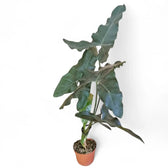
philodendron stenolobum narrow Thaumatophyllum stenolobum – Narrow Wavy LeavesThaumatophyllum stenolobum Narrow lobed Brazilian aroid with sculptural foliage Thaumatophyllum stenolobum (E. G. Gon.) Sakur., Calazans and Mayo formerly Philodendron stenolobum is a self heading, terrestrial aroid from Brazils Atlantic Forest. Long, narrow, deeply lobed leaves with gentle waves along the margins create a striking, architectural silhouette. Mature leaves commonly reach 60 100 cm, and well grown plants form a broad, upright rosette
Thaumatophyllum stenolobum – Narrow-lobed Brazilian aroid with sculptural foliage
Thaumatophyllum stenolobum (E.G. Gonç.) Sakur., Calazans and Mayo – formerly Philodendron stenolobum – is a self-heading, terrestrial aroid from Brazil’s Atlantic Forest. Long, narrow, deeply lobed leaves with gentle waves along the margins create a striking, architectural silhouette. Mature leaves commonly reach 60 – 100 cm, and well-grown plants form a broad, upright rosette that anchors a room.
Notable characteristics of Thaumatophyllum stenolobum
- Leaf architecture: Elongated blades divided into many slender lobes; semi-gloss surface with firm texture.
- Self-heading habit: Upright rosette on a short, decumbent to semi-erect stem with adventitious roots for stability.
- Interior scale: Indoors typically 1.2 – 1.5 m tall with a similar spread when mature.
Origin, size and growth habit
Native to eastern Brazil within the Atlantic Forest biome, where warm temperatures, filtered light and high ambient humidity prevail. Growth is moderate; foliage size and lobe definition improve with age, space and light quality.
Light, water and humidity – dialing in consistent growth
- Light: Bright, indirect or lightly filtered light drives larger leaves and sharper lobes. Avoid sustained midday sun that can scorch margins.
- Water: Water when the top 2 – 3 cm of mix is dry. Keep evenly moist in active growth; never waterlogged.
- Seasonal adjustment: In cooler, lower-light months, slow watering cadence to match reduced evaporation while preventing full dry-down.
- Humidity: Comfortable at 50 – 60%, with best results 60 – 75% for glossy, edge-clean foliage.
- Temperature: Ideal 18 – 28 °C; protect from cold drafts and sudden temperature dips.
Soil recipe and pot choice
- Mix: Airy aroid substrate: ~40% high-quality peat-free compost, 30% medium orchid bark, 20% perlite or pumice, 10% coco coir or fine bark. Aim for high aeration with steady moisture holding.
- Container: Pot with generous drainage and a stable base. Slightly snug pots help avoid oversaturation while the root system establishes.
Feeding, repotting and pruning
- Fertiliser: Every 4 – 6 weeks during active growth with a balanced liquid feed on moist substrate. A touch more nitrogen in spring supports leaf production.
- Repotting: Every 2 – 3 years or when roots circle the base; step up one size to maintain aeration.
- Pruning: Remove yellowing or damaged leaves at the base; rotate the plant periodically for even light exposure.
Propagation options
- Division: Separate basal offsets during repotting, ensuring each division has roots and a viable growing point.
- Stem sections: Possible from mature stems with visible nodes; allow cuts to callus before potting into airy mix.
- Semi-hydro: Adapts to inert substrates (e.g., expanded clay) with careful moisture and nutrient control.
Troubleshooting growth and foliage problems
- Leaf edges browning: Typically low humidity or uneven moisture. Stabilise humidity and avoid large wet – dry swings.
- Yellowing leaves: Often saturated mix or poor drainage. Improve aeration and adjust watering cadence.
- Weak lobing or smaller leaves: Insufficient light or nutrients. Increase filtered light and resume balanced feeding.
- Pests: Monitor for spider mites and thrips. Rinse foliage and treat with insecticidal soap as needed.
Styling ideas
- Stage as a statement floor specimen in minimalist or modern interiors.
- Pair with broad-leaf Anthurium or Monstera for layered texture and height contrast.
- Use warm-toned, matte planters to emphasise the narrow, rhythmic lobes.
Etymology and taxonomy
Thaumatophyllum combines Greek “thauma” (wonder) + “phyllon” (leaf), reflecting dramatic foliage across the genus. Reclassified from Philodendron to Thaumatophyllum in 2018 based on morphology and phylogeny.
Add Thaumatophyllum stenolobum to cart
Secure a sculptural Brazilian aroid with long, narrow, deeply lobed leaves and a clean, upright habit. Thaumatophyllum stenolobum brings impactful form with straightforward, science-based care – a true anchor plant for serious collections.
Shipping Notes
- Free Standard Shipping on $100+ Orders to the USA.
- Except Preorder products are shipped in 48 hours.
- Delivery to the USA:
- Standard Shipping : 3-10 business days
- If time is of the essence, please consider selecting expedited delivery for faster service.
Exchange/Return Notes
- We offer a 30-day return/exchange service after receiving.
- Final sale items are not eligible for returns or exchanges.
- To process your return/exchange, please contact us at [email protected]
- Please click here for more details>>> Return & Exchange Policy