SKU: 58413804800
neem oil damage succulents

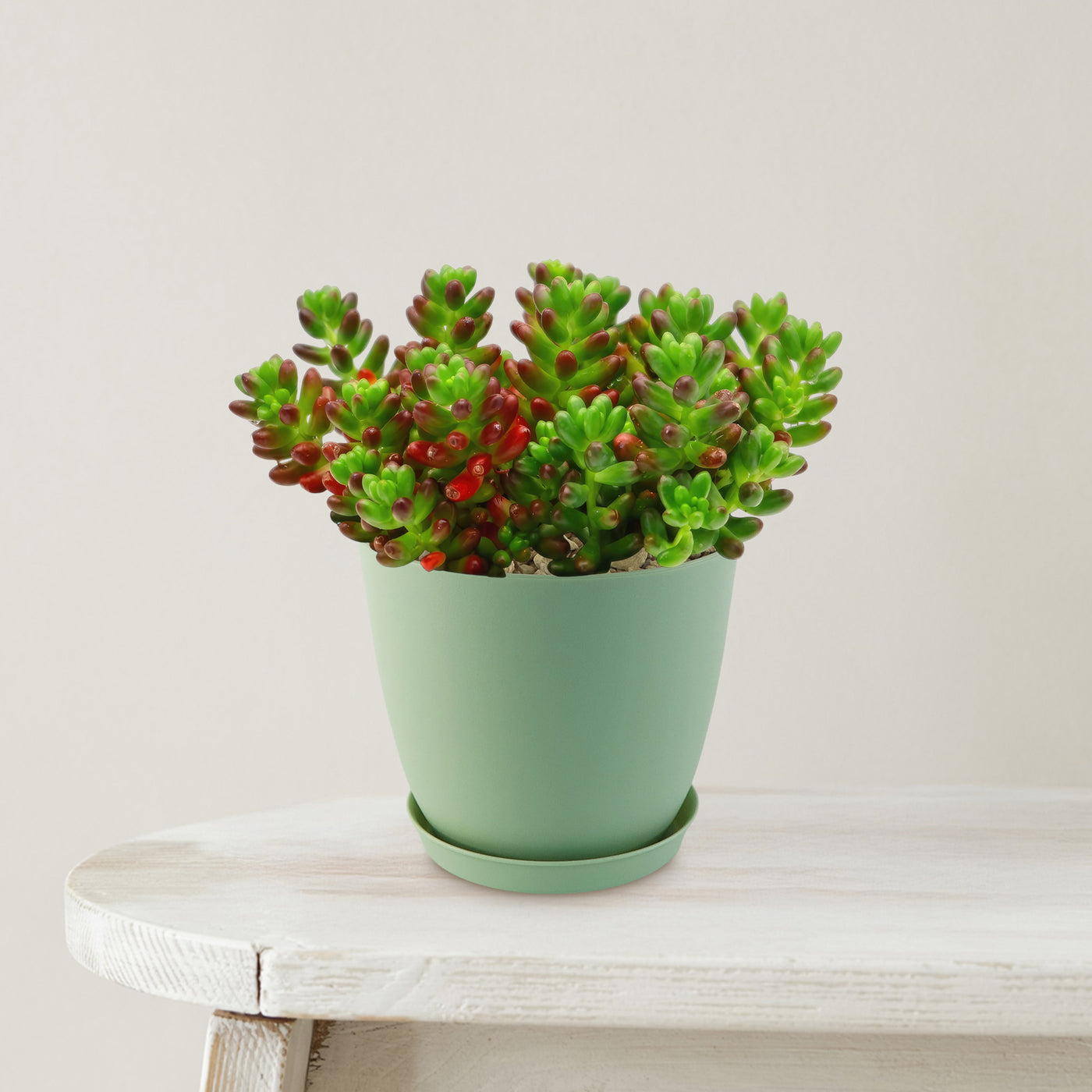
neem oil damage succulents Jelly Bean Succulent 'Sedum rubrotinctum'

Sale price$22.15 Regular price$24.61
Save 10%

Pay in installments of $6.15 with ShopPay, AfterPay and Klarna

Shipping Estimate
USA
  • USA
  • CAN

Ships within 48 hours · Estimated delivery Sep 8 - Sep 13

Promo Codes Available:

For Your Every Summer RSVP, with Code: SUMMER15

Description

neem oil damage succulents Jelly Bean Succulent 'Sedum rubrotinctum'Introducing the Jelly Bean Plant, botanically known as Sedum rubrotinctum, is a charming, low growing succulent admired for its colorful, bead like foliage. Its cascading stems make it an excellent choice for hanging baskets, window boxes, and container arrangements, where its colorful foliage can spill over the edges beautifully. Native to Mexico, this evergreen perennial is commonly called pork and beans or banana cactus due to its plump, jelly bean

Introducing the Jelly Bean Plant, botanically known as Sedum rubrotinctum, is a charming, low-growing succulent admired for its colorful, bead-like foliage. Its cascading stems make it an excellent choice for hanging baskets, window boxes, and container arrangements, where its colorful foliage can spill over the edges beautifully.

Native to Mexico, this evergreen perennial is commonly called pork and beans or banana cactus due to its plump, jelly bean-shaped leaves that give it a playful and unique appearance.

This hybrid jelly bean succulent has small, fleshy leaves that start out green but develop vibrant shades of red, orange, or bronze when exposed to bright sunlight, making it a standout in any succulent collection.

It is often used as a ground cover in rock gardens or featured in decorative containers and dish gardens.

As the plant matures, Sedum rubrotinctum typically reaches about 8 inches tall and up to 24 inches wide, forming a spreading, trailing habit.

Jelly bean succulent flowers are yellow, small, and star-shaped, blooming in clusters at the tips of their stems.

While the blooms are subtle, they provide a delicate contrast to the bold foliage and usually appear in spring to early summer.

Related Product

What truly makes the jelly bean succulent so popular is its combination of low-maintenance care and vibrant color transformation. It is drought-tolerant, easy to grow, and adapts well to both indoor and outdoor environments with proper light. Its ability to change color with sunlight adds dynamic beauty throughout the year.

When and How to Water Your Sedum rubrotinctum Plant

This jelly bean succulent is highly drought-tolerant and prefers drying out between waterings, making it more resilient to underwatering than overwatering.

The Sedum rubrotinctum should be watered once every 1-2 weeks during the growing season, with light soaking and minimal watering once every 3-4 weeks during the dormant season, with very light moisture.

During the active growing season, allow the soil to dry out completely between waterings. This helps prevent overwatering, which can cause the Sedum rubrotinctum roots to rot.

During the dormant season, your jelly bean requires even less water. It's important to remember that succulents like the jelly bean plant are more tolerant of underwatering than overwatering.

Light Requirements - Where to Place Your Jelly Bean Succulent

When growing indoors, you can grow it in the areas where it can receive atleast at least 6 hours of bright, direct light to maintain their vibrant red coloring and compact, healthy growth. 

Place it near a window that receives plenty of sunlight, but make sure to protect your jelly bean plants from direct exposure to intense sunlight, especially during the hottest parts of the day.

A south or west facing window works best, but protect it from harsh midday sun. If natural light is limited, you can use grow lights. 

When growing outdoors, it loves basking in the full sun, so find a location in your garden or patio that receives at least 6 hours of direct sunlight each day. 

When grown in direct sunlight, the color ranges from bright green leaves to red-tipped leaves, with the brightest hues.  However, it's important to note that the jelly bean plant can also tolerate partially shaded areas, especially in regions with intense summer heat. 

Newly purchased jelly bean succulent may burn if placed in full sun right away, so increase exposure gradually.

  1. If the leaves stretch or turn pale, it needs more light.
  2. If they become scorched or develop brown spots, it is getting too much sun.

Optimal Soil & Fertilizer Needs 

The Sedum rubrotinctum favors very airy, sandy soil that drains well, and NPK fertilizers once a year in spring. Planting your Sedum rubrotinctum in ordinary wet soil will result in compacted roots, stunted growth, and, most likely, root rot. Instead, make or buy a well-draining potting mix, or ideally, use our Go to Soil cactus mix blend 1 gal 4 qt cacti succulent dirt compost growing media that contains organic mycorrhizae to promote the development of a strong root system that helps your jelly bean plants and other succulents to thrive. 

A balanced, low-strength fertilizer works best for your Jelly bean succulent plant, ideally with an NPK ratio around 5-10-5, where phosphorus is slightly higher than nitrogen to support healthy growth. Apply fertilizer once in spring at the start of the growing season to give it a gentle boost to support stronger roots and better nutrient absorption. 

Hardiness Zones & More 

In the United States, this jelly bean succulent is mostly an indoor plant, but if you live in southern Florida or Hawaii, then you can cultivate it outdoors in USDA zones 9-11.

If you live in a colder climate, it's best to bring the jelly bean plant indoors or provide some protection during the winter months.

As for humidity, the jelly bean plant can handle a range of humidity levels, from drier to more humid environments. Just ensure that the soil has good drainage to prevent waterlogged conditions. 

How to Grow as a Houseplant 

Your jelly bean succulent grows best indoors in temperatures between 60°F and 75°F. It can tolerate slightly cooler temperatures during the winter months, but it's best to keep it away from drafts or extreme temperature fluctuations. As for humidity, the Sedum rubrotinctum jelly bean plant can handle average indoor humidity levels, so you don't need to worry too much about providing extra humidity. Just make sure the air isn't too dry, especially during the winter when indoor heating can cause dryness. 

Wildlife - Jelly Bean Succulent Flowers Attract the Following Friendly Pollinators 

Jelly Bean Succulent 'Sedum rubrotinctum' can attract friendly pollinators such as bees, butterflies, hummingbirds, and other beneficial insects. These pollinators play a crucial role in the ecosystem by aiding in the reproduction of plants and ensuring biodiversity.

Butterflies
Bees
Hummingbirds
Lady Bugs
Multi Pollinators
Other Birds

According to ASPCA, the Sedum rubrotinctum is mildly toxic to humans or pets if ingested in large amounts. However, it is safe to touch and handle, making it a popular choice for indoor gardens or landscaping due to its vibrant colors and low maintenance requirements.

How to Propagate Your Sedum rubrotinctum Plant 

To propagate your jelly bean plants, stem or leaf cuttings can be used. Both are simple and have a high success rate. Keep the cutting in a spot with bright, indirect light instead of direct sunlight, and give it some time until you begin to see new growth. 

Key Takeaways

  1. Jelly bean succulents are low-maintenance and drought-tolerant. They prefer infrequent watering and can handle dry conditions better than excess moisture, making them beginner-friendly plants.
  2. 'Sedum rubrotinctum' is known as pork and beans succulent or banana cactus, because of their jelly bean-shaped leaves.
  3. These succulents thrive in airy, sandy soil, and keeping roots from sitting in moisture is key to maintaining plant health.
  4. Jelly bean succulents' leaves shift from green to vibrant red or bronze, in bright sunlight.

Final Thoughts

Overall, the jelly bean succulents (Sedum rubrotinctumm) are captivating succulents with their bean-shaped leaves and trailing growth habit. With their vibrant green foliage and occasional bursts of colorful flowers, they add a touch of whimsy to any space. A succulent tends to live for many years and grows slowly. Plant them in the spring after the weather warms up. Propagating these succulents is relatively easy, whether through stem cuttings or fallen leaves. Jelly bean succulents are a delightful addition to any succulent collection, bringing charm and beauty to both indoor and outdoor settings. If you're looking for a unique and low-maintenance plant, the jelly bean succulent is definitely worth considering!

Don't miss out on this opportunity to add something truly exceptional to your garden. Order your very own jelly bean Sedum rubrotinctum today!
Shipping Notes
  • Free Standard Shipping on $100+ Orders to the USA.
  • Except Preorder products are shipped in 48 hours.
  • Delivery to the USA:
  1. Standard Shipping : 3-10 business days
  • If time is of the essence, please consider selecting expedited delivery for faster service.
Exchange/Return Notes
  • We offer a 30-day return/exchange service after receiving.
  • Final sale items are not eligible for returns or exchanges.
  • To process your return/exchange, please contact us at [email protected]
  • Please click here for more details>>> Return & Exchange Policy
SKU: 58413804800

Discover Niche Categories That Outsell neem oil damage succulents

Top-Converting Item to Boost Your Average Order

4.6 ★★★★★
Based on 6 reviews
Sort
Highest Rating
Newest First
Oldest First
Product Reviews
J
Verified Purchase
jennifer
Port Orchard, US
★★★★★ 5
Great condition
Format: Hardcover
I thought this book was going to look very old and used but it looks brand new . Really happy with my purchase
WAS THIS REVIEW HELPFUL?YesReportShare
Reviewed in the United States on January 24, 2022
M
Verified Purchase
Mark Erickson
Phoenix, US
★★★★★ 5
Best book on Christian Leadership
Format: Paperback
I love this book and have read it 7 or 8 times - and will likely continue reading it every couple years for the rest of my life. As a pastor who can struggle with insecurity and the temptation to be powerful, spectacular, and popular, I read this book regularly to be called back to Jesus and to choose the way of prayer, service, love, and humility. In an era of celebrity pastors, consumer Christianity, and scandal, this book is a breath of fresh air. If I had to make a list of my top five books of all time, there is no question this gem would be on that list. It's a short and easy read, but is so powerful.
WAS THIS REVIEW HELPFUL?YesReportShare
Reviewed in the United States on February 28, 2023
K
Verified Purchase
K Edward
New York, US
★★★★★ 5
Excellent glimpse into Christ's model for leadership
Format: Paperback
This book is on a required reading list for ministerial licensing in my state. I found it a refreshing look into real Christian leadership (seemingly free from methods and techniques encouraged by the world). I say 'refreshing' because so many leadership books send out a 'drill sergeant' message that 'You need to toughen up for leadership. It isn't a cake-walk... You do a lot alone, etc. etc.' That may be true, but it can almost be discouraging/ disheartening for those interested in learning about leadership. NOT SO with this book. The author is a humble man of God who only desires to walk closer with Him. He (author) approaches leadership from a Divine angle; that is, he doesn't see leadership as the exercise of power and authority for its own sake. He sees leadership as that quality one gets from simply walking with Christ in close fellowship, to the point of being what he calls 'a mystic'. He encourages us to take those quiet walks with God; get to know His heart, and only then... be qualified to lead others with a servant's heart. He encourages us to be transparent and not to seek to do this alone (contrary to the messages this world sends us). To do this he shares engaging stories from his own life - stories of tough lessons he had to learn about becoming a Christian leader. God taught him through these life experiences more accurately what it means to be a leader, and I found myself identifying with him. I found this book on leadership to be a great encouragement to just walk closely with God - and that's what it's all about!
WAS THIS REVIEW HELPFUL?YesReportShare
Reviewed in the United States on November 11, 2006
B
Verified Purchase
Brad
Charlottesville, US
★★★★★ 5
Follow Jesus, Not the World
Format: Paperback
Henri Nouwen calls on Christian leaders--including himself-- to resist, as Jesus resisted, the temptations to be relevant, spectacular, and powerful. Instead, "...the Christian leader of the future is called to be completely irrelevant and and to stand in this world with nothing to offer but his or her own vulnerable self. That is the way Jesus came to reveal God's love." Further: "We keep forgetting that we are being sent out two-by-two. We cannot bring good news on our own. We are called to proclaim the Gospel together, in community." And: "The temptation of power is greatest when intimacy is a threat. Much Christian leadership is exercised by people who do not know how to develop healthy, intimate relationships and have opted for power and control instead. Many Christian empire builders have been people unable to give and receive love." I hope these excerpts give you a flavor of what's inside this extraordinary book, which I thought was truly profound even in its simplicity. Nouwen speaks from the heart because he speaks from experience. He walked away from a high profile clerical career to follow Jesus in the most authentic way he could. His is a story worth hearing and imitating.
WAS THIS REVIEW HELPFUL?YesReportShare
Reviewed in the United States on September 16, 2006
L
Verified Purchase
Lavid
Grantham, US
★★★★★ 5
Un libro que debes leer!
Format: Paperback
El tema del liderazgo cristiano es vital dentro de la Iglesia. La lectura del libro In the Name of Jesus: Reflections on Christian Leadership, hace un aporte significativo a mi entendimiento teológico acerca del liderazgo. Como líderes podemos edificar o destruir vidas; ayudar a otros a que avancen o frenarlos en su jornada de fe; servir de inspiración o dejar huellas de dolor en la vida de otras personas; mostrarles el camino a otros o perdernos en el camino. El autor hace una pregunta que creo que es muy oportuna y puntual en nuestra vida: ¿Qué decisiones has estado tomando últimamente y cómo son un reflejo de cómo percibes el futuro? Ciertamente no había reflexionado en ello. Cada día tomamos decisiones desde el momento en que abrimos los ojos, si ya me levanto, qué voy a desayunar, qué ropa me voy a poner, etc. Pero no había analizado si mis decisiones diarias me están acercando a lo que Dios tiene para mí o si me tienen estancada en mi pasado. Una de las cosas que ha llamado mi atención en la lectura de este libro es que el autor dice que llegó a un punto en su vida donde comenzó a sentir una terrible amenaza interna y se cuestionó si el hacerse ya mayor en edad lo había acercado más a Jesús. Quiero detenerme aquí, porque una líder que ha influenciado mi vida es mi madre. Ella ya tiene 83 años, y continuamente me repite: -Hija, tengo que estar muy cerca de Jesús, ya casi llega mi hora y quiero poder encontrarme con Él cara a cara. Puede uno entrar a su cuarto y la hallarás en su sillón con su Biblia abierta y orando o cantando alabanzas a Dios. Ella se preocupa por guardar su relación con Jesús. ¿Alguna vez, como líderes, estamos preocupados por si estamos muy cerca de Dios? ¿O es que quizás nuestro liderazgo nos hace presuponer que sí lo estamos? Estamos tan ocupados en la viña del Señor que se nos olvida ocuparnos del Señor de la viña. El autor reconoce que en esa etapa de su vida ya no oraba con pasión, sino que lo hacía bastante mal, se había aislado de las personas y se dio cuenta de que su alma estaba en peligro. Vino a mi mente Mateo 16:26 (NTV) “¿Y qué beneficio obtienes si ganas el mundo entero pero pierdes tu propia alma? ¿Hay algo que valga más que tu alma?” O como Pablo les dice a la Iglesia en Corinto: “no sea que habiendo predicado a otros, yo mismo sea descalificado.” 1 Corintios 9: 27 (b) Creo que si reflexiono teológicamente me debería preguntar: ¿Tengo la seguridad de lo que vale mi alma? ¿Podré yo quedar descalificada ante Dios en algún área de mi vida? ¿Está mi alma en peligro? Henri J.M Nouwen desmenuza la tentación de Jesús y nos muestra tres tentaciones que como líderes y ministros enfrentamos frecuentemente. La primera a la que se refiere es la Tentación de ser Relevante y su base es cuando el diablo le pide a Jesús que convierta las piedras en pan. Hoy hay muchos que quieren ser “relevantes a toda costa”, aunque eso signifique ir más allá de nuestros principios y cambiar por completo el Evangelio. Cada vez que escucho a un predicador diciendo que “pacte” con cierta cantidad de dinero para recibir un milagro, me indigno en gran manera porque algo que Jesús ofreció gratuitamente al pagar con Su sangre, ahora los “grandes predicadores de estos tiempos” lo han convertido en negocio. ¿Estaremos provocando que Jesús voltee nuestras vidas como hizo con las mesas de los cambistas del templo? Se nos olvida que Jesús es quien tiene que ser relevante para el mundo y que tenemos que reflejar la luz de Cristo. Hoy vivimos pendientes de cuántos seguidores tenemos en las redes sociales, cuántos likes tienen nuestras publicaciones. Por eso decía al principio, que podemos perdernos en el camino. Nouwen se inquietó de que su ineficaz oración y la tiranía de lo urgente lo estuviera empujando a reprimir al Espíritu Santo. David sabía lo que significaba andar sin el Espíritu Santo como compañero, por eso clamó en el Salmo 51: 11 “No me eches de delante de ti, Y no quites de mí tu santo Espíritu” Coincido con el autor cuando expresa que los líderes del futuro serán aquellos que se atrevan a reclamar su irrelevancia en el mundo contemporáneo como una vocación divina que les permita entrar en una profunda solidaridad con la angustia que subyace a todo el brillo del éxito y traer la luz de Jesús allí. El autor nos hace reflexionar en la pregunta que Jesús le hace a Pedro. ¿Me amas más que estos? No le preguntó acerca cuánta gente lo conocía, a cuántos había impactado. La pregunta era relacional: ¿me amas a mí? Por lo tanto la pregunta para nosotros sería, ¿estoy enamorada de Jesús? Nouwen declara que el líder del futuro es uno que conoce el corazón de Dios. Cuando no estamos ligados al corazón de Dios porque nos falta esa intimidad con Él, somos más propensos a que el anhelo por la fama, por ser exitosos, se apodere de nosotros y nos desenfoque de nuestro llamado. Conocer el corazón de Jesús y amarlo son lo mismo. Cuando vivimos en el mundo con ese conocimiento del corazón de Jesús, no podemos hacer más que traer sanidad, reconciliación, nueva vida y esperanza donde quiera que vayamos. Seguido a la pregunta tan desafiante, viene una tarea importantísima: apacienta mis ovejas. Mi corazón se estremeció, pues a pesar de conocer este relato y haberlo predicado varias veces, esta vez el enfoque del autor me hizo reflexionar en que muchas veces se nos olvida que hemos sido llamados a apacentar las ovejas, que tenemos una responsabilidad pero por tratar de ser relevantes no la estamos cumpliendo a cabalidad. El autor aborda ahora el tema de la oración contemplativa como una disciplina importante para el cristiano. La oración contemplativa profundiza en nosotros el conocimiento de que ya somos libres, que ya hemos encontrado un lugar para morar, que ya pertenecemos a Dios, a pesar de que todo y todos los que nos rodean siguen sugiriendo lo contrario. Nouwen lanza una pregunta que es confrontante: ¿Son los líderes cristianos del futuro verdaderamente hombres y mujeres de Dios, personas con un ardiente deseo de morar en la presencia de Dios, escuchar la voz de Dios, mirar la belleza de Dios, tocar la Palabra encarnada de Dios y saborear plenamente la bondad infinita de Dios? Aunque está mirando hacia los líderes del futuro, mi preocupación es también por nosotros, los líderes actuales. Si no vivimos una vida de oración no vamos a poder enseñarle a los líderes del futuro cómo avivar ese deseo ardiente de permanecer en la presencia de Dios. Anoche en el servicio de oración de la iglesia, yo les hablé acerca de cuando Dios decide poner fin a Sodoma. Dios se pregunta: ¿Encubriré yo a Abraham lo que voy a hacer, habiendo de ser Abraham una nación grande y fuerte, y habiendo de ser benditas en él todas las naciones de la tierra? Pienso entonces: ¿qué nivel de intimidad tenía Abraham con Dios que éste no quiere encubrirle sus planes? La respuesta la da el mismo Dios: “Porque yo sé que mandará a sus hijos y a su casa después de sí, que guarden el camino de Jehová, haciendo justicia y juicio, para que haga venir Jehová sobre Abraham lo que ha hablado acerca de él.” Dios sabía que Abraham iba a preparar a su descendencia como líderes del futuro. La oración es llamada “la cenicienta” de la iglesia. Para muchos no es relevante; sin embargo, es lo que alimenta nuestra alma y define quiénes somos en Dios. Para vivir de pie delante de los demás, debo vivir de rodillas delante de Dios. La segunda tentación es la de ser espectacular. Hoy la mayoría de los cristianos quieren ser parte de los ministerios de la iglesia que son más visibles: alabanza, predicar detrás de un púlpito, ministerio de danza. Pocos prefieren estar en el grupo de intercesión, o en los servidores, o ser de los que limpian el templo. El mismo Nouwen dice que actuamos como si la visibilidad y la notoriedad fueran los criterios principales del valor de lo que estamos haciendo. La popularidad ha reemplazado lamentablemente la verdadera esencia del ministerio. Somos especialistas en dar shows domingueros, no en adorar a Dios los domingos. Somos especialistas en luces que impresionan en los stages de las iglesias, pero no somos luz que alumbra en medio del pecado. Somos especialistas en buscar las mejores voces para que canten en nuestro servicio, pero no en que nuestra voz produzca cambios en otros. La propuesta de Nouwen para tratar esta tentación es la confesión y el perdón. Los líderes y ministros deben ser personas siempre dispuestas a confesar su propia fragilidad y pedir perdón a aquellos a quienes ministran. Debemos ser capaces de rendir cuentas. Creo que esto es algo en lo que Wesley enfatizó y que debemos retomar. Hace unos años, para la tesis de graduación, mi esposo Daniel propuso como tema para la misma la rendición de cuentas. Esto causó revuelo en la Facultad, debido a que ellos decían que ese era un tema pasado de moda, que porqué tenemos que decirles a otros nuestras debilidades y nuestras faltas. ¿Qué tanta basura hay en mi vida que tengo temor a que sea expuesta? ¿Será porque dejo de ser relevante y espectacular ante otros? La tentación de ser poderoso es la tercera tentación que menciona Nouwen, y él considera que esta es la tentación más seductora. Ciertamente he visto a gente cambiar drásticamente cuando se les ha sido dada autoridad. El autor considera que a pesar de nuestra experiencia que el poder no nos da la sensación de seguridad que deseo, sino que revela nuestras propias debilidades y limitaciones, seguimos haciéndonos creer que más poder eventualmente satisfará nuestras necesidades. El texto que usa el autor en esta parte es uno de mis textos preferidos en la Biblia, Filipenses 2: 5-8, y me encanta la versión The Message: “Piensen en ustedes como Cristo Jesús pensó de sí mismo. Tenía el mismo estatus que Dios, pero no pensaba tanto en sí mismo que tenía que aferrarse a las ventajas de ese estado sin importar qué. De ningún modo. Cuando llegó el momento, dejó a un lado los privilegios de la deidad y asumió el estatus de esclavo, ¡se convirtió en humano! Habiéndose hecho humano, se mantuvo humano. Fue un proceso increíblemente humillante. No reclamó privilegios especiales. En cambio, vivió una vida desinteresada y obediente y luego murió una muerte desinteresada y obediente, y el peor tipo de muerte, una crucifixión.” Cristo renunció a todo, pero nosotros lo queremos conservar todo. El autor resalta el hecho de que gran parte del liderazgo cristiano es ejercido por personas que no saben cómo desarrollarse sanamente, sin habilidades relacionales y que han optado por el poder y el control en su lugar. Muchos constructores de imperios cristianos han sido personas incapaces de dar y recibir amor. Por eso es tan importante la disciplina de reflexionar teológicamente. Porque creo que ninguno de nosotros está eximido de enfrentar y de caer en estas tentaciones, así que debemos estar constantemente reflexionando en nuestro liderazgo y en la influencia que estamos teniendo en las personas que nos rodean. El verdadero liderazgo espiritual, según Nouwen, es uno en el que “el poder se abandona constantemente en favor del amor”. ¿Qué tanto estoy dispuesto a ceder por amor a Dios y a mi prójimo? Mis preguntas al terminar este maravillo libro son: ¿Cómo Dios ve mi liderazgo? ¿Cómo veo mi liderazgo? ¿Cómo otros ven mi liderazgo? ¿He permitido que alguna de estas tentaciones venza y gobierne mi vida?
WAS THIS REVIEW HELPFUL?YesReportShare
Reviewed in the United States on March 23, 2020

recommand products