SKU: 60350566259
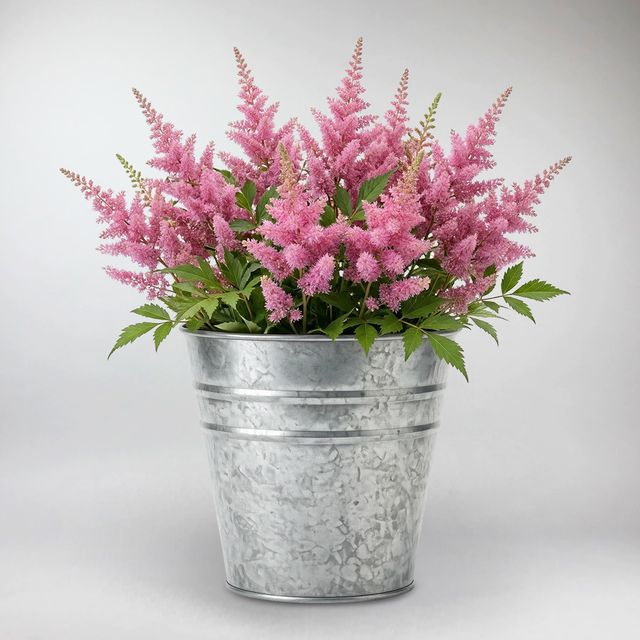
astilbe plant in pot

astilbe plant in pot Dwarf Chinese astilbe

Sale price$23.94 Regular price$26.60
Save 10%

Pay in installments of $6.65 with ShopPay, AfterPay and Klarna

Shipping Estimate
USA
  • USA
  • CAN

Ships within 48 hours · Estimated delivery Jul 23 - Jul 28

Promo Codes Available:

For Your Every Summer RSVP, with Code: SUMMER15

Description

astilbe plant in pot Dwarf Chinese astilbeDwarf Chinese Astilbe Compact, Ground Covering, Late Summer Bloomer Astilbe chinensis 'Pumila' is the dwarf member of the astilbe family, and it punches well above its weight. Dense, spreading mats of dark, ferny foliage are topped in late summer by stiff, upright spikes of rosy lilac flowers and unlike its taller cousins, 'Pumila' is noticeably more tolerant of drier conditions. A brilliant choice for the front of a shaded border or as a flowering

Dwarf Chinese Astilbe – Compact, Ground-Covering, Late Summer Bloomer

Astilbe chinensis 'Pumila' is the dwarf member of the astilbe family, and it punches well above its weight. Dense, spreading mats of dark, ferny foliage are topped in late summer by stiff, upright spikes of rosy-lilac flowers — and unlike its taller cousins, 'Pumila' is noticeably more tolerant of drier conditions. A brilliant choice for the front of a shaded border or as a flowering ground cover.

Plant Personality & Aesthetic Appeal

Everything about 'Pumila' is compact and precise. The foliage forms neat, spreading mats of finely cut, dark green leaves with a slightly glossy surface, and the flower spikes — upright, dense, and carried in a warm rosy-lilac to mauve-pink — are stiffer and more architectural than the softer plumes of taller astilbes. The overall effect is structured but natural. It works particularly well as a front-of-border plant, a ground cover between shrubs, or in a shaded rock garden where its small scale is an advantage rather than a limitation.

Growth Habit & Size Potential

Astilbe chinensis 'Pumila' grows to 20 to 30 cm in flower, forming a low, spreading clump that gradually widens each year. It is one of the best astilbes for ground cover in partial shade, filling gaps reliably without becoming invasive. Supplied at 20 cm in a 9 cm pot, it is compact enough for container displays and the front edge of a shaded border. Spreads gently over time to create a pleasing, weed-suppressing mat.

Light & Location Needs

More adaptable than many astilbes when it comes to moisture — 'Pumila' handles drier soils better than most in its genus, though it still prefers partial shade and reasonably moist conditions. It suits dappled shade under trees, shaded patio edges, and any spot that gets light but not direct midday sun. In the UK, a north- or east-facing border suits it perfectly.

Care Level & Maintenance Tips

Water regularly while establishing and during dry spells. Though more drought tolerant than other astilbes, it still rewards consistent moisture. Mulch in spring to conserve soil moisture. Cut back the flower spikes once they have finished, or leave the attractive seed heads for winter interest. Feed in spring with a balanced fertiliser. Divide every three or four years to keep plants vigorous and flowering well.

Dwarf Astilbe 'Pumila': Small Plant, Big Ground Cover Ambitions

Gardens need plants at every level, and 'Pumila' fills the low, front-of-border layer beautifully. Its spreading mats of ferny foliage keep the ground interesting all season, then the flower spikes arrive in late summer to add colour when you most appreciate it. It creates that sense of a properly layered garden — tidy but alive, structured but natural.

Why You'll Love Dwarf Astilbe 'Pumila'

  • Late Season Flowers: Rosy-lilac spikes in late summer give your garden a second wind.
  • Ground-Covering Habit: Spreads gently to suppress weeds and fill gaps in shaded borders.
  • Compact and Controllable: Perfect for the front of a border, containers, or rock gardens.
  • More Drought Tolerant: Handles slightly drier conditions better than taller astilbe varieties.
  • Ferny Foliage All Season: The dark, finely cut leaves look attractive from spring through to autumn.

Fill the Front of Your Shaded Border

Whether you are planting a shaded path edge, a north-facing border, or the ground beneath deciduous trees, Astilbe 'Pumila' is one of the most useful tools in the shade gardener's kit. Small, tough, and quietly beautiful.

What You'll Receive

Size at dispatch: 20 cm in height, and comes in a 9 cm pot
Care level: Medium
Pet safety: No, toxic to pets

Shipping Notes
  • Free Standard Shipping on $100+ Orders to the USA.
  • Except Preorder products are shipped in 48 hours.
  • Delivery to the USA:
  1. Standard Shipping : 3-10 business days
  • If time is of the essence, please consider selecting expedited delivery for faster service.
Exchange/Return Notes
  • We offer a 30-day return/exchange service after receiving.
  • Final sale items are not eligible for returns or exchanges.
  • To process your return/exchange, please contact us at [email protected]
  • Please click here for more details>>> Return & Exchange Policy
SKU: 60350566259

Discover Niche Categories That Outsell astilbe plant in pot

Top-Converting Item to Boost Your Average Order

4.2 ★★★★★
Based on 9 reviews
Sort
Highest Rating
Newest First
Oldest First
Product Reviews
D
Verified Purchase
djwatkins487
Fort Morgan, US
★★★★★ 5
The Battle of Bretton Woods
Format: Hardcover
From the growing reliance upon international finance and the devastating repercussions of two World Wars, Steil weaves together an important narrative that tells the story of America's rise to the world stage as a major power. Britain's reign of dominance comes to an abrupt end under the weight of the Second World War and the dependence of their territories. Reliance on foreign aid and mounting debt put Britain in a precarious situation for which the United States capitalized on to secure its place as the dominant world power. Through the ideas and experiences of two brilliant economists, Harry White and John Keynes, were guided through the creation and implementation of an economic solution to remedy, and further amalgamate the global financial framework. At Bretton Woods, White and Keynes promote slightly different plans that form the International Monetary Fund and World Bank; organizations designed to monitor, stabilize, and assist international finance. To Britain, and much of the world's chagrin, the organizations are formed in a manner that benefited the United States post-World War Two position as a creditor nation. Dollar dominance in the newly designed financial markets promotes short-term growth for the United States. However, financial mismanagement and over-extension soon lead the U.S. down a path of monetary hardship that ultimately results in our current situation as debtor nations (much like Britain was when the story began). The author ends the narrative by chronicling the effects of Bretton Woods on the United States, Britain, and international finance from the mid-twentieth century to the present. This book tells the remarkable story of America's rise to power through a financial lens. Steil is a wonderful writer who describes complex ideas of monetary policy, international economics, and currency manipulation in such a manner that is easy to understand and leaves the reader wanting more.
WAS THIS REVIEW HELPFUL?YesReportShare
Reviewed in the United States on August 16, 2013
A
Verified Purchase
Alfred H.
Louisville, US
★★★★★ 5
A concise, readable history of European developments prior to W.W. i.
Format: Paperback
This is part of a 4 volume series on (primarily) European history covering the development of the French and Industrial revolution(s) with particular emphasis on the Belle Epoque that marked the end of nearly 100 years of peace among the European Powers. It covers a variety of topics ranging from the emergence of the working classes; the role of the middle class; industrial capitalism; nationalism; the sciences and the arts; and, even a chapter on the "New Woman". Quite encompassing in its treatment and its analysis of the a period that serves as a background to the twentieth century.
WAS THIS REVIEW HELPFUL?YesReportShare
Reviewed in the United States on August 3, 2018
J
Verified Purchase
Juan Manuel Wills
Belleville, US
★★★★★ 5
Un comentario
Format: Paperback
El mundo burgués generó desarrollos muy importantes para los habitantes de Europa Occidental particularmente; incrementó de manera importante los niveles de vida de una porción significativa de la sociedad, introdujo innovaciones claras en las ciencias, en lo educativo, en el comercio global y en el intercambio entre diferentes culturas. Mejoró la productividad, las comunicaciones, la alimentación......Pero también incorporó consigo tendencias negativas y difíciles que cambiaron para siempre la interrelación entre pares al crearse una diferencia significativa de clases, la alta, burguesa y la trabajadora y proletaria, continuó la discriminación sobre la campesina, estableció el concepto forzado de nacionalismo, transformó a los países mas desarrollados en imperios con ansias de crecimiento y de dominio de los menos preparados, se evidenció la explotación del tercer mundo, se inició el armamentismo y la instigación a la guerra que culminó con la desastrosa confrontación de 1914. El mundo, a partir de ese momento no volverá a ser igual. Todos estos conceptos, esta historia, están amenamente descritos por el autor, con un gran conocimiento de la época y con una inteligente asociación de los acontecimientos para hacer entender al lector sus grandes transformaciones e implicaciones. Como los otros tres libros de la serie, lo recomiendo ampliamente. Permite entender todo la evolución de nuestra civilización en los dos últimos siglos así como la influencia generada por los grandes imperios de la época y sus pensadores
WAS THIS REVIEW HELPFUL?YesReportShare
Reviewed in the United States on November 28, 2011
P
Verified Purchase
Peyman ADL DOUSTI HAGH
Omaha, US
★★★★★ 5
This is a good book to read and understand how the European nations ...
Format: Paperback
This is a good book to read and understand how the European nations deployed their armies around the world to extract natural resources from other nations. Now, we have developing and underdeveloped nations.
WAS THIS REVIEW HELPFUL?YesReportShare
Reviewed in the United States on October 1, 2017
A
Verified Purchase
Al Singh
Cuba, US
★★★★★ 4
Interesting book, dull period
Format: Paperback
As a Marxist historian, Hobsbawm sees the world at this time, as well as the modern world, as a playground for the forces of capitalism. He apologizes for taking a eurocentric approach to world history, while acknowledging that Europe largely determined the course of world events during this period. In spite of the title, there actually isn't much discussion of colonial empires; Hobsbawm seems more interested in how the Age of Empire affected the rulers more than the ruled. His Marxist sympathies are in evidence and at times make his conclusions a bit predictable, but some of his cultural critiques are quite brilliant. The chapter on the dilemmas posed by modern science is exceptional. Reading a book like this seems to me much more interesting than actually living in this period would have been.
WAS THIS REVIEW HELPFUL?YesReportShare
Reviewed in the United States on May 23, 2014

recommand products