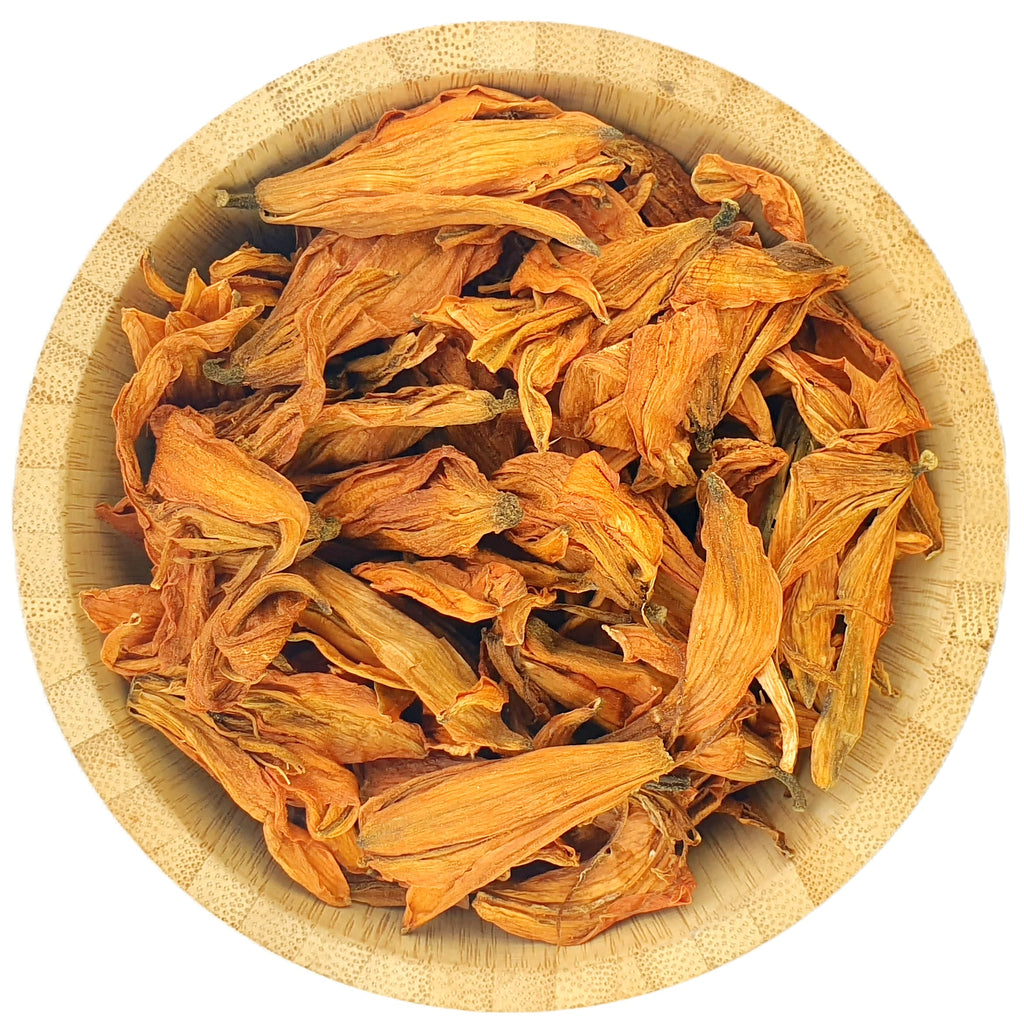
SKU: 60711446625
dried lily flower recipe

dried lily flower recipe Dried Lily Flowers - Dried Flowers

Sale price$22.63 Regular price$25.15
Save 10%

Pay in installments of $6.29 with ShopPay, AfterPay and Klarna

Shipping Estimate
USA
  • USA
  • CAN

Ships within 48 hours · Estimated delivery Sep 10 - Sep 15

Promo Codes Available:

For Your Every Summer RSVP, with Code: SUMMER15

Description

dried lily flower recipe Dried Lily Flowers - Dried FlowersDried Yellow Lily Flowers ( Hung Hu) A Natural Treasure in Herbal Medicine and Cosmetics Dried yellow lily flowers (Lilium spp.), known in Chinese as (hung hu), are vibrant, deep orange blossoms that, when dried, retain their beauty and fragrance. With a history spanning centuries, these flowers have been used in traditional medicine and cosmetics for their remarkable health benefits and aesthetic appeal. Their striking color and unique aroma make

Dried Yellow Lily Flowers (黄花 - Huáng Huā) - A Natural Treasure in Herbal Medicine and Cosmetics

Dried yellow lily flowers (Lilium spp.), known in Chinese as 黄花 (huáng huā), are vibrant, deep orange blossoms that, when dried, retain their beauty and fragrance. With a history spanning centuries, these flowers have been used in traditional medicine and cosmetics for their remarkable health benefits and aesthetic appeal. Their striking color and unique aroma make them a valuable addition to both therapeutic and decorative uses.

Yellow lily flowers boast numerous scientifically supported health properties, appreciated in traditional Chinese medicine (TCM) and modern research alike. Here are some of their key benefits:


Anti-inflammatory and Analgesic Properties

Research shows that yellow lily extracts exhibit potent anti-inflammatory effects, aiding in the reduction of inflammation and pain. Studies on animals and in vitro suggest that these extracts decrease the production of pro-inflammatory cytokines and markers.

Antioxidant Activity

Yellow lily flowers are rich in antioxidants that neutralize free radicals, reducing oxidative stress. This helps protect cells from damage and slows skin aging, making them beneficial for skincare.

Support for the Respiratory System

In TCM, yellow lilies have been traditionally used to address respiratory issues, such as coughs and sore throats. The flowers possess expectorant properties, helping to alleviate symptoms of colds and flu.

Skin Regeneration

Known for their regenerative properties, yellow lilies are prized in cosmetics for promoting wound healing, enhancing skin elasticity, and providing deep hydration, as confirmed by clinical studies.


Versatile Uses of Dried Yellow Lily Flowers

Teas and Infusions

  • Preparation: Add 1-2 teaspoons of dried flowers to a cup of boiling water. Steep for 10-15 minutes, then strain.
  • Use: Drink the infusion 2-3 times daily to support respiratory health and improve skin condition.

Cosmetics

  • Masks and Creams: Extracts can be incorporated into DIY masks and creams for hydration and skin regeneration.
  • Toners: Yellow lily extracts make excellent toners, promoting moisturized and nourished skin.

Relaxing Baths

  • Preparation: Add an infusion made from a handful of dried flowers to a warm bath.
  • Effect: A relaxing lily bath soothes stress and enhances skin health.

Crafts and Décor

  • Candles and Potpourri: Dried yellow lily flowers can be used to craft decorative candles and potpourri, adding aesthetic charm to interiors.

Historical and Cultural Significance of Yellow Lilies

Ancient Chinese Medicine

In TCM, yellow lilies were highly valued for their diverse medicinal properties. As early as the Han Dynasty (206 BCE – 220 CE), the flowers were included in remedies for various ailments. Classic texts like Bencao Gangmu (本草纲目) by Li Shizhen describe yellow lilies as a remedy for respiratory health, particularly for soothing coughs and cold symptoms.

Traditional Use in East Asia

Across East Asia, including Japan and Korea, yellow lilies were not only used medicinally but also in cultural rituals and ceremonies, symbolizing prosperity and happiness. In Japan, lilies were associated with purity and elegance, frequently appearing in gardens and decorations.

Renaissance and Modern Era

In Europe, yellow lilies gained recognition during the Renaissance and 17th century for their medicinal and cosmetic applications. As botanical discoveries expanded, these flowers became ingredients in luxury tonics and creams, valued for their moisturizing and nourishing effects.

Modern Applications

In the 20th and 21st centuries, yellow lilies have secured their place in contemporary medicine and cosmetics. Scientific research validates their traditional uses, and modern products, including dietary supplements, creams, and skincare items, frequently incorporate lily extracts to address skin issues, respiratory health, and oxidative stress.

Symbolism and Art

In many cultures, yellow lilies symbolize happiness, prosperity, and good fortune. In China, they are used in weddings and festivals, representing wishes for health and wealth. In Europe, lilies have often been depicted in art and literature as symbols of elegance and purity.


Embrace the Essence of Nature

Dried yellow lily flowers (黄花 - huáng huā) are more than just a stunning decorative element—they are a treasure trove of health benefits and a versatile ingredient in herbal medicine and cosmetics. Their broad applications, scientifically proven properties, and rich history make them a valuable addition to any wellness routine. From ancient Chinese remedies to modern skincare, yellow lilies bridge the gap between tradition and innovation, bringing the best of nature to your home and life.

Shipping Notes
  • Free Standard Shipping on $100+ Orders to the USA.
  • Except Preorder products are shipped in 48 hours.
  • Delivery to the USA:
  1. Standard Shipping : 3-10 business days
  • If time is of the essence, please consider selecting expedited delivery for faster service.
Exchange/Return Notes
  • We offer a 30-day return/exchange service after receiving.
  • Final sale items are not eligible for returns or exchanges.
  • To process your return/exchange, please contact us at [email protected]
  • Please click here for more details>>> Return & Exchange Policy
SKU: 60711446625

Discover Niche Categories That Outsell dried lily flower recipe

Top-Converting Item to Boost Your Average Order

4.9 ★★★★★
Based on 12 reviews
Sort
Highest Rating
Newest First
Oldest First
Product Reviews
M
Verified Purchase
mikeythereader
Birmingham, US
★★★★★ 5
Shocking
Format: Paperback
An informative read that will make you sick as the hanging death of people becomes a spectator sport. I knew going in I was going to be really angry about this and I was so right. It has been more than a month since I finished it and the horrific cruelty and lawlesness still makes my blood boil.And many times the "supposed law" were guilty of opening the jail or were complicit in letting this happen. It will make you think.
WAS THIS REVIEW HELPFUL?YesReportShare
Reviewed in the United States on November 13, 2013
R
Verified Purchase
R. B. Daytona
Los Angeles, US
★★★★★ 5
Great book
Format: Paperback
Interesting approach to the study of lynching. Thought- provoking and well reasoned thesis. The author adds a new dimension to the lynching literature
WAS THIS REVIEW HELPFUL?YesReportShare
Reviewed in the United States on September 7, 2013
J
Verified Purchase
Jerry Saperstein
Chelsea, US
★★★★★ 5
A valuable book for non-lawyers and lawyers
Why would non-lawyers want to read a book on persuading judges? For several reasons actually. First, many of us are involved in work that requires persuading others to adopt our views. While legal argument is substantially more formal and rule-driven than what most of us do, learning how to construct a logical argument as if it were to be delivered to the court, that Is governed by deadlines, restrictions on length, the need to adhere to established fact (or to establish those facts) and to be neither groveling nor inflammatory can be applied to selling your widgets. Perhaps more important is the fact that most people don't understand the impact of the court's decisions on our daily lives, our pocketbooks and our freedoms. Nine people sit on the Supreme Court. They cannot be removed except for the most grievous crimes and then only if Congress were to agree. More than one Justice has demonstrated that you can be senile and sit on the nation's highest court. Going down the food chain, the same applies to the federal appellate and trial courts. It is unlikely that one person in a hundred can even name a local federal district court judge and probably not one in a thousand could name the nine Supreme Court justices. Yet these men and women have tremendous impact on our lives, as do the thousands of state court justices. I am not a lawyer, but I consult to them and am not a stranger to the courtroom, writing drafts for legal briefs, doing legal research and the like. I have seen a lot of judges in action and have learned, in general, to fear them. They can - and do - cause tremendous harm through ill-considered decisions, making decisions with insufficient facts, assuming they know more than they do and myriad other reasons. They are gods in their courtrooms and if your lawyer fails to persuade them of the justness of your cause, you lose. Just how do these people reach their decisions? While justice is supposed to be blind (fat chance!), the justices are human and thus persuadable. Bryan Garner is a noted writer on legal writing. He is actually quite witty as he explains the use of the English language to lawyers who have had their understanding of words driven out of them in law school. Antonin Scalia is a hero to many for the courageousness of his decisions and dissents, his belief that the Constitution is to be strictly interpreted and his generally brilliant writing style. In 115, frequently witty, short chapters the two authors (who occasionally openly disagree) lay down their thoughts on how judges can be persuaded. It is not all about legal writing; e.g, advice to not chew your fingernails and dressing appropriately for court. They advise on giving your oral argument, which a lot of sales and marketing people would do well to read, especially the guidance to "never speak over a judge". In a sales situation, I am surprised at how often the sales person displays his or her contempt for me by not only not listening to me, but presuming they understand the point I was going to make before they spoke over me. I don't know about you, but a lot of salespeople have lost business with me for doing that. Some of the points the authors make are points of contention themselves: i.e., "swear off substantive footnotes - or not". None of the material in this book is truly new. Law students get elements of it in their first year as do some college students. A lot can be found in books on to be a better salesperson: i.e., don't chew your fingernails, etc. And a lot of it is plain commonsense. But that doesn't mean this book is unhelpful. First, it reveals in tiny part how Scalia evaluates the briefs he reads and arguments he hears, which in itself is a fascinating peek. The authors also put things many people may have forgotten through lack of use into perspective. Finally, they remind lawyers and non-lawyers alike that you often have only one shot at winning your argument so you had best put your best foot forward. Scalia and Garner show you how to do it. Overall, this is a fun, informative and helpful read. Jerry
WAS THIS REVIEW HELPFUL?YesReportShare
Reviewed in the United States on February 8, 2010
R
Verified Purchase
Rod Sullivan
Fort Morgan, US
★★★★★ 5
Like Having an Expert Looking over Your Shoulder
I am a law professor who spent 25 years as a Plaintiff's lawyer before deciding to teach. I've been before the U.S. Circuit Courts of Appeal many times and state appellate courts a few times. One caveat to consider: I expect to be arguing before the United States Supreme Court in the future. I hesitate to be too ebullient, lest you think that I'm trying to curry favor. However, I think that this book is great. Why do I recommend it? First, it is short. This book will accomplish much of what other books try to teach about advocacy, but in many fewer pages. Secondly, it is practical. It teaches writing skills, speaking skills, and how to be persuasive with limited time. Finally, it is not just for lawyers. Anyone trying to be persuasive can apply the same skills to other situations. For those of you who are politically opposed to Justice Scalia (which, believe it or not, includes some law professors)this is a joint effort by Garner and Scalia, and they frequently disagree. Hearing both sides of the argument on how to write or speak persuasively will help you decide how you want to present your arguments. How do my political opinions and Justice Scalia's opinions mesh? Can I be fair? I think so. He's a Federalist, I consider myself an Anti-Federalist. He as supporter of administrative delegation, I think delegation of congressional responsibilities to administrative agencies is congressional abdication. In short, I'm not recommending this book because Justice Scalia and I agree on policy, because on many policy matters we don't. I'm recommending it because I think it will help you. You wont be disappointed with the book.
WAS THIS REVIEW HELPFUL?YesReportShare
Reviewed in the United States on January 29, 2009
X
Verified Purchase
xiwaeo
Dallas, US
★★★★★ 5
Great Read
Great book, I enjoyed reading it. I am non-lawyer so I spent time having to read and re-read sentences and paragraphs but darn good book. Highly recommend it. Sometimes a person can be in discussion with an official, doctor, lawyer, cop ..whatever--it helps to remember arguments made in this book. Most folks just try to explain a situation, heaven forbid standing in front of a court or judge in a legal matter. But, this type of reading builds confidence, a strong vocabulary and so forth. It matters most trying to persuade a person or an institution..just winning, making your point in a clear coherent and cognizant way. This book can teach you these things.
WAS THIS REVIEW HELPFUL?YesReportShare
Reviewed in the United States on June 20, 2025

recommand products