SKU: 6130107201
are bear paw succulents poisonous to cats

are bear paw succulents poisonous to cats Cotyledon tomentosa Bear's Paw

Sale price$24.19 Regular price$26.88
Save 10%

Pay in installments of $6.72 with ShopPay, AfterPay and Klarna

Shipping Estimate
USA
  • USA
  • CAN

Ships within 48 hours · Estimated delivery Sep 6 - Sep 11

Promo Codes Available:

For Your Every Summer RSVP, with Code: SUMMER15

Description

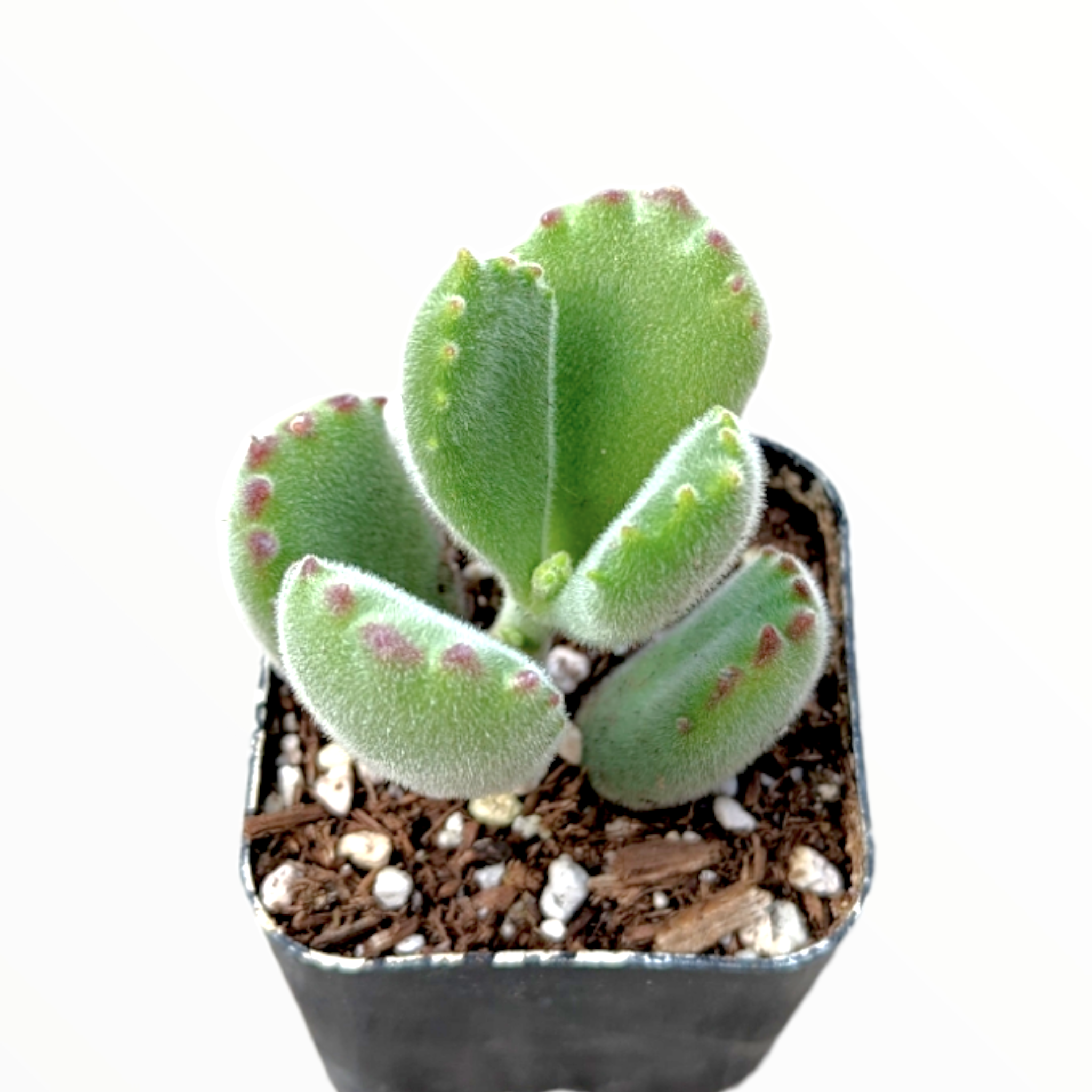
are bear paw succulents poisonous to cats Cotyledon tomentosa Bear's PawCotyledon tomentosa Bears Paw is a perennial succulent plant in the family of Crassulaceae. The plant is much branched, with green stems, fertile fleshy leaves, decussate, ovoid, green, and densely white short hairs. The leaves have red claw like teeth at the tips, dichotomous cymes, yellow florets, and flowers from July to September. This species is native to the Cape Province of South Africa. It prefers a warm, dry, sunny and well ventilated

Cotyledon tomentosa Bear’s Paw is a perennial succulent plant in the family of Crassulaceae. The plant is much branched, with green stems, fertile fleshy leaves, decussate, ovoid, green, and densely white short hairs. The leaves have red claw-like teeth at the tips, dichotomous cymes, yellow florets, and flowers from July to September.

This species is native to the Cape Province of South Africa. It prefers a warm, dry, sunny and well-ventilated environment. Too high temperatures in summer will make it dormant. Avoid cold and excessive humidity. Propagation methods include cuttings. This species has beautiful leaf shape and color, delicate and small flowers, and leaves resembling the paws of a bear, which is a peculiar form and very cute, with high ornamental value.

The leaf blade of the bear child is fleshy, spatulate, densely white tomentose, the lower part of the entire margin, the leaf tip with brown teeth, like a small Bear’s Paw, very cute. It’s elegant, unique and beautiful, and can be used as a small indoor potted plant.


Care Tips

Light: Likes light, and it can grow vigorously and in a more beautiful condition in a well-lit environment. Except for the strong light in summer, it can be placed in a place with good light and more sunshine in all three seasons. If it is in the shade for a long time, the Bear’s Paw will easily grow and the overall ornamental value will be greatly reduced.

Water: All succulents are drought tolerant and fear water logging, and bear’s paws are no exception. Watering it can be done according to the method of dry and wet, and the soil does not need to be watered if it is not dry. During the growing season, it is usually watered once a week, but in other stages, watering should be strictly controlled because the roots could be damaged by overwatering.

Soil: The soil must be loose, permeable and water-permeable, and the soil should be changed once every year or two to avoid soil caking. You can prepare your own nutritious soil when you maintain it, or you can buy special soil for succulent plants directly.

Potting: It is recommended to use ceramic pots, ceramic pots have a certain degree of permeability, clay pots lose water too fast, plastic pots retain water too strong, and poor permeability.

Temperature: Like a warm environment (high temperature requirements). High temperature in summer and low temperature in winter need to take timely temperature control measures. Summer needs to strengthen ventilation, timely blocking of strong light, the best temperature control at 86°F (30 ℃) or less, winter needs to move to a warm room, temperature control at about 50°F (10 ℃) only, the minimum should not be less than 41°F (5 ℃).

Humidity: Bear’s paw grows well in average household humidity levels when grown indoors. Does not like too much humidity. Normal household humidity is good for this plant.


Shipping & Handling

    • The 2 Inch Cotyledon tomentosa Bear's Paw plants are shipped with the pot and soil
    • The 4 Inch and larger plants are shipped bare roots without the pot and soil:
    • You will receive a very similar plant to the one shown in the photos; shape and color may vary
    • Ship within USA & its outlying territories only
    • Please visit Order Processing & Shipping info page for additional details


    Care Instructions

    Please visit our Succulent Care info page for more details.

    To ensure the health of succulents, it is important to plant them in porous, well-draining soil. Succulents require little watering, but don't like to sit in wet soil. To create an adequate cactus mix, simply add pumice, perlite, or grit to cactus soil to provide the proper drainage.

    Make sure to leave drought periods between waterings to prevent the plant from water-logging.


    Weather Conditions

    • When ordering, be mindful that living succulents can be damaged by the cold weather.
    • If you live in an area that is below 40 degrees Fahrenheit, please add a shipping warmer to your order or consider purchasing plant until the weather is more suitable.
    • Shipping Warmer: 72+ Hours Heat Packs available for $1.7 each
      Shipping Notes
      • Free Standard Shipping on $100+ Orders to the USA.
      • Except Preorder products are shipped in 48 hours.
      • Delivery to the USA:
      1. Standard Shipping : 3-10 business days
      • If time is of the essence, please consider selecting expedited delivery for faster service.
      Exchange/Return Notes
      • We offer a 30-day return/exchange service after receiving.
      • Final sale items are not eligible for returns or exchanges.
      • To process your return/exchange, please contact us at [email protected]
      • Please click here for more details>>> Return & Exchange Policy
      SKU: 6130107201

      Discover Niche Categories That Outsell are bear paw succulents poisonous to cats

      Top-Converting Item to Boost Your Average Order

      4.1 ★★★★★
      Based on 27 reviews
      Sort
      Highest Rating
      Newest First
      Oldest First
      Product Reviews
      H
      Verified Purchase
      Hunter Hart
      Cuba, US
      ★★★★★ 5
      Free Mini-Screwdriver + microfiber cloth? Thank you
      Color: Gold, Material Type: Stainless Steel
      100% worth the purchase mainly for the little screwdriver (a real one, just small) and microfiber cloth included. As long as you install it correctly it all holds together very well.
      WAS THIS REVIEW HELPFUL?YesReportShare
      Reviewed in the United States on March 18, 2026
      C
      Verified Purchase
      Connie
      Boise, US
      ★★★★★ 5
      Love it
      Color: Brushed Nickel, Material Type: Stainless Steel
      I love it. It holds the jumbo rolls and that makes it a perfect kitchennitem
      WAS THIS REVIEW HELPFUL?YesReportShare
      Reviewed in the United States on February 28, 2026
      M
      Verified Purchase
      Mr. Douglas
      Massapequa, US
      ★★★★★ 5
      The Best Book on the Creation-Evolution Debate
      Format: Paperback
      “The book The Evolution of Adam is an accessible study of the hermeneutical issues involved in reading Genesis and Paul on Adam in view of evolution.” - Peter Enns In my opinion The Evolution of Adam by Peter Enns is the best book available on the evolution versus creation debate because it goes right to the heart of the matter. Christians grossly misunderstand the creation stories in Genesis because they read them from a modern point of view. The first part of the book deals with Adam in Genesis. The second part of the book deals with Paul's Adam in Romans. The book is short and very well written for the popular audience. PART 1 ADAM IN GENESIS Many stories in the Old Testament have parallels with other Ancient Near Eastern stories. The Adam story is no different as it has strong similarities to Atrahasis. If I may quote Enns, “Israel's creation story was written to say something about their place in the world and the God they worshiped. To think that the Israelites, alone among all other ancient peoples, were interested in (or capable of) giving some definitive, quasi-scientific, account of human origins is an absurd logic. And to read the story of Adam and Eve as if it were set up to so such a thing is simply wrongheaded. It strains credulity to think that, of all the ancient peoples with origins stories, Israel alone escaped this story-telling mentality and gave us something approximating 'history' or 'science' in the modern sense.” The Evolution of Adam shows conclusively that, “the Adam story in Genesis is part of Israel’s literature of national and religious self-definition, not the origin of humanity.” The Adam story is not concerned with human origins as most Christians assume. Adam is Israel. Israel’s history as a nation can be broken down as follows:   1. Israel is “created” by God at the exodus through a cosmic battle (gods are defeated and the Red Sea is “divided”);   2. The Israelites are given Canaan to inhabit, a lush land flowing with milk and honey;   3. They remain in the land as long as they obey the Mosaic law;   4. They persist in a pattern of disobedience and are exiled to Babylon. Israel’s history parallels Adam’s drama in Genesis:   1. Adam is created in Genesis 2 after the taming of chaos in Genesis 1;   2. Adam is placed in a lush garden;   3. Law (not to eat of the Tree of the Knowledge of Good and Evil) is given as a stipulation for remaining in the garden;   4. Adam and Eve disobey and are exiled. PART 2 PAUL'S ADAM Paul’s use of the Adam story, like Paul’s other uses of the Old Testament, is marked by creativity and the prior conviction that Jesus is God’s unexpected solution to a universal plight. Enns' summary of Paul's Adam in Romans 5:12-21 is as follows: 1. Adam is hardly mentioned in the Old Testament. 2. Some see Noah, Abraham, Moses, and David as “new Adams.” Paul represents Jesus as a new Adam. 3. The Fall of man is not taught in the Old Testament. 4. The Fall of man is not taught in the Garden scene. The imputation of Adam’s sin is not taught in the garden story. 5. The Adam/Jesus Parallel in Romans 5 is both clear and not so clear. What does Paul mean when he says that through Adam’s sin, “death came to all, because all sinned.” One might have expected Paul to say, “because Adam sinned” (death is Adam’s fault). 6. Paul’s Jesus/Adam parallel does not stem from a “plain reading” of Genesis. It is selective and theologically driven. The Book of Romans is not about personal salvation, but about the Jew/Gentile relationship. 7. Paul was an ancient man and he had an ancient view of human origins. 8. Paul used the Old Testament in creative ways that violate the grammatical-historical-contextual approach. So he could be doing the same with Adam. 9. Adam was used creatively in Second Temple Jewish literature (Paul’s contemporaries). CONCLUSION Evolution and creation are not in conflict because the early chapters of Genesis have nothing to do with HOW God created the world or the first humans. Therefore science can be studied freely for what it is and the Old Testament can be understood as ancient Israel's story. If I may quote Enns again, “The root of the conflict over evolution and creation for many Christians is not scientific or even theological, but group identity and fear of losing what it offers. The challenge of evolution is here to stay, and its effect on how Christians read Genesis and Paul must be addressed deliberately.” “Evangelicals tend to focus on how to protect the Bible against the attacks of evolution. The real challenge before them is to reorient their expectation of what the story of Adam and Eve is actually prepared to deliver.” If you are looking to solve the evolution-creation debate in your mind then the Evolution of Adam is the book to read. Evolution and creation are both true. God created through evolution. The Bible is not a modern science book.
      WAS THIS REVIEW HELPFUL?YesReportShare
      Reviewed in the United States on December 15, 2012
      W
      Verified Purchase
      William M. Victor
      Lake Worth, US
      ★★★★★ 4
      Thoughtful book on the purpose of the Creation accounts
      Format: Paperback
      This book provides a very good introduction into how the Old Testament (Hebrew Bible) was most likely formed. It takes very seriously the environment that may have shaped the Pentateuch. It also provides a good primer into how Paul read the Hebrew Bible: through the lens of the death and resurrection of Jesus. If the reader of the Bible understands the purpose behind the creation narratives then there appears to be less conflict with scientific explanations for the origins of the universe and even humanity. I was expecting this book to do something that Enns never claims he was setting out to do, that is give an alternative understanding of the origins of sin and death while taking Paul's account in Romans 5 seriously. Enns claims that Paul interpreted the Adam story in a way that he interpreted other accounts of the Hebrew Bible, through a Christological lens but with little regard to historical context. To Enns, Paul was a man of his time and just because Paul, a man uninformed by scientific explanations of the universe, understood Adam as a historical person doesn't mean those of us who are informed need to see it the same way. Enns values Paul's Christocentric lens on the Hebrew Bible, but comes just short of calling Paul wrong on his understanding of the origin of sin and death. If you are working through the issue of integration/synthesizing scientific thoughts on the origins of the universe and humanity (as well as trying to come to grips with the purpose of the Creation accounts in Genesis) this book will serve you well. If you are expecting Enns to provide that integration/synthesis for you, you will be disappointed.
      WAS THIS REVIEW HELPFUL?YesReportShare
      Reviewed in the United States on March 3, 2012
      M
      Verified Purchase
      Mark A. Chenoweth
      Phoenix, US
      ★★★★★ 5
      Enns' view of Adam will eventually dominate in the Evangelical academy
      Format: Paperback
      For years and years on end, I have been fascinated with trying to make Adam and Eve line up with evolution. I took a bunch of positions that I knew were ad-hoc but I didn't know what else to do at the time. One thing I couldn't figure out was why Genesis 1-3 seemed to be completely symbolic, yet Paul seemed to interpret it so literally. I read through Genesis 1-3 again and again and again. I picked up commentary after commentary. But the commentaries I read (other than Claus Westermann's-which is fantastic)seemed to make arbitrary jumps between interpreting the Adam story literally and symbolically. The attempts to literally interpret the story seemed to stem from a desire to stay faithful to Paul's reading of the story rather than from a desire to be faithful to the Genesis text. But shouldn't how Paul interprets the story be the final word on Adam for Christians? This is what The Evolution of Adam deals with. Paul's interpretation of the story in Romans and 1 Corinthians seemed to be a strange re-reading of the story...one that is overly literal. A talking snake? God walking in the garden? Every good Christian knows God doesn't have a body. So why in the world did Paul read this story so literally? It's this that Enns tries to answer. He shows us that Paul didn't intend to give us a historical critical exegesis of Genesis. Maybe Paul thought Adam was a literal person, maybe he didn't. This is beside the point. Enns shows that Paul was doing some pastoral reshaping of the Adam story along the lines of 2nd Temple Judaism to highlight the significance of Christ's death and resurrection. According to Enns' the "authorial intent" of Genesis 2 and 3 was of very little significance to Paul. Even if Paul knew (and there's good reason to believe he did) that Genesis doesn't indicate that Adam's sin has a universal effect on all humanity, he probably would have used the Adam story in the exact same way. Why? Because it was the best way to explain how Christ put Jews and Gentiles on an "equal footing." For Paul, Christ came first. Anything that could help explain the significance of Christ, even if that meant reshaping OT testament passages from their original "authorial intent," was fair game for Paul. And as Enns shows, it was also fair game for Paul's contemporaries. As Christians, we know we are sinners because we have a savior, not because Adam sinned. In the words of world-renowned Patristics professor and Eastern Orthodox scholar, John Behr, "We should not begin with a claim to know ourselves as sinful and then find a savior who corresponds to what we think our problems are...Christ provides the diagnosis of our condition and simultaneously provides the remedy." Enns' suggestions for the evolution debate are controversial among evangelicals, although they seem to be accepted by many Eastern Orthodox and Catholic academics today. Evangelicalism is a bit behind. Enns' book will provide for much discussion and will inflame reformed Evangenical fundamentalists like Albert Mohler. But his suggestions will ultimately be accepted by the majority of evangelical theologians in the next 100 or so years. I'm fairly sure of this. Although I'm Eastern Orthodox, Peter Enns' book is thoroughly orthodox, excellently argued, pastorally sensitive and ultimately game-changing for the Evangelical world. And although it seems many Orthodox are already talking Enns' game, to my knowledge, no one has written a book on the subject that actually tackles all the sticky exegetical issues. So Enns' book transcends the Protestant/Catholic/Orthodox divide. One thing Enns did leave out is what to do with the genealogies in scripture that mention Adam. If you are interested in a discussion of these, check out Daniel Harlow's article online entitled "After Adam: Reading Genesis in an Age of Evolutionary Science."
      WAS THIS REVIEW HELPFUL?YesReportShare
      Reviewed in the United States on January 24, 2012

      recommand products