SKU: 61541444499
flower.seeds

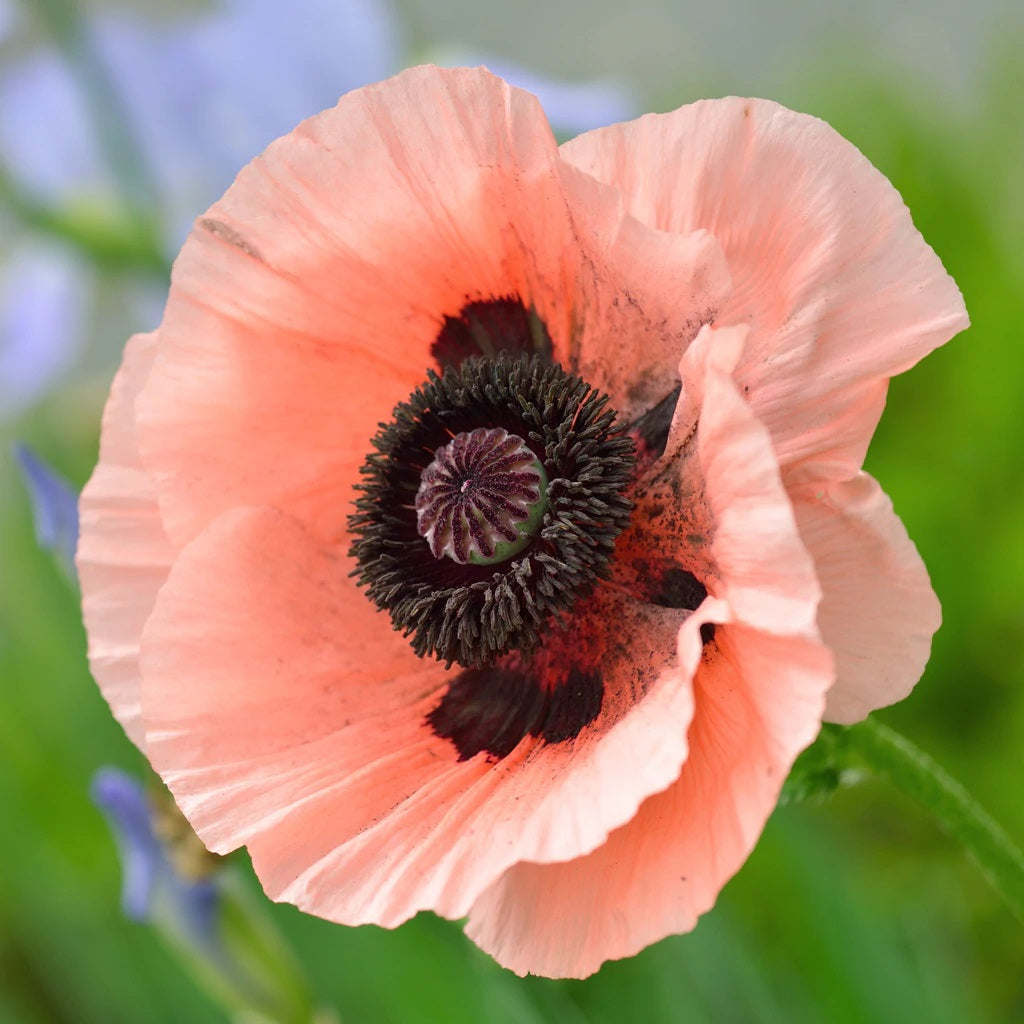
flower.seeds 100 Deluxe Mix Oriental Poppy Flower Seeds

Sale price$20.52 Regular price$22.80
Save 10%

Pay in installments of $5.70 with ShopPay, AfterPay and Klarna

Shipping Estimate
USA
  • USA
  • CAN

Ships within 48 hours · Estimated delivery Jul 20 - Jul 25

Promo Codes Available:

For Your Every Summer RSVP, with Code: SUMMER15

Description

flower.seeds 100 Deluxe Mix Oriental Poppy Flower SeedsUp for sale is one pack of 50 "Deluxe Mix" Oriental Poppy Flower Seeds. Perfect for summer blooms these poppy seeds create striking blooms in colors or pink, coral, purple, red, and white on 24" stems. Oriental poppies tend to be shorter than the other poppies we carry and have a shorter window to bloom during the summer. Upside is they are perennial and will come back after they die off in late summer heat. We offer flat rate combined shipping on all

Up for sale is one pack of 50 "Deluxe Mix" Oriental Poppy Flower Seeds. Perfect for summer blooms these poppy seeds create striking blooms in colors or pink, coral, purple, red, and white on 24" stems. Oriental poppies tend to be shorter than the other poppies we carry and have a shorter window to bloom during the summer. Upside is they are perennial and will come back after they die off in late summer heat.

We offer flat rate combined shipping on all orders, no limit on the amount or type of seed packets.

CULTURE

Soil temperature: 55 - 60 degrees fahrenheit
Germination lighting: Light required
Germination days: 20 days
Plant spread: 24"
Plant height: 24''
Plant type: Perennial
Maturation days: 55 days

How to Sow Poppy Seeds:

Poppy seeds are fairly easy to grow but can be a bit fussy. The details below are from our experiences, and failures, in trying to grow poppies several different ways.

Best Way (Fall/Winter): In late fall loosen enriched garden soil down to a 6" depth. For zones 3-7 it's best to direct seed into your garden after your first freeze in the fall. For zones 8-9, or mild zones like California, you will get better results if you cold treat your seeds (see below) sow them during the winter. From our experience it's best to choose a spot that gets sun during the winter and sowing them in a spot that stays shady (and here in zone 7 usually wet) during winter month's will reduce your chances for successful germination.

These poppy seeds are very small so we use the shaker method where you mix your seeds with peat or sand to spread the seeds evenly in your sowing area. We then we top with a fine dusting of peat or sand as they need light to germinate. The poppies will germinate over winter and pop up in very early spring.

You can transplant winter sown poppies in the spring. We wait until they are about 3" in diameter and then transplant their root ball if we are expecting mild weather for a few days. Usually they will suffer a bit but will pull through. Be sure and thin or transplant to around 12".

Ok Way (Spring): If you are buying your seeds in late winter or early spring, first try a germination test with 4-5 of your seeds. Place them in a moist paper towel, and then place in a sealed baggie, and put in a window where the temp is at least 65 degrees. If they are ready they will germinate in 4-5 days by sending a fine root hair from the seed. If they germinate you can direct sow them after your last frost using the shaker method. If you are in zones 8-9 where you get a hot summer you need to sow your poppy seeds by March 15th.

If they don't germinate they will have to be cold treated. Place your packet of seeds into a mix of 1/4 cup fine peat (or a mix of peat and coarse sand) and 1 tablespoon of water. You want your mix moist but not soggy. Place the mix in a sealed baggie, inside a sealed container, inside your refrigerator (not your freezer) for 60 days. Check after 30 days to see if you need to add more water as you don't want the mix to dry out. What this does is trick the poppy seed into thinking it has gone through a full cold winter. After 60 days you can take your seeds out and let them dry overnight and then use the shaker method. You can plant the poppies in the late winter or spring, after the 60 day cold treatment, as long as your ground is workable and it's past your last frost date. As always we give them a light dusting with peat so as to disguise them from birds.

When poppies germinate in spring they send up a stalk that looks like a very fine blade of grass. This stalk grows to about 1"-2" before it grows it's first leaf set. Once your poppies are around 2" tall it's time to thin them out. Don't try to transplant as they won't make it. The risk on spring planted poppies is if they germinate and you get a crazy heat wave there is a chance they won't make it. The race in the spring is to try and get the poppy to establish it's root system before the summer heat arrives. A bit easier in zones 3-6 but a more difficult thing for zones 7-9.

Bad Way (Summer): Unless you live in southern California or Hawaii do not try to sow poppy seeds in the Summer. They will germinate but the heat will kill them before they can develop.

Worst Way: We do not recommend starting in pots as poppies disliked being transplanted, but if you want to try use a compostable 4" peat pot and do not remove the plant from the pot when transplanting in the spring. They will probably not mature correctly and have a small chance of flowering

During the summer dead head any spent flowers but at the end of the growing season you can let the flower head form into seed pods where you can collect seeds in late fall, but note that if you have multiple varieties of poppies in your garden they will cross pollinate and you will end up with some different colors.

Shipping Notes
  • Free Standard Shipping on $100+ Orders to the USA.
  • Except Preorder products are shipped in 48 hours.
  • Delivery to the USA:
  1. Standard Shipping : 3-10 business days
  • If time is of the essence, please consider selecting expedited delivery for faster service.
Exchange/Return Notes
  • We offer a 30-day return/exchange service after receiving.
  • Final sale items are not eligible for returns or exchanges.
  • To process your return/exchange, please contact us at [email protected]
  • Please click here for more details>>> Return & Exchange Policy
SKU: 61541444499

Discover Niche Categories That Outsell flower.seeds

Top-Converting Item to Boost Your Average Order

4.1 ★★★★★
Based on 17 reviews
Sort
Highest Rating
Newest First
Oldest First
Product Reviews
C
Verified Purchase
CE
Fort Morgan, US
★★★★★ 5
Good quality
Size: 3 Pack, Color: Optic Yellow
These are really good quality. The color is easy to see on the outdoor court, especially when the sun is bright. Definitely has good bounce to them.
WAS THIS REVIEW HELPFUL?YesReportShare
Reviewed in the United States on May 28, 2026
T
Verified Purchase
Trevor & Tiffany G
Charlottesville, US
★★★★★ 5
Franklin X-40 vs. Dura Fast 40 (vs. Onix)
Size: 12 Pack, Color: Optic Yellow, Size: 12 Pack, Color: Optic Yellow
Review order: Review summary (quick read) Review update (4-13-2021) Full review (long read) Summary: This review might save you a lot of time researching balls, but here's the summary if you don't want to read the full review... For 4.0+ play consider the Dura Fast 40 when preparing for certain tournaments, but expect only about 2 games per ball, which is quite annoying in my opinion... for 95% of players, definitely go with the Franklin X-40 (except when preparing for a Dura only tournament of course). If you just want the ball to last and last year after year and don't care at all about egging or quality of play consider the much softer and much slower and much bouncier Onix ball. The Onix ball is so soft that I can't recommend it for typical play, but it is actually an excellent choice when introducing new players to the game and it is often the preferred ball in 65+ play if mobility becomes a common issue because extra bounce = extra time to get there, but in my area many older players seem to play the X-40 just fine. * * * * * * * * * * * * * * * * * * * * * * * * Update: 4-13-2021: Popularity: Almost everyone in my area is playing the Franklin X-40 in every park. I finally saw a Dura in play yesterday, but it's been a long time! Outdoor tournaments in my state are now about 60% X-40 and about 40% Dura (Washington), so even in tournament play the Dura seems to be going out pretty quick. Seasonal durability of X-40: for the first year I don't think my group cracked a single X-40 (despite having a faster paced game), but using that same batch of balls this Spring, they've all been dropping like flies so now my 1 year old batch of X-40's probably isn't much more durable than brand new Dura's (very annoying to deal with those cracks). I just bought new X-40's yesterday and I'll be discarding the few X-40's that are left from last year when the new stock arrives. It will be new X-40's for me once a year from now on assuming quality doesn't slide... fresh manufacturing is apparently very important, so hopefully Franklin will keep their runs moderate, and maybe that's what Dura did wrong.(?) * * * * * * * * * * * * * * * * * * * * * * * * Full review: This review will focus largely on the physical & quality comparisons between the Franklin Outdoor X-40 pickleball and the Dura Fast 40 pickleball, but I'll also give a summary of my impressions from the mouth of experts and supplement also by my own amateur impressions and measurements. Dura hole specs: 16 drilled holes @ 0.325" & 24 drilled holes @ .264" Franklin hole specs: 40 drilled holes @ 0.288" Both balls have 40 holes with an average hole size of 0.288", but the Dura ball has a far more randomized hole pattern. I personally didn't notice any difference in spin characteristics or any notable advantage to the randomized hole pattern of the Dura. Franklin weight: 26g Dura weight: 25g Both balls are rotationally molded in one continuous piece so the seam is just as strong as the rest of the ball on either ball... the appearance of a seam is on the outside of the ball only but the visual molding mark is not actually separated in any way in the middle of the ball and the inside of the ball will likewise appear 100% seamless on either ball, so no true seam exists (both balls are true "1-piece" balls). The Dura ball has much smoother molding marks w/ no plastic flashing like the Franklin... this is primarily cosmetic but quality in this regard definitely goes to the Dura. Subjective color preference: in the shade I think the Dura "Neon" color looks better (see pic), but in typical full sun the green tint looks dingy on the Dura ball in my opinion, and I feel the Franklin "Optic Yellow" is a crisper color that's probably a little more visible. These are the only 2 ball colors I have to compare. I would prefer more dye to be used for a green ball so it still looks green in full sun because in my experience with disc golf and ball golf neon green is the most visible color and neon pink is good too... with these 2 options I'd pick the yellow... the green tint on the Dura is so subtle in full sun it ends up looking more like a dingy yellow rather than a green. A more apples to apples comparison would be Dura's yellow option but I'm pretty confident Franklin would win that contest also based on the notably higher translucency in the plastic used by Dura. Color: Franklin wins. Franklin X-40 country of origin: China Dura Fast 40 country of origin: Vietnam - - EXPERT INSPIRED IMPRESSIONS - - From what I've gathered, expect much longer play per dollar out of the Franklin and expect very little life out of the Dura. Dura's are supposed to be a little harder/better/faster, but they often only last a few games based on everything I've read and heard. For older players consider the Onix over either of these balls... softer balls bounce higher and hit slower which allows more time to get to the ball for longer rallies... the Onix seems to be the favorite for play in older aged groups. Based on expert advise from the "pickleball kitchen" youtube channel... Best performance award (fastest, hardest): Dura Fast 40 Best Value (also w/ great performance): Franklin Outdoor X-40 - - - except high level players should opt for the Dura due to tournament requirements (note: this observation may be outdated... check tournaments in your state to verify what local tournaments are still using the Dura in your area and which tournaments have switched to the X-40) Longest lasting, but soft and bouncy: Onix Note: I have not seen a single outdoor tournament publish the Onix as their ball. My personal recommendation for most players based on a lot of reviews and some research and a close look would be to skip the Dura and go straight to the Franklin X-40 until you're playing tournaments... if/when you advance to the level of playing serious tournament play I don't think it would take long to transition muscle memory and power from the Franklin outdoor ball to the Dura ball and a lot of money and annoyance can be saved w/ the Franklin over the very brittle Dura... Franklin X-40 balls don't last very long either (according to some... possibly old stock), but compared to the Dura it's a notable improvement strongly worth considering even if you're a quality buff like myself. Manufacturing quality: Dura wins Material durability: Franklin easily wins and Onix lasts much longer still if you don't mind a notably slower game (more similar to indoor) and more egging. Quality of play: Mixed... many elite players prefer the extra speed of the Dura, but I prefer the consistency of virtually everyone using the same ball and even more notably, I'd rather sacrifice just a little speed to get the higher consistency / predictability / reliability of an uncracked ball and I find it distracting to look for cracks all the time. Value (w/o sacrificing much): Franklin Despite the long read, I'm hoping this helps the reader save some time in selecting a pickleball, especially for players new to the game.
WAS THIS REVIEW HELPFUL?YesReportShare
Reviewed in the United States on August 15, 2020
S
Verified Purchase
Sean Bozarth
Birmingham, US
★★★★★ 5
Comfortable and Effective Ear Plugs for Swimming
Color: Multicolored 1, Size: 1 pair (Pack of 3)
I picked up these ear plugs for swimming and was pleasantly surprised by how well they work. They’re soft and flexible, so they fit comfortably without feeling like they’re digging into your ears, even during longer swim sessions. They do a great job keeping water out whether you’re in a pool or just showering, and they stay in place well without constantly needing adjustment. I also like that they’re reusable and easy to rinse off and store after use. Overall, this is a solid set of swim ear plugs that are comfortable, practical, and easy to use. A good choice if you spend a lot of time in the water and want something reliable.
WAS THIS REVIEW HELPFUL?YesReportShare
Reviewed in the United States on February 1, 2026
J
Verified Purchase
J D
Omaha, US
★★★★★ 5
Good earplug. Will buy again.
Color: Multicolored 1, Size: 1 pair (Pack of 3)
These work better than another swimming earplug I tried on amazon. They stay in well, they completely block water from entering the ear canal and generally seem more firm and durable than the other pair. They are also cheaper. I have had the little tail pop out of my ear while swimming, but that hasn't been a problem other than I notice it. The earplug still stays in. Did multiple 2.4 mile swims in them including an Ironman race and they stayed in the whole time. I'm going to try the version with the goggles straps now.
WAS THIS REVIEW HELPFUL?YesReportShare
Reviewed in the United States on February 4, 2026
D
Verified Purchase
Dania valle vina
Massapequa, US
★★★★★ 5
Comfortable and easy to use
Color: Multicolored 1, Size: 1 pair (Pack of 3)
These ear plugs fit better than a lot of others I’ve tried and they stay in place while swimming. They’re soft enough to wear comfortably for longer periods without irritating my ears. I also like that they come with different sizes, which makes it easier to find the right fit. They block water well and the carrying case is convenient for keeping everything organized.
WAS THIS REVIEW HELPFUL?YesReportShare
Reviewed in the United States on May 19, 2026

recommand products