Pay in installments of $5.82 with
 ,
,
 and
and

Shipping Estimate
USA
- USA
- CAN
- USA
- CAN
Ships within 48 hours · Estimated delivery Jul 27 - Aug 1
 Promo Codes Available:
For Your Every Summer RSVP, with Code: SUMMER15
Description
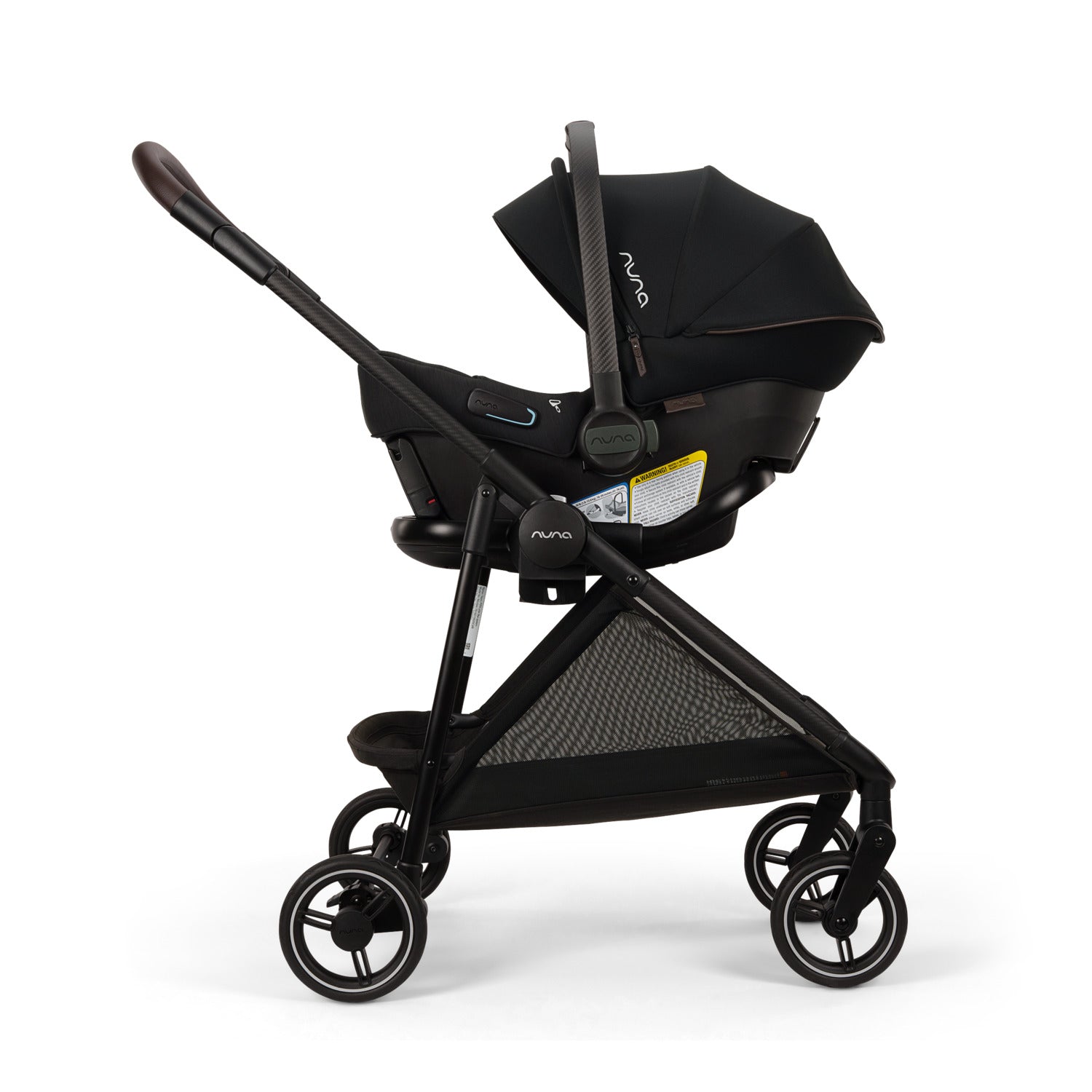
nuna pipa next stroller Nuna PIPA™ Urbn FLEX SystemDid your favorite car seat just sprout wheels? Well, sort of. It's called meeting the moment. This all in one PIPA urbn flex system gets that parenting demands flexibility and that your gear needs to keep pace with the pivots. So it flexes with your day, transforming from a car seat to a stroller so you can go from parked to pushing and back again in seconds. Secure and seamless, the car seat latch system installs without a base or a trace. With
Did your favorite car seat just sprout wheels? Well, sort of. It's called meeting the moment.
This all-in-one PIPA urbn flex system gets that parenting demands flexibility and that your gear needs to keep pace with the pivots. So it flexes with your day, transforming from a car seat to a stroller so you can go from parked to pushing and back again in seconds.
Secure and seamless, the car seat latch system installs without a base or a trace. With carbon fiber strength and showroom-worthy style, the featherlight frame folds in a flash and looks anything but basic.
Best of all, it's built for years, not just months. No tricks. No trade-offs. Because smart parents want smart systems, not shortcuts or clunky compromises.
This all-in-one PIPA urbn flex system gets that parenting demands flexibility and that your gear needs to keep pace with the pivots. So it flexes with your day, transforming from a car seat to a stroller so you can go from parked to pushing and back again in seconds.
Secure and seamless, the car seat latch system installs without a base or a trace. With carbon fiber strength and showroom-worthy style, the featherlight frame folds in a flash and looks anything but basic.
Best of all, it's built for years, not just months. No tricks. No trade-offs. Because smart parents want smart systems, not shortcuts or clunky compromises.
Use
- Frame is ultra-lightweight at only 11.3 lbs
- Frame folds with the car seat ring adapter attached and stands on its own when folded
- Travel system ready–compatible with the SWIV™ & TRIV™ series bassinet, the Flex system stroller seat, and any PIPA series car seat using the included folding ring adapter
- Car seat installs with ease using pipaFIX™ or vehicle seat belt—no base or dirty wheels
- 2-second steel-reinforced pipaFIX™ rigid latch installation makes set up swift, simple, and above all—safe (refer to instructions for any final adjustments)
- Car seat releases from vehicle with 1 hand for quick and easy in-and-outs
- Auto-reclining car seat foot aids in proper installation
- European belt path on car seat for vehicle belt installations
- Car seat is FAA certified for aircraft use
- Car seat is not compatible with PIPA series base or RELX™ base
- Flex System Stroller Seat is available as an add-on accessory to the frame
Security
- Quick-engaging 1-touch rear-wheel braking system on frame provides scuff-free security
- Aeroflex™ foam on the car seat is cleverly lightweight, resilient, and minimizes force transferred to baby by absorbing and diffusing energy
- Car seat features Side Impact Protection (SIP) for ultimate baby safekeeping
- 5-point harness on the car seat helps keep travels secure
Comfort
- All-wheel suspension and durable, never-flat tires on frame are ready for any terrain
- Full-coverage UPF 50+ canopy on car seat is extendable and features a flip-out eyeshade and XL peek-a-boo window
- Head support in car seat includes a 2-layer soft surround to accommodate smaller babies
- Infant head support and body inserts feature environmentally friendly Merino wool and TENCEL™ branded lyocell fiber blend that is soft and naturally moisture-wicking (TENCEL™ is a trademark of Lenzing AG)
Premium Details
- Large basket holds everything you need for the journey up to 22 lbs
- Tracking device pocket in the basket keeps tabs on it wherever you go
- Height-adjustable 3-position pivoting handle for comfortable strolling no matter your height
- Carbon fiber reinforced aluminum frame offers strength and durability with a lightweight profile
- Carbon fiber’s unique weave pattern on the frame creates a visually striking effect with a modern aesthetic
- Iconic Sky drape™ on car seat pulls down smoothly and attaches quietly with magnets
- Luxe leatherette accented pushbar adds style to your strolls
- Go hands-free and store frame away during travel with the included carry bag
- Car seat is ultralight for on-the-go at just 7 lbs (weight excludes canopy and infant insert)
- Carbon fiber reinforced aluminum carry handle offers lightweight strength and durability
- Carry handle is accented with luxe leatherette for stylish journeys
- Integrated magnetic buckle holders on the car seat help keep straps out of the way when buckling baby in
- Machine washable seat fabrics and inserts
- From fabric to foam and beyond, each element of the car seat is smartly sourced to be both flame resistant and contain no added fire-retardant chemicals
- Set of included car seat latch guides make the lower anchor bars in your vehicle more visible and accessible for easier installs
Specifications
- Flex Frame
- Frame Weight: 8.5 lbs
- Frame + Adapter Weight: 11.3 lbs
- Stroller dimensions (open): L 37 x W 21.5 x H 43.5 in
- Stroller dimensions (folded): L 23 x W 21.5 x H 29.3 in
- PIPA urbn
- Recommended use: 4 to 30 lbs, and up to 29 in
- Weight: 7 lbs (without insert and canopy)
- Size: L 25 x W 17.5 x H 22 in
Shipping Notes
- Free Standard Shipping on $100+ Orders to the USA.
- Except Preorder products are shipped in 48 hours.
- Delivery to the USA:
- Standard Shipping : 3-10 business days
- If time is of the essence, please consider selecting expedited delivery for faster service.
Exchange/Return Notes
- We offer a 30-day return/exchange service after receiving.
- Final sale items are not eligible for returns or exchanges.
- To process your return/exchange, please contact us at [email protected]
- Please click here for more details>>> Return & Exchange Policy
4.5 ★★★★★
Based on 9 reviews
Sort
Product Reviews
★★★★★ 2
Has Potential, Poorly Executed
Format: Kindle
I really really wanted to enjoy this book and was looking forward to reading it. However there were just one too many convoluted plot points, sentences just did not flow nicely at times, and I was left with a lot of confusion on my end. I think it has the bones of being a great story but seems like it was rushed and I had to push myself to finish the last of the book and was left with an unsatisfying ending. It’s definitely different from other omegaverse novels I’ve read but not for good reasons. I really think it could be great but needs some serious tweaking and editing before I’d read it again.
WAS THIS REVIEW HELPFUL?YesReportShare
Reviewed in the United States on February 3, 2025
★★★★★ 5
Secrets, Seduction, and Rockstars!
Format: Kindle
Rockstars, secrets, and off-the-charts chemistry? Sign me up!
Cinder Blaze takes us on a rollercoaster of passion and peril with Knot Their Omega. Blair Vesper, a secret Omega masquerading as an Alpha, strikes a risky deal to tour with Blooming Salvation, a band teetering on the edge of chaos. Enter Icarus Morrigan, the enigmatic manager, and his three complicated and irresistibly sexy rockstars: wild Kenji, icy Kaiser, and fiery Nathaniel.
This book delivers steamy Omegaverse drama, sizzling slow-burn romance, and just the right dash of angst. The tension between Blair and the band crackles like electricity onstage, while the societal stakes add depth to the spicy dynamics.
Short, sharp, and oh-so-sinful Knot Their Omega will have you hooked from the first note!
WAS THIS REVIEW HELPFUL?YesReportShare
Reviewed in the United States on December 9, 2024
★★★★★ 5
Wow.
Format: Kindle
Okay I’m usually not one for stand-alone’s I’m an avid series reader but my goodness am I so happy I read this! This story was brilliant & so absolutely mesmerizing. I loved reading about each character and their struggles as well as what helped them to move forward. The ending definitely brought tears to my eyes so hard. I truly wasn’t expecting some of what happened in this story. There is about to be a spoiler I am going to reveal so please stop reading if you don’t want the spoiler !!!! ⚠️ ⛔️ ‼️
I loved that the author didn’t do what most authors do with irredeemable male characters. I truly was hoping that Nate Jr. would be apart of the pack after the way he treated Astrea bc he truly didn’t deserve it. Though I must say you did a wonderful job or redeeming him as a person. I cried my eyes out when he walked into the story. I was truly terrified he was going to be a bad guy to the end. However you truly did him such a justice by having him realize his faults & having him redeem himself in the most wonderful way. I’m so sad that he didn’t get to hear how much his brother loved him & forgave him before dying. But again you wrote that ending so beautifully & I just can’t express how much I loved this story & how you took a different route than most authors I have read have. You are a remarkable author Cinder Blaze & I thank you generously for creating such a masterpiece.
WAS THIS REVIEW HELPFUL?YesReportShare
Reviewed in the United States on April 28, 2025
★★★★★ 4
Omegaverse
Format: Kindle
I was pleasantly surprised by this omega verse book. This 1 definitely had a few new twists And I really enjoyed reading it. The main female character was a badass and awesome. She had 1 best friend I wish we could have seen a little bit more of their friendship in this book. Her relationship with the male characters was good not to contrived or super instantaneous. And we had some fun plot twists that I didn't expect. I wish we had more of a follow up on the situation with her family her background and her mother who was a wench. I would definitely recommend this book.
WAS THIS REVIEW HELPFUL?YesReportShare
Reviewed in the United States on April 9, 2025
★★★★★ 5
Wow. Just wow. An amazing read
Format: Kindle
This book was eloquently written, or should I say the authors writing style is very eloquent? I loved the characters, and the story was quite compelling. I absolutely loved the FMC, she's a BA who doesn't take any crap & gives as good as she gets. A certain person certainly got his just desserts & then some, the earlier scenes of which were quite satisfying, had me punching the air & everything haha. All in all 20/10, great read
WAS THIS REVIEW HELPFUL?YesReportShare
Reviewed in the United States on November 29, 2024