Pay in installments of $6.64 with
 ,
,
 and
and

Shipping Estimate
USA
- USA
- CAN
- USA
- CAN
Ships within 48 hours · Estimated delivery Sep 11 - Sep 16
 Promo Codes Available:
For Your Every Summer RSVP, with Code: SUMMER15
Description
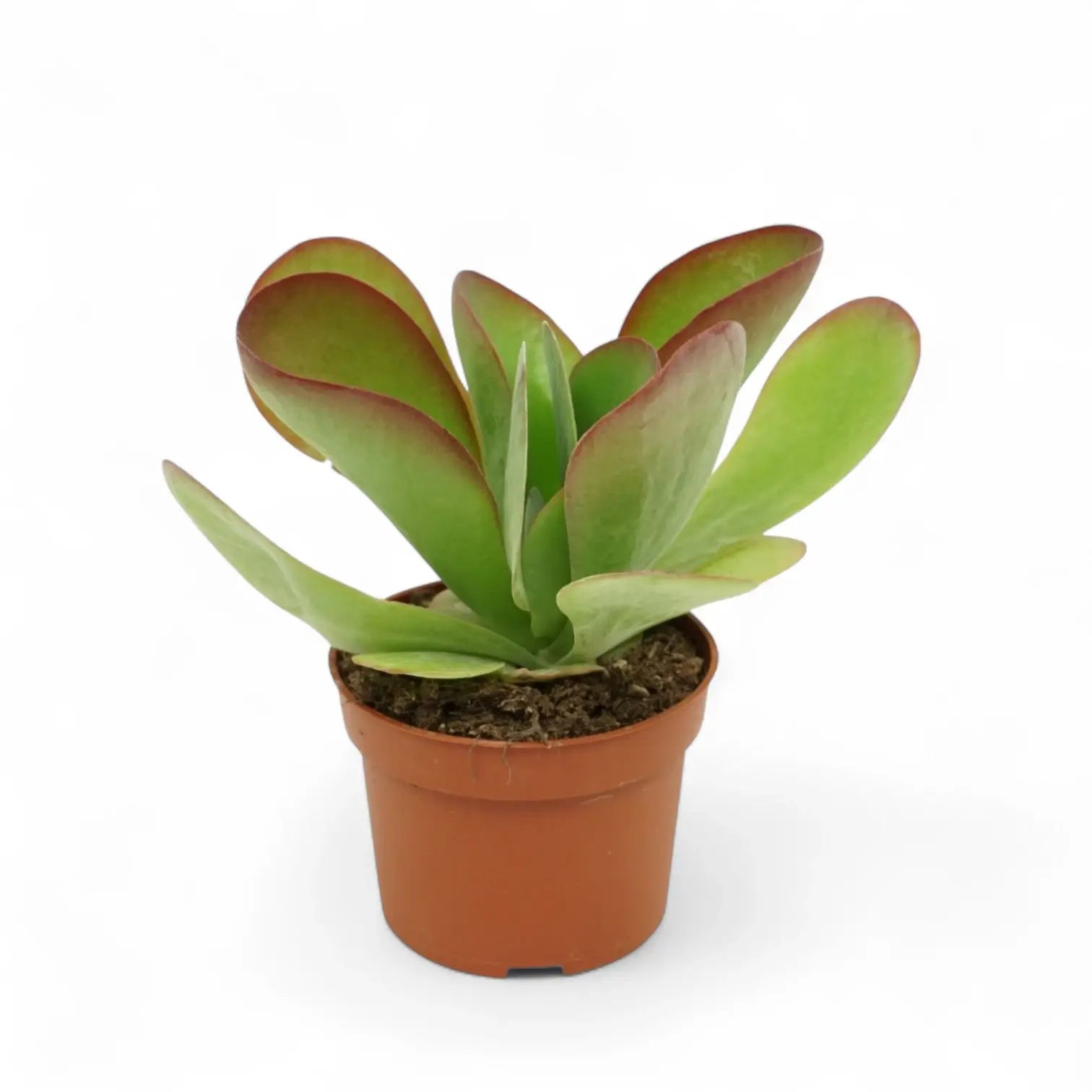
www.succulent factory.com Kalanchoe thyrsifloraKalanchoe thyrsiflora Kalanchoe thyrsiflora is a southern African succulent with thick, rounded leaves arranged in a rosette. The leaves are broad, fleshy and often coated in a pale waxy bloom that helps protect the surface in bright, dry conditions. Young plants form stacked paddles on a short stem and need dry, mineral, well drained cultivation. This species stores water in its leaves, reacts badly to heavy wet soil and performs best when the pot
Kalanchoe thyrsiflora
Kalanchoe thyrsiflora is a southern African succulent with thick, rounded leaves arranged in a rosette. The leaves are broad, fleshy and often coated in a pale waxy bloom that helps protect the surface in bright, dry conditions. Young plants form stacked paddles on a short stem and need dry, mineral, well-drained cultivation.
This species stores water in its leaves, reacts badly to heavy wet soil and performs best when the pot dries properly between waterings. Mature plants can produce a tall flower stem, and Kalanchoe thyrsiflora is monocarpic, meaning the flowering rosette can die after bloom while offsets continue the plant.
Kalanchoe thyrsiflora highlights
- Growth habit: Succulent rosette with thick, rounded paddle-like leaves.
- Leaf surface: Pale glaucous coating helps reduce water loss and should not be rubbed off.
- Native range: Southern Africa, where it grows in dry shrubland or desert-associated habitats.
- Flowering behaviour: Mature rosettes can flower once, then decline as offsets take over.
- Safety: Kalanchoe species contain bufadienolides and are toxic to cats and dogs if ingested.
Rosette growth in dry southern African habitats
Kalanchoe thyrsiflora Harv. is accepted as a species native to southern Africa, especially South Africa, Eswatini and Lesotho. The name thyrsiflora refers to the thyrse-like flower arrangement, and the species is described as a succulent with thick, rounded leaves and yellowish flowers. In habitat, it is associated with grassland and bushveld, often in rocky situations on exposed slopes or hilltops.
The pale coating on the leaves is part of the plant’s surface protection. Fingerprints, oils and repeated wiping can mark it permanently, so handle the plant by the pot rather than the leaves. Strong light can bring subtle warmth to the edges, but colour should not be forced with cold stress or extreme water restriction.
Dry succulent care for Kalanchoe thyrsiflora
- Light: Provide as much bright light as possible indoors, including gentle direct sun. Acclimate gradually if moving it from lower light to a sunnier position.
- Watering: Let the substrate dry fully before watering again. Water deeply, drain completely and keep the pot out of standing water.
- Substrate: Use a gritty cactus or succulent mix with mineral drainage material. Dense houseplant compost stays wet too long for this species.
- Pot choice: A pot with drainage is essential. Terracotta can help if your growing space is cool or watering tends to be heavy.
- Humidity: Low to average indoor humidity is suitable. High humidity combined with poor airflow increases fungal and rot risk.
- Temperature: Keep warm and frost-free. Protect from temperatures below 10 °C in indoor cultivation, especially if the substrate is damp.
- Feeding: Feed sparingly during active growth with a diluted succulent fertiliser. Rich feeding can produce soft, stretched tissue.
- Propagation: Offsets are the most reliable way to continue the plant after maturity. Let cut surfaces callus before potting.
Soft leaves, stretched growth and rosette checks
- Soft yellow leaves: Usually a sign of overwatering or a substrate that stays wet. Stop watering, check drainage and inspect roots if the base feels soft.
- Wrinkled leaves: The plant has used stored water. Water thoroughly if the substrate is fully dry and the roots are healthy.
- Stretched rosette: Increase light gradually. Etiolated succulent growth cannot shrink back, but new growth can become tighter.
- Marked leaf coating: The waxy bloom has been rubbed or splashed. It will not fully repair on the same leaf, so handle new growth more carefully.
- Mealybugs or scale: Check between leaf bases and around offsets. Remove pests carefully without scraping the leaf surface unnecessarily.
Trade confusion and mature offsets
Kalanchoe thyrsiflora is often confused in trade with other paddle-type Kalanchoe species, especially when plants are young or not in flower. The care remains strongly succulent-focused: bright light, gritty drainage, full drying between waterings and warm frost-free conditions.
Kalanchoe thyrsiflora safety
Kalanchoe species are toxic to cats and dogs if ingested. ASPCA lists Kalanchoe spp. as containing bufadienolides, with possible signs including vomiting, diarrhoea and, rarely, abnormal heart rhythm. Keep Kalanchoe thyrsiflora away from pets and children that may chew leaves or flowers.
Kalanchoe thyrsiflora name background
Kalanchoe thyrsiflora was published by William Henry Harvey in Flora Capensis in 1862. The genus name Kalanchoe was used by Michel Adanson and is usually traced to a Chinese name for one of the species. The epithet thyrsiflora combines thyrsus, a thyrse-type inflorescence, with flora, meaning flower.
Kalanchoe thyrsiflora forms a firm paddle-leaf succulent rosette with a pale waxy surface, dry-rooted care and offsets that continue growth after mature flowering.
Shipping Notes
- Free Standard Shipping on $100+ Orders to the USA.
- Except Preorder products are shipped in 48 hours.
- Delivery to the USA:
- Standard Shipping : 3-10 business days
- If time is of the essence, please consider selecting expedited delivery for faster service.
Exchange/Return Notes
- We offer a 30-day return/exchange service after receiving.
- Final sale items are not eligible for returns or exchanges.
- To process your return/exchange, please contact us at [email protected]
- Please click here for more details>>> Return & Exchange Policy