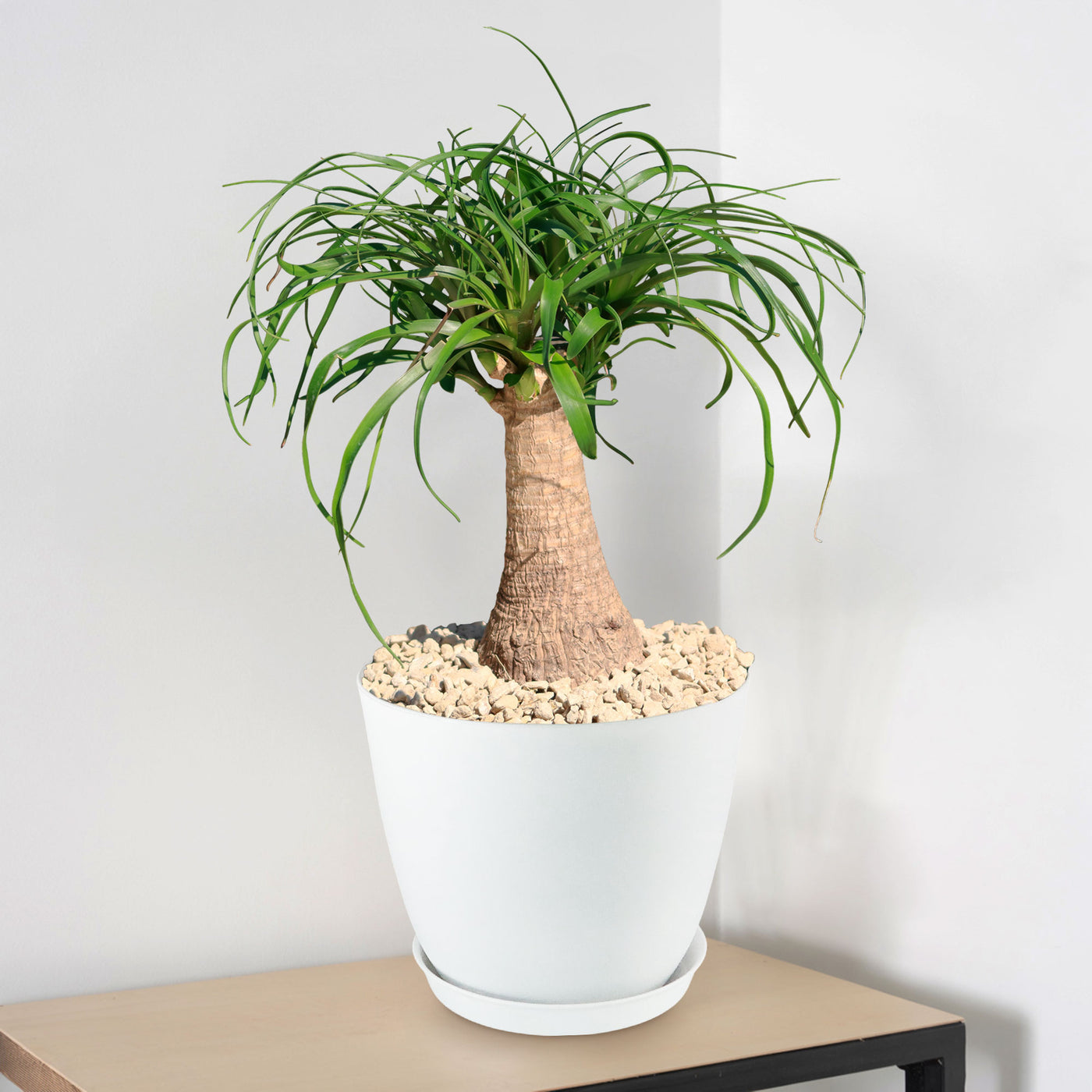
SKU: 62615926245
taking care of ponytail palm

taking care of ponytail palm Ponytail palm 'Beaucarnea recurvata'

Sale price$25.75 Regular price$28.61
Save 10%

Pay in installments of $7.15 with ShopPay, AfterPay and Klarna

Shipping Estimate
USA
  • USA
  • CAN

Ships within 48 hours · Estimated delivery Jul 25 - Jul 30

Promo Codes Available:

For Your Every Summer RSVP, with Code: SUMMER15

Description

taking care of ponytail palm Ponytail palm 'Beaucarnea recurvata'Introducing the ponytail palm, known as Beaucarnea recurvata. Native to Southern Brazil, the ponytail palm is also known as the "elephant's foot palm or elephant foot tree" because of its enlarged lower trunk, which resembles an elephant's foot. Within the agave family, the ponytail palm is a distinct plant that, despite its name, is not a true palm. Its cascading, strap like leaves resemble a ponytail, adding to its unique and elegant appearance.

Introducing the ponytail palm, known as Beaucarnea recurvata. Native to Southern Brazil, the ponytail palm is also known as the "elephant's foot palm or elephant foot tree" because of its enlarged lower trunk, which resembles an elephant's foot.

Within the agave family, the ponytail palm is a distinct plant that, despite its name, is not a true palm. Its cascading, strap-like leaves resemble a ponytail, adding to its unique and elegant appearance. This misconception often arises because its bulbous trunk and graceful foliage evoke the look of a palm tree. Ponytail palms are actually succulents, despite popular belief. Whether it's a succulent or a true palm itself, it adds a touch of tropical flair and botanical fascination to every area of your home. 

This stunning ponytail palm succulent boasts unique features, such as long, slender leaves that cascade gracefully from its bulbous trunk.

Ponytail palms grown in gardens as landscape plants typically grow no taller than 11 feet, while indoors, they rarely exceed 4 feet in height.

The Ponytail Palm is a popular houseplant with a distinctive appearance and a thick, bloated brown stem that stores water at its thick, swollen stem and trunk base, often called a bulb or caudex.

The flowers of the ponytail palm rarely bloom when grown as a houseplant. When it blooms in late winter to early spring, it has small, nocturnal, pure white flowers that appear on long stalks that emerge from the center of your ponytail palm succulent.

The ponytail palm is a slow-growing plant with an impressive lifespan, reportedly living up to 150–200 years. Its longevity and ease of care make it a popular choice for indoor plants, offering beauty and companionship that can last for generations.

The ponytail palm Beaucarnea recurvata, is more closely related to desert plants in the Agave and Yucca genera.

When and How to Water Your Ponytail Palm

Like succulents, the ponytail palm is drought-tolerant with its fleshy, water-storing stems that can hold a lot of water.  However, their root structure is easily susceptible to overwatering, so make sure that you don't overwater, as it can lead to root rot and fungal infections.

In the spring and summer, during the growing season, the ponytail palm prefers regular watering. You'll want to keep the soil evenly moist but not soggy. Allow the top few inches of soil to dry out between waterings to prevent overwatering, which can lead to root rot.

In fall and winter, during the dormant period, to reduce the frequency of watering. The Beaucarnea recurvata growth slows down, so it won't require as much water. In spite of the right watering frequency of about 2–3 weeks, ponytail palm Beaucarnea recurvata roots can be damaged if the soil is not fast-draining. 

If you need to pot up a new ponytail palm, choose a container with enough drainage holes. Allow the soil to dry out more between waterings, but don't let it completely dry out. Aim for a balance where the soil is slightly moist but not overly wet. 

Light Requirements - Where to Place Your Ponytail Palm

When growing Ponytail palm indoors, it thrives in bright, indirect light but can also tolerate lower light levels. Placing it near a sunny window or in a well-lit room is ideal. However, be cautious of exposing your ponytail palm to direct, intense sunlight, as it may scorch the leaves. If they don't receive enough bright light, their stems may grow leggy, become paler, and develop curly leaves. So make your ponytail palm happy and give it plenty of light.

If you are growing your ponytail palm outdoors, it can withstand full sun, but it prefers to grow in areas with some partial shade and avoid prolonged direct sunlight.

Learn to adjust your ponytail palm plant to avoid burns if the location where you have Beaucarnea recurvata is exposed to too much direct sunlight. Gradually increase the exposure until it can handle the full sun.

It's critical to remember that during a heatwave or periods of extreme heat, your Beaucarnea recurvata ponytail palm could still sustain sun damage or get sunburned. In this situation, you can protect your ponytail palm by moving it indoors or to a shaded area. 

Optimal Soil & Fertilizer Needs 

When it comes to choosing the right soil for your adorable ponytail palm, you need to be careful. You see, the amount of moisture in the soil can literally make or break your little green friend. You've got root and stem rot faster than you can say "cactus." That's why we at Planet Desert have got your back with our Soil cactus mix blend 1 gal 4 qt cacti succulent dirt compost growing media. This organic mycorrhiza helps grow a healthy root system that makes all those thick, swollen stems stand tall and proud.  As an okay alternative, you can create your own succulent mix by combining equal portions of perlite, coarse sand, and good natural potting soil. 

Ideally, you should look for a natural fertilizer with an approximate blend of 5-10-15 that is higher in phosphorus than nitrogen. The best choice is to use natural fertilizer, as ponytail palm Beaucarnea recurvata lasts longer and keeps your soil alive by adding other beneficial compounds and microbes that encourage ponytail palm health and nutrient absorption. 

Hardiness Zones & More

When it comes to indoor care, this Beaucarnea recurvata ponytail palm prefers average room temperatures between 65 and 75°F, making it suitable for most indoor settings. It can tolerate slightly cooler temperatures, but it's best to avoid extreme cold drafts or sudden temperature fluctuations.

The ponytail palm Beaucarnea recurvata can tolerate average indoor humidity levels, but it appreciates a bit of dry air from time to time. Misting the leaves occasionally or placing the pot on a tray filled with pebbles and water can help create a slightly more humid microclimate around the ponytail palms.

If you are living in USDA zones 9–11, you can grow your ponytail palm outdoors year-round. It thrives in warm climates and can tolerate full sun to partial shade outdoors.

 In terms of temperature, it can withstand temperatures as low as 30°F for short periods, but it's generally recommended to protect it from frost and freezing temperatures.

 It can tolerate low humidity levels, making it a great choice for outdoor landscapes in drier regions. However, it's important to note that excessive humidity or prolonged exposure to high humidity can lead to fungal issues or root rot.

Remember, the ponytail palms, as slow-growing species, can't stand frost or too much humidity; therefore, they need warm, dry conditions. A balanced ponytail palm care will help you maintain temperatures and prevent too much moisture.

Wildlife - Ponytail Palm Attracts the Following Friendly Pollinators

The Ponytail Palm has small, fragrant flowers that can attract pollinators such as bees, butterflies, or hummingbirds. While it’s primarily grown as an ornamental indoor plant, providing outdoor exposure during flowering can support local pollinator populations and enhance the plant’s natural beauty.

Butterflies
Bees
Hummingbirds
Lady Bugs
Multi Pollinators
Other Birds

According to the ASPCA, the Ponytail Palm is non-toxic to humans, cats, dogs, and other common household pets. Its pet-friendly nature makes it an excellent choice for homes with animals, as it poses no significant health risk if leaves are chewed or ingested.

How to Propagate Your Ponytail Palm

The ponytail palm can be propagated through seeds or by offshoots that develop around the base of the ponytail palm plant. This method allows for quicker growth and ensures that the new plant retains the same characteristics as the parent plant. Repotting Ponytail palms is best done in the spring when the plant is actively growing. Be sure to use a well-draining potting mix to prevent root rot.

Key Takeaways

  1. The Ponytail Palm features a large, bulbous base known as a caudex, which stores water, making it highly efficient in surviving extended periods of drought.
  2. This plant is exceptionally low-maintenance and thrives in dry conditions, requiring infrequent watering and minimal care, making it perfect for busy individuals.
  3. Its long, narrow, and arching leaves cascade from the top of the trunk, resembling a ponytail, giving the plant its signature look and adding elegance to any space.
  4. The Ponytail Palm is a slow-growing plant, making it ideal for indoor settings, as it maintains its compact size for years with proper care.
  5. The Ponytail Palm is a slow-growing plant, making it ideal for indoor settings, as it maintains its compact size for years with proper care. (duplicate)

Final Thoughts

Overall, the Ponytail Palm (Beaucarnea recurvata) is a versatile and low-maintenance plant that can be a wonderful addition to both indoor and outdoor spaces. With its unique appearance and ability to adapt to different light conditions, it can brighten up any room or garden. Indoors, it prefers bright, indirect light and average room temperatures. Outdoors, it thrives in warm climates and can tolerate full sun to partial shade. Don't miss out on this opportunity to add something truly exceptional to your garden. Order your very own Beaucarnea recurvata, or ponytail palm, today!

Shipping Notes
  • Free Standard Shipping on $100+ Orders to the USA.
  • Except Preorder products are shipped in 48 hours.
  • Delivery to the USA:
  1. Standard Shipping : 3-10 business days
  • If time is of the essence, please consider selecting expedited delivery for faster service.
Exchange/Return Notes
  • We offer a 30-day return/exchange service after receiving.
  • Final sale items are not eligible for returns or exchanges.
  • To process your return/exchange, please contact us at [email protected]
  • Please click here for more details>>> Return & Exchange Policy
SKU: 62615926245

Discover Niche Categories That Outsell taking care of ponytail palm

Top-Converting Item to Boost Your Average Order

4.3 ★★★★★
Based on 22 reviews
Sort
Highest Rating
Newest First
Oldest First
Product Reviews
R
Verified Purchase
Rebecca b
Whiting, US
★★★★★ 5
Fast, Reliable, and Stunning Print Quality — Best 3D Printer Value!
Set name: Ender 3 V3 SE
The Creality Ender 3 V3 SE is an absolute powerhouse for the price! At 250mm/s print speed with CR Touch auto leveling, this thing sets up fast and prints reliably right out of the box. The Sprite direct extruder handles flexible and rigid filaments with ease, and the print quality is stunning. Whether you're prototyping custom parts, printing jigs and fixtures, or cranking out creative projects, this printer delivers every time. Best 3D printer value on the market — period!
WAS THIS REVIEW HELPFUL?YesReportShare
Reviewed in the United States on June 2, 2026
I
Verified Purchase
Infrastructure Network
Grantham, US
★★★★★ 5
Not the biggest kid on the schoolyard, but plays a solid ground game.
Set name: K2 SE, Set name: K2 SE
The K2SE is an excellent printer for users who are still interested in learning and growing within the 3D-printing ecosystem, but who no longer want to spend the majority of their time troubleshooting basic hardware issues. While it may not be a flagship, top-tier machine by today’s standards, it represents a significant step forward—especially when compared side-by-side with older platforms like the Ender 3 Pro. Out of the box, the K2SE delivers a level of refinement that once required extensive upgrades on earlier printers. Features such as automatic bed leveling, filament runout detection, a sturdier frame with vibration-dampening feet, and a properly supported raised Z-axis bed all come standard. The addition of cloud access and a fluid web interface—complete with optional root access for advanced users—bridges the gap between a consumer-friendly machine and a system that still rewards technical curiosity. My first print, a simple Kirby model, was intentionally done with minimal tuning to get a baseline feel for the machine. The results were impressive, especially coming from years of compensating for aging components on my Ender 3. With that printer long overdue for a new extruder, I had grown accustomed to managing variables that simply don’t exist on the K2SE. The consistency and reliability here are immediately noticeable. Although I didn’t have the budget to add the multi-filament CRT system at launch, the printer’s upgrade path is clearly well thought out. Planned expansions like an enclosure, camera monitoring, and multi-material support make it easy to justify future investments. I would also welcome a firmware or hardware update that introduces Bowden extruder support, as it could further improve filament switching speeds and overall print performance. As someone who has stuck with the same Ender 3 since long before touchscreens, CR-Touch, and modern quality-of-life upgrades became commonplace, it’s refreshing to see Klipper remain a core component of the K2SE. For users who are on the fence about moving away from heavy DIY builds, this printer strikes a compelling balance—offering reliability and speed without sacrificing control. Perhaps the most underrated benefit is time savings. The K2SE is noticeably faster than older models, and its intuitive touchscreen interface makes it accessible even for non-technical users in my household. After setup, my wife and children can confidently start prints on their own, which speaks volumes about the usability of the system. Print quality alone justifies the upgrade for patient users. While some may find the stock cooling fans slightly underpowered, the machine compensates with excellent compatibility for multi-tool and threaded expansion systems—an advantage over many Bowden-dependent designs that require significant modification for production or multi-material workflows. And as a final bonus, despite being scheduled for February delivery, the K2SE arrived weeks early. Getting this machine ahead of schedule was the perfect way to confirm that the upgrade was absolutely worth it for the value price point.
WAS THIS REVIEW HELPFUL?YesReportShare
Reviewed in the United States on January 8, 2026
R
Verified Purchase
Ricky stein
Los Angeles, US
★★★★★ 1
Don’t buy
Set name: K2 SE Combo, Set name: K2 SE Combo
This printer is pretty awesome. Here is the biggest catch to it. We have spent hundreds of dollars on the app and or validating what we could buy between buying filament and everything else. This thing does not connect properly. It is very technical if you are not smart. This is a terrible thing to buy. I’m a very educated person and so are the other 3 to 4 people in my household that have all tried to use this thing it will not let you change individuals to print off it and even the amount of money you spend to buy credit credits and or other items that you want to purchase in the store do not print properly. This sucks don’t buy it even though this equipment is awesome. This is the worst thing I wish I’d never bought. I do not say this in the test and or ignorance I have studied. I have read up. I’ve looked at forums. I’ve been on Reddit. Everyone says this creatality is extremely difficult and we have definitely found this out firsthand. I would definitely return this, but I think my window has closed. It sucks when you buy a product and you have it for like 2 to 3 weeks before you get to use it but then your window to return it is closed. The app does not match what is online and or if you have more than one person that wants to print, you cannot share unless the other person is logged out and even if the person is logged out, it does not always match the same, so for example, I have tons of money and credit on my account, but it will not let me print out certain apps and or creations then it tells me that it will work on our item that we have purchased, but then it’ll say it does not work. It will not print. 3-D printer is a scam. It sucks. It has great potential but this is not the one for you. Don’t waste your money too much money.
WAS THIS REVIEW HELPFUL?YesReportShare
Reviewed in the United States on February 18, 2026
E
Verified Purchase
Elton Smith
West Palm Beach, US
★★★★★ 5
Forget Adventurer 5M , This is the true and easy to use beginner machine
Set name: Ender 3 V3 SE
This is my 3rd 3d printer. Once I spent about 45 minutes assembling it has been printing nonstop since the amazon driver dropped it off, these are the best for reliability and perfect for hobbyists. It is not the quickest machine out there, but it makes up for it with a quality print good price as well.
WAS THIS REVIEW HELPFUL?YesReportShare
Reviewed in the United States on May 25, 2026
H
Verified Purchase
hearmeout
Los Angeles, US
★★★★★ 4
One - Month Review
Set name: Ender 3 V3 SE, Set name: Ender 3 V3 SE
First - I wrote a out of the box review - I do not know if this review will replace the old review or compliment it. Just in case this review replaces the old review - I will repeat a few of the important points from the previous review. I must also say it helps a great deal if you are already familiar with Ender because about 80% or more of the machine is built the same way as the older models. If this is your first Ender - read the instructions and check to make sure you have all the parts. Placing the parts where you can easily tear open the bags and not having to search for a part cuts down the assembly time. While the assembled printer takes up a small footprint - give yourself room to work. This is my 3rd printer - my first one I made from scratch. It took about 2 weeks to get it assembled and another two weeks to get it to print properly. Most of that time was spent modifying the Martin software so it would run my machine! My second one was an Ender V1. It took me about 90 minutes to assemble and about 30 minutes to get it to work. Over the years - I modified it to the point it was virtually impossible to tell the difference between it and a V3. I replaced it because a least one of the motors was going bad and I did not want to do the repairs. I picked this printer for 3 reasons 1) it was on sale, 2) I am now wheelchair bound and needed a printer that did not require too much assembly, and 3) I had worked with Ender before and knew how they worked. I was able to keep some of the old parts from the old machine (but threw most away). Everything was packaged well, but the small parts are in plastic bags that you have to tear or cut open - so be careful you do not lose any parts! There are only three parts to be assembled. They are the base, the frame, and the screen. I had no trouble getting the machine together - did have some trouble getting it to work. I was never able to reach customer service which ranged between "Who are you Kidding?" and "Did you really expect any?" I did some internet searching (there is lots of stuff out there - many are good YouTube videos). I found I needed to do an update - it got a bit complicated here. Part of the update was done using the hidden slot on the LEFT side of the removable screen and part was done using a SD card on the LEFT side of the Unit. (Ender does NOT tell you this on their website!). I was already angry when I tried their slicer and it did NOT work - after not being able to get customer service again. I deleted their slicer and used my Cura. After doing a few prints using Cura (which works fine) a couple days later, I reinstalled their slicer and did some troubleshooting - I found I had a setting wrong. I use both Cura and their slicer now because of the differences. Each one has some features the other one lacks. One example: The Cura has a large number of preset configurations, and it is easy to save a custom configuration. The Creality titles the g-code with a filename that includes the estimate print time. I tried customer service and actually someone! They did give me the manual settings for generic Pla - when I asked how to save those settings they send me to a useless link. I will research how to save one day - but will use my Cura for generic pla until then. What I like about the machine. 1} While it is nosier (a trade-off for higher speed) - it is still much quieter than the original Ender I had before modifications. 2)The new ribbon and print head are a big improvement. The filament is easier to change, and you can easily make prints with different colors! I do not miss the bowden tube and individual wires at all! 3) I like to put my prints on a card. The old machine used a micro-SD card - and I quicky bought an adapter! The new machine takes regular SD cards and no adapter is needed! 4) I really like the automatic leveling feature. There have been times I have spent hours getting my manual table set the way I wanted. So far - it has worked great. I have only made about 50 prints - so I cannot tell you how reliable it is in long term use. 5) The quality of prints is much better than my old machine. I am not sure whether this due to being a better machine or the stepper motor needing replacement. What I do not like: 1) The SD card has to be put into its slot upside down. 2) The controls and the SD card slot are all on the left side of the printer. I think putting the computer connection and the SD card would have been much better on the front of the machine. 3) Updating is like putting up a Christmas tree. The firmware is done with a hidden C connector on the left side of the detachable screen (this is like putting up a Christmas tree). Fine details on display etc. are put in using the SD card (this is like putting the lights on the tree). Once you figure out what goes where - it is the easiest printer to update I have had. 4. This one is a mixed bag. I do not give their customer service good marks - but the fact I found solutions on the internet was a good thing.
WAS THIS REVIEW HELPFUL?YesReportShare
Reviewed in the United States on April 5, 2026

recommand products