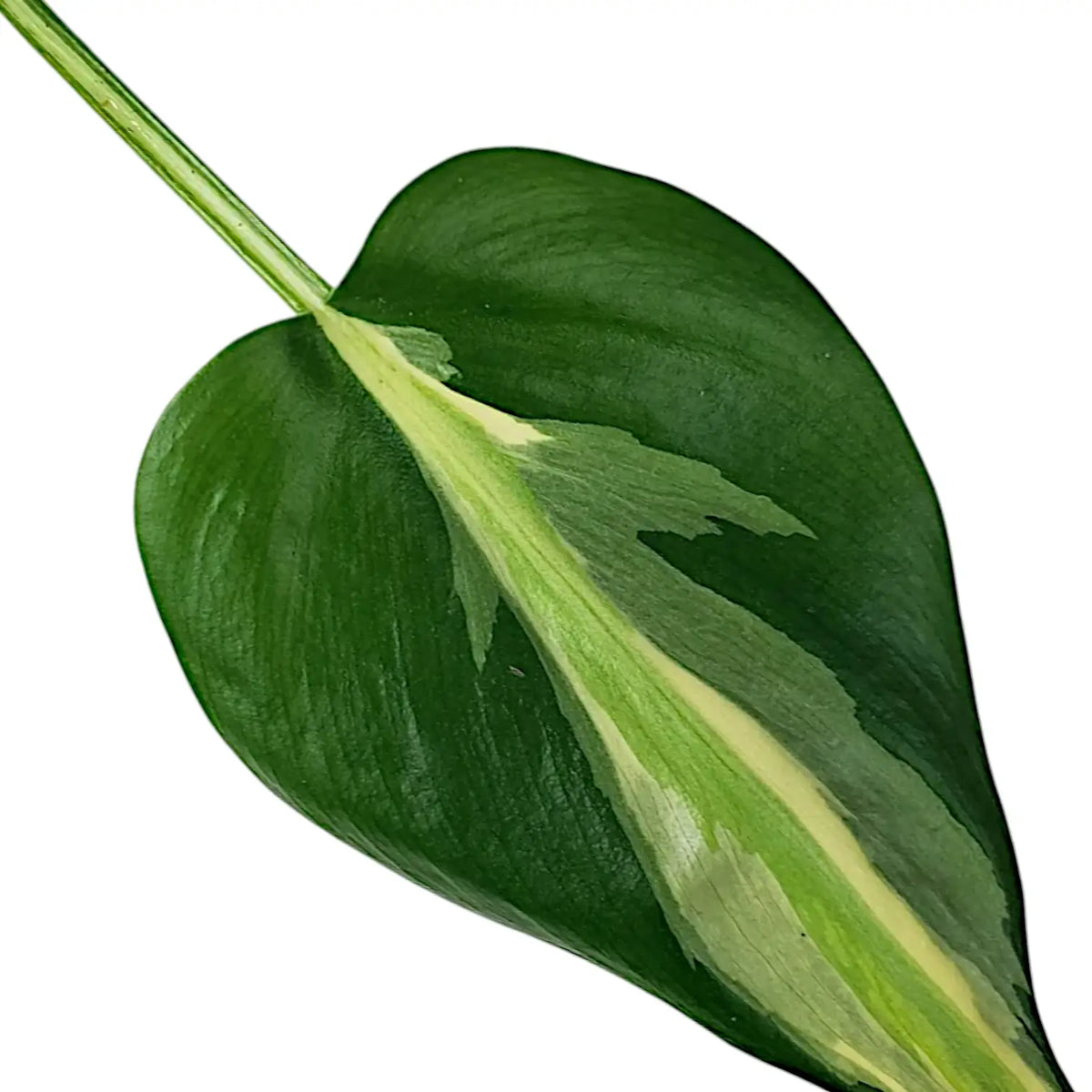
SKU: 62692471940
philodendron hederaceum var. oxycardium variegated

philodendron hederaceum var. oxycardium variegated Philodendron 'Cream Splash' – Variegated Heartleaf Philodendron

Sale price$18.79 Regular price$20.88
Save 10%

Pay in installments of $5.22 with ShopPay, AfterPay and Klarna

Shipping Estimate
USA
  • USA
  • CAN

Ships within 48 hours · Estimated delivery Jul 22 - Jul 27

Promo Codes Available:

For Your Every Summer RSVP, with Code: SUMMER15

Description

philodendron hederaceum var. oxycardium variegated Philodendron 'Cream Splash' – Variegated Heartleaf PhilodendronPhilodendron hederaceum var. oxycardium 'Cream Splash' Care Guide and Insights Philodendron hederaceum var. oxycardium 'Cream Splash' is a striking variegated cultivar with heart shaped leaves featuring a unique blend of deep green, soft cream, and pale yellow hues. Each leaf has its own pattern, making every plant one of a kind. With cascading vines perfect for shelves or hanging planters, this Philodendron also climbs when given support. Its low

Philodendron hederaceum var. oxycardium 'Cream Splash' – Care Guide and Insights

Philodendron hederaceum var. oxycardium 'Cream Splash' is a striking variegated cultivar with heart-shaped leaves featuring a unique blend of deep green, soft cream, and pale yellow hues. Each leaf has its own pattern, making every plant one of a kind.

With cascading vines perfect for shelves or hanging planters, this Philodendron also climbs when given support. Its low-maintenance nature makes it a fantastic choice for adding vibrant foliage to your space without demanding care.

Key Features and Benefits

  • Unique variegation: A mix of green, cream, and yellow on each leaf.
  • Versatile growth habit: Suitable for trailing or climbing setups.
  • Easy care: Thrives indoors with minimal maintenance.

Important Facts About Philodendron 'Cream Splash'

  • Native Habitat: Grows in the tropical rainforests of Central and South America.
  • Growth Rate: Moderate to fast under optimal conditions.
  • Size: Vines can reach up to 1.2 meters indoors, with leaves growing 5-15 cm long.
  • Toxicity: Contains calcium oxalate crystals and is toxic if ingested.

How to Care for Philodendron 'Cream Splash'

Light

  • Prefers bright, indirect light but tolerates moderate to low light.
  • Too much direct sun may scorch leaves; low light can reduce variegation.
  • Grow lights can help maintain vibrancy in dim spaces.

Watering

  • Allow the top 2-3 cm of soil to dry between waterings.
  • Water thoroughly, ensuring excess drains away.
  • Reduce watering in cooler months.

Humidity

  • Prefers humidity above 50% but adapts to average indoor levels.
  • A humidifier can help in drier environments.

Temperature

  • Best range: 18-26°C.
  • Avoid temperatures below 15°C and sudden drafts.

Soil

  • Needs well-draining, nutrient-rich soil.
  • A mix of perlite, and orchid bark supports root health.

Repotting

  • Repot every 1-2 years or when roots outgrow the container.
  • Choose a pot with drainage holes to prevent water buildup.

Fertilization

  • Feed monthly with a diluted balanced liquid fertilizer.
  • Avoid over-fertilizing to prevent salt buildup.

Propagation

  • Propagate via stem cuttings in water or soil.
  • Ensure cuttings have at least two nodes for better success.

Pruning

  • Regular trimming encourages bushier growth.
  • Remove damaged, yellowing, or leggy stems as needed.

Semi-Hydroponics

  • Adapts well to semi-hydroponic growing with inert substrates.
  • Use a balanced nutrient solution for hydroponic setups.

Common Issues and Solutions

Pests

  • Spider mites: Fine webbing on leaves – treat with neem oil, or use beneficial insects or insecticidal soap.
  • Mealybugs: White, cotton-like clusters – remove manually and treat with rubbing alcohol.
  • Fungus gnats: Indicate overwatering – allow soil to dry and use sticky traps.

Root Rot

  • Caused by excess moisture and poor drainage.
  • Use a well-draining mix and avoid overwatering.

Leaf Discoloration

  • Yellowing: Overwatering or nutrient deficiency.
  • Browning tips: Low humidity or over-fertilization.
  • Fading variegation: Needs more indirect light.

Fungal Issues

  • Leaf spots: Black or brown fungal patches.
  • Improve airflow and avoid overhead watering.

Additional Tips

  • Encourage climbing for larger leaves by using a moss pole.
  • Wipe leaves with a damp cloth to improve photosynthesis.
  • Variegation is genetically stable and won’t revert.

Etymology

  • Philodendron: Greek for "love tree," referencing its climbing habit.
  • Hederaceum: Latin for "ivy-like," describing its growth pattern.
  • Oxycardium: Greek for "sharp heart," referring to leaf shape.
  • Cream Splash: Named for its creamy variegation.

Philodendron scandens vs. hederaceum – Clearing Up the Confusion

Botanical naming can be tricky. Philodendron scandens, Philodendron hederaceum, and Philodendron micans all refer to the same species: Philodendron hederaceum. The difference? Micans is a variety with velvety leaves.

Read more: Scandens, Hederaceum, Micans – A Comprehensive Heartleaf Philodendron Guide

Shipping Notes
  • Free Standard Shipping on $100+ Orders to the USA.
  • Except Preorder products are shipped in 48 hours.
  • Delivery to the USA:
  1. Standard Shipping : 3-10 business days
  • If time is of the essence, please consider selecting expedited delivery for faster service.
Exchange/Return Notes
  • We offer a 30-day return/exchange service after receiving.
  • Final sale items are not eligible for returns or exchanges.
  • To process your return/exchange, please contact us at [email protected]
  • Please click here for more details>>> Return & Exchange Policy
SKU: 62692471940

Discover Niche Categories That Outsell philodendron hederaceum var. oxycardium variegated

Top-Converting Item to Boost Your Average Order

4.5 ★★★★★
Based on 14 reviews
Sort
Highest Rating
Newest First
Oldest First
Product Reviews
A
Verified Purchase
A. Thomas
Massapequa, US
★★★★★ 5
a very serious read about ongoing and proposed climate intervention
Format: Kindle
This book has a lot of serious information. If it’s honing to of any use to you , then it will require active reading, note taking etc. The complex social involvement of political and business interests that already exist with the spread of non- native species of plants and animals in North America, Australia, South America etc. Since the 19th century gives this reader a reason to pause in his quest to find the “right, simple, effective strategy” which would require an unimaginable level of cooperation between the EU, Asia,and North America. The likely scenario is that as get closer to deadlines by the year 2030 and beyond, partial programs will be launched by various combinations of government and public, and business interest’s. The result isn’t optimistic but it will be a reality.
WAS THIS REVIEW HELPFUL?YesReportShare
Reviewed in the United States on April 2, 2022
J
Verified Purchase
Jack Hicks
Alexandria, US
★★★★★ 4
interesting science
Format: Hardcover
Under A White Sky, The Nature of The Future, Elizabeth Kolbert, 2021 In 2015 Elizabeth Kolbert won the Pulitzer Prize for her book the Sixth Extinction. In my review of that book, I wrote: Kolbert is not a scientist but a reporter and writer for The New Yorker magazine and as such her book is structured as a series of bylines as she travels around the world reporting on scientists investigating extinctions in both the present and the past. As in that book she adopts the same format but this time investigating “how the very sorts of interventions that have imperiled our planet are increasingly seen as the only hope for its salvation”. Ice cores from the Antarctic and Greenland have shown that the last 10,000 years of earths history have been the most benign and stable climatological periods in the last 100,000 years. During this time, we have been able to develop agriculture, an amazing technological and a pervasive globe encompassing culture with a population now of almost 8 billion people. Without this unusually stable climate most of our current civilization would probably have not evolved or been possible. Up to this point we humans have taken this for granted thinking that this benign state will somehow last forever. In Kolbert’s last book she emphasized that due to our own rapacious destruction of earth’s ecosystems and our destabilization of climate stability, this situation is coming to an end and not responding is not an option. Facing an unimaginable crisis of our own making how should we respond? When we intervene, are we smart enough not to cause newer unanticipated problems greater than the original problem we sought to solve? Kolbert travels around the world seeking an answer to this question. She visits places and examples where we historically have tried to solve problems such as sewage in Chicago or taming floods on the Mississippi only to create larger problems such as invasive species or sinking cities such as New Orleans. The most interesting part of her book is when she addresses the people and places that are using current cutting-edge technology to save ecosystems and reverse global warming. One such example is on the Great Barrier Reef of Australia, one of the most diverse and prolific ecosystems on earth, which is under dire threat from oceanic warming and acidification. Faced with the real possibility of extinction of the reef in just decades, scientists are turning to genetic modification of Corals to make them more resistant to these fast-changing conditions. Since 2012 a new gene editing technology called CRISPR-Cas has become ubiquitous. In fact, so ubiquitous that you can buy your own “genetic engineering home lab kit” from a company in California called Odin for $1800. Kolbert buys her own kit and is able to engineer a colony of E. coli bacteria into a strain that is resistant to streptomycin antibiotic. She then inserts a jellyfish gene into yeast which then glows in the dark. Sound dangerous? Yes, what could possibly go wrong, but this is also the technology to develop new global warming resistant corals or destroy malaria carrying mosquitos, control rapacious rodents on Pacific Islands or control a plague of Cane Toads in Australia, not to mention breakthrough medical benefits. We have so altered natural systems with invasive species, with climatological chaos that the only solution is further intervention. She quotes a scientist at the Australian Animal Health Laboratory: “What people are not seeing is that this is already a genetically altered environment. Invasive species alter the environment by adding entire genomes that don’t belong. By contrast Genetic engineers, by contrast, alter just a few bits of DNA here and there”. “The classic thing people say with molecular biology is: Are you playing God? Well no. We are using our understanding of biological processes to see if we can benefit a system that is in trauma”. Do you feel guilty about all the carbon you are emitting into the atmosphere when you drive around in your SUV or eat a filet mignon? Now there is a way to assuage your guilt. There is a now a company called Climeworks that will do just that for the price of $1000 per ton of sequestered CO2. Being that each American emits about 20 tons per year following the American way of life and to totally assuage your guilt will cost you a cool $20,000 per year. Do you feel that guilty? Kolbert purchases one ton of sequestration and then visits the place where the deed is done which turns out to be at a geothermal power plant in Iceland. There they inject CO2 into the hot molten basalt at the bottom of their well to form limestone. This is a way the earth has been doing this process for millions of years without payment. In fact, it is the very process that transpired when the Himalayas were pushed up by the Indian subcontinent million of years ago, sequestered billions of tons of carbon into limestone and enabled the ice ages to begin 3 million years ago. Is this process a feasible solution to our current crisis? According to the latest UN climate report at this point, some form of sequestration is almost certainly required to avoid a catastrophic global temperature rise above 2 degrees regardless of what green technologies are introduced. Almost certainly the cost of that sequestration will have to be drastically reduced. Is there another way to approach the problem? Here Kolbert interviews scientists who are studying a process called solar geoengineering which involves shooting reflective compounds or crystals into the stratosphere to reflect sun light and reduce the earths albedo or heat absorption. This the same process that occurs when large volcanic explosions expel billions of tons of dust and S02 that block incoming sunlight and cool the planet. Last time a truly global volcanic eruption occurred was Tambora in Indonesia in 1815 and caused catastrophic cooling causing mass famine in various places around the world. Is this a feasible solution? Maybe, certainly not to the extent of Tambora and one side effect might be changing the sky from blue to white and hence the title of the book. Sunsets might be improved however. This a short book and quick read and one gets the sense that it was somewhat truncated because of the pandemic restricting travel. However, there is still a lot of interesting information about the future fate of our planet and what can be done to ameliorate the damage that we have inflicted. JACK
WAS THIS REVIEW HELPFUL?YesReportShare
Reviewed in the United States on March 1, 2021
F
Verified Purchase
Fern
Phoenix, US
★★★★★ 5
I like it
Format: Paperback
In very good condition
WAS THIS REVIEW HELPFUL?YesReportShare
Reviewed in the United States on March 25, 2026
M
Verified Purchase
Mr. Stripey
Bozeman, US
★★★★★ 5
Informative studies of how scientists are trying to address environmental issues today
Format: Paperback
In this book Kolbert travels to visit scientists attempting to address the environmental changes that humans are creating on the planet. The chapters focus on different issues, such as invasive species, and species loss, and includes field site visits, and also references for more reading. If you read this, and Sixth Extinction, and Field Notes From a Catastrophe, you will get a great oversight of some of the environmental issues that we face, although not any neat solutions. All the case studies build up into a wider understanding.
WAS THIS REVIEW HELPFUL?YesReportShare
Reviewed in the United States on December 23, 2023
D
Verified Purchase
Dave of Dublin
Grantham, US
★★★★★ 3
disappointing
Format: Hardcover
I was excited to read "Under a White Sky". Unfortunately, it seems that the author just sort of stopped writing when COVID hit. See page 197, where author laments the arrival of COVID. FOur pages later, book ends. The author even says on page 197: "Here I was, trying to finish a book about the world spinning out of control, only to find the world spinning so far out of control that I couldn't finish the book". Couldn't finish the book, but COULD publish it and sell it to people like me. The early chapters are interesting, each one covering a different topic related to man messing with nature. Good stuff. But I expect some analysis, some conclusion, something to sum it all up. It just isn't there. Topic and early chapters showed great promise. But the ending is truly lacking. And as the author alludes, unfinished.
WAS THIS REVIEW HELPFUL?YesReportShare
Reviewed in the United States on March 7, 2021

recommand products