SKU: 6288389181
jade plant soil type

jade plant soil type Botany Bay Jade Plant

Sale price$18.13 Regular price$20.15
Save 10%

Pay in installments of $5.04 with ShopPay, AfterPay and Klarna

Shipping Estimate
USA
  • USA
  • CAN

Ships within 48 hours · Estimated delivery Jul 22 - Jul 27

Promo Codes Available:

For Your Every Summer RSVP, with Code: SUMMER15

Description

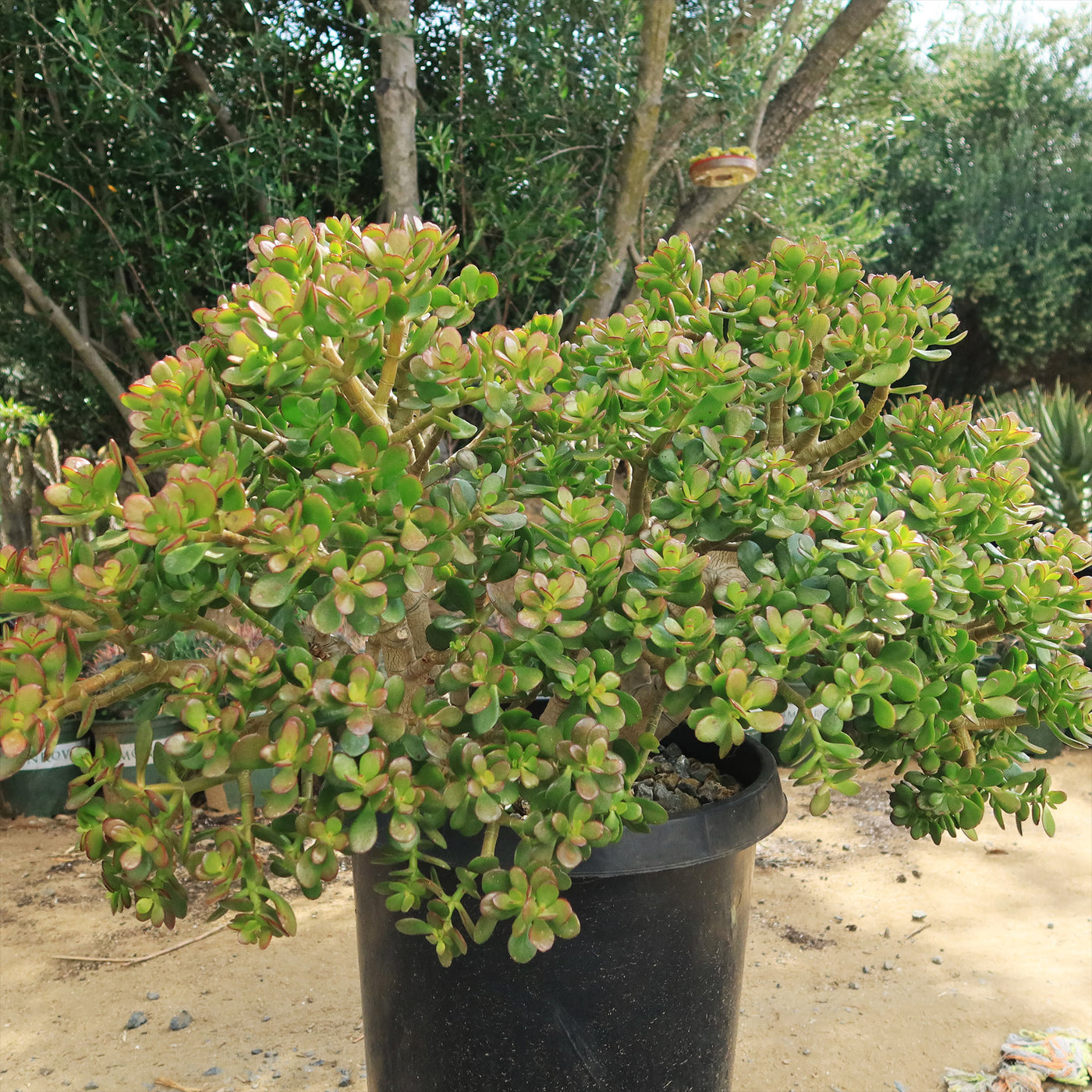
jade plant soil type Botany Bay Jade PlantThe Botany Bay Jade plant, known as the Crassula ovata 'Botany Bay', is a popular Jade plant known for its unique foliage and low maintenance care. This Crassula succulent is one of the most widely distributed flowering succulents out there. Additionally, "Botany Bay" is the name of a location in Australia where significant botanical discoveries were made. This image features a lush, mature Botany Bay Jade plant with tightly packed, glossy green

The Botany Bay Jade plant, known as the Crassula ovata 'Botany Bay', is a popular Jade plant known for its unique foliage and low-maintenance care. This Crassula succulent is one of the most widely distributed flowering succulents out there. Additionally, "Botany Bay" is the name of a location in Australia where significant botanical discoveries were made.

This image features a lush, mature Botany Bay Jade plant with tightly packed, glossy green leaves forming a dense, bonsai-like canopy.

In Chinese culture, Crassula ovata is known as the "money tree" or "feng shui money tree" and is believed to bring good luck and financial prosperity to those who grow it.

This money plant is often given as a gift during the Chinese New Year or other auspicious occasions.

Native to South Africa and Mozambique, this evergreen beauty can grow up to 3 feet tall and 2 feet wide, depending on its conditions (so make sure you give it plenty of root space!).

During summertime, those glossy green tubular leaves shine brightly, but as we head into cooler temperatures, those edges start turning red - talk about stunning! 

The star-shaped flowers of the jade plant bloom in late winter to early spring with white flowers that create an eye-catching contrast between open blossoms and closed buds. These pollinated flowers produce seeds enclosed in these buds.

Money tree plants are exceptionally easy to propagate by leaf or stem cuttings, so you can quickly grow your collection with just a few simple steps.

The jade succulents typically go dormant during the winter months, from late fall to early spring. During this period, the plant will stop growing and may lose some of its leaves. This is a natural process and is not harmful to the plant. To encourage its growth during dormancy, the plant should be kept in a cool, dark location and reduced watering. 

So, whether you call it a jade plant, lucky plant, or money tree, Crassula ovata is definitely worth adding to your collection! 

When and How to Water Your Botany Bay Jade Plant 

The Botany Bay Jade plant succulent is naturally drought-tolerant, having evolved to store water in its thick, fleshy leaves. This makes it particularly well-suited to indoor environments where frequent watering isn’t ideal. Like most succulents, it thrives when watered using the soak-and-dry method, thoroughly saturating the soil and allowing it to dry out completely before the next watering. The Crassula ovata ‘Botany Bay’ prefers watering 10-14 days once every growing season, and once every 3-4 weeks in the dormant season.

In spring and summer, during the active growing season, the jade plant will appreciate slightly more frequent watering once every 10 to 14 days. Always check the soil moisture before watering. If the top 2 inches are dry and the pot feels noticeably lighter, it’s time to water again. Bright, indirect light and warm indoor temperatures will also cause the plant to use water more quickly during this time.

In fall and winter, during the dormant season, growth slows considerably, and so should your watering routine. Watering once every 3 to 4 weeks is often sufficient, especially in cooler homes where evaporation is slower. Be extra cautious during this period; moist, cold soil is a recipe for root rot. Reduce watering frequency and avoid misting or adding humidity, as this succulent prefers dry air year-round.

Light Requirements - Where to Place Your Jade Plant 

When grown indoors, place your Jade plant in the brightest sunny place in your house, where it gets 4-6 hours of bright light daily.

Direct sunlight can scorch the new leaves off, so placing them near a window that receives filtered or indirect light is best. 

The amount of light the plant receives can affect the color of its leaves. The money tree grown in bright light will have more vibrant, deep green leaves, while the foliage of those grown in lower light conditions may have a lighter, yellow-green color.  

When grown outdoors, the jade plant thrives best in full sun to partial shade, for at least six hours of strong light each day to survive. However, partial shade in the afternoon is often preferable - especially in hotter climates where the plant might become stressed by the intense heat of the afternoon sun.  

The red coloration on the margins of the leaves of a Jade plant is a sign of stress; it's usually not harmful to the plant and will often disappear once the plant is returned to the bright sunlight.  

Optimal Soil & Fertilizer Needs 

The Botany Bay jade plant prefers sandy, well-drained soil and should be fertilized once a year in the spring. Planet Desert specializes in succulents and has specialized succulent potting soil that includes an organic substrate with mycorrhizae to help with the growth of a healthy root system to help your new plants and succulents thrive. 

When it comes to fertilizing your Crassula ovata, it only needs a small amount of fertilizer applied once a year in spring. Succulent plants prefer a fertilizer with lower doses of NPK, with a maximum ratio of 5-10-5, higher in phosphorus than nitrogen.

Hardiness Zone & More

In the United States, this Botany Bay Jade Plant is mostly an indoor plant, but if you live in southern Florida or Hawaii, then you can cultivate it outdoors in USDA zones 9-11.

The jade plant, on the other hand, cannot handle frost, cold, or freezing temperatures, so make sure it doesn't get below 45 degrees F in its environment. 

As desert dwellers, the jade plant enjoys hot temperatures and high humidity, but can tolerate lower humidity as well. They prefer constant temperatures above 70 degrees Fahrenheit and can tolerate triple digits in the summer, so don't worry if your succulents get too hot.

In terms of coloration, Jade plants can display different colors depending on the temperature. When the plants are exposed to cooler temperatures, the leaves may turn reddish or purplish in color. This reddish tint on smooth, fleshy leaves is a natural response to cooler temperatures and is not harmful to the plant.

How to Grow Best Botany Bay Jade Plant Indoors 

Botany Bay Jade plants thrive in temperatures between 65-75°F during the day and slightly cooler temperatures at night. Make sure to place them in a bright, indirect light location to encourage healthy growth. Avoid overwatering by allowing the soil to dry out between waterings to prevent root rot.

Wildlife - Jade Plant Flowers Attract the Following Friendly Pollinators

Jade plant flowers are known to attract a variety of friendly pollinators, including bees, butterflies, and hummingbirds. These creatures are drawn to the sweet nectar and vibrant colors of the flowers, helping to facilitate pollination and promote the growth of new plants. Additionally, the presence of these pollinators can contribute to a healthy ecosystem and biodiversity in the surrounding area.

Butterflies
Bees
Hummingbirds
Lady Bugs
Multi Pollinators
Other Birds

According to ASPCA, the Crassula ovata 'Botany Bay' jade plant is considered mildly toxic to pets and humans. However, it is safe to touch and handle, making it a popular choice for indoor houseplants.

How to Propagate Your Crassula ovata 'Botany Bay' Jade Plant

To propagate your Crassula ovata 'Botany Bay' Jade Plant, you can take stem cuttings from a healthy, mature plant. Make sure the cutting is at least 3-4 inches long and allow it to dry for a few days before planting it in well-draining soil. Water sparingly until roots develop, then gradually increase watering as the plant establishes itself.

Key Takeaways

  1. Botany Bay Jade has a compact, upright growth habit, forming dense clusters of fleshy green leaves with reddish edges in bright light.
  2. This variety is considered a symbol of prosperity and good luck, often used as a Feng Shui “money plant” in homes and offices.
  3. It is highly drought-tolerant, storing water in its thick leaves and requiring only infrequent watering.
  4. The plant responds well to pruning and shaping, making it a popular choice for bonsai-style training and container displays.
  5. Its low-maintenance nature and attractive form make it an excellent choice for beginners or busy plant lovers.

The Bottom Line

Overall, the Botany Bay Jade Plant is a resilient, slow-growing succulent prized for its compact shape and dense clusters of bright green, fleshy leaves that often develop red margins in full sun. Its tidy growth habit makes it ideal for containers, small spaces, or bonsai training. With its drought tolerance, low-maintenance needs, and ornamental appeal, Botany Bay is a reliable and attractive choice for both beginner and experienced plant owners looking to add a touch of structure and vibrant greenery to their indoor collection.

Shipping Notes
  • Free Standard Shipping on $100+ Orders to the USA.
  • Except Preorder products are shipped in 48 hours.
  • Delivery to the USA:
  1. Standard Shipping : 3-10 business days
  • If time is of the essence, please consider selecting expedited delivery for faster service.
Exchange/Return Notes
  • We offer a 30-day return/exchange service after receiving.
  • Final sale items are not eligible for returns or exchanges.
  • To process your return/exchange, please contact us at [email protected]
  • Please click here for more details>>> Return & Exchange Policy
SKU: 6288389181

Discover Niche Categories That Outsell jade plant soil type

Top-Converting Item to Boost Your Average Order

4.5 ★★★★★
Based on 12 reviews
Sort
Highest Rating
Newest First
Oldest First
Product Reviews
M
Verified Purchase
Martijn13Maart1970
Natrona Heights, US
★★★★★ 5
Unfortunately yet another one to add on the pile of writing books!
Format: Paperback
I say 'unfortunately another good book on writing' since I have been reading many books on the topic and each time I think I have read it all by now, pfff, but then another one like this comes along. But hey, it is fun to read about writing and especially if you get something useful and new out of it. Always worth the money. Why the accolades for this book? All the information on characters, plot, details etc, how they work and why they are important, is not new. You find them in many reading books, especially from Reader's and Writer's Digest series. I would especially recommend the books on plot and structure by James Scott Bell. Yet this book Wired For Story is not redundant, since it is unique in both the focus on the familiar subjects like what story is, the importance of details, details versus generics, how events affect a character etc. The approach of using brain science shows in a compelling way why all the stuff in the book (and for that matter, the classic theory on writing) is there for a reason, since it has evolved out of how we humans seem to perceive a story. Interesting though, a lot of rules like 'write about what you know' are shown to be myths. Of course, in the end it is you as a reader that has to decide what works for you, but you will find new things here and that is always good. If you are thinking about writing a story, this book can give you a very sharp focus on what to think about before you start. Or, like me, when you have a draft, and you want to get to the 'real story' behind it to come forward, this work gives you a very transparent way to get better clues as to what stays and what has to go. It is also entertaining and easy to read, so, all I can say is, yet again a book on writing you cannot afford to miss! I just added some extra information: I loved the humor and wisdom of the writer. She has worked for years reading manuscripts and she does know her stuff, and I liked her tone, which was both realistic but also fun! How many times have you read a reference work and actually had to laugh? But this book was also profound on many story issues. Many common writing rules are, as I said before, shown to be myths and more importantly, why this is so. I have read for instance so often that you should have some sensory info on every page, but, as I thought myself and I am not the only one: although this makes things more lively, it should only be there if the story would dictate it! The book has many more things like these. I have compiled a collection of notes I took from all the many many books on writing so I measure new books on writing in how much text I copied and pasted to look at again and this book has given me lots, so 5 stars and I hope we will see more of this author again! I also recommend the book by James Scott Bell on plot and structure which you can find here
WAS THIS REVIEW HELPFUL?YesReportShare
Reviewed in the United States on October 28, 2012
C
Verified Purchase
C. F. King
Dallas, US
★★★★★ 5
Great book
Format: Kindle
I have been an author for decades and published 4 books. I've been an editor for over a decade and this book is perfect for seasoned and new writers. It certainly made me take a new, long look at the latest book I'm busy with. I think it's great for getting one focused on the important points. I loved it. There wasn't too much about how the brain works to bore one or make it feel like a technical book on neuroscience. I found her writing style amusing and entertaining. I will definitely recommend it to all my clients and writing friends. There was nothing in the book I didn't know, but this book forces one to focus on the bigger picture. It doesn't matter how accomplished one is as a writer, one can always learn more. And I certainly did with this book. So, thank you, Ms. Cron. I saw the negative three or fewer star comments and can only think the commentators didn't see what the author was actually trying to convey. It's a classic lesson in the KISS method (keep it simple stupid) and I loved it. This isn't a full-on, in-depth analysis of every part of the craft of writing, as many seemed to expect, that would take 12 full books or more. This is also not only for beginners as some suggest. To them I would say, don't let hubris cloud your ability to write better--think beyond that--read the book again. I think the book serves as an excellent reference to keep us on track when we lose the plot, so to speak. Seasoned writers can get quite jaded and write almost on auto-pilot at times--not good. Thank you, Ms. Cron, for putting me back on track and making me excited to re-write and re-edit my latest book, my first YA fantasy, for the zillionth time. I was out of my comfort zone with this book and feeling a bit overwhelmed and unsure. Wired for Story has me fired up to go forth and do this. I highly recommend this book, especially for seasoned writers.
WAS THIS REVIEW HELPFUL?YesReportShare
Reviewed in the United States on January 26, 2018
R
Verified Purchase
robert lanier
Phoenix, US
★★★★★ 5
Quality writing information
Format: Paperback
A book that was fun to read and informative. I feel as though I have a better understanding of writing fiction now.
WAS THIS REVIEW HELPFUL?YesReportShare
Reviewed in the United States on February 11, 2026
R
Verified Purchase
Ron Mahon
Fort Morgan, US
★★★★★ 5
Thanks to a great new book ”Wired for story
Format: Kindle
I’ve written many books over the years, and published 40 or so. Once I started writing my first novel, I found out that all the old techniques just didn’t work. Thanks to a great new book ”Wired for story. The writer’s guide to using brain science. By Lisa Cron” Lisa studied and cataloged the works of several Neuro scientists. She explained all of that, plus how it applied to writing a novel. Better yet, she then shows us how to apply these techniques to where it counts. In addition, This changes the hierarchy of your novel. Ensuring that it’s focusing on what’s important to the brain. Using this new brain science, she proposes a completely new hierarchy of needs for your book. Moreover, the fact that the brain is trying to solve the problem of the protagonist. • “What happens” is the plot • “Someone” is the protagonist • The “goal” is what’s known as the story question • “How are he or she changes” is what the story itself is actually about. As counterintuitive as it may sound, the story is not about the plot or even what happens in it. Stories are about how we, rather than the world around us, change. The more your reader discovers the missing pieces to solving the protagonist's problem the more interesting if it is. It seems as the mind creates a mental stimulation of events described in the story. But he goes much deeper than that Details about actions and sensations that are captured from the text and integrated with personal knowledge from past experiences these data are then run through mental stimulation using brain regions a closely mirror those involved when people perform, imagine, or observe similar real-world activities. Haven’t you ever come home from a movie, reenacting that movie in your own mind? When the events of the story of filtering through the protagonist's point of view, allowing us to watch as she makes sense of everything. Seeing it in her eyes. This is not just like we see things. It’s that we grasp what they mean to her. Other words the reader must be aware of the protagonist personal effect on everything that happens. This is exactly where I fell apart on my novel is should be a first person third person. Lisa explains all these points of view, their advantages, and their disadvantages… My personal choices third person, omniscient. It also fixes another problem about tags. This technique is so powerful the third person doesn’t have to be bothered with he said;​ she said it’s so intuitive, it needs no explanation. It also settles a big dispute that I’ve always had the use of italic, quotes, and indented text. None are necessary. Some of the best examples that I’ve ever seen for show rather than tell. All the points that the author makes are demonstrated and explained with real examples from published articles. It’s like a five-year writing course that you can complete in three or four days. I bookmarked it extensively so that I can get back to those important points. Neuroscience also explains why social proof works so well. And a few hints on how to customize it, for your particular problem or opportunity. As a copywriter, one who writes advertising copy? I have long been aware of how to write directly to the subconscious mind. These techniques have been known for almost 100 years. We just didn’t know why they worked. Only that they did work. Thanks to Lisa for this fantastic book, I now know why they work.
WAS THIS REVIEW HELPFUL?YesReportShare
Reviewed in the United States on April 19, 2015
D
Verified Purchase
Doug Glassford
Battle Creek, US
★★★★★ 5
Wowsers!
Format: Paperback
I purchased this book a few weeks ago expecting it to be pretty much like most of the other writing guides. I was not expecting to fall in love with it. I don't know if it appeals to me because of my ADD or the fact that many of the scientific studies Ms. Cron cites in her book confirms much of what I suspected was true in my dealings with people for over a half-century in sales and marketing. It helped fill in the gaps of how we as social creatures love to immerse ourselves in story on an ongoing basis... that we are hard-wired to socially share our thoughts and emotions through more than statistical data streams and cold hard facts. Her breakdown of the classic movie, "It's A Wonderful Life" literally changed my life by allowing me to see that George Bailey and I shared much in the way of misguided external goals blinding me to my true inner goals and motivations. I know this might sound like crap to some of you... but, I swear it is all true. In delving into what the protagonist of this movie wanted I discovered what I truly wanted and already had... I wanted to be unconditionally loved and accepted and I have all of that and more in my lovely wife. A black cloud of loathing at feeling like a failure lifted and I realize that if I died right now, I would do so a happy and fulfilled man. I know she did not write this book so I could pull my head out of a dark place, but, Lisa Cron, I thank you anyway. Other than my life altering epiphany, I would recommend this book because it is more than just another how to write better book... the information here will help anyone who wants to understand themselves better and the people around them either living or fictional. I can see where it will be a great help to writers who want to better write the stories that matter to them. I know it is helping me. I cannot recommend this book more highly than saying... buy it. It is worth every penny you'll spend on it. (For the record, I bought the paperback version.)
WAS THIS REVIEW HELPFUL?YesReportShare
Reviewed in the United States on December 10, 2012

recommand products