SKU: 64092697864
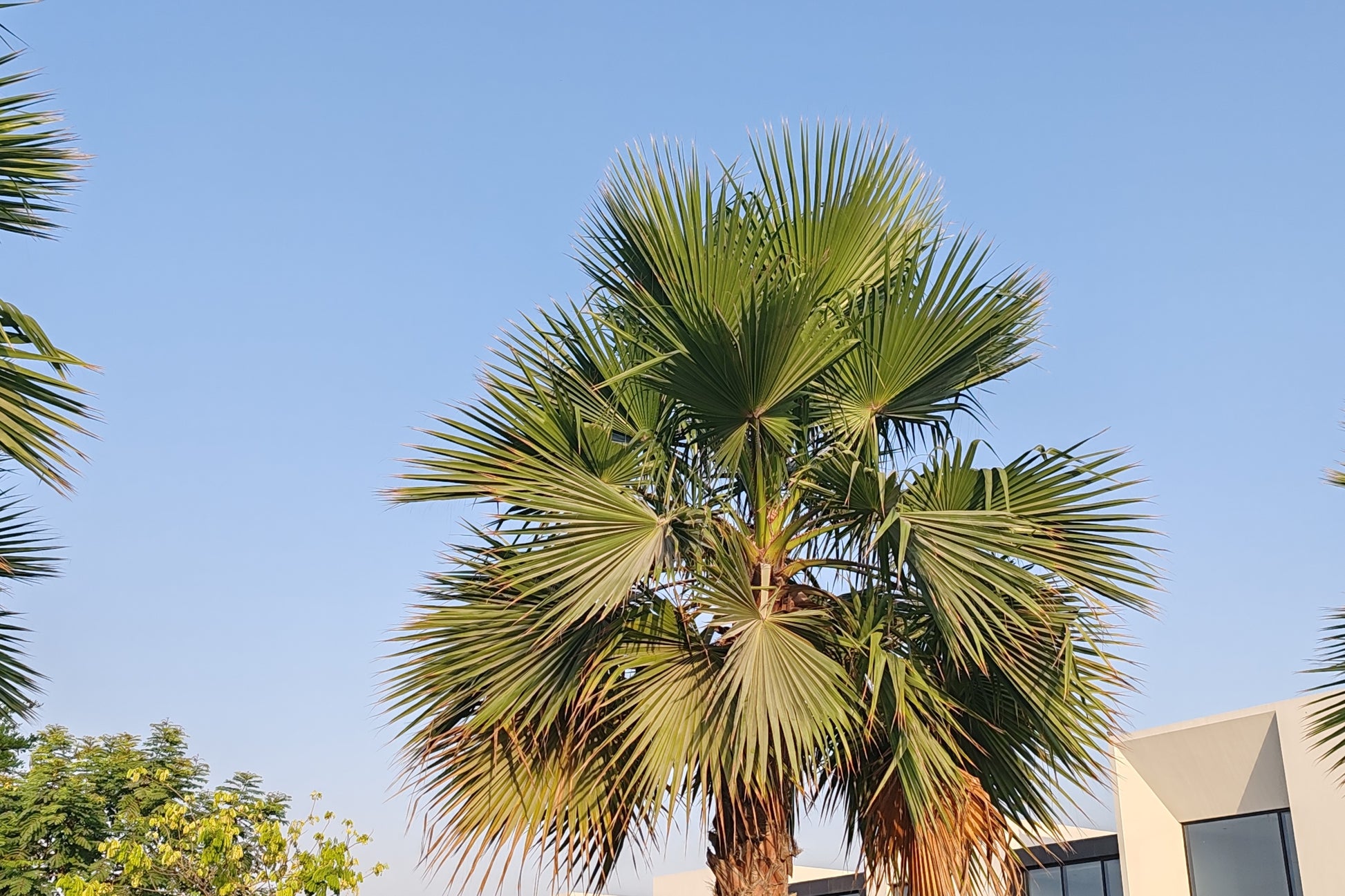
fan like palm plant

fan like palm plant 30 CALIFORNIA FAN PALM Tree Petticoat Arizona Desert Washingtonia Fili – Seedville USA

Sale price$20.28 Regular price$22.53
Save 10%

Pay in installments of $5.63 with ShopPay, AfterPay and Klarna

Shipping Estimate
USA
  • USA
  • CAN

Ships within 48 hours · Estimated delivery Sep 4 - Sep 9

Promo Codes Available:

For Your Every Summer RSVP, with Code: SUMMER15

Description

fan like palm plant 30 CALIFORNIA FAN PALM Tree Petticoat Arizona Desert Washingtonia Fili – Seedville USADESCRIPTION: NAME: California Fan Palm OTHER COMMON NAMES: Desert Fan Palm California Palm Petticoat Palm Arizona Fan Palm Maul SCIENTIFIC NAME: Washingtonia Filifera syn. Brahea Filamentosa Neowashingtonia Filamentosa Neowashingtonia Filifera Pritchardia Filifera Washingtonia Filamentosa COLOR: White Flowers Reddish Black Fruit PLANT SEEDS: When soil temp warms to 70F BLOOM TIME: July Aug HARVEST: Nov Jan HARDINESS ZONE: 8 11 PLANT HEIGHT: Up to 70'

DESCRIPTION:

NAME: California Fan Palm

OTHER COMMON NAMES: Desert Fan Palm / California Palm / Petticoat Palm / Arizona Fan Palm / Maul

SCIENTIFIC NAME: Washingtonia Filifera syn. Brahea Filamentosa / Neowashingtonia Filamentosa / Neowashingtonia Filifera / Pritchardia Filifera / Washingtonia Filamentosa

COLOR: White Flowers / Reddish Black Fruit

PLANT SEEDS: When soil temp warms to 70F

BLOOM TIME: July - Aug

HARVEST: Nov - Jan

HARDINESS ZONE: 8 - 11

PLANT HEIGHT: Up to 70'

PLANT SPACING: 40'

LIGHT REQUIREMENTS: Sun


SOIL & WATER PREFERENCES: Average - Dry


QUANTITY: 30 Seeds

OTHER: This beautiful Palm is native to the deserts of the US & Mexico, but always near a water source. Think of a beautiful desert oasis! The trees have a single unbranched trunk, & are topped with huge 3 – 6’ wide fan shaped leaves. The leaves are evergreen & they are stiff, not drooping. Cottony leaf threads stay on plant, & if the old leaves are not removed, they will cover the trunk of the tree. This is not a bad thing. This ‘Petticoat’ provides a great protected tiki hut-like shelter for all kinds of small wildlife seeking refuge. This skirt actually creates a microhabitat within its protection for small birds & invertebrates.

The California Fan Palm has huge drooping clusters of flowers from July to August. They turn into a sweetly flavored fruit that is used to make jellies & drinks. Birds & other wildlife will enjoy eating the fruit too. Native Americans used the fruit & nuts of the fan palm, & its leaves for woven baskets & thatched roofs.

These palms can be grown in containers as a houseplant, or they can be transplanted from a container unlike a like of palms. They are also very tolerant of coastal conditions like wind & salt.

Did you know ... ? Washingtonia filifera is the only palm native to the Western United States, and is the country's largest native palm.


We have an excellent collection of California native plant seeds available!

* FREE SHIPPING ON ALL ADDITIONAL SEEDS!

PAY ONE FLAT SHIPPING FEE PER ORDER NO MATTER HOW MANY PACKS OF SEEDS YOU SELECT!

WE HAVE OVER 2,000 TYPES OF FLOWER, VINE, TREE, SHRUB, HERB, FRUIT, & VEGETABLE SEEDS TO CHOOSE FROM!!!

Shipping Notes
  • Free Standard Shipping on $100+ Orders to the USA.
  • Except Preorder products are shipped in 48 hours.
  • Delivery to the USA:
  1. Standard Shipping : 3-10 business days
  • If time is of the essence, please consider selecting expedited delivery for faster service.
Exchange/Return Notes
  • We offer a 30-day return/exchange service after receiving.
  • Final sale items are not eligible for returns or exchanges.
  • To process your return/exchange, please contact us at [email protected]
  • Please click here for more details>>> Return & Exchange Policy
SKU: 64092697864

Discover Niche Categories That Outsell fan like palm plant

Top-Converting Item to Boost Your Average Order

4.2 ★★★★★
Based on 27 reviews
Sort
Highest Rating
Newest First
Oldest First
Product Reviews
C
Verified Purchase
Christian Schlect
Charlottesville, US
★★★★★ 5
The Fix
Format: Hardcover
An insightful and interesting book on how our country's first legislators try to make sense of the new and fairly short U.S. Constitution, which, being drafted by humans, was bound to be imperfect. A lack of clarity on some point might be due to the changeable nature of words themselves or to confusion or obscurity of thought by the authors. And, who were the authors? The men in the room who came up with the product or the various state conventions that approved the final product? Professor Gienapp writes well and with a fine grasp of his subject. He uses concrete examples to illustrate his main points. For example, Congressional debates over the constitutionality of a proposed federal bank, the ratification of Jay's Treaty, and even whether the Bill of Rights was to be incorporated into or simply added to the original document. Most people think of U.S. constitutional history in terms of its drafting and ratification and/or its later judicial interpretation by the Supreme Court. Here, Professor Gienapp focuses on the initial work of interpretation by the first few sessions of Congress. This book is essential reading for those interested in the U.S. Constitution and the internal architecture of our government. I think those who spend countless hours viewing frenetic talking heads say this or that about the constitutionality of some issue or another (or the nomination of a justice to the High Court) should throw their television set out the window and, instead, settle into a corner chair and calmly read this and other such thoughtful books. This one should win prizes.
WAS THIS REVIEW HELPFUL?YesReportShare
Reviewed in the United States on October 14, 2018
G
Verified Purchase
Gadavis
Belleville, US
★★★★★ 5
Excellent Book
Format: Hardcover
Stanford University History Professor Gienapp has done an outstanding job of researching and writing this historical analysis of the interpretation of the American Constitution by America's first Congress. Professor Gienapp analyzes data primarily from Congress's problems interpreting the removable of executive officers, chartering a national bank and approval of the 1794 Treaty with Great Britain negotiated by Chief Justice John Jay, the "Jay Treaty." Gienapp shows in clear writing how Congress used records of the debates at the Constitutional Convention and State Ratification Conventions to resolve these constitutional issues. I highly recommend this book to anyone concerned with the interpretation of the American Constitution.
WAS THIS REVIEW HELPFUL?YesReportShare
Reviewed in the United States on July 18, 2020
G
Verified Purchase
Gary Y. Larsen
Pawtucket, US
★★★★★ 5
An analysis of how we came to think about the Constitution the way we do
Format: Kindle
It provides a detailed analysis of the arguments used to talk about the Constitution in the ten years after it was ratified. These arguments shifted from treating it as a preliminary draft to be perfected through filling in the details of the operation of the government through experience, to a sacred document that had to be interpreted to determine its "true" meaning.
WAS THIS REVIEW HELPFUL?YesReportShare
Reviewed in the United States on December 18, 2018
C
Verified Purchase
Connie Jones
New York, US
★★★★★ 5
Transcends the Historiography on the Constitution
Format: Hardcover
“This is the most important book to be written on the Constitution since Gordon Wood’s Creation.”
WAS THIS REVIEW HELPFUL?YesReportShare
Reviewed in the United States on May 9, 2020
M
moxielady
Los Angeles, US
★★★★★ 2
I Really Wanted to Like This, But...
Format: Audiobook
My 2 star review is entirely due to the audio performance. While the premise and scholarly research in this book is fascinating, the narration is anything but. The narrator speaks, and at times even PERFORMS, every "quote" and "unquote" no matter where they are in the text. In a long (20 hours) book relying heavily on quotations, this narrative choice dramatically detracts from the listener's ability to absorb the material. One wonders why he doesn't say, "period," after every sentence! In addition, he sounds like he's spraying a lot of spit at the mike while speaking. Yes, euw. I listen to 3-8 audiobooks a week, and have done so since the early 1990s, so this isn't my first, or even my first scholarly, audiobook. The better narrators designate quoted text with a shift in vocal tone or slight pause. If you are considering this book, I hope you choose the print version.
WAS THIS REVIEW HELPFUL?YesReportShare
Reviewed in the United States on November 5, 2021

recommand products