SKU: 64938914552
areca palm drying

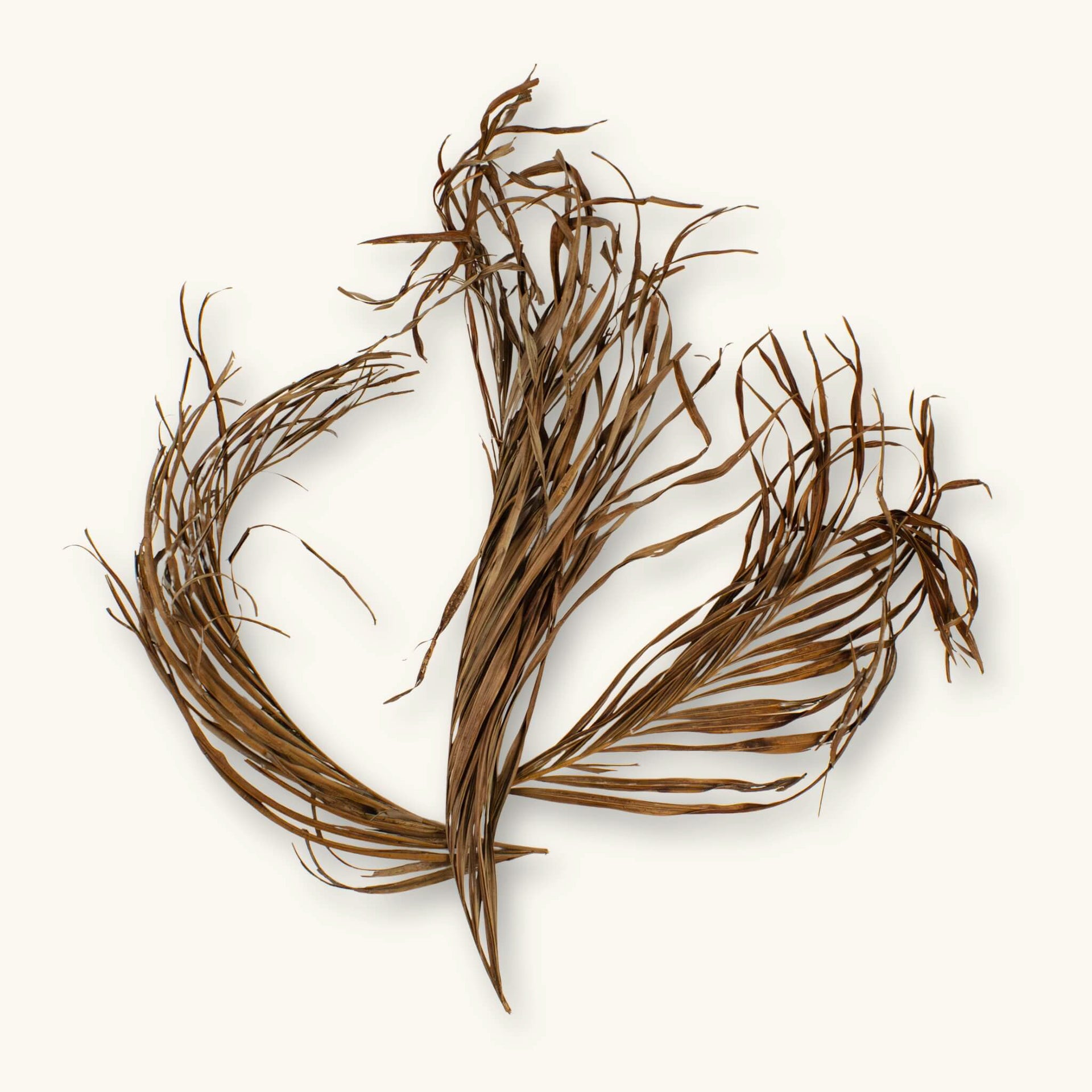
areca palm drying Areca Palm Fronds for Blackwater Aquariums

Sale price$20.27 Regular price$22.52
Save 10%

Pay in installments of $5.63 with ShopPay, AfterPay and Klarna

Shipping Estimate
USA
  • USA
  • CAN

Ships within 48 hours · Estimated delivery Sep 1 - Sep 6

Promo Codes Available:

For Your Every Summer RSVP, with Code: SUMMER15

Description

areca palm drying Areca Palm Fronds for Blackwater AquariumsAreca Palm Fronds on the Surface: The Areca Palm Fronds that we use in aquariums come from Dypsis lutescens, a palm native to Madagascar that's been widely naturalized across warm climates. They have rather long, medium durability, feather like fronds, though some may condition quickly in ecosystems containing plecos and other rasping or nibbling fishes. They will often float at first, creating immediate cover for fish and shrimp in botanical method,

Areca Palm Fronds on the Surface:

The Areca Palm Fronds that we use in aquariums come from Dypsis lutescens, a palm native to Madagascar that's been widely naturalized across warm climates. They have rather long, medium-durability, feather-like fronds, though some may condition quickly in ecosystems containing plecos and other rasping or nibbling fishes. They will often float at first, creating immediate cover for fish and shrimp in botanical method, blackwater, and biotope aquariums, and bioactive enclosures. Their widespread naturalization allows them to function as a broadly compatible, “generic tropical” botanical across many methods of aquarium keeping, and their low tannin content makes them ideal for the habitat replication of both clear water and blackwater streams.

Essential Details

  • Tannin Level: Low
  • Tint Color: Minimal to light tea brown
  • Durability: Slow to decompose; leaflets soften gradually and hold structure for extended use
  • Habitat Location: Native to Madagascar, widely naturalized in tropical and subtropical regions
  • Optimal For: Bettas, gouramis, tetras, rasboras, shrimp, snails, nano fish, community tanks, and bioactive enclosures for snakes, geckos, frogs, isopods, and springtails
  • Use with Caution: Suitable for all inhabitants
  • Size Range: Typically 15–20 inches long, with natural variation in leaflet spacing and thickness
  • Quantities: Sold as 1 count Areca Palm Frond or 3 count Areca Palm Fronds

Areca Palm Fronds for Aquariums & Vivariums

Areca Palm Fronds just look tropical! The long leaflets create soft line-of-sight breaks that fish use immediately, especially small schooling fish and timid species that settle faster when they can weave in and out of cover. They are a favorite amongst angelfish enthusiasts, or with nano fish like the green neon tetra.

Functionally, fronds provide a lot of surface area that is quick to be colonized with bacterial films and fungi, which then become grazing surfaces for shrimp and snails. In the botanical method aquarium, this forms the basis of the food web and is a level of the food chain that standard aquariums are often missing.

Once broken down, the frond fragments help in the mulm accumulation and substrate formation between larger leaves and seed pods. This natural substrate formation is exactly what we see in nature, especially when the frond is laid over leaf litter or tucked against wood. In this perpetual substrate approach, the mulm layer is a food source, as it feeds beneficial microbes and supports slow nutrient cycling within the litter layer for aquatic plants.

In nano aquariums, one frond can provide the entire habitat and cover on its own. In larger aquariums, using multiple fronds creates a broader “canopy” effect across the substrate, which fish and invertebrates utilize as habitat.

In bioactive enclosures, Areca Palm Fronds help replicate the diversity of litter found on the forest floor. They trap pockets of humidity in the litter, and create pathways that isopods and springtails use for refuge and feeding as microbial films develop. For reptiles and amphibians, this can increase activity because the enclosure offers more usable cover and more microclimates within the same footprint.

Beneath the Leaves: Dypsis lutescens in the Wild

Historically, palm fronds have been used as symbols of triumph, victory, and renewal, appearing in religious, ceremonial, and civic traditions across the Mediterranean, Africa, and parts of Asia. This association reflects the palm’s resilience and its ability to persist and regenerate in demanding environments.

Palms as a group have long provided practical resources as well. While Dypsis lutescens itself is not a major food crop, many closely related palm species produce edible fruits, sap, or starches that have supported human communities for thousands of years. The shedding of fronds and fruits links canopy growth to the ground below, reinforcing the constant exchange between living plants and the detrital systems that follow.

Sustainability Note:

This product’s packaging is home compostable. Just like the botanicals inside, it will break down naturally and return to the soil—because what supports your ecosystem should minimally impact our planet.

Not for human consumption. Preparation required.

This is a natural product—variation in color, shape, and texture is expected.

Shipping Notes
  • Free Standard Shipping on $100+ Orders to the USA.
  • Except Preorder products are shipped in 48 hours.
  • Delivery to the USA:
  1. Standard Shipping : 3-10 business days
  • If time is of the essence, please consider selecting expedited delivery for faster service.
Exchange/Return Notes
  • We offer a 30-day return/exchange service after receiving.
  • Final sale items are not eligible for returns or exchanges.
  • To process your return/exchange, please contact us at [email protected]
  • Please click here for more details>>> Return & Exchange Policy
SKU: 64938914552

Discover Niche Categories That Outsell areca palm drying

Top-Converting Item to Boost Your Average Order

4.8 ★★★★★
Based on 12 reviews
Sort
Highest Rating
Newest First
Oldest First
Product Reviews
A
Verified Purchase
Amazon Customer
Grantham, US
★★★★★ 5
Great Comfortable pants
I was expecting a pair, cheap polyester pants but was very surprised by the quality. And the perfect fit on these pants. Going back to get 2 more pairs. Love them, wear I them to work.
WAS THIS REVIEW HELPFUL?YesReportShare
Reviewed in the United States on March 30, 2024
B
Verified Purchase
breezy
Fort Morgan, US
★★★★★ 5
Good Fit
Bought for a wedding for my husband he looked good an felt comfortable.
WAS THIS REVIEW HELPFUL?YesReportShare
Reviewed in the United States on February 9, 2025
G
Verified Purchase
Gary Darling
Grantham, US
★★★★★ 3
Didn’t last as long as I had hoped
Pants were okay for a returned item, but certainly not the best. They lasted a few months before defects got worse. Probably will convince me to just buy new all the time.
WAS THIS REVIEW HELPFUL?YesReportShare
Reviewed in the United States on December 6, 2025
R
Verified Purchase
Ryan
Carnegie, US
★★★★★ 5
Best Pants I've Ever Owned!!
Size: 44W x 34L Big Tall, Color: Navy Blazer
There is not a bad thing to say about these pants. They look great (I get compliments all the time, as well as people asking for information on them), feel great, are super comfortable, and are actually quite durable. I own these in blue and gray and they are by far my favorite pants to where to work. They work for both business-casual, as well as business-formal dress-codes. Buy these pants!
WAS THIS REVIEW HELPFUL?YesReportShare
Reviewed in the United States on July 27, 2023
L
Verified Purchase
lebowitzit
Birmingham, US
★★★★★ 5
Fits Fine, Looks Great, Sizing Makes No Sense
Size: 16.5" Neck 32"-33" Sleeve, Color: White, Size: 16.5" Neck 32"-33" Sleeve, Color: White
I hate shopping for dress shirts. For me, at least, it is a thoroughly frustrating experience, mostly because there's no consistency at all to the sizing. Actually, that's not quite true: dress shirts consistently DON'T FIT ME PROPERLY, which means I have to look at a lot of shirts and scrutinize size charts - which are usually incomplete, when they're provided at all - before finally finding The One. And sometimes, like this time, I don't manage to find The One. But this shirt comes close, as I will explain. The problem stems from my physique, which I never thought of as unique, but here it is: I'm short (just under 5'4", with a 40-41" chest, a little extra weight (so my middle is about the same), a 36" waist, 33" arms when measured the traditional way (more on that later) and a 16" neck. That last measurement is the single biggest problem: most shirt manufacturers apparently think that if you have a 16' neck, you are shaped like Omar the Tentmaker. Van Heusen is no exception. Note that this shirt is listed as "fitted". Now, that's a completely amorphous descriptor, which, I suppose, is true for most shirt fit descriptors these days. But if you look at Van Heusen's "regular" fit shirts, you'll find that they think if you have a 16" neck, you must have a nearly 50" chest and your waist is over 45". That's not regular, that's freakin' portly! I was afraid to even look at any of their Big & Tall men's dress shirts -- if their idea of regular fit was this skewed, then I didn't want to know what they think Big & Tall is. Thankfully, this is a "fitted" shirt, so Van Heusen thoughtfully provides the 16" neck version with a 42-44" chest and 36-38" waist. That's the size I bought, and it actually fits me pretty well. Still a little loose for a "fitted" shirt, but it doesn't look baggy, and that's what I was after. But a little more realism in the size descriptions would be greatly appreciated. Regarding the sleeve length, I really don't know what's up. I've seen charts that tell you how to measure it, but no matter how I measure it, I never manage to come up with any of the sleeve lengths provided on size charts. I have noticed that there appear to be two ways of measuring it, though. One way, which I call the traditional way because it seems to have been around longer, starts the measurement somewhere between the edge of the shoulder and the neck. At least, I think that's where it starts -- approximately. As I said before, I never manage to come up with the same number. But by this measurement, my correct sleeve length is 32-33", and the average guy's is probably 34-35". In the last year or so, when I shopped for shirts, I found some size charts using a different method, because the numbers were a lot lower, anywhere from 22" to 28". I have no idea where they came up with that measurement, nor do I know what mine is by this method, because the shirts I ended up buying so far have all used what I referred to as the traditional method. Anyway, the shirt looked quite nice on me, right out of the package, and continues to look quite nice on me after a couple of washings. The photo I attached is what the shirt looked like after being washed twice. I wash my shirts on my machine's Delicate cycle and hang them to dry. When cared for this way, the shirt does a pretty good job of living up to the listing's claim of wrinkle resistance. It doesn't come out perfectly smooth and crisp, but it looks good enough that I don't feel inclined to iron it. I decided on a poplin shirt because I was shopping for a summer-weight shirt that would breathe well. But poplin shirts proved nonexistent in my local stores, and not all that plentiful online. Poplin shirts listed online with full size charts so I could tell whether or not they might fit me were nearly as hard to find as igloos in the Mojave Desert, and poplin shirts whose size charts indicated that they were available with dimensions that would actually fit me were somewhere between that and hen's teeth. Needless to say, I was thrilled when I found this one. But the composition of poplin appears to be open to some interpretation. I own a few poplin business shirts (which I wear without suits and ties), and upon receiving my new Van Heusen shirts, it seemed to me that my poplin business shirts were lighter and breathed better. But then it occurred to me that shirt manufacturers often treat their material with coatings that improve the luster and crispness of their shirts for display purposes, and such coatings might be why my new shirts felt stiff, heavy and not particularly airy. Not wanting to give up and send the new shirts back, I decided to take a risk and launder them to see if that improved the feel. Thankfully, it did. After two washings, my new shirts are less shiny than delivered (which I'm fine with), a lot less stiff and breathe reasonably well. So... these shirts fit well, look good and feel good. Check, check and check. That means I'm fully satisfied with them, right? Wrong -- I am NOT fully satisfied with them. It's summertime. Summertime where I live is hot and often quite humid. I wanted shirts appropriate for that weather. To me, that has always meant lightweight broadcloth short-sleeve shirts. But it seems that today's Fashion Police have decreed that there is no longer such a thing as a short-sleeve dress shirt. They have decreed that today's well-dressed men must wear heavy cotton, long-sleeve shirts year-round. Well, excuse me for living, but some of us perspire when dressed that way in summer heat. Poplin shirts were presented to me as the compromise between acceptable modern fashion and comfort. Linen shirts were also recommended, but I couldn't find a single linen shirt what didn't have a crinkly, casual finish, much less one that was intended to be worn with a tie. With extreme effort, I found a poplin shirt that fits well, and I bought two of them, but while they are more comfortable in the sticky summer heat than heavy cotton, they are NOT as comfortable as my old short-sleeve dress shirts. I want new short-sleeve dress shirts, dagnab it! But until I successfully identify and locate all those insane Fashion Police, blow up their air conditioners and confine them to a Chicago Summer Simulator (otherwise known as a sauna) for three days in their heavy cotton shirts so that they will once again bless the manufacture of short-sleeve dress shirts, I guess these Van Heusen fitted long-sleeve poplin shirts will have to do.
WAS THIS REVIEW HELPFUL?YesReportShare
Reviewed in the United States on August 30, 2024

recommand products