SKU: 6500353185
coral succulent plant

coral succulent plant Buy Coral Aloe Phoenix, AZ | Aloe striata

Sale price$18.03 Regular price$20.03
Save 10%

Pay in installments of $5.01 with ShopPay, AfterPay and Klarna

Shipping Estimate
USA
  • USA
  • CAN

Ships within 48 hours · Estimated delivery Jul 18 - Jul 23

Promo Codes Available:

For Your Every Summer RSVP, with Code: SUMMER15

Description

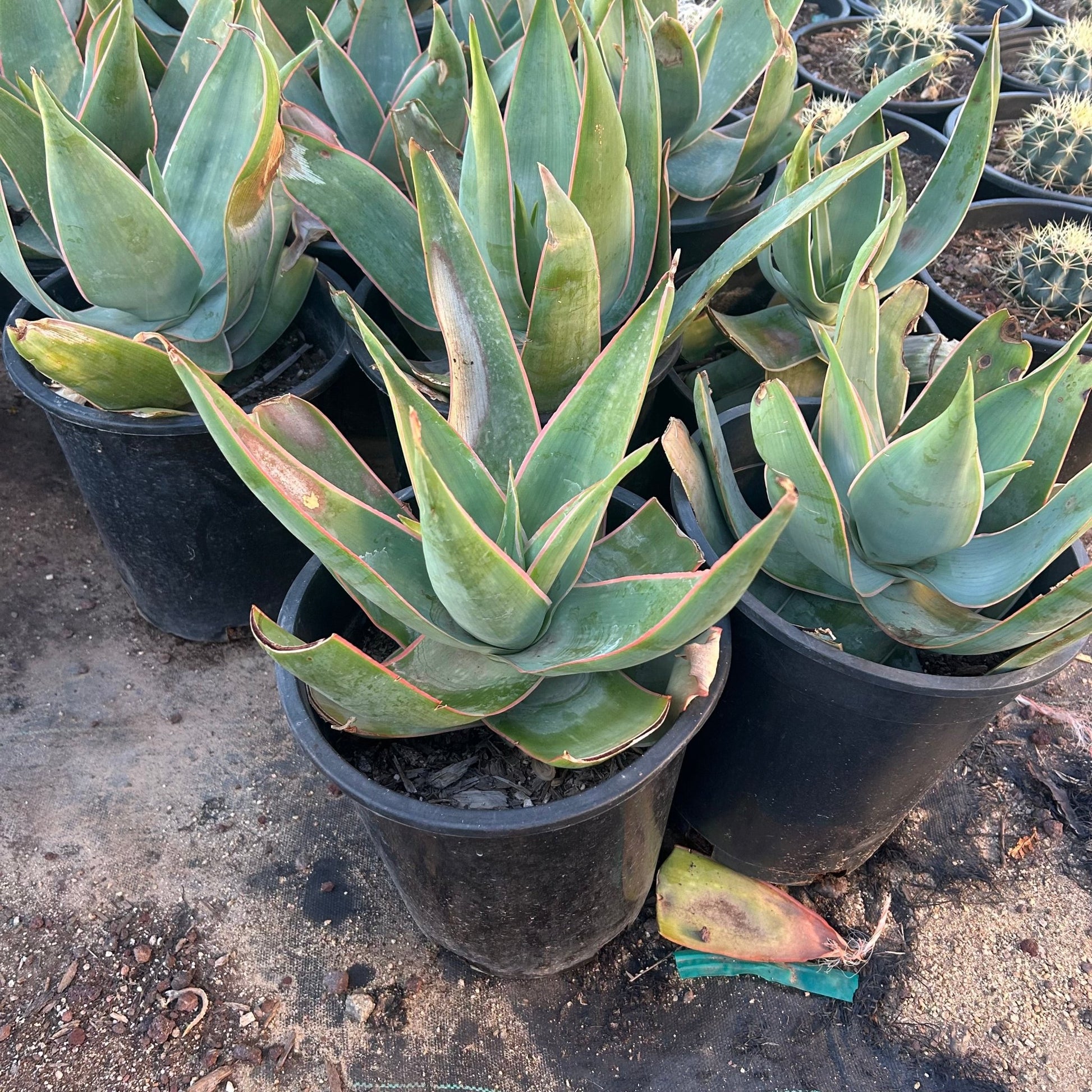
coral succulent plant Buy Coral Aloe Phoenix, AZ | Aloe striataPhoenix's Most Beautiful Low Maintenance Aloe Coral Aloe (Aloe striata) is one of the most visually striking succulents you can plant in the Phoenix Valley. Its broad, smooth, blue green leaves form a flawless rosette that looks sculpted year round no teeth, no spines, just clean architectural form. In late winter, flat topped clusters of coral red to orange flowers rise above the foliage, attracting hummingbirds during the months when few other

Phoenix's Most Beautiful Low-Maintenance Aloe

Coral Aloe (Aloe striata) is one of the most visually striking succulents you can plant in the Phoenix Valley. Its broad, smooth, blue-green leaves form a flawless rosette that looks sculpted year-round — no teeth, no spines, just clean architectural form. In late winter, flat-topped clusters of coral-red to orange flowers rise above the foliage, attracting hummingbirds during the months when few other plants bloom. Whether you're designing a rock garden in Scottsdale, filling a container on a Tempe patio, or massing along a walkway in Chandler — Coral Aloe delivers show-stopping beauty with almost zero effort.

Coral Aloe Plant Details

Attribute Detail
Scientific Name Aloe striata
Common Names Coral Aloe, Striped-stemless Aloe
Mature Height 1–2 feet
Mature Width 2–3 feet
Growth Rate Moderate — reaches full size in 2–3 years
Sun Full sun to partial shade. Handles reflected heat from walls.
Water Very low once established. Extremely drought-tolerant.
USDA Zones 9–11 (Phoenix is Zone 9b–10a)
Soil Well-draining sandy or rocky soil. Adapts to Arizona caliche.
Foliage Evergreen — smooth, broad, blue-green to gray-green leaves with pinkish edges
Bloom Color Coral-red to orange flat-topped flower clusters
Bloom Season Late winter to early spring (January–March in Phoenix)

Coral Aloe Uses in Phoenix Landscapes

Succulent & Rock Gardens

Coral Aloe's perfect rosette form makes it the centerpiece of any rock garden. Plant among boulders and decomposed granite alongside Tiger Aloe, Agave colorata, and Desert Spoon for a curated succulent display with contrasting textures and sizes. The smooth, spineless leaves make it safe for high-traffic areas near walkways and patios.

Container & Patio Plantings

Coral Aloe is one of the best aloes for containers. Its compact size and architectural form look stunning in modern pots on patios, pool decks, and entryways across Scottsdale, Mesa, and Gilbert. Use a well-draining cactus mix and a pot with drainage holes.

Mass Plantings & Ground Cover

Space 2–3 feet apart for a dramatic mass planting that creates a living carpet of blue-green rosettes. When they all bloom simultaneously in winter, the coral flower display is spectacular. This works especially well on gentle slopes, in medians, and along commercial building foundations in Tempe, Peoria, and Glendale.

Best Time to Plant Coral Aloe in Phoenix

Fall (October–November) and spring (March–April) are both excellent planting windows. Warm soil promotes root establishment while moderate temperatures reduce transplant stress. Avoid planting in peak summer heat when possible.

How to Plant Coral Aloe

  1. Dig wide, not deep — 2–3× the root ball width, same depth. Never bury the crown.
  2. Check for caliche — break through any hardpan layer for drainage. Aloes rot in standing water.
  3. Backfill with native soil — add pumice or coarse sand if your soil retains water.
  4. Spacing — 2–3 ft apart for mass plantings; single specimens need 3 ft clearance.
  5. No water basin — aloes prefer water to drain away quickly from the crown.
  6. Mulch — 2–3 inches of gravel or decomposed granite (avoid bark mulch).

Watering Coral Aloe in Phoenix

First Year Watering Schedule

  • Weeks 1–2: Every 5–7 days, deep soak then let dry completely
  • Months 1–3: Every 7–10 days
  • Months 3–6: Every 10–14 days
  • After Year 1: Every 3–4 weeks summer; monthly or less in winter

Drip Irrigation

Place one 1 GPH emitter 12 inches from the base. Coral Aloe stores water in its thick leaves and is extremely drought-tolerant. Overwatering is the #1 killer — always let soil dry completely between waterings.

How big does Coral Aloe get in Phoenix?
Coral Aloe reaches 1–2 feet tall and 2–3 feet wide. It produces offsets (pups) around the base over time, slowly expanding into a clump. Individual rosettes maintain their clean, symmetrical form.

Is Coral Aloe safe to plant near walkways?
Yes — unlike most aloes, Coral Aloe has completely smooth leaf margins with no spines or teeth. This makes it one of the safest aloes for high-traffic areas near walkways, patios, and pool decks.

When does Coral Aloe bloom in Phoenix?
Expect flat-topped clusters of coral-red to orange flowers from January through March. The winter bloom time is a major asset since few other plants flower during Phoenix's coolest months. Hummingbirds love them.

What makes Coral Aloe different from other aloes?
Coral Aloe is distinguished by its smooth, broad leaves with no teeth — most aloes have serrated or spiny leaf edges. The leaves also develop attractive pinkish edges in bright sun. Its flat-topped flower clusters are unique among aloes.

You May Also Like

  • African / Tiger Aloe — a spotted aloe with triangular leaves, great for textural contrast.
  • Coast / Dune Aloe — a larger trunk-forming aloe for dramatic vertical accent.
  • Aloe vera — the classic medicinal aloe, useful and ornamental.
  • Desert Spoon — a native Arizona rosette that pairs beautifully with Coral Aloe's blue-green tones.

How Many Coral Aloe Do I Need?

Coral Aloe is a compact, smooth-leaved rosette (2 to 3 ft wide) that pups into a low clumping carpet. For a mass planting or living groundcover, set plants about 2.5 ft on center. Because the leaves are completely spineless, you can run it right up to walkways, patios, and pool decks. Use the coverage guide below to estimate plant counts.

Area to Cover Plants Needed (at 2.5 ft spacing)
25 sq ft 4 plants
50 sq ft 8 plants
100 sq ft 16 plants
200 sq ft 32 plants

Coral Aloe Season-by-Season in Phoenix

  • Spring (Feb to Apr): Coral-red flat-topped flower clusters peak into early spring, drawing hummingbirds. New rosette growth and pups fill in around the base. A strong second planting window.
  • Summer (May to Sep): Takes full Phoenix sun, though in the harshest west-facing reflected heat the broad leaves appreciate a little afternoon relief. Monsoon rain is fine with fast drainage. Water only every 3 to 4 weeks to prevent crown rot.
  • Fall (Oct to Nov): Prime planting season. Roots establish in warm soil before winter, and bloom spikes begin to set.
  • Winter (Dec to Jan): Evergreen rosette holds its clean blue-green form and leaf edges blush pink in the cool sun. Hardy to about 25°F, covering nearly all Valley winters. Cover only in a rare hard freeze.

At a Glance

✔ Hummingbird-Friendly   ✔ Pollinator-Friendly   ✔ Heat-Loving (Reflected-Heat Tolerant)   ✔ Drought-Tolerant   ✔ Pool-Friendly (Low-Litter)   ✔ Evergreen   ✔ Low-Maintenance   ✔ Spineless   ✔ Deer & Rabbit-Resistant   ✔ Cold-Hardy to 25°F

Plant It With

  • African / Tiger Aloe: a spotted triangular-leaved aloe for textural contrast in a rock garden.
  • Coast / Dune Aloe: a larger trunk-forming aloe that adds dramatic vertical accent behind Coral Aloe.
  • Aloe vera: the classic useful aloe that blends into the same smooth-leaved succulent palette.
  • Desert Spoon: a native silvery rosette whose fine texture sets off Coral Aloe's broad leaves.

Is Coral Aloe Right for Your Yard?

Coral Aloe thrives in full sun to light afternoon shade, in fast-draining or amended caliche soil, anywhere you want clean evergreen form and safe spineless foliage next to paths and pools, down to about 25°F. It is one of the best family-safe aloes for the Valley. It is not a fit if your bed stays wet or heavily shaded: soggy soil rots the crown, and deep shade dulls both the leaf color and the winter bloom.

Shipping Notes
  • Free Standard Shipping on $100+ Orders to the USA.
  • Except Preorder products are shipped in 48 hours.
  • Delivery to the USA:
  1. Standard Shipping : 3-10 business days
  • If time is of the essence, please consider selecting expedited delivery for faster service.
Exchange/Return Notes
  • We offer a 30-day return/exchange service after receiving.
  • Final sale items are not eligible for returns or exchanges.
  • To process your return/exchange, please contact us at [email protected]
  • Please click here for more details>>> Return & Exchange Policy
SKU: 6500353185

Discover Niche Categories That Outsell coral succulent plant

Top-Converting Item to Boost Your Average Order

4.5 ★★★★★
Based on 23 reviews
Sort
Highest Rating
Newest First
Oldest First
Product Reviews
A
Verified Purchase
Amazon_Customer
Waukegan, US
★★★★★ 5
CAN be used for simple Home Theater but really shines when playing music.
Style: R-S202BL, Configuration: receiver only
First: YES, you can use this as an AV receiver *IF* you have a simple home theater setup and are willing and know how to run a digital to analog audio converter from your TV to the inputs of the receiver. BestBuy sells an inexpensive and intuitive unit. HOWEVER, if you have several devices associated with your home theater (i.e. more than 2 -- then this probably isn't a great option for you). I generally prefer Vintage Stereo equipment -- My ideal receiver was the Yamaha CR-2020. But sadly, those are hard to come by and have are more expensive and like a used car -- you don't really know what maintenance you have ahead of you. I had inherited a Sony AV receiver that pre-dated HDMI. It worked and I could even program my Logitech remotes with it. However, it really didn't bring the best sound out of my speakers -- a pair of original Large Advents. Plus, it seemed like it was starting to give up the proverbial ghost. My AV setup is pretty simple since I dumped Time Warner -- or whatever they are calling themselves these days. I have a TV, Roku Streaming stick and that's it! I don't have a living room that would accommodate 20 speakers and a sub without tripping over them (my cats and dog and kids shoes provide enough of an obstacle field). The downside -- this isn't really intended to be an AV receiver. No Optical Audio in... no HDMI ports... you have to make it work if you want to use it for your TV as well. I purchased an Insignia Digital to Analog Audio converter -- you plug in the HDMI cable from your TV into the input and use RCA cables as the output to plug into the receiver. This little gizmo was about 25 bucks so I was still saving quite a bit of money over "full-featured" AV receivers. The sound for the TV is fine -- You aren't going to be fooled into thinking you are in an IMax theater or anything. But that wasn't my primary concern. I really wanted my music to sound great. And playing music is where this receiver really shines! I *REALLY* like the Bluetooh connectivity so that I can play from my computer, cell phone without having to use a patch cable to plug into the receiver. It has a very simple interface -- mainly because there just isn't that much functionality. push a few buttons and you'll be able to figure it out without a manual. I know several reviewers have commented on the flimsy clips for the speaker wire but I have some fairly heavy gauge wire and it doesn't works just fine. I don't use banana plus -- just run the copper straight in. Once you get it set up, you shouldn't have a problem -- it isn't like you are constantly re-wiring your speakers. I was able to purchase this for less than 120 bucks and it drives my vintage Large Advents really well. It provides a beautiful full sound for a wide variety of musical genres. Maybe one of these days, I'll stumble across another great vintage receiver. But for the money and the convenience of a remote and bluetooth, this receiver can't be beat. [NECAR}
WAS THIS REVIEW HELPFUL?YesReportShare
Reviewed in the United States on January 30, 2018
C
Verified Purchase
Count Pitoffy
Pawtucket, US
★★★★★ 5
No Nonsense
Style: R-S202BL, Configuration: receiver only
I love this unit! No buzzers and bells, just high quality, hi-fidelity audio. Very easy installation and easy to use remote. Display is not cluttered with unnecessary information. It's sleek appearance make it an awesome unit for any indoor application.
WAS THIS REVIEW HELPFUL?YesReportShare
Reviewed in the United States on April 17, 2026
B
Verified Purchase
Bryan G
Port Orchard, US
★★★★★ 5
Does exactly what I wanted, sounds perfect for the price.
Style: R-S202BL, Configuration: receiver only
I'm kind of an audiophile, really picky. I got this while on sale for $150 and I am really surprised with how good it sounds, it doesn't compare to the Niko amp I was using in the barn, but it powers my KX12 speakers really well, shakes the walls of the barn. I'll be taking those speakers inside for the winter along with the Niko amp and be using the YAMAHA NS-6490 speakers I bought at the same time as this. I'll be reviewing those speakers soon, they also surprised me. The bluetooth connected easily. I had to use a 3.5mm Aux to 2 RCA Adapter Audio Cable to connect my laptop to it. Some stereos come with a 3.5mm input, this doesn't, but neither did my Niko Beta 30 preamp, so no big deal, the adapter was less than $8. The tuner is really good, I have this in my pole barn that is all metal, including the roof and 18 miles out of town yet it picks up several stations with the supplied antenna, my portable stereo doesn't pick up anything when in the barn. The specs say it plays 10 Hz – 100 kHz, that seams a little much, the best ears can hear is up to 20kHz, and nothing you connect to it will go higher than 30 kHz, so why would this play up to 100? I use an equalizer to shape the sound and it does play to my satisfaction for the price, both sound quality and volume. For the $150 I spent, this is a really good deal.
WAS THIS REVIEW HELPFUL?YesReportShare
Reviewed in the United States on November 18, 2023
S
Verified Purchase
srptopdog
Houston, US
★★★★★ 4
Excellent, But I Returned It...
Style: R-S202BL, Configuration: receiver only
I have been a pro musician all of my life and have owned and still use a variety of high quality recording gear. It was time to simplify my setup for the benefit of others. Although my setup sounded great, it was too confusing for friends and family to use with my separate power and mixing console, etc. The solution was to buy a self contained stereo receiver that was easy for everyone to use. Being on a budget, and having owned a myriad of Yamaha instruments and audio gear over the years, I felt confident in buying this receiver without hearing it first. The bang for the buck is great, and this could easily be a five star rating. I will avoid commenting on specs, etc., as those can be easily compared at anyone's leisure. The Bluetooth feature is very nice, as I am often streaming songs my band is covering and learning from my phone or iPad and it sure is convenient to connect wirelessly, and the sound is great, btw. Even better than a wired connection. Build quality is excellent. It's a fine device, no question. Despite the many reasons for liking this receiver I returned it after several weeks of daily listening. Bottom line, in my opinion, I did not like the audio quality. Although it can produce more than enough volume to fill my 12' x 18' listening space, there was a lack of fullness and warmth to the sound. True, this receiver is certainly at entry level pricing, but my primary need was to obtain the best sounding 2-channel unit within my budget. I have ordered the Onkyo TX-8020, which I believe will be a better sounding receiver for my needs. Although the Onkyo lacks Bluetooth, it does offer a separate subwoofer output (which is something I might add down the road), and has a built in phono preamp input, eliminating the need to purchase a separate turntable preamp should I have kept the Yamaha, as I own LPs. A comment about wattage. The Yamaha claims 100w /channel, while the Onkyo, only 50w /channel. Power amp designs vary widely, as do power amp ratings and and measurements. For example, the guitar player in my classic rock band plays a 15 watt amp, and at a loud concert may get turned up to 3, with lots of headroom to spare. Google the subject if you're interested in learning more. I should mention that speakers vary widely in design and performance too, and it's possible the Yamaha will come alive and sound to my taste with other speakers. I believe many people will really enjoy the Yamaha BL202. It's a fine receiver. Bottom line, if YOU like it, that's all that matters. I will amend this review soon after I receive the Onkyo. UPDATE 6-28-16: I received the Onkyo TX-8020. I like the amplifier better. To my ears, the bass is tighter, more defined and warmer. Mids and highs seem smoother, and the soundstage in well defined and natural. The overall sound is "fuller." Sound is subjective, and in the end your ears decide what you like to hear. The Yamaha sounded great too. Although I don't have Bluetooth with the Onkto, I can stream YouTube and my internet radio stations from my phone or iPad to my Roku player, which is connected to the Onkyo, so I will have somewhat similar wireless capability. There is a wireless add-on accessory to connect an IPad , iPod or iPhone that I may consider.
WAS THIS REVIEW HELPFUL?YesReportShare
Reviewed in the United States on July 26, 2016
J
Verified Purchase
J.H.K.
Cuba, US
★★★★★ 5
Great features and impressive quality for the price!
Style: R-S202BL, Configuration: receiver only
Got this for my classroom. Not an audiophile by any means and certainly didn't need the latest greatest features (along with accompanying higher cost). For what I paid, $150 on Amazon before sales tax, I'm very impressed with what it offers and can do. Installed it in my classroom today. Connected it to a pair of old Sony bookshelf speakers which I got around 10 years ago. Specifically got this receiver because the old Onkyo I previously used (still working even though it must be from 1980s or 1990s) was unable to handle audio input from my classroom desktop computer even though I had gotten an adapter cable that had a 3.5mm jack on one end and two RCA (red/white) plugs on the other end. Wanted to use the bookshelf speakers instead of the weak external speakers provided by school for whenever I would need audio during a lesson, video clips, etc. to be heard by students at the back of the classroom. After setting up this receiver and putting it through its paces, I am pleased with its overall performance. I connected my classroom's desktop computer to the receiver using that adapter cable previously mentioned and this receiver had no problems at all picking up the signal and transmitting it to my bookshelf speakers. Tried out the radio tuner and was pleasantly surprised by both how clear the sound quality is for many local stations (compared to the Onkyo I had previously been using) and for even decoding signals from distant stations (I'm using a spare cheap external FM radio antenna, not the wire antenna provided with this unit) which the previous Onkyo receiver (and even my car radio) can't pick up clearly if at all. The Bluetooth feature is nice. There's a cheaper version of this receiver without the Bluetooth feature but I decided that the extra $20 was worth it for providing additional possibilities. Had no problem pairing this receiver with my Nexus 6 smartphone. No problems streaming music from my smartphone to the receiver. So far, I've only encountered one problem. I thought about docking one star off for this problem but in the end decided not to do so because the overall functionality and performance of the receiver isn't significantly impaired by this issue. When I first powered up this receiver (after making all the necessary audio connections to speakers and computer), I thought I might have had a defective unit because I couldn't hear anything even though the volume was clearly set at 40 (out of a 0-99 scale). After some trial and error, what I discovered was that any setting below 45 is practically impossible to hear coming out of my speakers. Once I cranked up the volume to 50-55, sound was clearly discernible to anyone near the speakers. From 55-65, sound fills up my entire classroom nicely. From 65-75, it gets loud in my classroom and when I walked out into the hallway (and then continued walking down the hallway) I could hear the sound clearly from several classrooms away. I can only imagine how loud it might be (and how far the sound may travel) if I cranked up the volume beyond 75. So, for all intents and practical purposes, the sound on this unit works but I'm essentially navigating between 45 (quiet) and 80 (really loud) instead of the full range of 0-99. Like I said, functionality and performance doesn't seem to be impaired by this discrepancy, so I ultimately decided not to knock off a star. Not sure if this issue is particular to the specific unit I received or a recurring pattern in more units beyond mine. Not a deal-breaker and not worth going through the hassle of a merchandise exchange since it gets the job done. Looking forward to seeing how well this unit works out for this coming school year (and hopefully for many years beyond). If anything should arise to warrant editing this review, then I'll update as needed.
WAS THIS REVIEW HELPFUL?YesReportShare
Reviewed in the United States on August 6, 2016

recommand products