Pay in installments of $6.88 with
 ,
,
 and
and

Shipping Estimate
USA
- USA
- CAN
- USA
- CAN
Ships within 48 hours · Estimated delivery Sep 16 - Sep 21
 Promo Codes Available:
For Your Every Summer RSVP, with Code: SUMMER15
Description
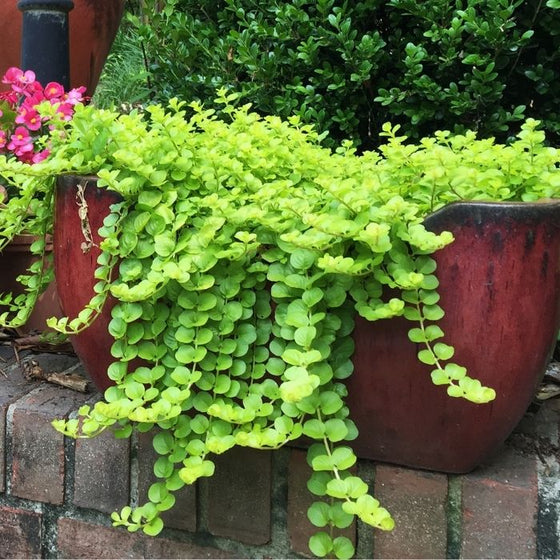
draping plants for pots Golden Creeping JennyBright Chartreuse Foliage That Instantly Lifts a Planting Creeping Jenny is one of those plants that can change the whole feel of a container or garden bed almost immediately. Its round, golden chartreuse leaves bring brightness, contrast, and a soft, flowing texture that helps darker foliage and flowers stand out. Whether it is tucked into a mixed planter or woven along the front edge of a bed, it adds a fresh, energized look that feels clean and
Bright Chartreuse Foliage That Instantly Lifts a Planting
Creeping Jenny is one of those plants that can change the whole feel of a container or garden bed almost immediately. Its round, golden-chartreuse leaves bring brightness, contrast, and a soft, flowing texture that helps darker foliage and flowers stand out. Whether it is tucked into a mixed planter or woven along the front edge of a bed, it adds a fresh, energized look that feels clean and intentional. The trailing stems also help create visual movement, which keeps a planting from feeling static or flat.
That bright foliage is the main reason gardeners reach for Creeping Jenny again and again. It does not need large flowers to make an impact because the foliage itself does the visual work. In sunnier conditions, the leaves often stay a brighter gold, while in part shade they can shift toward a softer chartreuse. That flexibility makes it useful in many different design styles, from bold summer containers to softer perennial borders and moisture-loving garden spaces.
A Natural Spiller for Porch Pots, Hanging Baskets, and Mixed Containers
Creeping Jenny is one of the easiest spiller plants to use because it naturally drapes and trails over the edge of a pot without looking stiff or forced. In mixed containers, it helps soften rims, connect the planting together, and create that finished layered look people want. It pairs especially well with upright thriller plants and mounded fillers, giving the arrangement the kind of balance that makes it feel fuller and more professionally planted. Even a simple planter can look more complete once Creeping Jenny starts to spill.
That trailing habit makes it especially useful for gardeners who want strong design payoff without overcomplicating the planting. It works in porch pots, patio containers, window boxes, and hanging baskets, and it plays well with a wide range of flower colors. Because the foliage is bright but not overwhelming, it can easily bridge purples, pinks, whites, blues, and deeper greens. For container gardening, it is one of those dependable plants that gives color, texture, and movement all at once.
Fast-Spreading Groundcover for Moist Beds and Soft Edges
Beyond containers, Creeping Jenny is also a very effective low groundcover. It stays close to the soil, usually only a few inches tall, but spreads readily and forms a soft carpet of foliage that can brighten the front of a bed or fill bare spaces between larger plants. It is especially useful where you want something that feels loose and natural rather than upright and formal. Along stone edges, pathways, retaining walls, and moist borders, it creates a trailing, flowing look that helps the whole planting feel more connected.
Its spreading habit is a major advantage when used thoughtfully. Creeping Jenny can quickly fill in open soil, soften the edge of a path, or weave through a mixed planting in a way that feels relaxed and layered. It is especially happy in soil that stays evenly moist, so it often performs very well in rain-friendly areas, moist borders, and richer garden beds. Gardeners should still place it carefully, though, because in favorable conditions it can spread enthusiastically and may need occasional trimming to stay in bounds.
Easy Color and Texture With Simple Ongoing Care
Creeping Jenny is appealing because it adds a lot of visual value with minimal maintenance. It performs best in moist, well-drained soil and appreciates steady watering, especially while establishing and when grown in containers. In the right spot, it fills in quickly and keeps its bright trailing look with only occasional trimming. Small yellow flowers may appear in summer, but the real appeal lies in the foliage and how it trails, spills, and brightens the planting over time.
Its biggest care note is simply understanding its vigor. In containers, that fast growth is usually a plus because it helps the planting look fuller sooner. In beds, it may need some shaping or trimming to keep it from moving too far into neighboring plants. That does not make it difficult to grow. It just means it performs best when gardeners use it with intention. For homeowners who want a bright groundcover or spiller that earns its keep quickly, Creeping Jenny is one of the easiest plants to put to work.
Shipping Notes
- Free Standard Shipping on $100+ Orders to the USA.
- Except Preorder products are shipped in 48 hours.
- Delivery to the USA:
- Standard Shipping : 3-10 business days
- If time is of the essence, please consider selecting expedited delivery for faster service.
Exchange/Return Notes
- We offer a 30-day return/exchange service after receiving.
- Final sale items are not eligible for returns or exchanges.
- To process your return/exchange, please contact us at [email protected]
- Please click here for more details>>> Return & Exchange Policy