Pay in installments of $5.38 with
 ,
,
 and
and

Shipping Estimate
USA
- USA
- CAN
- USA
- CAN
Ships within 48 hours · Estimated delivery Sep 12 - Sep 17
 Promo Codes Available:
For Your Every Summer RSVP, with Code: SUMMER15
Description
is yucca plant a succulent Shop 'Yucca filifera – Palma China' Care and Growing GuideIntroducing the Yucca filifera, known as Palma china, which is a striking and unique plant that belongs to the Yucca, opens in a new tab genus. Native to Mexico, this Yucca plant has several other common names, such as Mexican tree yucca, Chinese palm, Yucca australis, or Yucca palm. These names reflect the plant's origin and its palm like growth habit. The plant's common names often highlight its graceful and elegant appearance, resembling a palm
Introducing the Yucca filifera, known as Palma china, which is a striking and unique plant that belongs to the Yucca, opens in a new tab genus.
Native to Mexico, this Yucca plant has several other common names, such as Mexican tree yucca, Chinese palm, Yucca australis, or Yucca palm. These names reflect the plant's origin and its palm-like growth habit. The plant's common names often highlight its graceful and elegant appearance, resembling a palm tree with its tall, slender trunk and crown of foliage.
This Yucca tree can grow to an impressive size, reaching heights of up to 20 feet tall and 11 feet wide when mature.
Its trunk is typically tall and slender, topped with a cluster of long, arching leaves that add to its tropical and exotic appeal.
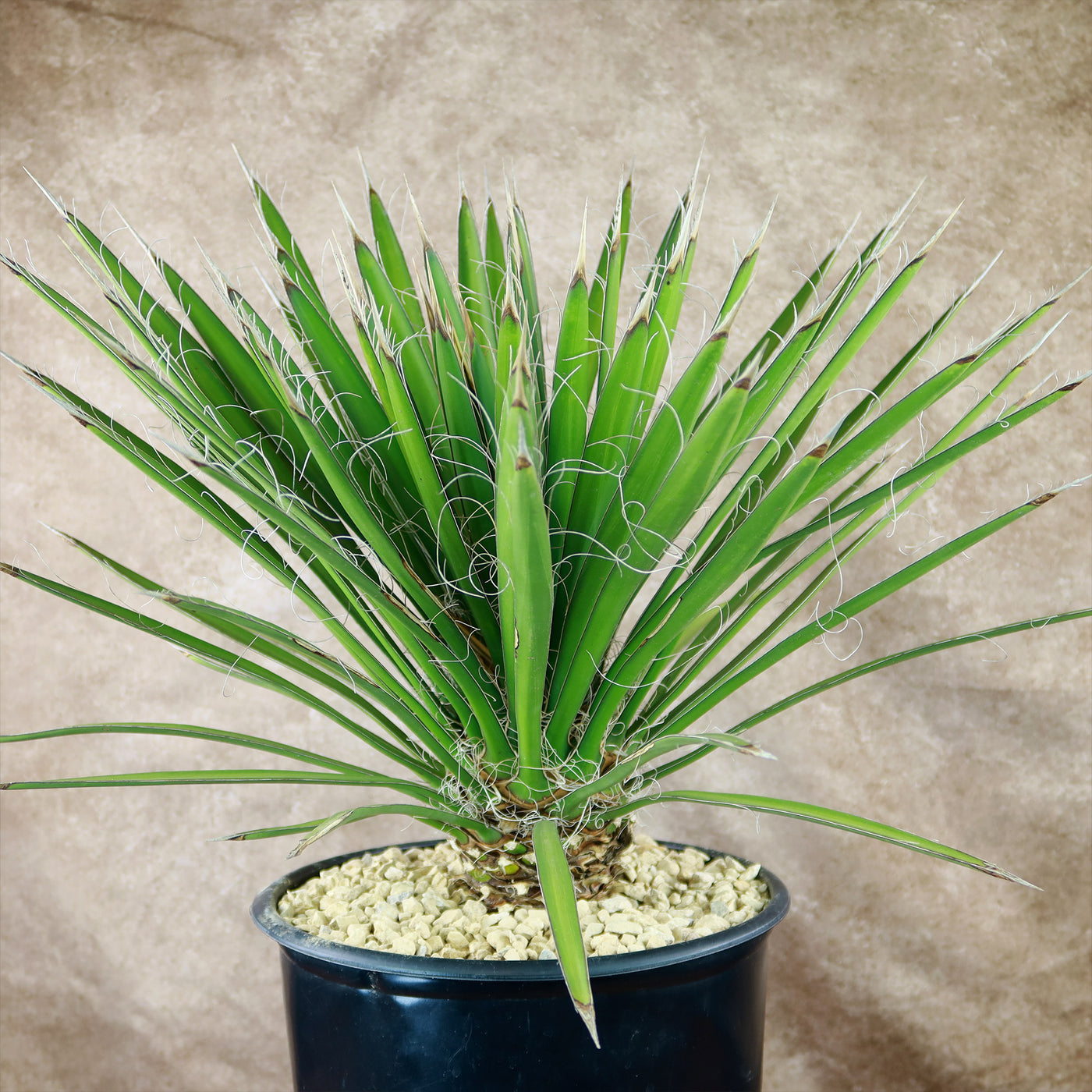
The Yucca palm tree plant is known for its distinctive appearance, featuring long, sword-shaped leaves with thread-like fibers along the margins, giving it a delicate and intricate look.
When it comes to flowering, the Yucca filifera produces tall spikes of creamy white flowers that bloom in summer. These flowers are bell-shaped and fragrant, attracting pollinators such as bees and butterflies. The flowering of Palma china adds to its ornamental value, creating a stunning display of white blooms against the backdrop of its green foliage.
Propagation of the Yucca filifera can be done through seeds or offsets. Seeds can be collected from the plant's dried flower stalks and sown in well-draining soil. Offsets, or pups, can also be separated from the base of the plant and replanted to propagate new Palma china plants. With proper care and suitable growing conditions, Yucca filifera can be propagated successfully to expand your plant collection or share with others who appreciate its beauty.
Watering Needs
Yucca filifera is a robust and striking plant that requires minimal watering once established. This Yucca plant is well-adapted to arid conditions and can tolerate drought well. It's essential to allow the soil to dry out between waterings to prevent overwatering, which can lead to root rot.
In the spring and summer, during the growing season, water the Yucca filifera thoroughly, ensuring that excess water can drain away. It's crucial to water deeply but infrequently to encourage the plant's roots to grow deeply and become more resilient to drought.
In winter, when the plant is dormant, it reduces watering significantly to mimic its natural environment. When watering, ensure that excess water can freely flow out of the pot or the planting area.
Observing the plant's leaves can also provide clues about its watering needs; if the leaves start to yellow or droop, it may be a sign of underwatering. By understanding the watering requirements of the Yucca filifera, you can help it thrive and maintain its beauty in your garden or landscape.
Light Requirements
When growing indoors, Yucca filifera thrives in bright, indirect light. Placing the plant near a window where it can receive plenty of sunlight without being in direct sunlight all day is ideal. Palma china can adapt to lower light conditions but may grow more slowly or become leggy if not provided with enough light.
For outdoor cultivation, they prefer full sun to partial shade. This plant loves basking in the sun and will flourish when exposed to ample sunlight. When planting Palma china outdoors, choose a spot that receives at least 6 hours of sunlight per day for optimal growth. However, it's essential to acclimate the plant gradually to direct sunlight if it has been indoors or in low-light conditions to prevent sunburn on the leaves.
Whether indoors or outdoors, it's essential to monitor the plant's response to light conditions. If the leaves start to turn yellow or brown, it may indicate that the Yucca filifera is receiving too much direct sunlight. On the other hand, if the plant becomes leggy or pale, it might be a sign that it needs more light. By providing the right amount of light for your Palma china, you can help it thrive and maintain its vibrant appearance.
Optimal Soil & Fertilizer Needs
Yucca filifera prefers sandy, well-drained soil, as excess moisture can promote root and stem rot. Planet Desert specializes in succulents and has specialized succulent potting soil, opens in a new tab that includes an organic substrate with mycorrhizae to help with the growth of a healthy root system to help your succulents thrive. As an okay alternative, you can create your own potting mix, opens in a new tab by combining equal portions of perlite, coarse sand, and good natural potting soil.
When it comes to fertilizing the Yucca plant, it's best to use a balanced NPK fertilizer formulated for succulents. During the growing season in the spring, you can fertilize the plant once a year to support its growth. However, it's crucial not to over-fertilize, as this can lead to nutrient build-up in the soil, causing harm to the plant. In winter, when the plant is dormant, reduce or stop fertilizing to allow it to rest.
Hardiness Zone & More
When growing indoors, your Yucca filifera Palma china prefers average room temperatures ranging from 45 to 75 °F. It can tolerate slightly cooler temperatures but should be protected from drafts and sudden temperature fluctuations. As for humidity, this plant is adaptable to normal household humidity levels, so additional humidity is usually not necessary.
For outdoor cultivation, the Yucca filifera is suited for hardiness zones 6-9. While they are cold hardy it's important to protect your Yucca plant from prolonged frost and freezing temperatures. Additionally, this cold hardy Yucca prefers low to moderate humidity levels, making it well-suited for arid or semi-arid climates.
Whether grown indoors or outdoors, monitoring temperature and humidity levels is crucial for the health of the Yucca filifera. By providing the appropriate conditions for this plant, such as the right hardiness zones, temperature range, and humidity levels, you can help ensure its growth and well-being.
Final Thoughts
Overall, the Yucca filifera (Palma china) is a stunning plant native to Mexico, featuring long, sword-shaped leaves with thread-like fibers along the margins. It can grow up to 20 feet tall, producing fragrant, creamy white flowers in summer. Palma china thrives in full sun and well-draining soil, making it ideal for arid climates. To care for this plant, provide plenty of sunlight and water sparingly and ensure good drainage to prevent root rot. With its unique beauty and easy-care requirements, the Yucca filifera is a captivating addition to any garden or indoor space. Order your very own Yucca filifera for sale today!
Shipping Notes
- Free Standard Shipping on $100+ Orders to the USA.
- Except Preorder products are shipped in 48 hours.
- Delivery to the USA:
- Standard Shipping : 3-10 business days
- If time is of the essence, please consider selecting expedited delivery for faster service.
Exchange/Return Notes
- We offer a 30-day return/exchange service after receiving.
- Final sale items are not eligible for returns or exchanges.
- To process your return/exchange, please contact us at [email protected]
- Please click here for more details>>> Return & Exchange Policy