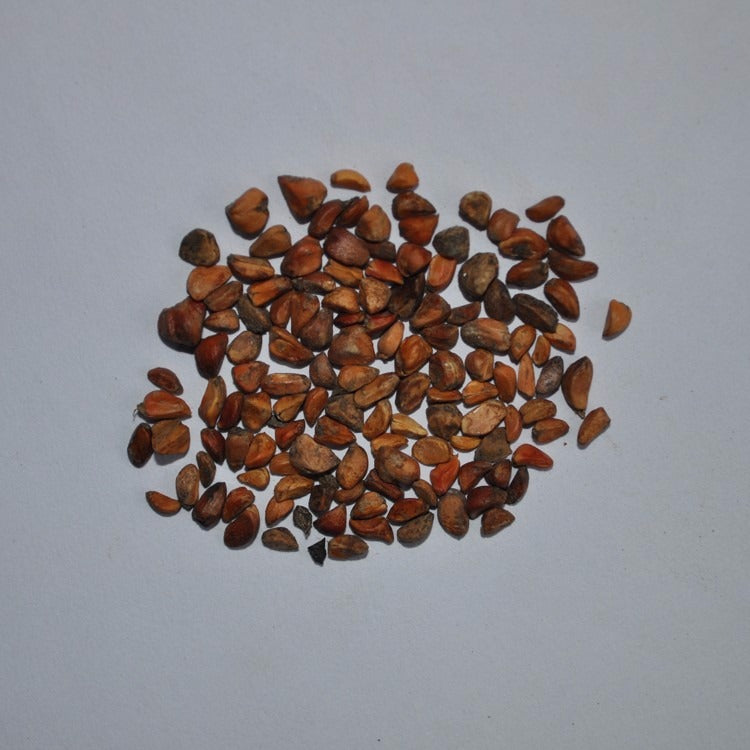
blue moon rose seeds Blue Moon Rose Seedlings Flower Seeds Perennial Growing Bonsai Corms Tubers  Potted Planting Reblooming Fragrant Garden Roots Rhizomes Species Blooms  Plant Bulbs Gardening Tree
SKU: 6573406015
blue moon rose seeds

blue moon rose seeds Blue Moon Rose Seedlings Flower Seeds Perennial Growing Bonsai Corms Tubers Potted Planting Reblooming Fragrant Garden Roots Rhizomes Species Blooms Plant Bulbs Gardening Tree

Sale price$19.22 Regular price$21.35
Save 10%

Pay in installments of $5.34 with ShopPay, AfterPay and Klarna

Shipping Estimate
USA
  • USA
  • CAN

Ships within 48 hours · Estimated delivery Jun 29 - Jul 4

Promo Codes Available:

For Your Every Summer RSVP, with Code: SUMMER15

Description

blue moon rose seeds Blue Moon Rose Seedlings Flower Seeds Perennial Growing Bonsai Corms Tubers Potted Planting Reblooming Fragrant Garden Roots Rhizomes Species Blooms Plant Bulbs Gardening TreeAbout this item How to Grow Roses from Seeds Step 1: Treat Rose SeedsRose seeds need a much longer germination period than many flowers. If you arent careful, this extended moist storage can lead to the growth of molds that can threaten young rose seedlings. To prevent fungus spores from growing, you can destroy them with hydrogen peroxide. Add one half tablespoon of 3% hydrogen peroxide to one cup of water and soak the seeds in this solution for an

About this item

  • How to Grow Roses from Seeds

    Step 1: Treat Rose Seeds
    Rose seeds need a much longer germination period than many flowers. If you aren’t careful, this extended moist storage can lead to the growth of molds that can threaten young rose seedlings.
    To prevent fungus spores from growing, you can destroy them with hydrogen peroxide. Add one-half tablespoon of 3% hydrogen peroxide to one cup of water and soak the seeds in this solution for an hour.                                                                                                                                                                                      Step 2: Cold Germinate Seeds (Stratification)                                                        The natural rose germination process takes a few years. First, the rose hip needs to break down and decompose. After the seeds are fully exposed, they must undergo a period of stratification.Rose seed germination relies on a climate that experiences cold, moist winter months. You can simulate this winter environment using your home refrigerator.Place the rose seeds evenly spaced on a damp paper towel. Be sure to avoid overcrowding. Cover them with another layer of moist paper towels and seal the seeds in a plastic bag.Place the bag of seeds in a clean, empty crisper drawer. It would be wise to first sanitize the drawer with bleach and hot water to prevent mold contamination.Ensure the seeds remain moist throughout the entire stratification process. Add more clean water whenever they start to feel dry.Leave the seeds in the refrigerator for at least two months or until you are ready to sprout them.                                                                                                                                                                                                                     Step 3: Warm Germinate Rose Seeds
    Once the stratification process is complete, you can germinate rose seeds as you would other flowers. It is crucial to bring the seeds out of refrigeration into conditions warmer than 70 degrees.
    Ensure the seeds remain damp and leave them in a warm environment until they sprout. This can take up to a month, and it is likely that not all seeds will germinate.                                                                                                                                                                                                                                                  Step 4: Plant Rose Sprouts
    Add moistened seed-starter soil mix to seedling trays. Make a slight indentation for the rose seeds in each cell.
    The tiny tendrils that emerge are roots and must be handled very carefully. Gently remove the rose sprouts from the paper towel and place them root down in the seed trays.
    Cover the seeds with moist soil and leave the seed trays on a sunny windowsill. Use a clean spray bottle to mist the rose seedlings when they start to feel dry.
    For the best results, consider using Hoss Tools Deluxe Seed Starting Kit. This kit includes a 24-cell seed starting tray with a dome lid, seed-starter soil mix, fertilizer, and more.                                                                                                                                                                                                                                  Step 5: Transplant Rose Seedlings
    As the rose seedlings grow, pay close attention to the seed leaves so you know when to transplant. Wait until the true leaves develop, which take on the typical rose leaf appearance.
    Gently loosen the dirt from the tray cells and slide the seedlings free. Move them to individual containers and let them continue to grow for about a year before you transplant them outdoors.

  • Caring for Young Rose Plants

    Give your rose seedlings the support they need to grow strong stems and lush foliage. Add half-strength fertilizer to each planting location.
    Not all fertilizers are equal. Use a high-quality blend like Dry Fertilizer for guaranteed results.

    • How long does it take to grow a rose from seed

      Growing roses from seeds is a lengthy process. Without proper stratification, it can take multiple years for seedlings to emerge.
      Even the fastest-growing roses will likely take two full growing seasons to produce beautiful blooms.

    • Do roses grow true to seed

      Heirloom rose varieties grow true to the parent plants, while hybrid varieties are less predictable.
      The task of growing roses from seeds is very involved. For this reason, most gardeners prefer to grow roses from cuttings.
      If you want to experiment with cross-breeding unique roses, then you need to grow them from seed.
      To get predictable results, you must control pollination. This will ensure that your homegrown roses will grow true to color.

    • How to grow roses

      All you need to know about growing roses, in our detailed Grow Guide.Roses are some of the most beautiful and versatile garden plants. They come in a variety of forms, from patio roses to shrub roses, ramblers and climbers. Nearly all of them make an excellent cut flower. Single-flowered roses are great pollinator plants, while some species are used by leafcutter bees to make their nests. Most roses need sun and heavy soils to thrive, but some will grow well in partial shade and poorer soils. There really is a rose, or three, for every garden.Key points about growing roses
      Most roses thrive in full sun.Roses need rich, moist but well-drained soil.Water roses regularly so the soil stays moist but not waterloggedRoses are hungry plants. Mulch annually with organic matter such as well-rotted animal manure, and consider using a rose feed to promote flowering in summer.Prune roses annually to promote healthy growth, control the shape and encourage flowering
      Plant bare-root roses from November to March. Container-grown roses can be planted at any time of year.

    • How to grow shrub roses

      Shrub roses and English roses come in a huge range of sizes and colours �some can grow to 2m in height. Shrub roses are typically robust, healthy, repeat-flowering plants offering colour when other shrubs have finished flowering. Some shrub roses have a good fragrance, but if you want a scented shrub rose then English roses are for you. Shrub roses and English roses are perfect for growing in a mixed border, large container or as part of a rose garden. Some can also be trained as climbers or used to grow into a hedge.

    • How to grow climbing roses

      Climbing roses are the perfect plants to add height to a garden, without being too vigorous. There are climbing roses available in all the popular rose categories �hybrid tea roses, bourbons and English roses. Choose from double or single flowers, thornless or scented. Climbing roses can be grown up house walls, along garden fences, over pergolas or up large obelisks.

    • How to grow rambling roses

      Rambling roses are often confused with climbing roses. Ramblers are far more vigorous than climbers, and bear one fantastic flush of flowers, usually in June, followed by colourful hips. Climbing roses often repeat flower and have larger flowers.Rambling roses need plenty of space as they grow quickly. They’re ideal for growing up a tree or tumbling over a wall. They're perfect for covering an eyesore in the garden, such as an unsightly shed or out-building.A rambling rose looks great growing up into a tree, especially an apple tree, providing flowers after the apple blossom fades but before the fruits form. In this video guide from Gardeners' World, Monty Don shows you how to plant two different rambling roses â€?'Wedding Day' and 'Sander's White'. He details what conditions a rambling rose needs, how to prepare the soil, and how deep to plant it so it settles in well over autumn and gets off to a good start in spring. You'll also find out how far from the tree to plant the rose and how to encourage it to climb up the tree.

    • How to grow patio roses

      Patio roses are small enough to grow in pots. They are compact in habit and thrive in lighter soils than many other rose types. Patio roses are not as long lived as other types of rose, but they're easy to manage and remain compact if hard-pruned each spring.

    • How to grow ground cover roses

      Ground cover roses have a trailing or spreading habit. They're ideal for growing in a container, at the front of a border or on steep banks. Many are modern introductions have good disease resistance. If given the right conditions, ground cover roses can suppress weeds.

    • Roses to grow by colour

      Roses come in a huge variety of colours. Browse our lists of roses by colour, below, for the best one for your garden:
      Pink roses to grow
      Purple roses to grow
      Yellow roses to grow
      Beautiful red roses to grow
      Orange roses to grow

    • Growing roses in pots

      It's possible to grow roses in pots, meaning you can grow roses in even the smallest gardens. While all but rambling roses can be grown in pots, shorter growing bush varieties, or ‘patio roses', are ideal. They’ll do best in large, deep containers â€?an absolute minimum of 50cm in diameter and the same in depth â€?to keep their roots cool and moist during summer.In hot, dry weather, soak the compost every two to three days, and feed regularly.

    • What to grow with roses

      Many plants can be grown with roses to great effect. Climbing roses work well grown with clematis. Rambling roses can be trained to grow up a tree. Patio roses work well with a variety of other plants suitable for growing in pots, while shrub roses can be grown in a mixed ornamental border, alongside nepeta, lavender and other herbaceous perennials.

    • When to plant roses

      The best time to plant roses is in autumn, when the soil is warm and the water table is at its highest. Roses will establish quickly before becoming dormant, and then burst into life again in spring. Roses come as potted plants or as bare-root plants (sold without soil on the roots). Technically, you can plant a potted rose at any time of year and a bare-root rose from October to March, but autumn remains the best time to plant roses.

    • How to plant roses

      Plant roses in a well-prepared hole with added compost to improve soil structure and aid water retention. Back-fill with soil and firm in well, then water thoroughly.In this Gardeners' World programme clip, Monty Don shows you how to plant shrub roses. Watch as he plants the yellow-flowered, myrrh-scented rose 'The Pilgrim' in the Cottage Garden at Longmeadow. He explains how to prepare the soil and dig the hole, how and why you should add mycorrhizal fungi, and what rose care to provide to ensure the rose settles in well.

    • How to plant bare-root roses

      Planting bare-root roses during the dormant season is cheaper than planting container-grown roses, because the growers don't need to water and feed the plants when they're dormant, and they weigh less and take up less room when shipping. What's more, there's a far greater selection of bare root roses available to buy than container-grown roses, giving you more choice.You can plant bare-root roses at any time between October and the end of March, but planting them in autumn helps them establish more quickly because the soil is still warm from summer, and is typically moist.

    • Pruning roses

      Pruning is essential for the overall health, vitality and appearance of roses. Winter is the key time to cut back most varieties, except rambling roses, which are pruned in summer immediately after flowering.The basic principles of pruning are the same: cutting back hard will promote the strongest growth, while light pruning will result in less vigour. The other basic rules include cutting to an outward-facing bud to prevent compacted growth, and removing closely positioned stems that might rub or compete for space. Also remove stubby ‘snagsâ€?(short, dead lengths of stem with no growth on them) and thin, twiggy stems, which are unlikely to produce anything worthwhile in terms of growth and flowering potential.

    • Growing roses: problem-solving

      Roses suffer from many problems, including black spot, aphids, die-back and bloom balling. In this Quick Tips video, Richard Jones explains why you shouldn't worry about leafcutter bees damaging your rose leaves:Find more solutions to rose growing problems, below.
      Rose problems solved
      Trouble-free roses
      How can I stop die-back on roses?
      Rose black spot
      Rose bloom-balling

    Why Seedsplant ?

    • Experts in the field
    • Family owned and operated - 100 years
    • Rigorous quality control
    • We strive for your success by offering the bulb size you need
    • Affordable quality

    Flower Bulb Facts of Life

    Bulbs: Beauty In a Bottle:

    Bulbs are a natural product. And, as such, follow a natural cycle of growth and rebirth. Enjoying their fabulous flowers means planting ahead in one season then results the next. Bulbs are among the easiest flowers to grow, not only are they affordable, but bulbs offer the most stunning colors available. Even the most novice gardener can create a breathtakingly beautiful spring garden with bulbs.

    What's a Bulb?

    A flower bulb is really a self-contained flower factory. Within this marvelous little package is nearly everything the flower needs to come to life! Split a bulb open, for instance, and you'll see its baby flower bud, leaves, roots, stem and food supply. All bulbs need from you is to be placed in the ground at the appropriate season of year, given a liberal drink of water then left to work their magic.

    Variety:

    Flower bulbs come in seemingly limitless varieties which makes them perfectly suitable for any garden design you can dream up.

    Is It a bulb ?

    The Difference Between Bulbs, Corms, Tubers, Roots,Today, people commonly us the term 'bulb' to refer to any plant that stores its own food underground. But, in truth, many popular 'bulbs' are not true bulbs at all. These include corms, tubers and roots and, while they all produce beautiful flowers, technically the plants are different

    When To Plant

    In fall, after soil temperatures are below 50ºF/10ºC. These bulbs bloom the following spring and require the cold winter temperatures for development. But let's say winter arrives and your bulbs are still in their bag. Not to worry! Bulbs are pre-programmed to grow so even if you have to plant through snow, plant your bulbs!

    How To Plant

    Most bulbs thrive in either full or partial sun and in almost any location with good drainage. Avoid planting at the base of hills or under drainage pipes where water collects and will rot the bulbs.

    • Dig a hole
    • Drop in the bulb
    • Water thoroughly

    Tips For success

    • A larger grouping of flower bulbs are far more fab than just a few planted here and there. Think clumps of color.
    • Buy the largest bulbs you can find.
    • Note the flowering times. Not all bulbs will bloom at the same time. A little planning will greatly increase the number of months you will enjoy bulb flowers.

    Passionate About bulbs

    Generally speaking, the best predictor for gardening success is bulb size. Almost always, the larger the initial bulb size planted, the larger and stronger the plants will be, producing more flowers. The first year end result will be noticeable to anyone.The best predictor for gardening success is bulb size.

    Shipping

    All items are shipped usually within 2 working days (usually sooner) except plug plants. Plants only dispatch Monday-Thursday to avoid problems with live plants sitting in a postal depot over the weekend. During busy periods , due to the nature of product and extra care needed when packing and preparing for post, please allow up to 7 days for delivery (depending on day purchased). Plants are only dispatched when crops are ready to travel , therefore some multi orders may be delivered separately and occasionally it may be necessary to hold back dispatch until plants are ready. Shipping is either via Post  or 24/48 Hour courier depending on order size/weight etc. at our discretion. Please be patient when ordering plants as you cannot rush nature. Please be aware delivery dates shown by Seedsplant are estimates only and do not apply to live plant orders. Any orders returned to us by Post or Courier will incur a further postage charge to resend.

    Returs

    You may return all unopened items within 14 days of delivery for a full refund less P&P charges. Any items received damaged in transit must be notified in writing/email within 24 hours of receipt. Live plants should arrive in perfect condition , If however for some reason they do not please contact us immediately upon receipt. A full refund including original P&P will be made for any items not as described or wrong part no etc. All returns must include your full details with a copy of original receipt. You may cancel any transaction as long as notice is received before item(s) are / have been dispatched.

    Contact us

    You can message us through Seedsplant messages , otherwise You can write to us by email :[email protected]

    Shipping Notes
    • Free Standard Shipping on $100+ Orders to the USA.
    • Except Preorder products are shipped in 48 hours.
    • Delivery to the USA:
    1. Standard Shipping : 3-10 business days
    • If time is of the essence, please consider selecting expedited delivery for faster service.
    Exchange/Return Notes
    • We offer a 30-day return/exchange service after receiving.
    • Final sale items are not eligible for returns or exchanges.
    • To process your return/exchange, please contact us at [email protected]
    • Please click here for more details>>> Return & Exchange Policy
    SKU: 6573406015

    Discover Niche Categories That Outsell blue moon rose seeds

    Top-Converting Item to Boost Your Average Order

    4.7 ★★★★★
    Based on 2072 reviews
    Sort
    Highest Rating
    Newest First
    Oldest First
    Product Reviews
    A
    Verified Purchase
    Amanda Becker
    Whiting, US
    ★★★★★ 5
    Best wrap mask!
    Color: Lifting (Jericho Rose)
    Just the best wrap mask!! A lot of peptides that make my skin soft and moisturizing. Very effective in only 20min use!
    WAS THIS REVIEW HELPFUL?YesReportShare
    Reviewed in the United States on May 20, 2026
    A
    Verified Purchase
    Amanda Boyd
    Massapequa, US
    ★★★★★ 5
    Great face mask
    Color: Lifting (Jericho Rose)
    Love this mask. I have really sensitive skin and this mask doesn't irritate my skin at all. It absorbs nicely and leaves my skin feeling moisturized and glowing. Great value for the price!
    WAS THIS REVIEW HELPFUL?YesReportShare
    Reviewed in the United States on April 21, 2026
    T
    Verified Purchase
    Tammy Marshall
    Pawtucket, US
    ★★★★★ 3
    Full Moisturization of the face is lacking
    Color: Lifting (Jericho Rose)
    I would give it a 5 based on the appearance after the mask is removed your skin is glassy but the moisture level is lacking. It leaves behind an oily residue and my face didn’t feel hydrated. The search continues.
    WAS THIS REVIEW HELPFUL?YesReportShare
    Reviewed in the United States on March 25, 2026
    J
    Verified Purchase
    John P. Jones III
    San Leandro, US
    ★★★★★ 5
    “The fragments of a life”…
    A formidable movie, in the stricter sense of the word. In a looser sense, it has helped shape the way that I’ve seen the world, ‘lo these past six decades. I saw this movie when it first came out, in 1963, at one of my favorite art theaters in Pittsburgh. Like most of us at the time, we’d only viewed rather straightforward movies of “good and evil,” Westerners, and the like. Predictable endings. The director of “8 ½,” Federico Fellini, offered something radically different, a foreshadowing of the stream-of-consciousness technique in literature, how the fragments of one’s life get all jumbled up in the brain. And he provided some takeaways that have long been with me. I was 16 at the time and took a date who was 15. In re-watching it now, if I thought it somewhat baffling at 16, I wonder what my date thought about the portrayal of the women in the movie, who are “fragments” in the life of the movie director, Guido Anselmi, excellently played by Marcello Mastroianni. There is his wife, Luisa, wonderfully played by Anouk Aimée, who was the motive force behind the re-watching of it now. There is the “virginal” Claudia Cardinale, usually in white (I had not realized that she was originally Tunisian). Sandra Milo plays Guido’s flighty bimbo of a mistress. And so many others: The airline stewardess; the caring mom who wraps the infant Guido in a blanket; the first stripper; the insightful and nagging friend of his wife… “Upstairs when you are 40.” That was one of the big takeaways. Anselmi is having this male fantasy about his “harem,” all those fragmented women who are there to serve him and do so in complete harmony when he realizes that the “stripper” is now 40 and must go upstairs, the metaphor for being placed on the “discard pile” for being too old. He gets out his bull whip even, to drive her up the stairs. Even at 16, when 40 is more than twice your life away, it did seem a bit harsh, particularly when the same rule does not apply to the guy with the bull whip. It was also my first viewing of the prototype of those pompous pedantic critics of movies or literature who toss around expressions like “impoverished poetic imagination,” “overabundant symbols,” and, of course, “self-indulgent.” I was in parochial high school at the time, so the scenes in which the priests were chasing down the young student Guido in order to shame and humiliate him because he found sexual imagery to be of interest, imagine that, strongly resonated. It was also the era that the Catholic Church published “The Index of Forbidden Books,” (which now seems to have been taken over by the woke crowd of today), and thus the scene in which Anselmi has to pay homage to the Cardinal also resonated. Anouk Aimée is absolutely mesmerizing. She has been a “fragment” of my own life, ever since I viewed “A Man and a Woman” in the ’60’s. Again, she played opposite the equally formidable Jean-Louis Trintignant, of “Z,” “Three Colors, Red,” and so much else, fame. Far more relevantly, the two of them recently played in “The Best Years of Our Lives,” again directed by Claude Lelouch. Aimée is now a young 90. In her role as Anselmi’s wife, Luisa, she wore those glasses that connotated a greater thoughtfulness than him. I searched that ever-so-youthful face watching for the subtle expressions of later movies. It struck to the core. Luisa is utterly fed up with Guido’s philandering and constant lies. And Guido is suffering from “director’s block” in trying to finish his movie, with what sort of message? Luisa fires off THE classic line that I have long remembered: “But what can you say to strangers when you can’t tell the truth to the one closest to you…”. The only problem is that I’ve felt that line was said in Ingmar Bergman’s “Scenes from a Marriage.” And maybe that line was ALSO said in Bergman’s movie, which means one more movie I need to watch to find out. As I said earlier, things can tend to get jumbled up in the brain, even more so as one ages. Fellini would understand, maybe Aimée would also. 5-stars, plus for Fellini’s classic, formidable film.
    WAS THIS REVIEW HELPFUL?YesReportShare
    Reviewed in the United States on March 14, 2023
    S
    Verified Purchase
    Stephen McLeod
    West Palm Beach, US
    ★★★★★ 5
    One of the greatest in SPECTACULAR DVD package
    This new Criterion Collection edition of *8 1/2* is one of the best DVD "special edition" sets I've come across. The Movie: Fellini's breakthrough film is a movie about itself. It is archetypal in the Fellini canon because it both settles old scores and announces a new cinema. The film's hero is an Italian filmaker (Mastroianni as "Guido" a quasi-alter ego for the director) who has just had his first major hit (=La Dolce Vita). He is not resting on his laurels, however. He is confronted with the necessity of the next movie. This necessity is both personal to the director and apparently contractual: the producer is forever hovering... To Guido, it is an inner necessity, an unrest, a creative suffocation, objectified in the opening sequence of the movie where Guido is seen/not seen by the camera, trapped inside a tiny car that is itself trapped in a traffic jam that stretches endlessly beyond available light as the car fills with toxic gas. We see the as yet unidentified hero in silhouette from behind. We see his hands and feet from outside the car, through the window as he desparately tries to escape. Then, he mysteriously escapes through the car's roof like a new bird escaping its shell and is carried off into the clouds, etc. The trouble is, this is a wish fulfillment dream. In "real" life, Guido is about to make a movie, and he has no idea what it's going to be about, or what to do with all the actors and extras, and the giant launching pad for some kind of space-ship that is the only thing even close to a concrete idea for the projected picture. The film is not, however, a perfect autobiographical fit. For one thing, Fellini gets to finish his movie and Guido, evidently, does not. But, that said, the movie is a virtual mirror of itself, which was a very hard thing to pull off in 1962, before the concept of "virtual" was annexed by the codifiers of computer jargon, and *8 1/2* is nothing if not a virtuoso performance. Fellini's breakthrough is the film we watch. But in the film, the hero finds the resolution to his anguish, not in finding the project - that is, in making what would have been the film-about-itself within the film-about-itself within the film-about-itself that we are, finally, watching - but in letting go of the project, in surrendering to the impossibility of finding it or making it. Precisely *on the other side of his own fantasy-suicide*, at the moment when he apparently gives in to despair, he discovers the circle of life and becomes able to join into the procession of lives into which his own life is finally intertwined. So, this is an essential film. And it is a film so rich in texture that a person could watch the movie a hundred times and find new things to wonder at, and discover new connections between the One and the Many - Fellini's personal/existential problem. The DVD: First disc contains a sparkling transfer of the movie that restores a luster to the angular lights and shadows in Fellini's final black & white movie. Audio commentary by a couple of scholars and Fellini's former close accomplice Gideon Bachman. Second disc contains Fellini's famous "Director's Notebook" of 1968(-9), an hour-long movie that was originally made for television, as well as another documentary about composer Nino Rota, and various interviews, including one with the ever-fiesty Lina Wertmueller who was Fellini's Asst. Director on *8 1/2*. The package also comes with a really interesting little booklet with lots of information and a thoughtful mini-essay. Overall a great package that I'll not regret buying.
    WAS THIS REVIEW HELPFUL?YesReportShare
    Reviewed in the United States on January 5, 2002

    recommand products