Pay in installments of $5.82 with
 ,
,
 and
and

Shipping Estimate
USA
- USA
- CAN
- USA
- CAN
Ships within 48 hours · Estimated delivery Sep 10 - Sep 15
 Promo Codes Available:
For Your Every Summer RSVP, with Code: SUMMER15
Description
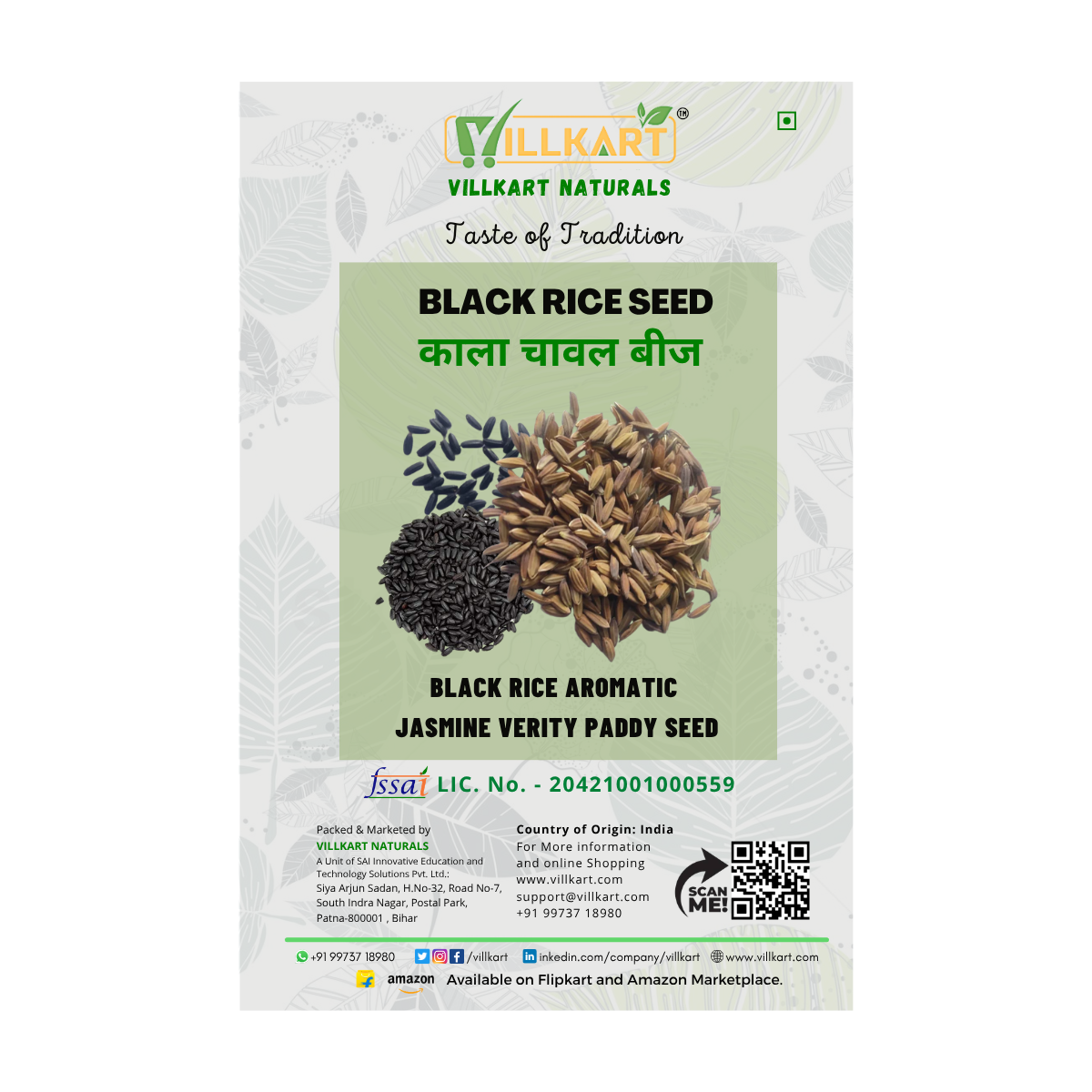
black rice seeds for planting Buy Black Rice Seeds OnlineBlack Rice Seeds for Sowing This is a Black Rice Paddy Seed For cultivation planting (agricultural purposes) In 1 Acre 5 kg Black rice Seeds Required Manipur Chakhao Black Paddy Seeds Purely natural and organic whole paddy. This is also called as Chak Hao, Manipuri Kaaala Dhan, Kaala Beej, Chakhao Rice, desi black Rice, and Vegetarian products This variety is also recognized internationally with Geo Tag. 1). Details of the Vietnam Black Jasmine
Black Rice Seeds for Sowing
This is a Black Rice Paddy Seed For cultivation/planting (agricultural purposes)
In 1 Acre 5 kg Black rice Seeds Required
Manipur Chakhao Black Paddy Seeds- Purely natural and organic whole paddy. This is also called as Chak-Hao, Manipuri Kaaala Dhan, Kaala Beej, Chakhao Rice, desi black Rice, and Vegetarian products
This variety is also recognized internationally with Geo-Tag.
- Duration: 120–125 days.
- Production/Yield: 20 to 25 Quintals/Acre.
- Grain Color: Fully Black (Z-black) husk, with a pigmented black bran.
- Plant Height: 3 to 3.5 feet (semi-dwarf type, which helps prevent lodging).
- Suitability: Suitable for high land and medium-high land (Rainy Season).
- Characteristics: Fragrant, glutinous (sticky), and high in anthocyanins
- Crop Duration: 110 to 115 days. It is considered an early-maturing variety, making it suitable for multiple cropping systems or areas with limited water availability.
- Yield Potential: 25 to 30 quintals per acre. Under optimal management and irrigation, it can reach up to 32 quintals per acre, significantly higher than many traditional early varieties.
- Grain Type: Long Slender. The grains are elongated and fine, similar to premium long-grain or Basmati-type rice, which helps it fetch better market prices.
- Grain Appearance: Clear and Lustrous. Unlike the traditional "Krishna Kamod" (which has a black husk), modern Krishnam/Krishna improved varieties are bred to have a clean, light-colored husk ("not too much black") and translucent white kernels.
- Plant Height: 95 to 110 cm. It is a semi-dwarf to medium-height plant, which provides better resistance against lodging (falling over) during wind or heavy rain.
- Disease Resistance: High. It is typically resistant to common rice diseases such as Blast, Bacterial Leaf Blight (BLB), and pests like the Brown Plant Hopper (BPH).
- Cooking Quality: Excellent. The cooked rice is known for being soft, non-sticky, and having a good taste, making it popular for domestic consumption.
3). Details of the Chak-Hao Manipur Black Paddy Seeds -
- Cultivation Duration: These seeds typically have a seed-to-seed duration of 90 to 110 days depending on the specific strain, though traditional long-grain varieties may take up to 145 days.
- Geo-Tag Recognition: Chak-Hao was awarded a Geographical Indication (GI) tag in 2019, recognizing it as a unique product of Manipur.
- Organic Production: These seeds are produced using organic methods, often involving cattle manure and hand-weeding, making them an eco-friendly choice for sustainable farming.
- Husked Rice, also known as Red Rice, is characterized by its inedible outer hull, making it a whole-grain option. Red rice, gold rice, and Black Rice are all whole kinds of rice with differently pigmented outer layers.
- Apart from its distinctive appearance, Manipur Black Paddy Seeds boast a high antioxidant quotient, which can boost immunity and aid in detoxification.
- Seed Requirement: For cultivation, approximately 5 kg to 20 kg of seeds are required per acre.
More About Black Rice
One of the rarest varieties of rice, black rice doesn’t just look pretty—it’s full of antioxidants.
Botanical name Oryza Sativa Linn Also known as black rice Forbidden Rice, purple rice Rarest Paddy seeds FORBIDDEN RICE Paddy Seeds grains for sowing Growing this paddy for plantations sawing a variety with herbal properties most nutrient fragrant and herbal value.
Also known as Forbidden Rice, purple rice. It (also known as purple rice Forbidden Rice is a range of rice types of the species Oryza sativa Linn some of which are glutinous rice.
It is known as chak-hao in Manipur, where desserts made from It are served at major feasts.
It is a source of vitamins and antioxidants. The bran hull (outermost layer) contains one of the highest levels of nutrient found in food.
It has a deep black colour and usually turns deep purple when cooked. Its dark purple colour is primarily due to its anthocyanin content, which is higher by weight than that of other coloured grains.
It is suitable for creating porridge, dessert, traditional Chinese It cake, bread and noodles. Please check the internet for more details on Forbidden Rice impressive health benefits.
It is whole-grain rice with the inedible outer hull removed.
Red rice, gold rice, are all whole kinds of rice, but with differently pigmented outer layers.
Antioxidant-Rich, Nutty and Aromatic
It is not as common as other types of rice, It is the highest antioxidant activity and contains more protein than brown rice. As such, eating it may offer several health benefits.
Its glutinous properties make it ideal for rice pudding, Soak for a minimum of 1 hour or ideally overnight before cooking.
It also called forbidden rice or "emperor's rice," is gaining popularity for its high levels of antioxidants and superior nutritional value. Forbidden to anyone else for the sake of emperors in the ancient period.
It has a beautiful purple hue along with a distinctive aroma, has a deep black colour and usually turns deep purple when cooked.
Its dark purple colour is primarily due to its anthocyanin content, which is higher by weight than that of other coloured grains. It is suitable for creating porridge, dessert, traditional Chinese It cake, bread, and noodles.
Why Is Black Rice Called Forbidden Rice?
This is often called forbidden rice because, in Ancient China, it was reserved for the aristocracy. Its low yield (about 10 percent) means that it is still rarer than other types of rice, and the fact that it’s been used for hundreds of years in traditional Chinese medicine makes this rice special, even if it’s no longer for royals only.
Black Rice Health Benefits
Black rice is high in antioxidants, including anthocyanin, which may support heart and brain health, and vitamin E, which supports eye and skin health and the immune system. Its antioxidants are both fat- and water-soluble, allowing them to potentially benefit multiple parts of the body. It contains more fibre, iron, and protein than regular brown rice and especially white rice.
Like other whole-grain rice varieties, it has a low glycemic index, meaning that sugar is absorbed more slowly, providing a more stable energy source and avoiding the spikes in blood sugar associated with other carbohydrate-rich foods.
What Does Black Rice Taste Like?
The flavour of black rice varies depending on variety, but since the bran is left on, it always has a slightly nutty flavour, like brown rice. Chinese black rice is mildly sweet, fruity, and floral.

Shipping Notes
- Free Standard Shipping on $100+ Orders to the USA.
- Except Preorder products are shipped in 48 hours.
- Delivery to the USA:
- Standard Shipping : 3-10 business days
- If time is of the essence, please consider selecting expedited delivery for faster service.
Exchange/Return Notes
- We offer a 30-day return/exchange service after receiving.
- Final sale items are not eligible for returns or exchanges.
- To process your return/exchange, please contact us at [email protected]
- Please click here for more details>>> Return & Exchange Policy