SKU: 68456275830
wildflower seeds for southeast

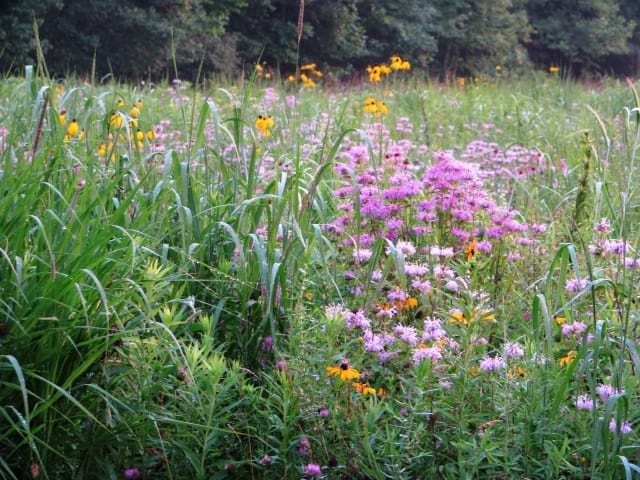
wildflower seeds for southeast Native Short Grass and Wildflower Seed Mix

Sale price$26.10 Regular price$29.00
Save 10%

Pay in installments of $7.25 with ShopPay, AfterPay and Klarna

Shipping Estimate
USA
  • USA
  • CAN

Ships within 48 hours · Estimated delivery Sep 7 - Sep 12

Promo Codes Available:

For Your Every Summer RSVP, with Code: SUMMER15

Description

wildflower seeds for southeast Native Short Grass and Wildflower Seed MixWhen we describe one of our native seed mixes as short, we typically mean 3 to 5 feet tall. Our Native Short Grass and Wildflower Seed Mix was designed as a native grass planting with native wildflowers mixed in that have bloom times ranging from spring through fall once established. Attract Monarch Butterflies with Common and Butterfly Milkweed. Watch birds eat Ox Eye Sunflower and Yellow Grey headed Coneflower seeds. Wild Bergamot is a bee magnet

When we describe one of our native seed mixes as short, we typically mean 3 to 5 feet tall. Our Native Short Grass and Wildflower Seed Mix was designed as a native grass planting with native wildflowers mixed in that have bloom times ranging from spring through fall once established.

Attract Monarch Butterflies with Common and Butterfly Milkweed. Watch birds eat Ox Eye Sunflower and Yellow/Grey-headed Coneflower seeds. Wild Bergamot is a bee magnet and Little Bluestem is the larval host plant for many butterflies and moths.

Some things to remember:

This mix of native grasses and wildflowers will take 2 to 3 growing seasons to fully establish. We do include annual wildflowers for color and foraging the first growing season.

This mix performs best in well-drained soils and will need at least 4 to 6 hours of sunlight a day.

Contains the following species:

Grasses:

Elymus virginicus - Virginia Wild Rye

Schizachyrium scoparium - Little Bluestem

Bouteloua curtipendula - Side-oats Grama

Wildflowers:

Chamaecrista fasciculata - Partridge Pea 

Echinacea purpurea - Purple Coneflower

Heliopsis helianthoides - Ox Eye Sunflower

Coreopsis lanceolata - Lanceleaf Coreopsis

Gaillardia aristata - Blanket Flower

Dalea purpurea - Purple Prairie Clover

Desmanthus illnoensis - Illinois Bundleflower

Rudbeckia hirta - Black-eyed Susan

Eryngium yuccifolium - Rattlesnake Master

Dalea candida - White Prairie Clover

Astragalus canadensis - Canadian Milk Vetch

Ratibida pinnata - Yellow / Grey-headed Coneflower

Asclepias syriaca - Common Milkweed

Monarda fistulosa - Wild Bergamot

Penstemon digitalis - Foxglove Beardtongue

Lespedeza capitata - Roundheaded Bushclover

Coreopsis tinctoria - Plains Coreopsis

Solidago rigida - Stiff Goldenrod

Aster laevis - Smooth Aster

Asclepias tuberosa - Butterfly Milkweed

Seed Info

Seed Packet covers 250 square feet (a 10 x 25 area) and will take up to three growing seasons to fully establish. Each packet will cover approximately 250 square feet.

PLS Lbs. Per Acre Broadcast = 15

PLS=Pure Live Seed

Pure Live Seed is a measure of viable seed stated as a percentage. It is the product of total germination times purity.

Example: 96% Germination x 93% Purity = 89% PLS

All of our native warm season grasses and seed mixes are sold PLS.

Broadcast seeding is the process of sowing seed by hand. The seeds are sprinkled into the soil and can be lightly raked to ensure germination.

This mix of native grasses and wildflowers typically grows to a height of 3 to 5 feet. Please note that each site is unique and that several factors can affect overall height. These factors include sunlight, hydrology and overall soil health.


Product Details

Flower Color: Green, Yellow, Purple, Pink, Orange, White

Height: 3 to 5 Feet

Light Requirements: At Least 4 to 6 Hours of Sunlight a Day

Soil Hydrology: Dry to Mesic Soils

Bloom Time: Spring through Fall

Plant Type: Annuals/Perennials

Attracts: Birds, Bees, Butterflies and Humans

Suggested USDA Planting Zones: 3-7

Product Code: NSGM03

Color Boosters

The native perennials in your mix do require some patience to establish, but for instant gratification consider adding any of these quick establishing annuals. They're perfect pollinator plants, too!

Indian Blanket

Partridge Pea 

Quick Growing Wildflowers Native Seed Mix 

Cover Crops and Seed Carriers

Do you need a cover crop?

Know where you sow! Add some Rice Hulls to your order!

Shipping Notes
  • Free Standard Shipping on $100+ Orders to the USA.
  • Except Preorder products are shipped in 48 hours.
  • Delivery to the USA:
  1. Standard Shipping : 3-10 business days
  • If time is of the essence, please consider selecting expedited delivery for faster service.
Exchange/Return Notes
  • We offer a 30-day return/exchange service after receiving.
  • Final sale items are not eligible for returns or exchanges.
  • To process your return/exchange, please contact us at [email protected]
  • Please click here for more details>>> Return & Exchange Policy
SKU: 68456275830

Discover Niche Categories That Outsell wildflower seeds for southeast

Top-Converting Item to Boost Your Average Order

4.1 ★★★★★
Based on 6 reviews
Sort
Highest Rating
Newest First
Oldest First
Product Reviews
H
Verified Purchase
How Family
Omaha, US
★★★★★ 5
Great reference for college US History I & Ii.
Format: Paperback
My college course references this book for US History I & Ii at Temple College in Texas.
WAS THIS REVIEW HELPFUL?YesReportShare
Reviewed in the United States on June 21, 2022
P
Natrona Heights, US
★★★★★ 4
A useful study
Format: Hardcover
This is a book that will make you angry. If you are a conservative, this book should make you feel very guilty. It is important to begin with that this book is a detour from Keyssar's larger project, which was supposed to be a history of the American working class' electoral participation. After struggling with the work for several years he realized that he needed to publish a whole book explaining what the right to vote actually was in American history. The result is a history of the slow and uneven path to universal suffrage in American history. We learn about the existence of the vote before 1776, the improvement that occured with the revolution, and the larger improvement that occured with the Jeffersonian/Jacksonian period in which the large majority of white men were able to vote. At the same time we learn of efforts to counter the expanding suffrage, such as disfranchisement of free blacks all over the country before 1861, attacks on the voting rights of paupers, felons, migrants and aliens, as well as the disfranchisment in the early 1800s of the limited voting rights women had in the early 1800s. Keyssar then goes on to discuss the narrowing of the portals from the 1860s to the 1920s, periods ironically bounded by giving the vote to blacks in the 1870s and to women by the 1920s. But in between that period nearly all blacks and many whites were disenfranchised in the south, while literacy, residence, nationality and registration systems sought to limit the vote in the North (while "asiatics" were barred in the west). The book concludes with the successful passage of the Voting Rights Act and the twenty-sixth amendment, but also with low turnout, an extremely narrow political spectrum, and government structures which limit political participation and reinforce conservative values. Much of this will not be new to historians, though never before has there been such detail and the twenty appendixes provided at the back will be invaluable for future reference. Sometimes Keyssar gives a qualititative estimate of how many Americans could vote (he suggests that perhaps 60% of white Americans could vote before 1776, a figure much lower than the 80-90% posited by more Panglossian historians). And there are many interesting details, such as the New York plan where registration was supposed to take place on Yom Kippur, conventiently leaving out many Jews. But otherwise the full results have been reserved for his upcoming work. This weakens his criticisms of American exceptionalism, since without a clear understanding of how much the vote declined in the North, we cannot see how fully the ponderous elitism of Parkman and Godkin were like the undemocratic aspects of German or Italian or even British liberalism. I am also do not agree with his description of slaves as a "peasantry." This implies that the majority of white farmers who were not slaveholders were a) not peasants and b) were otherwise indistinguishable on a class basis from the slaveholders. Recent southern agrarian history makes this assumption quite questionable. It is true that Americans were unenthusiatic as Europeans about the rise of the proletariat and rural subaltern classes, but it is insufficient to say that mass suffrage only occured because such classes were a small proportion of the population. They were also a small proportion of the population in France in 1848 and 1851 when universal male suffrage was declared, which did not prevent a greater degree of struggle over the question in that country. Enfranchising the majority of any population would raise serious issues of class domination and control regardless of the class structure. Nevertheless this is still a useful study, and reading the petty, racist, misogynist, self-serving and self-satisfied arguments against the suffrage will be a depressing experience. To think that such injustices could be continued for two centuries thanks to the endless cant of "state's rights" long after the republican content of that slogan had drained away will infuriate you.
WAS THIS REVIEW HELPFUL?YesReportShare
Reviewed in the United States on October 18, 2000
R
Verified Purchase
Randall Lindsey
Houston, US
★★★★★ 5
Unfolding of the right to vote in the U.S.
In my forty years of studying the history of the U.S., I find this work to be the most authoritative and complete work yet encountered. Not only is the book a thorough guide through the evolution of our democracy, it is an entertaining read. The book is a 'must' read for those who seek a perspective on many of the current issues involving voting rights.
WAS THIS REVIEW HELPFUL?YesReportShare
Reviewed in the United States on November 4, 2006
J
Verified Purchase
Jj7484
Louisville, US
★★★★★ 5
Typical for a casebook.
Format: Hardcover
I had to buy this for school. It’s overpriced and horrible to read but great for what I needed it for.
WAS THIS REVIEW HELPFUL?YesReportShare
Reviewed in the United States on June 29, 2019
C
Verified Purchase
C Cox
Natrona Heights, US
★★★★★ 5
Good seller
Format: Hardcover
book in condition provided in description
WAS THIS REVIEW HELPFUL?YesReportShare
Reviewed in the United States on April 7, 2021

recommand products