Pay in installments of $7.42 with
 ,
,
 and
and

Shipping Estimate
USA
- USA
- CAN
- USA
- CAN
Ships within 48 hours · Estimated delivery Sep 7 - Sep 12
 Promo Codes Available:
For Your Every Summer RSVP, with Code: SUMMER15
Description
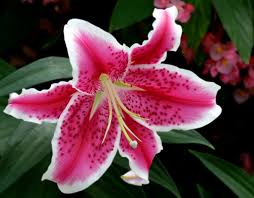
asiatic lily vs stargazer Stargazer Oriental Lily – The Lily Pad Bulb FarmThe Stargazer lily is probably the best known and most widely grown of the Oriental lilies. This incredibly vivid crimson lily is unquestionably the most prominent lily in commerce. Widely grown as a cut flower, it boasts garden worthiness and container worthiness as well. Late to emerge, it tends to withstand conditions which other Orientals cannot. The inflorescence is strongly upfacing and quite narrow and compact, which makes this variety
The Stargazer lily is probably the best-known and most widely-grown of the Oriental lilies. This incredibly vivid crimson lily is unquestionably the most prominent lily in commerce. Widely-grown as a cut flower, it boasts garden-worthiness and container-worthiness as well. Late to emerge, it tends to withstand conditions which other Orientals cannot. The inflorescence is strongly upfacing and quite narrow and compact, which makes this variety especially suitable for certain purposes, especially small garden spaces and for floral design work. Naturally short, Stargazer is also desirable as a container lily, needing no growth regulators to suppress height. No staking is needed. Bulb size is 16-18 cm. Choose between 1 bulb or a 3-pack.
Botanical name: Lilium orientalis 'Stargazer'
Form: Perennial
Hardiness Zone: 4-9
Flower Color: Crimson pink petals with white border
Foliage Type: Linear, green leaves arranged in whorls or spirals up the stems
Bloom time: August
Height: 2-3 ft
Spread: 12 inches
Light requirements: Full to half sun
Plant depth: 6 inches of soil over top of bulb
See "Growing Tips" for more detailed instructions
Form: Perennial
Hardiness Zone: 4-9
Flower Color: Crimson pink petals with white border
Foliage Type: Linear, green leaves arranged in whorls or spirals up the stems
Bloom time: August
Height: 2-3 ft
Spread: 12 inches
Light requirements: Full to half sun
Plant depth: 6 inches of soil over top of bulb
See "Growing Tips" for more detailed instructions
Tips and Growing Instructions
Visit our How-To Cultivation Library for more growing tips.
Many growers plant lily bulbs in the Fall. However, Spring is a great time for planting lilies. Lily “bulbs” are actually tubers composed of fleshy scales and lack a protective covering. Unlike true bulb flowers, they never go completely dormant and should be handled carefully since they loose moisture very quickly. Essentially, you can plant your new lilies anytime after the ground freezes in Spring.
Lilies are incredibly easy to grow and few garden pests trouble them. The most natural location for lilies is on sloping ground with excellent drainage. Lilies prefer to have their blooms in the sun and their roots in the shade. Try planting them among annuals or perennials that will keep their roots cool.
The general rule of thumb for planting spring bulbs is to plant two to three times as deep as the bulb is tall. This means that some of our larger Bulb-Zilla lily bulbs will need to be planted 6-8 inches deeps. Plant with the roots downward and the scales upward. After planting, water well two or three times. Lilies are most effective when planted in groups of three or more. Space them about a foot apart – they will spread and fill this space in no time!
Always allow the leaves on the stalk to turn yellow and fall off as part of the lily’s natural growth process. This ensures that the bulbous underground part of the plant has gotten enough nourishment and will mean greater growth next year. Each year watch their beauty increase as they multiply!
Visit our How-To Cultivation Library for more growing tips.
Many growers plant lily bulbs in the Fall. However, Spring is a great time for planting lilies. Lily “bulbs” are actually tubers composed of fleshy scales and lack a protective covering. Unlike true bulb flowers, they never go completely dormant and should be handled carefully since they loose moisture very quickly. Essentially, you can plant your new lilies anytime after the ground freezes in Spring.
Lilies are incredibly easy to grow and few garden pests trouble them. The most natural location for lilies is on sloping ground with excellent drainage. Lilies prefer to have their blooms in the sun and their roots in the shade. Try planting them among annuals or perennials that will keep their roots cool.
The general rule of thumb for planting spring bulbs is to plant two to three times as deep as the bulb is tall. This means that some of our larger Bulb-Zilla lily bulbs will need to be planted 6-8 inches deeps. Plant with the roots downward and the scales upward. After planting, water well two or three times. Lilies are most effective when planted in groups of three or more. Space them about a foot apart – they will spread and fill this space in no time!
Always allow the leaves on the stalk to turn yellow and fall off as part of the lily’s natural growth process. This ensures that the bulbous underground part of the plant has gotten enough nourishment and will mean greater growth next year. Each year watch their beauty increase as they multiply!
Shipping
Sorry, we do not ship outside the U.S. or to Hawaii due to agricultural restrictions.
We guarantee safe arrival of healthy bulbs, that varieties will be true-to-name, and will grow if planted as instructed, subject to the limitations described in our Shipping and Returns Policy.
We begin shipping our bulbs in mid-February through Spring. Despite what you may have heard, Spring planting of bulbs is not a bad thing, and in fact, there are many advantages to planting in Spring. Visit our Spring Planting page to learn more. Upon arriving, your bulbs and most of your perennials may show signs of growth such as green leaves and sprouts - this is okay and transportation during this time should not harm the plants.
All bulbs and perennials should be planted in your garden as soon as possible to ensure the best success. If you must delay planting, open the bags to permit air circulation and place them out of direct sunlight in a cool, well-ventilated room. Do not place the bulbs where they can freeze. If you have the space, storing the bulbs in the refrigerator is another excellent way to “hold them” prior to planting. If you choose this method of storing your bulbs, be sure not to store fruit with them, as this is detrimental to bulbs.
Plant outdoors when the ground is no longer frozen and the conditions have improved for your zone.
If you have any questions or concerns our customer service team would be glad to help you at any time. Please use our contact form or email us at [email protected].
Shipping Notes
- Free Standard Shipping on $100+ Orders to the USA.
- Except Preorder products are shipped in 48 hours.
- Delivery to the USA:
- Standard Shipping : 3-10 business days
- If time is of the essence, please consider selecting expedited delivery for faster service.
Exchange/Return Notes
- We offer a 30-day return/exchange service after receiving.
- Final sale items are not eligible for returns or exchanges.
- To process your return/exchange, please contact us at [email protected]
- Please click here for more details>>> Return & Exchange Policy
4.7 ★★★★★
Based on 30 reviews
Sort
Product Reviews
★★★★★ 5
The best DL/ML book I have ever seen!!
Format: Hardcover
Fantastic deep-learning book! The logic is very easy to follow, but the content is very thorough when it comes to explaining the theories behind it, making it perfect for beginners as well as math and CS students. The best DL/ML book I have ever seen!!
WAS THIS REVIEW HELPFUL?YesReportShare
Reviewed in the United States on November 30, 2025
★★★★★ 5
Comprehensive Look At An Incredibly Complex Topic
Format: Hardcover
Deep Learning is an advanced book with great explanations and details. There is a heavy math focus with the book's beginning chapters detailing the necessary linear algebra and probability that one will need to understand deep learning. I liked that the author's chose to cover only the parts of these subjects which are relevant to deep learning.
There are many interesting philosophical sections in the book as well. Just about when I was feeling overwhelmed with the complexity of the mathematics the authors take a step back and cover the foundations of deep learning such as borrowing concepts from human learning. There was an interesting dicussion about the early studies done on the vision of cat's and monkey's in the 1970s.
The text covers the entire history of deep learning and the bibliography is hundreds of sources. It is clear this is the most comprehensive text available about deep learning. For anybody interested in this topic this book is a mandatory read.
There are sections about machine learning as well, which makes sense because deep learning is a subset of machine learning. These sections focused on the machine learning concepts which are most relevant to deep learning.
The book was well organized and divided into three parts which cover mathematics related to deep learning, typical deep learning techniques, and then more experiment learning techniques. Often the author's state when a technique works well or when it does not, and which types of data works best for the technique.
Just a warning, the math in this book is highly complex. It requires a lot of work to go through this book, but the effort will be well rewarded.
WAS THIS REVIEW HELPFUL?YesReportShare
Reviewed in the United States on March 15, 2017
★★★★★ 4
Too Dry.
Format: Hardcover
This was a required textbook for my class in college. I think it was too dry.
The book titled Deep Learning: From Curiosity To Mastery is much more approachable.
WAS THIS REVIEW HELPFUL?YesReportShare
Reviewed in the United States on May 22, 2026
★★★★★ 5
Comprehensive! The Bible of Deep Learning!
This book has by far surpassed my expectations! I have purchased many machine learning and deep neural network books in the past, but nothing has ever come close to this book! First of all, it is written by the fathers of Deep Learning, and is therefore an authority. Secondly, the book is broken into three parts: 1. A math overview and refresher. 2. Deep Learning applications and 3. Research in Deep Learning. I can't help but go through this book from front to back. It is a smooth read, and every sentence written is meaningful. These guys know their stuff! And after you read this book, YOU WILL ALSO know your stuff!
If you feel daunted by the price, just remember, you get what you pay for! I'd say they could easily charge about $300+ for this book, but they are doing everyone a very kind favor by ONLY charging this reasonable amount. You get A LOT of bang for your buck with this purchase. I hesitated at first about buying this book because of the price, but I am soooooo happy that I did! Worth every penny! Look no further, get this book and start your Deep Learning journey!!
WAS THIS REVIEW HELPFUL?YesReportShare
Reviewed in the United States on July 14, 2017
★★★★★ 1
A rushed, poorly written guide of how the "experts" can't really explain what Deep Learning is
Format: Hardcover
This book, in every sense of the word, is rushed. I think the authors wanted to establish themselves as leaders of this young-ish field, but does so by sacrificing quality. It also shows that Deep Learning theory has been there for a long time, known by another name called Neural Networks. The interesting algorithms are of MLP, Back Propagation and the classical neural networks. The optimization methods such as Adam are the ones that are new and interesting, and the only ones worthy of in this book. So, essentially, what you get from this book is use A for X, B for Y and C for Z type of dry, un-intuitive, badly written waste of paper.
As for the structure of the book, it's like an example of how not to structure a book. It has some linear algebra, probability at the start (not good enough, and confuses more people and wastes paper). Goes on to prove other algorithms such as PCA (yeah, ok!). Then, talks about how this architecture works for this and that architecture.
So, yeah, if you really want to try out deep learning, don't buy this book. Set up Tensorflow/pytorch/ other library, run the tutorials, find an architecture for the problem you are interested in and start tweaking that. You will have far more fun and would have saved your money.
The praise that this book gets is beyond me. Did Musk even read this book? I doubt it.
WAS THIS REVIEW HELPFUL?YesReportShare
Reviewed in the United States on May 15, 2018