SKU: 69038038893
largest aloe vera plant ever

largest aloe vera plant ever Buy 'Large Aloe Vera Plants - Aloe barbadensis' Care and Growing Guide

Sale price$22.55 Regular price$25.06
Save 10%

Pay in installments of $6.26 with ShopPay, AfterPay and Klarna

Shipping Estimate
USA
  • USA
  • CAN

Ships within 48 hours · Estimated delivery Sep 13 - Sep 18

Promo Codes Available:

For Your Every Summer RSVP, with Code: SUMMER15

Description

largest aloe vera plant ever Buy 'Large Aloe Vera Plants - Aloe barbadensis' Care and Growing GuideIntroducing the fabulous Aloe Vera plant also known as Aloe barbadensis 'miller,' it is also known as a medicinal aloe and burn plant. The Aloe vera plant is by far the most popular out of over 400 varieties of the Aloe genus. This incredible tropical succulent is not your average houseplant. It's a superstar known for its leaves, which hold a magical aloe vera gel for soothing sunburn and as a popular drink to help your stomach. This large Aloe vera

Introducing the fabulous Aloe Vera plant- also known as Aloe barbadensis 'miller,' it is also known as a medicinal aloe and burn plant. The Aloe vera plant is by far the most popular out of over 400 varieties of the Aloe genus.

This incredible tropical succulent is not your average houseplant. It's a superstar known for its leaves, which hold a magical aloe vera gel for soothing sunburn and as a popular drink to help your stomach.

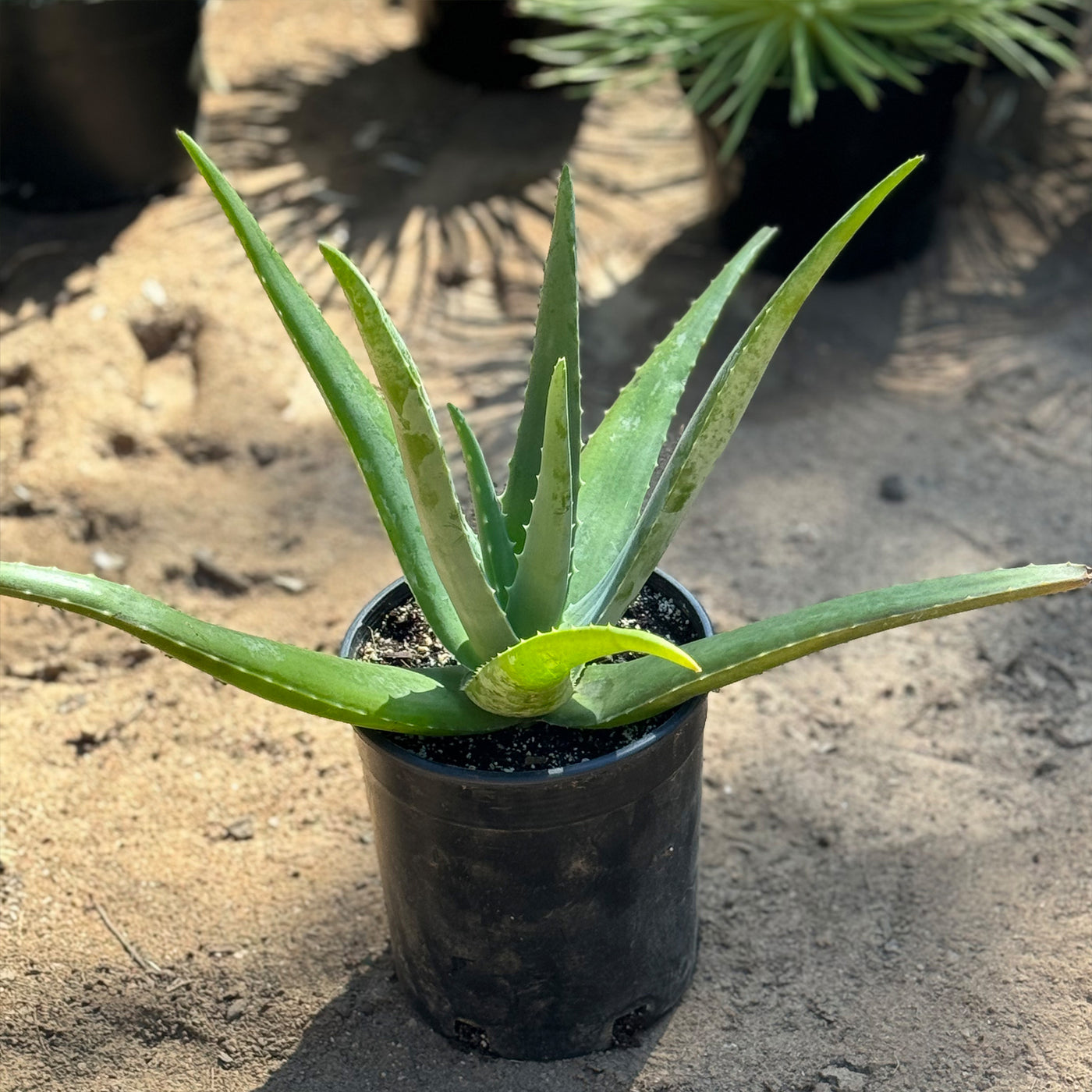
This large Aloe vera plant boasts fleshy lance-shaped grey-green leaves with small white teeth along the edges growing out from a starfish-like basal rosette. 

The edible aloe vera flowers burst into bloom in vibrant shades of yellow at the tips of their stalks when given favorable conditions. Only mature plants will yield flowers, so you'll have to wait at least four years to see an aloe vera bloom. However, in some growing conditions (especially hybrid plants), the flowers can sometimes appear with orange or reddish hues. 

This fast-growing succulent can grow into a large aloe vera plant up to 3 feet tall and 2 feet wide and even produce adorable pups that you can repot or share as delightful gifts with fellow plant enthusiasts.

How to Get Aloe Vera Gel from the plant to use on your skin

  1. Choose and Cut a Leaf: Select a large, healthy leaf from the bottom of the plant. Use a sharp knife to cut the entire leaf off at the base.
  2. Prepare the Leaf: Let the leaf sit upright in a container for 10–15 minutes to allow the yellow sap (aloin) to drain out. This sap can be irritating to the skin.
  3. Slice and Extract the Gel: For a small amount of gel, cut a section from the leaf rather than using the whole thing. Slice the leaf lengthwise to expose the gel. Use a spoon or knife to scoop out the clear gel.
  4. Apply or Store: Apply directly to your skin for soothing relief. Store extra gel in an airtight container in the fridge for a few days.

Aloe vera juice has many benefits for humans, this succulent rich in antibacterial, antioxidant, and anti-inflammatory properties, may enhance digestion, blood sugar levels, and oral health, although certain compounds, particularly aloin, may cause digestive discomfort and other side effects.

An aloe vera indoor plant is a great addition to any home, as it is easy to aloe vera care for and provides a variety of aloe vera benefits. 

According to the American Academy of Dermatology, Aloe vera has anti-inflammatory properties that can help in wound healing. It can also help to moisturize the skin and prevent peeling.

When and How to Water Your Aloe Vera 

As a desert dweller, watering the aloe vera succulent may be tricky, it may shrivel and die if given too little water, but it may also easily rot when given excessive water. So be careful not to overwater your aloe plantyou only want to give it enough to keep it from drying out completely, not drown it! 

A good rule of thumb is to water the Aloe plants deeply and then allow the soil to dry out completely before watering again. In the spring and summer, during the growing season, watering can be done once every 2-3 weeks.

During the winter months, when aloe vera is in a dormant period, it can be watered even less frequently. If you live in a rainy climate, consider planting aloe in gravel or stones. 

It is also important to note that aloe vera plants are sensitive to water quality. They prefer water that is low in minerals and salts, so it is best to use distilled or filtered water. Tap water can be used, but it should be left out for 24 hours before watering the plant to allow the chlorine to evaporate.

Light Requirements - Where to Place Your Aloe Vera Plant 

When growing indoors as a houseplant, place the aloe vera a few feet away from the south-facing window that receives plenty of sunlight, but it is important to avoid direct sunlight, as this can cause the leaves to burn. If the aloe plant is not receiving enough light, the leaves will start to droop and turn brown. In this case, it may be necessary to move the aloe vera plant to a brighter location. 

When planted outdoors, your Aloe plants need their daily dose of sunshine like a beach-loving teenager needs their favorite tunes!

They thrive on at least 6 to 8 hours of direct sunlight, soaking up those glorious rays with joy.

But wait, before you go dragging your aloe plant from its cozy shady spot into the blazing sun, be cautious. That sudden move can dry out your leafy buddy and leave it looking as yellow as a lemon.  

Now imagine you live in one of those cooler climates where clouds have permanent residency or if your home lacks these sunny windows altogether.

Fear not; you can use artificial lights – they're like little suns in bulb form! Hang them about one to two feet above your precious plant during daylight hours (that's roughly 16 hours per day) and watch it flourish happily amidst dim interiors.

Optimal Soil & Fertilizer Needs 

Aloe vera plants prefer well-draining soil that is a mixture of sand, perlite, and peat moss. It is critical to avoid soil that retains excessive moisture, as this can cause root rot. Instead, make or buy a well-draining potting mix, or ideally use our specialized succulent potting mix soil for aloe vera that contains 5 natural substrates and mycorrhizae to promote the development of a strong root system that helps your succulent to thrive.  

In terms of fertilizer, aloe succulents do not require a lot of nutrients. They can be fertilized once a year in the spring with a balanced fertilizer (NPK) of 5-10-5 in ratio. It is important not to over-fertilize the aloe plant, as this can lead to root burn. 

Hardiness Zones & More 

When grown indoors as a houseplant, aloe vera plants prefer a warm and dry environment. They thrive in temperatures between 60°F and 80°F. Aloe vera is a succulent, so it's adapted to arid conditions and doesn't do well in overly humid environments. Aim for a humidity level of around 30% to 40% for your indoor aloe vera plant.

In the United States, this is mostly an indoor plant, but if you live in southern Florida or Hawaii then you can cultivate it outdoors in USDA zones 9-11

Aloe vera can tolerate temperatures as low as 40°F for short periods, but prolonged exposure to freezing temperatures can damage or kill the plant. If you live in a colder climate, it's best to keep your aloe vera indoors or provide protection during winter months.

Aloe vera plants prefer dry air and do not require high levels of humidity. They can tolerate low humidity levels and do not need to be misted or placed in a humid environment. 

Wildlife - Aloe Vera Attracts the Following Friendly Pollinators

Aloe vera plants attract a variety of friendly pollinators, including bees, butterflies, and hummingbirds. These pollinators are essential for the reproduction of aloe vera plants, as they help transfer pollen between flowers, ultimately leading to the production of seeds. Additionally, these pollinators play a crucial role in maintaining biodiversity and ecosystem health.

Butterflies
Bees
Hummingbirds
Lady Bugs
Multi Pollinators
Other Birds

According to the ASPCA, the Aloe vera can be mildly toxic to pets and humans. It is rare but can occur if consumed in large quantities and can cause abdominal cramps, diarrhea, and electrolyte imbalances. It is important to consult a healthcare professional if you experience any adverse effects from consuming aloe vera.

How to Propagate Your Aloe Vera Plant

To propagate your aloe vera plant, you can separate the offsets or "pups" that grow at the base of the main plant. Gently remove these pups and plant them in their own pots with well-draining soil to encourage root growth. Water sparingly until they establish themselves, and place them in a sunny spot to promote healthy growth.

Aloe Vera: The Natural Sunburn Remedy


Aloe vera gel is known for its ability to moisturize the skin, it helps soothe burns and sunburns, as well as being known for its anti-inflammatory and antibacterial properties.

Aloe Vera is also rich in vitamins and minerals that are essential for healthy skin. It is best to use pure aloe gel extracted directly from an aloe vera plant.

To use aloe vera gel to soothe sunburns, cut off a piece of the large aloe vera leaf and open it to reveal the gel.

To maintain the aesthetic appeal of your aloe plant, it is advisable to cut off the entire leaf of the large aloe vera plant when cutting one. Just chop the leaf off as close to the main stem as you can. Cutting leaves from the base of the plant is always preferable. These leaves will be thicker since they are older. If you cut off the tip of a leaf, it will eventually turn brown at the tip because cut leaves keep their scars.

Key Takeaways

  1. Aloe vera is renowned for its medicinal properties, particularly its soothing gel, which is widely used for treating burns, wounds, and skin irritations. Its natural compounds, like aloin and acemannan, have anti-inflammatory and healing properties.
  2. When cut, aloe vera can seal its own wounds by producing protective latex, showcasing its remarkable survival mechanism in harsh environments.
  3. Aloe vera is not just a skincare savior; it also purifies indoor air by removing harmful pollutants like formaldehyde and benzene, making it a great addition to homes and offices.
  4. Native to arid regions, aloe vera thrives in minimal water conditions. It stores water in its thick, fleshy leaves, allowing it to endure prolonged droughts.
  5. The inner gel of aloe vera leaves is edible and used in drinks and food for its health benefits, such as aiding digestion, boosting immunity, and providing hydration. Always ensure proper preparation to remove any bitter or toxic compounds.
  6. The presence of yellow flower buds is a strong indicator of the edible variety.

The Bottom Line

Overall, Aloe vera is a popular plant known for its healing properties and versatility. It has gained popularity for its ability to help heal wounds, cuts, and burns, including sunburns. The gel inside the aloe vera leaves contains soothing and moisturizing properties that can provide relief and promote healing. In terms of care, aloe vera is relatively low-maintenance. It thrives in well-draining soil and requires moderate watering. It prefers bright, indirect sunlight but can tolerate some shade. 

A lot of people have a hard time finding large aloe vera plants, but here at Planet Desert, we regularly have large sizes in stock. Don't miss out on adding an Aloe vera plant for sale to your garden! Order now and enjoy its beauty for years to come. 

Shipping Notes
  • Free Standard Shipping on $100+ Orders to the USA.
  • Except Preorder products are shipped in 48 hours.
  • Delivery to the USA:
  1. Standard Shipping : 3-10 business days
  • If time is of the essence, please consider selecting expedited delivery for faster service.
Exchange/Return Notes
  • We offer a 30-day return/exchange service after receiving.
  • Final sale items are not eligible for returns or exchanges.
  • To process your return/exchange, please contact us at [email protected]
  • Please click here for more details>>> Return & Exchange Policy
SKU: 69038038893

Discover Niche Categories That Outsell largest aloe vera plant ever

Top-Converting Item to Boost Your Average Order

4.1 ★★★★★
Based on 5 reviews
Sort
Highest Rating
Newest First
Oldest First
Product Reviews
B
Verified Purchase
Bryan G
Natrona Heights, US
★★★★★ 5
Does exactly what I wanted, sounds perfect for the price.
Style: R-S202BL, Configuration: receiver only
I'm kind of an audiophile, really picky. I got this while on sale for $150 and I am really surprised with how good it sounds, it doesn't compare to the Niko amp I was using in the barn, but it powers my KX12 speakers really well, shakes the walls of the barn. I'll be taking those speakers inside for the winter along with the Niko amp and be using the YAMAHA NS-6490 speakers I bought at the same time as this. I'll be reviewing those speakers soon, they also surprised me. The bluetooth connected easily. I had to use a 3.5mm Aux to 2 RCA Adapter Audio Cable to connect my laptop to it. Some stereos come with a 3.5mm input, this doesn't, but neither did my Niko Beta 30 preamp, so no big deal, the adapter was less than $8. The tuner is really good, I have this in my pole barn that is all metal, including the roof and 18 miles out of town yet it picks up several stations with the supplied antenna, my portable stereo doesn't pick up anything when in the barn. The specs say it plays 10 Hz – 100 kHz, that seams a little much, the best ears can hear is up to 20kHz, and nothing you connect to it will go higher than 30 kHz, so why would this play up to 100? I use an equalizer to shape the sound and it does play to my satisfaction for the price, both sound quality and volume. For the $150 I spent, this is a really good deal.
WAS THIS REVIEW HELPFUL?YesReportShare
Reviewed in the United States on November 18, 2023
S
Verified Purchase
srptopdog
Chelsea, US
★★★★★ 4
Excellent, But I Returned It...
Style: R-S202BL, Configuration: receiver only
I have been a pro musician all of my life and have owned and still use a variety of high quality recording gear. It was time to simplify my setup for the benefit of others. Although my setup sounded great, it was too confusing for friends and family to use with my separate power and mixing console, etc. The solution was to buy a self contained stereo receiver that was easy for everyone to use. Being on a budget, and having owned a myriad of Yamaha instruments and audio gear over the years, I felt confident in buying this receiver without hearing it first. The bang for the buck is great, and this could easily be a five star rating. I will avoid commenting on specs, etc., as those can be easily compared at anyone's leisure. The Bluetooth feature is very nice, as I am often streaming songs my band is covering and learning from my phone or iPad and it sure is convenient to connect wirelessly, and the sound is great, btw. Even better than a wired connection. Build quality is excellent. It's a fine device, no question. Despite the many reasons for liking this receiver I returned it after several weeks of daily listening. Bottom line, in my opinion, I did not like the audio quality. Although it can produce more than enough volume to fill my 12' x 18' listening space, there was a lack of fullness and warmth to the sound. True, this receiver is certainly at entry level pricing, but my primary need was to obtain the best sounding 2-channel unit within my budget. I have ordered the Onkyo TX-8020, which I believe will be a better sounding receiver for my needs. Although the Onkyo lacks Bluetooth, it does offer a separate subwoofer output (which is something I might add down the road), and has a built in phono preamp input, eliminating the need to purchase a separate turntable preamp should I have kept the Yamaha, as I own LPs. A comment about wattage. The Yamaha claims 100w /channel, while the Onkyo, only 50w /channel. Power amp designs vary widely, as do power amp ratings and and measurements. For example, the guitar player in my classic rock band plays a 15 watt amp, and at a loud concert may get turned up to 3, with lots of headroom to spare. Google the subject if you're interested in learning more. I should mention that speakers vary widely in design and performance too, and it's possible the Yamaha will come alive and sound to my taste with other speakers. I believe many people will really enjoy the Yamaha BL202. It's a fine receiver. Bottom line, if YOU like it, that's all that matters. I will amend this review soon after I receive the Onkyo. UPDATE 6-28-16: I received the Onkyo TX-8020. I like the amplifier better. To my ears, the bass is tighter, more defined and warmer. Mids and highs seem smoother, and the soundstage in well defined and natural. The overall sound is "fuller." Sound is subjective, and in the end your ears decide what you like to hear. The Yamaha sounded great too. Although I don't have Bluetooth with the Onkto, I can stream YouTube and my internet radio stations from my phone or iPad to my Roku player, which is connected to the Onkyo, so I will have somewhat similar wireless capability. There is a wireless add-on accessory to connect an IPad , iPod or iPhone that I may consider.
WAS THIS REVIEW HELPFUL?YesReportShare
Reviewed in the United States on July 26, 2016
J
Verified Purchase
J.H.K.
Pawtucket, US
★★★★★ 5
Great features and impressive quality for the price!
Style: R-S202BL, Configuration: receiver only
Got this for my classroom. Not an audiophile by any means and certainly didn't need the latest greatest features (along with accompanying higher cost). For what I paid, $150 on Amazon before sales tax, I'm very impressed with what it offers and can do. Installed it in my classroom today. Connected it to a pair of old Sony bookshelf speakers which I got around 10 years ago. Specifically got this receiver because the old Onkyo I previously used (still working even though it must be from 1980s or 1990s) was unable to handle audio input from my classroom desktop computer even though I had gotten an adapter cable that had a 3.5mm jack on one end and two RCA (red/white) plugs on the other end. Wanted to use the bookshelf speakers instead of the weak external speakers provided by school for whenever I would need audio during a lesson, video clips, etc. to be heard by students at the back of the classroom. After setting up this receiver and putting it through its paces, I am pleased with its overall performance. I connected my classroom's desktop computer to the receiver using that adapter cable previously mentioned and this receiver had no problems at all picking up the signal and transmitting it to my bookshelf speakers. Tried out the radio tuner and was pleasantly surprised by both how clear the sound quality is for many local stations (compared to the Onkyo I had previously been using) and for even decoding signals from distant stations (I'm using a spare cheap external FM radio antenna, not the wire antenna provided with this unit) which the previous Onkyo receiver (and even my car radio) can't pick up clearly if at all. The Bluetooth feature is nice. There's a cheaper version of this receiver without the Bluetooth feature but I decided that the extra $20 was worth it for providing additional possibilities. Had no problem pairing this receiver with my Nexus 6 smartphone. No problems streaming music from my smartphone to the receiver. So far, I've only encountered one problem. I thought about docking one star off for this problem but in the end decided not to do so because the overall functionality and performance of the receiver isn't significantly impaired by this issue. When I first powered up this receiver (after making all the necessary audio connections to speakers and computer), I thought I might have had a defective unit because I couldn't hear anything even though the volume was clearly set at 40 (out of a 0-99 scale). After some trial and error, what I discovered was that any setting below 45 is practically impossible to hear coming out of my speakers. Once I cranked up the volume to 50-55, sound was clearly discernible to anyone near the speakers. From 55-65, sound fills up my entire classroom nicely. From 65-75, it gets loud in my classroom and when I walked out into the hallway (and then continued walking down the hallway) I could hear the sound clearly from several classrooms away. I can only imagine how loud it might be (and how far the sound may travel) if I cranked up the volume beyond 75. So, for all intents and practical purposes, the sound on this unit works but I'm essentially navigating between 45 (quiet) and 80 (really loud) instead of the full range of 0-99. Like I said, functionality and performance doesn't seem to be impaired by this discrepancy, so I ultimately decided not to knock off a star. Not sure if this issue is particular to the specific unit I received or a recurring pattern in more units beyond mine. Not a deal-breaker and not worth going through the hassle of a merchandise exchange since it gets the job done. Looking forward to seeing how well this unit works out for this coming school year (and hopefully for many years beyond). If anything should arise to warrant editing this review, then I'll update as needed.
WAS THIS REVIEW HELPFUL?YesReportShare
Reviewed in the United States on August 6, 2016
A
Verified Purchase
Amazon Customer
New York, US
★★★★★ 5
200 Watts… More Like *2000 Watts!
Style: R-S202BL, Configuration: receiver only
This system is really nice and I mean it! Not a lot of information on this unit but what I can say is this system gets extremely loud to the point where you can lose your hearing from it. There is no distortion from this system even at max volume. I like music loud but this loud is on the next level and this is coming from a guy who has a lot of audio equipment and experience in the audio and FM broadcast industry! The nice thing is FM sounds wonderful on this unit. FM radio sensitivity is just wonderful like a high end receiver or like a good car FM radio. The wire provided to get radio reception wasn’t the best but a good tip is to put the wire next to the speaker wires to act like a ground plane but I highly recommend to get a good FM radio antenna that goes on your roof of your house for superior reception. AND no, the speaker wires don’t interfere with reception!!! I was skeptical due to the lack of information on this Yamaha, but I took that risk. I always knew Yamaha always been a very premium brand for audio and receivers but then you watch videos online about this unit they hate on it for being a cheap system when this isn’t true. This unit is for someone who wants a: Basic Semi Audiophile Stereo (Left and Right Sound) FM Radio, Line In or CD Playback, if you buy the cd reader separate. The video I provide is this stereo shaking my cheap old school 80s 8 inch bookshelf speakers. The only con is no sub out port. Irrelevant information starts here: The setup you see in the video is only temporary as we are remodeling the house and garage this stereo is currently in. Are new house is being currently being built in the country and after are new garage is built I’ll be putting this stereo in there and be setting this up with 2 outdoor Yamaha AW-350s on our back deck by the fire pit and the 2 old school 80s speakers in the garage. (Also a FM antenna mast for extreme FM radio reception.) The idea is the backyard would have good audio for music and are front yard would also get some good ported sound from the garage. Overall me and my family spends a lot of time outdoors no phones and little to no internet time just hanging out listening to music. The reason I am sharing this is because this is what I see a unit like this being used for.
WAS THIS REVIEW HELPFUL?YesReportShare
Reviewed in the United States on April 8, 2025
S
Verified Purchase
Strategos
West Palm Beach, US
★★★★★ 1
Weak, Flat, Tinny Sound
Style: R-S202BL, Configuration: receiver only
My Insignia NS-STR514 suddenly died after a year of glorious sound (device still turned on, switch inputs, etc, just no sound), and I had to find another stereo receiver to replace it. Yamaha seemed to be a pretty popular brand, especially among musicians and home theater enthusiasts, so I figured I couldn't go wrong. Wrong. From the minute I hooked this receiver up I noticed a significant drop in power, range, and overall quality. This device is advertised as having the same 100w of power per channel, so this is really surprising for a major brand. I used to have to turn the Insignia up to 20, but this device has to be turned up to 44 to get the same loudness. When you do get this device cranked up enough to hear something, the sound is very flat. There's no other way to describe it. There's no range. Even if bass cranked to max you can barely hear it. The treble is weak, flat, and distorts at high volume. This device is literally making my stereo speakers that cost $300.00 each sound like a boom box from the 90's. I was considering upgrading my turntable to a higher quality one, but now, what's the point? On the flip side, the sound is clean, crisp. But man oh man is it flat. These days I mostly listen to music on high grade headphones and watch movies and streaming on my projector so it's not a huge loss (high fidelity sound on video games and movies isn't a huge deal to me), but don't buy this for your entry-level audiophile needs. There's got to be better options out there than this. The weak bass especially is unforgivable. *Update 04/25/17* My wife finally grew so tired of this piece of junk that I got rid of it and bought another Insignia Stereo Receiver. Unreliable as it is (dead after 2 years) it's still better than this garbage. The bass response is absolutely horrible, and the neighbors started complaining about the "booming". That's pretty much the only bass you get from this device. A loud, cheap-sounding thumping. The frequency response of this device is so poor, and the sound so thin and tinny, that even my wife couldn't stand it! Do yourself a favor and avoid this one.
WAS THIS REVIEW HELPFUL?YesReportShare
Reviewed in the United States on February 15, 2017

recommand products