Pay in installments of $6.92 with
 ,
,
 and
and

Shipping Estimate
USA
- USA
- CAN
- USA
- CAN
Ships within 48 hours · Estimated delivery Sep 12 - Sep 17
 Promo Codes Available:
For Your Every Summer RSVP, with Code: SUMMER15
Description
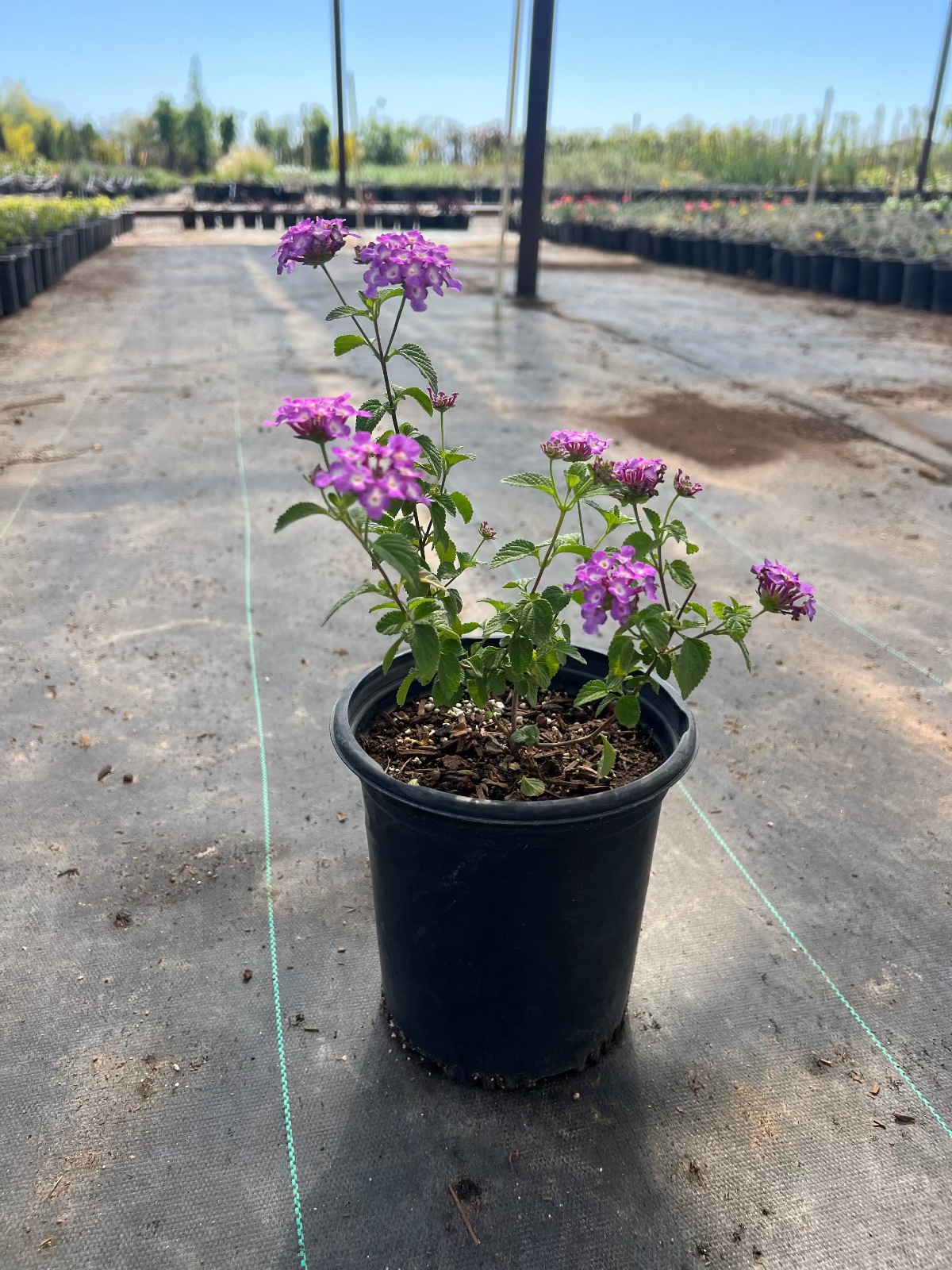
trailing lavender lantana plant Purple Trailing Lantana AZ | Lantana montevidensisPhoenix's Best Trailing Groundcover for Slopes, Borders & Cascading Color Purple Trailing Lantana (Lantana montevidensis) is Phoenix's most reliable low water trailing groundcover for season long color. Its cascading stems spill over walls, blanket slopes, and fill borders with vivid lavender purple blooms from spring through falland often into winter in the warmest Phoenix microclimates. Whether you're covering a hot slope in Scottsdale, softening a
Phoenix's Best Trailing Groundcover for Slopes, Borders & Cascading Color
Purple Trailing Lantana (Lantana montevidensis) is Phoenix's most reliable low-water trailing groundcover for season-long color. Its cascading stems spill over walls, blanket slopes, and fill borders with vivid lavender-purple blooms from spring through fall—and often into winter in the warmest Phoenix microclimates. Whether you're covering a hot slope in Scottsdale, softening a retaining wall in Chandler, or creating a colorful groundcover bed in Peoria, Purple Trailing Lantana delivers effortless, butterfly-attracting color with virtually no irrigation once established.
Purple Trailing Lantana Plant Details
| Attribute | Detail |
|---|---|
| Scientific Name | Lantana montevidensis |
| Common Names | Purple Trailing Lantana, Weeping Lantana, Purple Lantana |
| Mature Height | 1–2 ft |
| Mature Width | 4–6 ft (trailing spread) |
| Growth Rate | Fast — 3–5 ft spread per season in Phoenix |
| Sun | Full sun (6+ hrs). Handles reflected heat from walls and pavement. |
| Water | Low once established. Highly drought-tolerant. |
| USDA Zones | 9–11 (Phoenix is Zone 9b–10a) |
| Soil | Well-draining. Adapts to Arizona caliche soils with minimal amendment. |
| Foliage | Semi-evergreen — holds leaves year-round in warm microclimates |
| Bloom Color | Lavender-purple, continuous spring through fall |
| Wildlife Value | Attracts butterflies, bees, and hummingbirds |
Purple Trailing Lantana Uses in Phoenix Landscapes
Slope Coverage & Erosion Control
Purple Trailing Lantana's vigorous trailing habit makes it one of the best plants for stabilizing slopes in the Phoenix Valley. Its spreading stems root as they go, binding soil and preventing erosion on grades that are difficult to maintain. Once established, it requires no supplemental irrigation and covers large areas quickly — plant 3–4 feet apart for full slope coverage within one growing season.
Retaining Walls & Spilling Borders
Few plants create a more dramatic effect than Purple Trailing Lantana cascading over a retaining wall or raised planter edge. The long, arching stems spill beautifully over stone, block, and concrete edges, softening hard landscape lines with a continuous curtain of purple blooms. Plant at the top of walls 3–4 feet apart; trails will cascade down naturally within the first season.
Low-Water Groundcover Beds
As a flat groundcover, Purple Trailing Lantana suppresses weeds and creates a dense flowering carpet that requires virtually no care once established. It pairs beautifully with Desert Spoon, Texas Sage, and Ruellia (Mexican Petunia) for a layered, all-season desert landscape design. For a groundcover bed, plant 3 feet apart on center for coverage within 1–2 seasons.
Butterfly & Pollinator Gardens
Purple Trailing Lantana is one of the best butterfly-attracting plants available in the Phoenix Valley. Its continuous blooms provide nectar from spring through fall, supporting monarch, swallowtail, and painted lady butterflies alongside native bees and hummingbirds. Mass plantings of 5–10 plants create spectacular wildlife habitat while delivering bold color with zero summer irrigation once established.
Best Time to Plant Purple Trailing Lantana in Phoenix
Fall planting (October–November) is ideal — soil is still warm for fast root establishment, cooler air reduces transplant stress, and the plant gets 6–8 months to establish before its first Phoenix summer. Spring planting (February–April) is the second-best window. Avoid planting in peak summer (June–August) as newly planted lantana needs consistent moisture that can be hard to maintain without daily watering.
How to Plant Purple Trailing Lantana
- Dig wide, not deep — 2–3x the root ball width, same depth. Lantana roots spread outward, not deep.
- Check for caliche — break through any hardpan layer with a breaker bar or pick to ensure drainage. Lantana will not thrive in waterlogged soil.
- Backfill with native soil — a light 20% organic compost blend is fine. Avoid over-amending; lantana prefers lean, well-draining soils.
- Spacing — 3–4 ft apart for slopes and groundcover; 3 ft apart for wall cascades where faster coverage is desired.
- Water basin — build a 3–4 inch ring of soil around the plant to direct irrigation water to the root zone during establishment.
- Mulch — 2–3 inches of gravel or decomposed granite mulch around the base to retain moisture and moderate summer soil temperatures.
Watering Purple Trailing Lantana in Phoenix
First Year Watering Schedule
- Weeks 1–2: Every 1–2 days, deep and slow (20–30 min drip)
- Month 1–2: Every 3–4 days
- Month 3–6: Every 7–10 days (every 5–7 days in peak summer heat)
- After Year 1: Every 10–14 days in summer; every 3–4 weeks in winter. Established plants are highly drought-tolerant.
Drip Irrigation
Place drip emitters 18–24 inches from the crown. Use 1 GPH emitters for 1-gallon plants; 2 GPH for 3/5-gallon plants. Once established (typically 6–8 months in Phoenix), Purple Trailing Lantana rarely needs supplemental water beyond summer heat spikes.
How fast does Purple Trailing Lantana grow in Phoenix?
Very fast. In Phoenix's long warm season, established plants spread 3–5 feet per year and bloom continuously from spring through fall. First-year plants focused on root establishment may bloom lighter, but second-year plants are prolific.
Is it drought tolerant once established?
Yes — one of the most drought-tolerant flowering groundcovers available for Zone 9b–10a. Once established, Purple Trailing Lantana thrives on minimal supplemental irrigation and tolerates weeks without water in summer.
Does it come back after a freeze?
In Zone 9b–10a (greater Phoenix), Purple Trailing Lantana is semi-evergreen and rarely dies back completely. In colder spots or in unusual freeze events, it may die to the crown but re-sprouts vigorously in spring. Cut back frost-damaged stems to 6 inches in late February.
Can I plant it near a pool?
Purple Trailing Lantana is relatively pool-friendly — it produces minimal litter and is not a messy bloomer. Keep it trimmed back from the water's edge and it works well as a surrounding groundcover or border.
What's the difference between Purple Trailing Lantana and other lantana varieties?
Purple Trailing Lantana stays lower (1–2 ft) and spreads wider than shrub lantana varieties. Its trailing, cascading habit makes it ideal for groundcover and wall plantings where upright lantana varieties would be too tall and bushy.
You May Also Like
- Radiation Lantana — Vivid orange-red trailing lantana; same low-water habit, hot sunset colors
- New Gold Lantana — Compact golden-yellow lantana for borders and mass plantings
- Dallas Red Lantana — Bold red and orange shrub lantana for height and color in desert landscapes
- White Trailing Lantana — Clean white-flowering trailing variety; pairs beautifully with purple and gold lantanas
- Moss Verbena — Fine-textured purple groundcover for the same slope and border applications
How Many Purple Trailing Lantana Do I Need?
This is a wide spreader: 1 to 2 feet tall and 4 to 6 feet across. For slopes and groundcover beds, plant on 3-foot centers so plants knit together within a season or two. At 3-foot spacing one plant covers roughly 8 square feet once filled in.
| Area to Cover | Plants Needed (3 ft spacing) |
|---|---|
| 50 sq ft | about 6 plants |
| 100 sq ft | about 12 plants |
| 200 sq ft | about 24 plants |
| 400 sq ft | about 48 plants |
On a hot slope where you want fast erosion control, tighten to 2.5-foot spacing (about one plant per 5 to 6 square feet).
Purple Trailing Lantana Season-by-Season in Phoenix
- Spring (Feb to Apr): After a late-February cutback, fresh growth flushes out and the first lavender-purple blooms open. Best spring planting window.
- Summer (May to Sep): Peak season. Blooms nonstop through extreme and reflected heat off walls and pavement, and monsoon rains (Jul to Sep) drive an extra surge of growth and color. Virtually no irrigation needed once established.
- Fall (Oct to Nov): Prime planting season and heavy continued bloom as nights cool.
- Winter (Dec to Jan): Semi-evergreen and rarely fully dormant in greater Phoenix. In a hard freeze it may die to the crown, then re-sprouts vigorously in spring. Cut frost-nipped stems back to about 6 inches in late February.
At a Glance
✔ Pollinator-Friendly ✔ Hummingbird-Friendly ✔ Heat-Loving (Reflected-Heat Tolerant) ✔ Drought-Tolerant ✔ Pool-Friendly (Low-Litter) ✔ Low-Maintenance ✔ Deer & Rabbit-Resistant ✔ Cold-Hardy to 20°F (recovers from roots)
Plant It With
- Radiation Lantana: hot orange-red trailing color to play against the purple on a big slope.
- New Gold Lantana: golden blooms for a classic purple-and-gold groundcover sweep.
- Dallas Red Lantana: a taller shrub lantana to add height behind the trailing carpet.
- Moss Verbena: fine-textured purple groundcover that blends seamlessly for the same slope and border use.
Is Purple Trailing Lantana Right for Your Yard?
This is the go-to plant for hot, sunny slopes, wall tops, and wide low-water beds in full sun and reflected heat, on well-draining soil. It is not a fit for shade or small tidy borders (it wants room to run), and lantana foliage and berries are toxic if eaten, so keep it away from spots where pets or small children graze.
Shipping Notes
- Free Standard Shipping on $100+ Orders to the USA.
- Except Preorder products are shipped in 48 hours.
- Delivery to the USA:
- Standard Shipping : 3-10 business days
- If time is of the essence, please consider selecting expedited delivery for faster service.
Exchange/Return Notes
- We offer a 30-day return/exchange service after receiving.
- Final sale items are not eligible for returns or exchanges.
- To process your return/exchange, please contact us at [email protected]
- Please click here for more details>>> Return & Exchange Policy