SKU: 70764226045
type of soil for money tree

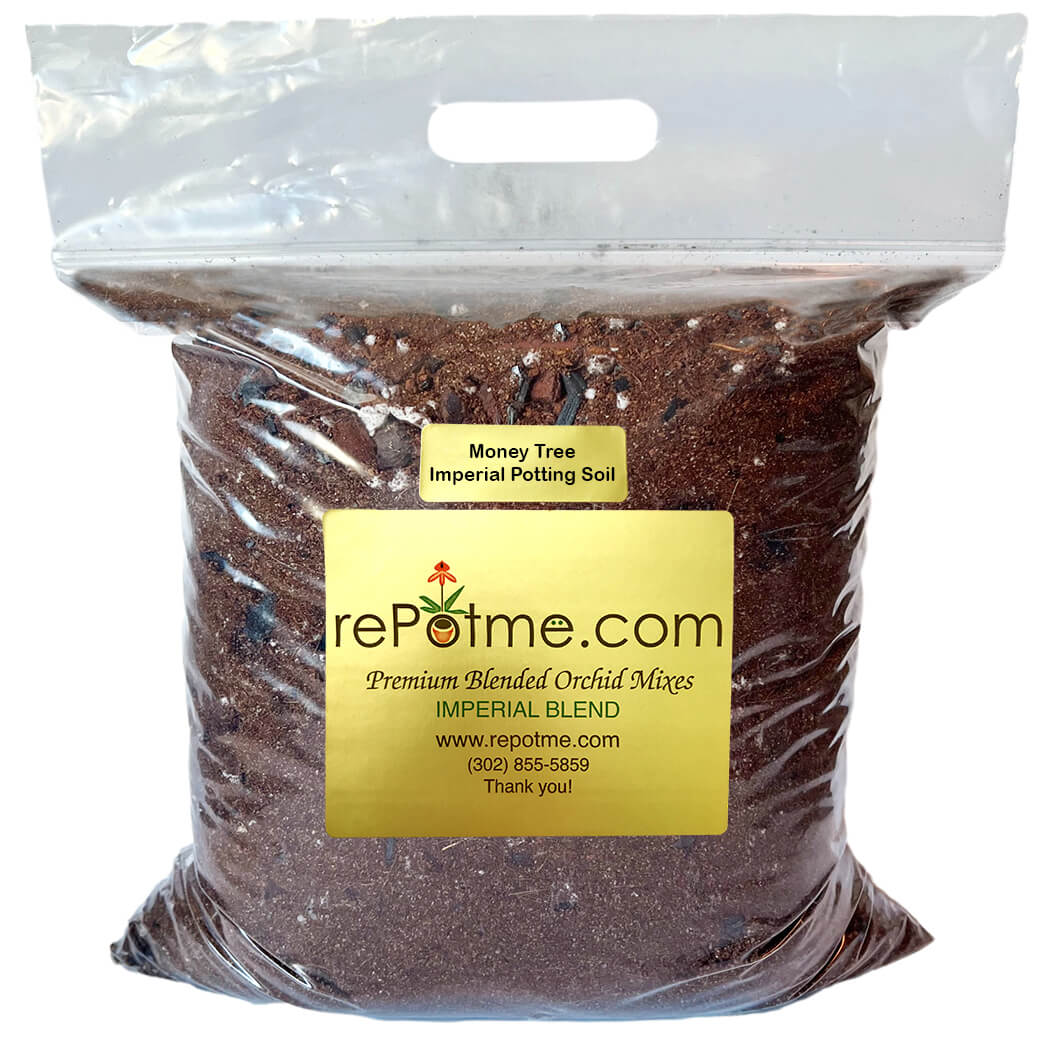
type of soil for money tree Money Tree Imperial Potting Soil Mix Mini Bag

Sale price$20.19 Regular price$22.43
Save 10%

Pay in installments of $5.61 with ShopPay, AfterPay and Klarna

Shipping Estimate
USA
  • USA
  • CAN

Ships within 48 hours · Estimated delivery Sep 4 - Sep 9

Promo Codes Available:

For Your Every Summer RSVP, with Code: SUMMER15

Description

type of soil for money tree Money Tree Imperial Potting Soil Mix Mini BagThis potting soil mix is made with: Coir Medium Sponge Rock Medium Monterey Pine Bark Charcoal Sand Money Tree Imperial Potting Soil Mix by rePotme is a free draining mix that is ideal for Money Tree plants. The base of the potting mix is coir, imported from Sri Lanka, which is a clean, easy to use medium derived from coconut husk. Medium sponge rock and sand are added to increase drainage, keeping the mix from retaining too much water. Medium sized

This potting soil mix is made with:

Money Tree Imperial Potting Soil Mix by rePotme is a free draining mix that is ideal for Money Tree plants. The base of the potting mix is coir, imported from Sri Lanka, which is a clean, easy to use medium derived from coconut husk. Medium sponge rock and sand are added to increase drainage, keeping the mix from retaining too much water. Medium sized Monterey Pine Bark and Charcoal benefit the soil, naturally releasing nutrients over time.

Our Money Tree Potting Soil is expertly crafted to cater to the unique needs of the popular Money Tree (Pachira aquatica). Money Trees require a well-aerated and nutrient-rich soil to thrive and bring prosperity to your home or office. Our specialized blend ensures optimal drainage and moisture retention, promoting healthy root development and lush foliage. With our Money Tree Mix, you can expect your Money Tree to flourish, exhibiting robust growth and vibrant green leaves, symbolizing abundance and good fortune in any space. Invest in the prosperity of your Money Tree with our premium potting mix today!

This mix is distinguished by what it doesn't have in it, peat moss. Using premium ingredients in the absence of peat is key to getting rid of fungus gnats. Fungus gnats are attracted to peat moss, and almost all commercially available plant mixes are made with peat moss.

We make our mixes the old fashioned way -- no "secret ingredients", just the highest quality and finest media that can be had, and we tell you exactly what goes in to every one of our mixes. Would you have it any other way?

That's the way we do business too, no surprises, just impeccable service, lightning fast responsiveness and checking back with you on every order to make sure you are delighted with what you received. We treat you the same way we want to be treated. We treat your plants the same way, as we treat our own.


Shipping Notes
  • Free Standard Shipping on $100+ Orders to the USA.
  • Except Preorder products are shipped in 48 hours.
  • Delivery to the USA:
  1. Standard Shipping : 3-10 business days
  • If time is of the essence, please consider selecting expedited delivery for faster service.
Exchange/Return Notes
  • We offer a 30-day return/exchange service after receiving.
  • Final sale items are not eligible for returns or exchanges.
  • To process your return/exchange, please contact us at [email protected]
  • Please click here for more details>>> Return & Exchange Policy
SKU: 70764226045

Discover Niche Categories That Outsell type of soil for money tree

Top-Converting Item to Boost Your Average Order

4.5 ★★★★★
Based on 28 reviews
Sort
Highest Rating
Newest First
Oldest First
Product Reviews
C
Verified Purchase
Clint Pachl
Cuba, US
★★★★★ 5
Well Presented Concepts and Implementations (5th ed.)
Format: Paperback
Foreword: I have been running my own DNS servers on OpenBSD and FreeBSD for about 4 years. All of my previous DNS knowledge was obtained from the man pages and online tutorials. The book is great because the example network used throughout the book is built upon, showing you how to "grow" your DNS with your expanding network. The design and implementation presented is priceless and covers some of my favorite topics: placement of slaves, hidden primaries, building root servers, split views, daisy-chaining, forwarders, partial-slaves, address maintenance issues, etc. The pros and cons of each setup are weighed and best practices are suggested. If you like a generous helping of diagrams, examples, and tables as a learning aid, you won't be disappointed. One specific example of weighing the pros and the cons is presented on page 479 as follows: "Could we have saved a few bucks on hardware by using our external authoritative nameservers as forwarders, too? Sure, but that would have presented a risk." After that statement, they proceed into all the details of "why." There is adequate coverage on security. The authors preach defense in depth. An implementation example includes hiding your masters and only exposing bastion slaves. Securing communications between the masters and slaves is also covered in the security chapter using DNSSEC and TSIG. I think IPSec is another way to add a security layer, but that is probably another book. After reading the book, I started to implement my new DNS infrastructure and found myself referring to the index often. It is fairly consummate, however, I found a few things missing, such as the $GENERATE statement. Also, some of the configuration details were lacking slightly. For example, the order in which ACL elements are processed and how negated elements affect the processing outcome. Another question I had was, what would happen if an ACL name is negated, and what if that ACL contained some negated elements. Well I found my answer by actually trying it and verifying with the canonical reference docs on isc.org. I gave this book five stars because of its effectiveness in presenting the concepts and implementations of DNS using examples, good writing style, tables, and diagrams. If you're looking for the last 4 percent of the diminutive details of DNS, you will find it on isc.org.
WAS THIS REVIEW HELPFUL?YesReportShare
Reviewed in the United States on August 22, 2006
C
Verified Purchase
C. Brown
San Leandro, US
★★★★★ 5
Good DNS reference
Format: Paperback
The Book is a good reference for BIND9 DNS administration. Although, at this time, it's a bit outdated. It wasn't written to reference DNSSEC, or other new configurations.
WAS THIS REVIEW HELPFUL?YesReportShare
Reviewed in the United States on January 2, 2025
A
Verified Purchase
Alexander
Draper, US
★★★★★ 4
Overall it was an OK book. I am already ...
Format: Paperback
Overall it was an OK book. I am already "competent" with DNS, specifically the BIND9 implementation but I got the book as reference material since the official documentation is a little sparse. The fifth edition (not sure about the others) even covers, albeit a little too briefly, how to deal with reverse lookup zones with subnet masks that do not fall on octet boundaries.
WAS THIS REVIEW HELPFUL?YesReportShare
Reviewed in the United States on July 31, 2015
D
Verified Purchase
Dan
Massapequa, US
★★★★★ 5
Domain Names...Serves us!
Format: Paperback
This is the most complete and must-have DNS book i've ever seen before. Nor only prepares you to understand every basic and some advanced issues about DNS, it also shows a lot of "tricks" with the most powerfull and well know - famous DNS implementation!: BIND. If you are a beginner in the DNS world, this is a good step towards become an expert, if you're already an expert this guide will surely show you a lot of useful information in your daily DNS administration problems. Definitely, this was one of my best investments on my way to become a site administrator.
WAS THIS REVIEW HELPFUL?YesReportShare
Reviewed in the United States on June 11, 2011
P
Verified Purchase
Pzano
Port Orchard, US
★★★★★ 5
Thicker than I anticiapted
Format: Paperback
The encyclopedia of DNS books, meaning thicker than a phone book. I like the fact that this book is thick but so easy to read and follow along with. If you know nothing about DNS, this book makes it easy to learn about DNS. It starts with the history of DNS and then explains the hierarchy of the DNS tree. A must read if you want to improve your understanding of the internet and what happens under the hood for name resolution.
WAS THIS REVIEW HELPFUL?YesReportShare
Reviewed in the United States on February 7, 2014

recommand products