SKU: 71158605518
dracaena draco tree

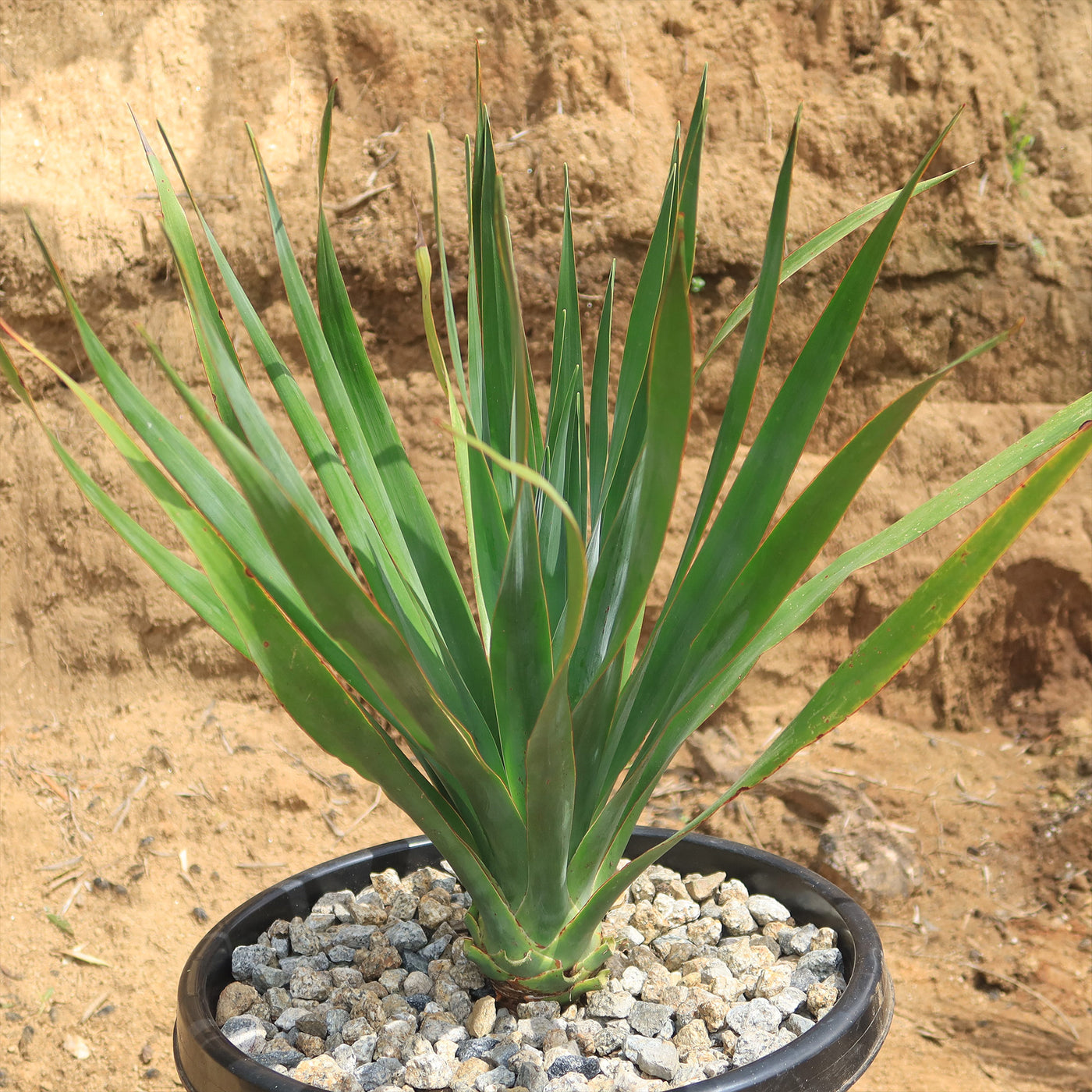
dracaena draco tree Dragon Tree 'Dracaena draco' 3 Gal

Sale price$19.04 Regular price$21.16
Save 10%

Pay in installments of $5.29 with ShopPay, AfterPay and Klarna

Shipping Estimate
USA
  • USA
  • CAN

Ships within 48 hours · Estimated delivery Jul 28 - Aug 2

Promo Codes Available:

For Your Every Summer RSVP, with Code: SUMMER15

Description

dracaena draco tree Dragon Tree 'Dracaena draco' 3 GalIntroducing the Dragon Tree, also known as Dracaena draco. The Greek word "drkaina," which means "female dragon," gave rise to the name "dracaena." This refers to the 'Draco' kind of brilliant red resin. The name "dragon tree" is believed to have originated from the red sap that oozes from the trunk when cut, resembling a dragon's blood. This unique characteristic has contributed to its mythical and intriguing reputation. Hailing from Madagascar, it

Introducing the Dragon Tree, also known as Dracaena draco. The Greek word "drákaina," which means "female dragon," gave rise to the name "dracaena." This refers to the 'Draco' kind of brilliant red resin. 

The name "dragon tree" is believed to have originated from the red sap that oozes from the trunk when cut, resembling a dragon's blood. This unique characteristic has contributed to its mythical and intriguing reputation.


Hailing from Madagascar, it is also known as the Madagascar dragon tree and goes by many other common names such as dragon blood tree, corn plant, ribbon plant, Asparagus Draco, and dragon's blood plant.

The dragon tree, a tall, cylindrical tree with sword-shaped leaves, grows tall in the landscape, whereas the houseplant is shorter but has identical leaves.

This dragon tree stands tall and can grow up to 15 feet tall in its natural habitat.

If grown indoors, it can grow up to 4 feet boasting a thick cylindrical trunk adorned with stunning rosettes. These rosettes are no ordinary ones either; they are crowned with magnificent sword-shaped leaves that will make you feel like you've stepped into a mythical kingdom.

The dragon plant flowers bloom from late winter to early spring, with white flowers, which are produced in clusters on the tips of its branches. The flowers emit a strong, sweet fragrance that attracts pollinators such as bees and butterflies. The blooming period is relatively short, lasting only a few weeks.

Interesting Facts

  1. The dragon tree has a thick, gnarled trunk that adds a touch of character and charm to its overall appearance.
  2. It has a long lifespan and can live for several decades, becoming a cherished part of your home.
  3. Its sap is a vibrant red color, giving it a dramatic and eye-catching appearance.
  4. The Dragon Tree is believed to bring good luck and positive energy to its surroundings, according to ancient folklore.

Propagation of the dragon tree can easily be done by stem cuttings. Simply take a cutting from the stem of the healthy plant and allow it to dry out before planting it in well-draining soil. Keep the cutting in a warm, humid environment to encourage root growth.

With its show-stopping presence, this dragon blood tree will undoubtedly add to the landscape of your lovely home. Plus, this slow-growing plant is perfect for those who want to add something truly special to their collection.   

Watering Needs 

The dragon blood tree is a succulent shrub that definitely stands out from the rest. Since it is a drought-tolerant plant, it does not need much water, but should not be overwatered or underwatered. But here's a fun fact - unlike most trees, dragon trees do not tolerate prolonged drought well. 

In fact, during the scorching summer months, it might require watering once a week to keep those arms perky and looking their best. Keep the soil moist but not saturated.

If you ever notice your dragon blood plant gradually curling towards the center, don't freak out! That just means they're thirsty and in need of some water. So, make sure to water them thoroughly when you see this happen (but be careful not to let them stand in watery soil), or else risk facing root rot - yikes! 

Stay on top of your watering game with this quirky dragon plant and watch as they continue to thrive and turn heads with their unique appearance. 

Light Requirements 

If growing indoors, place your Dracaena tree a few feet away from the south-facing window. If they don't receive enough light for a long period, their stems may grow leggy and become paler and their spines will shorten; so, make your house plant happy and give it plenty of light. 

For outdoor cultivation, the dragon tree requires a lot of light and should be grown in either full sun or part shade. New plants can get burned in the full sun as they were probably grown in a greenhouse; therefore, dragon blood tree exposure to sunlight gradually increases. If the sun is too bright and is burning your plant's leaves, consider purchasing a sunshade or moving the plant to a more shaded location.  

The dragon tree can also thrive in filtered or low-light conditions. It can also grow in areas that are partially shaded, but not in those that receive direct sunlight. The plant is vulnerable to exposure to the full sun. 

Optimal Soil & Fertilizer Needs 

Dracaena plant favors very airy, sandy soil that drains well. Planting them in ordinary soil will result in compacted roots, stunted growth, and most likely root rot. Instead, make or buy a well-draining regular potting soil, or ideally use Soil Cactus Mix Blend 1 Gal 4 Qtour specialized potting mix that contains over 5 natural substrates and mycorrhizae to promote the development of a strong root system that helps your blood tree to thrive. 

When it comes to fertilizing your dragon blood trees, it only needs a tiny bit applied once a year in the spring growing season with a balanced liquid fertilizer that has lower doses of NPK (5-10-5). No harsh chemicals here, folks - just pure, natural goodness that lasts longer and encourages nutrient absorption, so your succulent stays happy as a clam.  

So go ahead and give your Dragon's blood plant some love with a good natural fertilizer because when it comes to soil and fertilizers, through experience, we know what works best!  

Hardiness Zones & More 

When growing indoors, the Dragon Tree prefers average room temperatures ranging from 6°F to 75°F. It can tolerate slightly cooler temperatures, but it's best to avoid extreme temperature fluctuations. It is adaptable and can tolerate average indoor humidity levels. However, it appreciates a slightly higher humidity level, so misting the leaves occasionally or placing a humidifier nearby can be beneficial, especially during dry winter months.

For outdoor cultivation, the Dragon Tree is best suited for USDA hardiness zones 9 to 12, which are regions with mild winters and warm climates. The Dragon Tree can tolerate temperatures as low as 30°F for short periods but prefers temperatures above 50°F. It's important to protect it from frost and extreme temperature fluctuations, as they can damage the plant.

Final Thoughts

Overall, the Dragon Tree (Dracaena draco), is a stunning indoor plant with spiky foliage that adds a touch of exotic beauty to any space. It's known for its easy care, making it perfect for beginners. This plant thrives in bright, indirect light and can tolerate lower light conditions too. It likes average room temperatures and can handle normal indoor humidity levels. Just water it when the top inch of soil is dry, and mist the leaves occasionally for a little extra humidity. 

We think you will love this dragon plant – order your very own Dracaena draco - Dragon blood tree for sale and start enjoying its beauty in no time!  

Shipping Notes
  • Free Standard Shipping on $100+ Orders to the USA.
  • Except Preorder products are shipped in 48 hours.
  • Delivery to the USA:
  1. Standard Shipping : 3-10 business days
  • If time is of the essence, please consider selecting expedited delivery for faster service.
Exchange/Return Notes
  • We offer a 30-day return/exchange service after receiving.
  • Final sale items are not eligible for returns or exchanges.
  • To process your return/exchange, please contact us at [email protected]
  • Please click here for more details>>> Return & Exchange Policy
SKU: 71158605518

Discover Niche Categories That Outsell dracaena draco tree

Top-Converting Item to Boost Your Average Order

4.6 ★★★★★
Based on 30 reviews
Sort
Highest Rating
Newest First
Oldest First
Product Reviews
W
Verified Purchase
Walter W. Olson, Ph.D, P.E.
Omaha, US
★★★★★ 3
A military reading: The cover is misleading
This book is purported to be a translation of China’s Masterplan to Destroy America written by two Colonels in the People’s Liberation Army in 1999. There is reason, but not confirmed, to doubt this. The authors of the book are clearly Chinese. Whether or not the authors are Colonels in the PLA, I feel, is in doubt, as such a plan would never be available to Western sources as quickly as it was after drafting. The book is no “master plan.” It is a discussion of modern warfare strategy written by readers of the worldwide military strategy publications. Most of the publications have been in the United States and China. The cover of this book is misleading with the statement, “Wake up, America.” This book should be little interest to the non-military American. But it should be read by anyone with potential requirements for field grade service (Major and above,) or higher (and equivalent strategy levels in the Marines, Air Force, and Navy.) As far as “Wake Up,” I can recall discussions about strategy that contained most of the information provided within the book as a staff field grade officer in the US Army. While as military officers, we need to be aware of these issues, we are not entirely ignorant of them. The book provides a somewhat different perspective of the issues from a Chinese viewpoint. The first point the authors make, how technology precedes its best employment in warfare. Most of the technology discussed concerns the information processing capabilities of both computers and software. It is more than computerized warfare. A large part of this is based on the technology to US Forces but not entirely. Part of the problem with technology is that mankind becomes so used to using technology to solve today’s problems that previous methods of solving problems are lost. Thus, if the technology can be crippled, it represents an exploitable weakness in war. The second point made, is that the military forces now must consider nonmilitary actions if it is to be effective in both defense and offense. Warfare developed from point battlefields (using swords, knives, etc.,) to linear battlefields (using machine guns and artillery,) to area battlefields, to 3D battlefields (using aircraft and missiles,) to modern infinite-dimensional battlefields which include space, electromagnetic spectrums, and civilian actions. If one can start a war in a computer room or a stock exchange, is there a non-battle space anywhere? Warfare that transcends military boundaries is “unrestricted warfare.” A “kinder warfare” with critical attacks that take no lives is now possible. Technology is providing a means to attack and enemy’s nerve centers without directly harming anything else. Such nerve centers exist in an enemy’s financial systems, their economic systems, their environmental systems, their public media systems, their political systems, their power and energy systems, and their logistics centers. A third point made is that coalitions of disparate forces, internationally, nationally, and military, are formed and broken very quickly, as quickly as within 24 hours! For example, in Desert Storm, the United States weaved together more than 30 nations in various roles. The author’s prescient comment foresaw the alignments that occurred immediately following the 9/11 attack, although this was after the book was written and not available to the authors to use as an example. There was also unity of command established. This, the authors say, stemmed from the US DoD Reorganization Act passed by Congress in 1986. All of the air forces and naval forces were under General Schwartzkopf despite the desires of the individual forces to operate independently. The air tasking order (a 300-page document) drafted in joint sessions by the Air Force, Navy and Marines, had to be approved by General Schwartzkopf before commands were issued to the various forces. The Kuwaiti Invasion Plan that the Marines wanted was put off in favor of the plan that General Schwartzkopf endorsed. Media personnel were incorporated into the military units but controlled with definitions of release timing and content. A fourth point is that Americans want wars which achieve its national interests while having no causalities. This promotes an over-reliance on technology and an unwillingness to support prolonged war. Americans have a blind faith in technology always thinking that the road to victory is with the highest technology weapons. American military budgets are based largely on the acquisition of expensive weapon systems, and little thought given to their integrated use within the military services. American military theory is behind (consistent with point one above.) But the overriding goal is victory without casualties. Thus, the authors recommend that the secret to war with America is to kill its rank and file soldiers. The style of the book is somewhat elliptical: it is written in the Chinese manner which often dances around a subject before coming to its subject. For example, there is a discussion of the Golden Ratio (1:0.618) before the authors show how it can be found in various ancient and modern military operations. There is considerable Chinese military philosophy discussed including the 36 Strategies, which most American military readers have not encountered ( did not at West Point when I was a Cadet studying Chinese!) I first encountered these after a reference from a Chinese Professor while I was teaching in China and then read Sun Tzu in Chinese. Sun Tzu was not the original author of these. In my personal opinion, an English translation this short book should be required reading for all Cadets at West Point. I rate the book 3 stars for several reasons. I don’t feel the book is well written. Many of the references are transliterations of the author’s names in Chinese which do not read as the real names. At this time, the book is somewhat dated having been written in 1999. I also doubt the attribution of the source and authors of the book. The concepts presented in the book are worth thinking about for a person developing military strategies.
WAS THIS REVIEW HELPFUL?YesReportShare
Reviewed in the United States on September 16, 2019
B
Verified Purchase
Beth Rohl
Waukegan, US
★★★★★ 5
No complaints
Format: Paperback
Knowledge is power and everybody should read this book
WAS THIS REVIEW HELPFUL?YesReportShare
Reviewed in the United States on December 3, 2025
C
Verified Purchase
Cita
Omaha, US
★★★★★ 5
Fascinating and beautifully written.
Format: Hardcover
Clear and compelling reading of the much-neglected history of Carthage -- all its histories had been written by the victors in Rome. BTEW y four-colour photo insert was missing a page....shame on Norton, the puboisher.
WAS THIS REVIEW HELPFUL?YesReportShare
Reviewed in the United States on March 25, 2026
N
Verified Purchase
Nana & Granddad
Louisville, US
★★★★★ 4
Excellent Overview of Carthage
Format: Hardcover
293 pages of text/maps/b&w figures; 8 pages of color plates; 15 pages of end notes (mostly citations); 20 page Bibliography; 6 page Primary Bibliography; 2 page Acknowledgements; 8 area maps; 1 battle map [Cannae]. This is a well written history of Carthage. It provides a one source overview of the background and history of the city/empire. As a reasonably well read layperson, I am familiar at an overview level with the Punic Wars, Rome, Alexander, and the Alexandrine successor states and this book packaged Carthaginian information very well while adding interesting information that I hadn't come across before. I was somewhat disappointed (hence the 4 star rather than 5 star rating) that there was a very limited drill down to a lower level of detail, particularly from such a noted author. However, this is probably an unfair criticism given the limited amount of archeological information available and the millennia of effort that has been spent in pigeonholing Carthage according to the desired perceptions. I recommend the book highly as a well written overview of Carthage.
WAS THIS REVIEW HELPFUL?YesReportShare
Reviewed in the United States on April 2, 2026
N
Verified Purchase
Norm G
Carnegie, US
★★★★★ 5
Brilliant book
Format: Hardcover
Brilliant book. An insightful synthesis of history, myth, and archaeology. Highly recommend.
WAS THIS REVIEW HELPFUL?YesReportShare
Reviewed in the United States on February 22, 2026

recommand products