SKU: 71485706226
butterfly pea flower seeds near me

butterfly pea flower seeds near me Butterfly Pea Seeds – Clitoria ternatea Hoa Đậu Biếc Organic – Mai's Family

Sale price$19.66 Regular price$21.84
Save 10%

Pay in installments of $5.46 with ShopPay, AfterPay and Klarna

Shipping Estimate
USA
  • USA
  • CAN

Ships within 48 hours · Estimated delivery Jul 23 - Jul 28

Promo Codes Available:

For Your Every Summer RSVP, with Code: SUMMER15

Description

butterfly pea flower seeds near me Butterfly Pea Seeds – Clitoria ternatea Hoa Đậu Biếc Organic – Mai's FamilyBring tropical elegance and timeless botanical beauty to your garden with Butterfly Pea, also known as Clitoria ternatea or Hoa u Bic. This beautiful climbing vine is treasured for its vivid blue to violet blue flowers, graceful growth habit, and traditional use in teas, drinks, desserts, natural coloring, and ornamental gardens. Butterfly Pea is a warm season flowering vine that grows best in full sun, warm temperatures, and well drained soil. Its

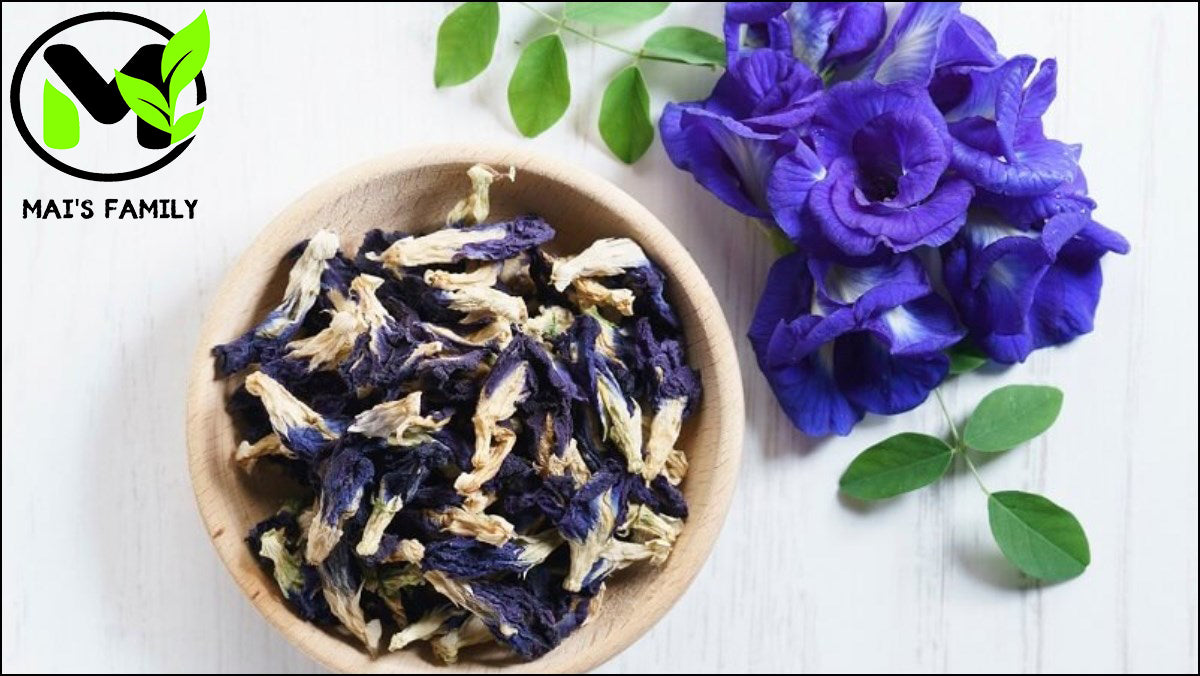
Bring tropical elegance and timeless botanical beauty to your garden with Butterfly Pea, also known as Clitoria ternatea or Hoa Đậu Biếc. This beautiful climbing vine is treasured for its vivid blue to violet-blue flowers, graceful growth habit, and traditional use in teas, drinks, desserts, natural coloring, and ornamental gardens.

Butterfly Pea is a warm-season flowering vine that grows best in full sun, warm temperatures, and well-drained soil. Its delicate blue flowers create a striking display on trellises, fences, arches, patio containers, and tea gardens. In warm climates, it may grow as a perennial; in cooler regions, it is commonly grown as an annual during the warm season.

The flowers are best known for their natural blue color, often used to make butterfly pea tea and botanical blue drinks. When mixed with acidic ingredients such as lemon or lime, the color may shift from blue to purple or pinkish violet, making it a favorite for creative drinks and culinary presentation.

This variety is ideal for gardeners who want a beautiful, useful, and unique tropical vine with both ornamental and culinary appeal.

Product Highlights

  • Common Name: Butterfly Pea / Hoa Đậu Biếc
  • Botanical Name: Clitoria ternatea
  • Seed Type: Organic
  • Plant Type: Tropical flowering climbing vine
  • Flower Color: Blue to violet-blue
  • Growth Habit: Climbing vine
  • Life Cycle: Perennial in warm climates; often grown as annual in cooler areas
  • Sunlight: Full sun
  • Soil: Well-drained soil
  • Watering: Moderate
  • Best Season: Spring to summer after danger of frost
  • Best Uses: Tea garden, natural dye, drinks, desserts, trellis vine, ornamental garden

Growing Instructions

For better germination, soak Butterfly Pea seeds in warm water for 12–24 hours before planting. Sow seeds about 1/2 inch deep in moist, well-drained soil.

Keep the soil warm and evenly moist, but not soggy. Seeds usually germinate in about 7–21 days, depending on temperature and growing conditions. Butterfly Pea grows best in warm weather with full sun and steady moisture.

Transplant outdoors after all danger of frost has passed. Provide a trellis, fence, arch, or climbing support as the vines grow. Pick flowers when fully open and use them fresh or dry them for later use.

Growing Details

Detail Information
Botanical Name Clitoria ternatea
Common Names Butterfly Pea, Blue Butterfly Pea, Hoa Đậu Biếc
Flower Color Blue to violet-blue
Plant Type Tropical flowering vine
Growth Habit Climbing
Sunlight Full sun
Soil Preference Well-drained soil
Watering Needs Moderate
Germination Time 7–21 days
Seed Depth 1/2 inch
Best Planting Season Spring to summer
Support Needed Trellis recommended

FAQ for Google / AI Search

What color are Butterfly Pea flowers?
Butterfly Pea usually produces vivid blue flowers, sometimes appearing blue-violet or purple-blue depending on lighting, flower age, and variety.

Is Butterfly Pea the same as Hoa Đậu Biếc?
Yes. Butterfly Pea is commonly known in Vietnamese as Hoa Đậu Biếc. Its botanical name is Clitoria ternatea.

Can Butterfly Pea be used for tea?
Yes. The blue flowers are commonly used for herbal tea, drinks, desserts, rice dishes, and natural food coloring.

Does Butterfly Pea need a trellis?
Yes. Butterfly Pea grows as a climbing vine and performs best with a trellis, fence, or support.

Is Butterfly Pea annual or perennial?
It is perennial in warm tropical climates, but in colder regions it is often grown as a warm-season annual.

Shipping Notes
  • Free Standard Shipping on $100+ Orders to the USA.
  • Except Preorder products are shipped in 48 hours.
  • Delivery to the USA:
  1. Standard Shipping : 3-10 business days
  • If time is of the essence, please consider selecting expedited delivery for faster service.
Exchange/Return Notes
  • We offer a 30-day return/exchange service after receiving.
  • Final sale items are not eligible for returns or exchanges.
  • To process your return/exchange, please contact us at [email protected]
  • Please click here for more details>>> Return & Exchange Policy
SKU: 71485706226

Discover Niche Categories That Outsell butterfly pea flower seeds near me

Top-Converting Item to Boost Your Average Order

4.7 ★★★★★
Based on 5 reviews
Sort
Highest Rating
Newest First
Oldest First
Product Reviews
L
Verified Purchase
Lovechunk
New York, US
★★★★★ 5
The Best Gift Ever!
Denomination: 0, Design Name: You're the best. (Animated)
Easy Peasy! Who doesn't like to get an Amazon eGift Card!
WAS THIS REVIEW HELPFUL?YesReportShare
Reviewed in the United States on May 17, 2026
T
Verified Purchase
Tim M.
Lowell, US
★★★★★ 5
Great gift idea!
Denomination: 0, Design Name: You're the best. (Animated)
Always a great gift for anyone and easy to purchase and redeem.
WAS THIS REVIEW HELPFUL?YesReportShare
Reviewed in the United States on May 12, 2026
M
Verified Purchase
Madison
Houston, US
★★★★★ 5
Quick delivery, Naturally a great and easy gift.
Denomination: 0, Design Name: You're the best. (Animated)
Always a great way to say thank you.
WAS THIS REVIEW HELPFUL?YesReportShare
Reviewed in the United States on June 6, 2026
D
Verified Purchase
Daniel Myers
Boise, US
★★★★★ 5
A Foundling's Felicity
This book or novel or whatever you may deem fit to call it has so many points in its favour that it's difficult to know where to begin. I think a rundown of a few of the myriad of characters that delight me personally might do for starters: Tom Jones - A young fellow with many "imperfections" if so they may be called, but a robust fellow with a "good heart." Prudence and what is commonly called virtue are not his strong suit - But may I remind the reader that virtue comes from the Latin word for "manliness"- Tom is certainly possessed of the word's etymological origins, if not of its modern usage (particularly in amorous matters)--And a good thing too, or we should have no story here to delight us! Squire Western- Another rambunctious character, who, for me, typifies all that is Eighteenth Century England. Every time he appeared in this book, whether it was to comment on wenching, wine, or riding to hounds a smirk would immediately cross my face followed invariably by chuckling by the end of the chapter. Henry Fielding - The author plays as much a part of the book as any of the characters with many prologues and prefaces and etc. For these, and for much of the rest of the book, I might add, the reader who has not had four years of Latin inculcated into him at an English boarding school would do well to buy the Oxford edition, which fully explains all the learned quotes - Also, as one who was thus inculcated but is inclined to laziness, the Oxford edition's notes prove extremely helpful also. Fielding also gives us a lively picture of the literary life of his time, which the Oxford footnotes do a deft job of explaining- In short, buy the Oxford edition. This review can not be comprehensive. There are simply too many characters to even make a go at encompassing them all. I'm merely describing some of the, to me, more delightful ones. The book as a whole is simply a joy to read, in its comic descriptions of all who will deign to admit that they are human, and of some priggish sorts who will not so deign. I can put it no better than Fielding Himself at the beginning of Book XV: "There are a set of religious, or rather moral writers, who teach that virtue is the certain road to happiness, and vice to misery, in this world. A very wholesome and comfortable doctrine, and to which we have but one objection, namely, that is not true." In short, this is a delightful ramble of a book which, while entertaining the reader not too attached to Sunday School, sheds light on how unvirtuous the virtuous can be, and how kind and good-natured the roguish can be as well as giving us as good a history lesson on the state of affairs in Eighteenth century England (with attention given to the Jacobite Rebellion etc.) as many a "proper" history does. Who, I ask myself, would not delight in this book? ---Well...for the priggish, there's always Jane Austen.
WAS THIS REVIEW HELPFUL?YesReportShare
Reviewed in the United States on January 24, 2007
A
Verified Purchase
Alexander Kobulnicky
Fort Morgan, US
★★★★★ 4
The Sidekick in Early-Modern Literature.
Tom Jones is probably the most influential novel in English history, pioneering elements like complex characterization, social criticism and authorial interjection. But you already knew that. What you want to know is, is this a good book for us in the 21st century. And here, it's not so clear. The dialogue is pretty brisk, and some of the exchanges (the stereotypical Whig Mrs. Western arguing with her Jacobite brother is a particular treat) are actually funny. The latter part of the novel evolves into a farce, with a dozen characters engaged in scheming against one another, while Tom and Sophia helplessly go along. Farce works better in drama, where it has a faster pace, but it's always a welcome mode of comedy. You don't see enough farces. Some of the characters are evocative (why do I picture Blifil as looking like Ted Cruz?) but some are not: Dowling is just a lawyer, and Mrs. Miller is a good woman, like thousands who have come since, and that's all there is to it. It's not as if every character needs to, or can, be a fully realized person, but the parts of the novel spent with these human plot devices do feel mechanical. But Mr. Partridge, Tom's traveling companion, is in a different category altogether, and he just poisons the parts of the novel that he features in (chiefly the middle third). Eighteenth Century literature has a depressing reliance on goofy loose-lipped sidekicks: Mr. Partridge, Hugh Strap, Humphrey Clinker, Andrew Fairservice, Friday. Sometimes they're servants, but sometimes they're just stupid friends. Part of this must be practical: It's difficult to follow a wandering hero (and why are the heroes of these novels always wandering? But that's a different question altogether) without giving him a friend to talk to. Maybe early novelists had a hard time sketching characters who didn't have a way to discuss the ongoing action. But mostly, I think this is the bad influence of Don Quixote, which was becoming increasingly popular in England during this period. Sancho Panza is OK, and he's certainly the funniest element of that leaden tome. But Mr. Partridge *is* Sancho Panza, cowardice, superstition and all, and one Sancho Panza was more than enough. You know? There's a limited number of things that a silly, selfless, lazy pal can do, and it's hard to read about the same old doofus, yet again.
WAS THIS REVIEW HELPFUL?YesReportShare
Reviewed in the United States on April 28, 2016

recommand products