Pay in installments of $6.84 with
 ,
,
 and
and

Shipping Estimate
USA
- USA
- CAN
- USA
- CAN
Ships within 48 hours · Estimated delivery Sep 4 - Sep 9
 Promo Codes Available:
For Your Every Summer RSVP, with Code: SUMMER15
Description
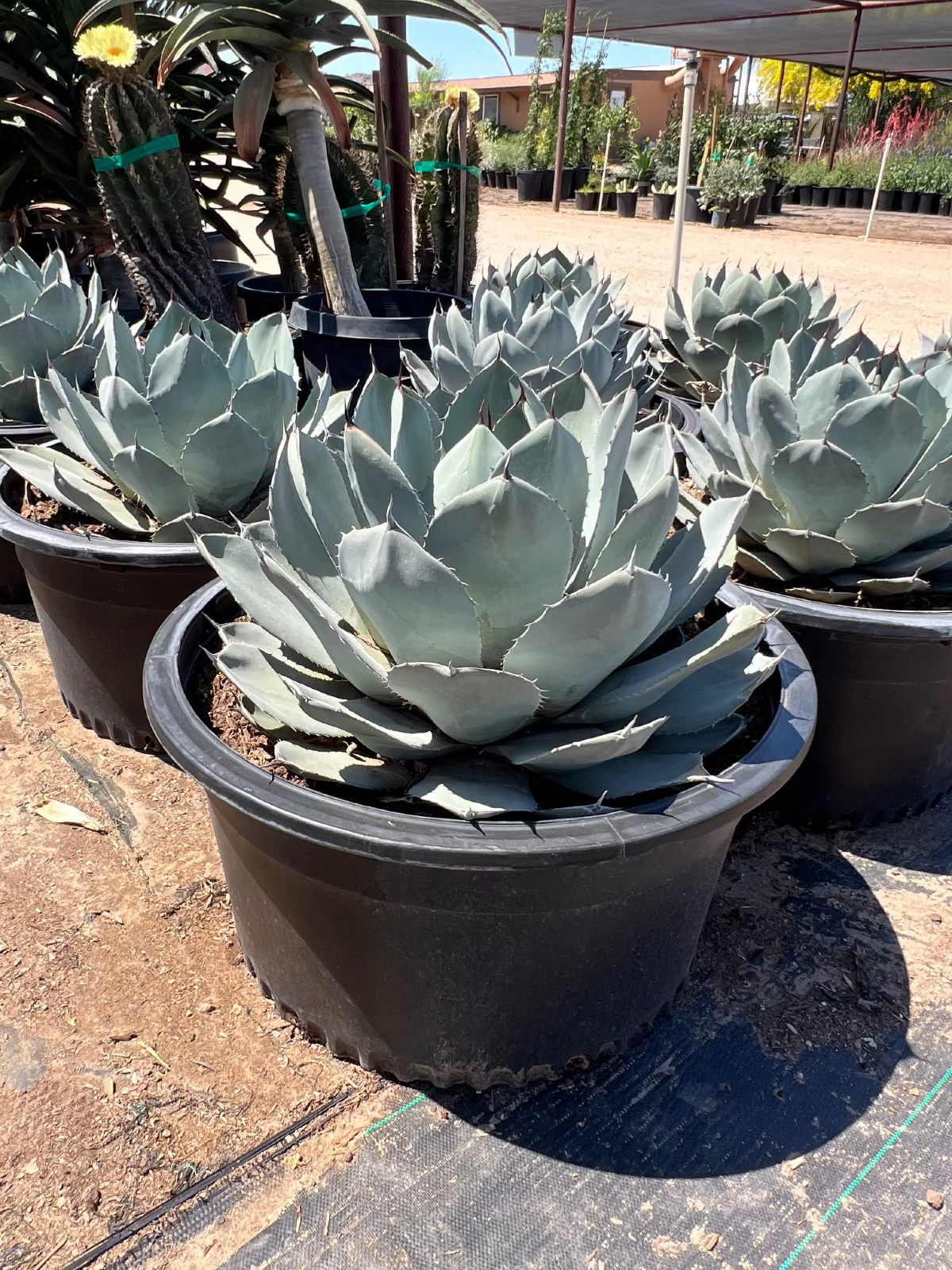
succulent plant looks like artichoke Buy Artichoke Agave Phoenix, AZ | Agave parryi truncataPhoenix's Most Sculptural Desert Agave The Artichoke Agave Artichoke Agave (Agave parryi var. truncata) is the most visually striking compact agave you can grow in the Phoenix Valley. Its tightly packed, blue gray rosettes look like oversized artichokes earning it one of the most recognized names in desert landscaping. This cold hardy, heat loving succulent thrives with almost zero supplemental water once established. Whether you're designing a modern
Phoenix's Most Sculptural Desert Agave — The Artichoke Agave
Artichoke Agave (Agave parryi var. truncata) is the most visually striking compact agave you can grow in the Phoenix Valley. Its tightly packed, blue-gray rosettes look like oversized artichokes — earning it one of the most recognized names in desert landscaping. This cold-hardy, heat-loving succulent thrives with almost zero supplemental water once established. Whether you're designing a modern xeriscape in Scottsdale, adding sculptural focal points in Chandler, or building a low-maintenance rock garden in Mesa — Artichoke Agave delivers dramatic curb appeal year-round.
Artichoke Agave Plant Details
| Attribute | Detail |
|---|---|
| Scientific Name | Agave parryi var. truncata |
| Common Names | Artichoke Agave, Maguey, Parry's Agave Truncata |
| Mature Height | 2–3 feet |
| Mature Width | 3–4 feet |
| Growth Rate | Slow to moderate — forms a tight rosette over 3–5 years in Phoenix |
| Sun | Full sun (6+ hrs). Handles reflected heat from walls and pavement. |
| Water | Very low once established. Highly drought-tolerant. |
| USDA Zones | 5–11 (Phoenix is Zone 9b–10a) |
| Soil | Well-draining. Adapts to Arizona caliche soils with proper drainage. |
| Foliage | Evergreen — blue-gray rosette stays striking year-round |
| Flower Color | Yellow blooms on a tall stalk (10–15 ft) at maturity |
| Cold Hardy | Yes — tolerates temperatures down to 0°F |
Artichoke Agave Uses in Phoenix Landscapes
Sculptural Focal Point in Modern Desert Design
The Artichoke Agave's perfectly symmetrical rosette makes it one of the most popular focal point plants for contemporary Phoenix landscapes. Plant a single specimen in a decorative pot or gravel bed near an entryway for instant architectural impact. Its compact 2–3 foot size means it won't overwhelm the space — pair it with Desert Spoon or Red Yucca from Three Timbers for a layered desert composition.
Rock Garden & Xeriscape Anchor
Artichoke Agave is perfectly scaled for rock gardens and xeriscape beds throughout Scottsdale, Gilbert, and Tempe. Its low profile and tidy form mean it stays neat without pruning. Group 3–5 plants at staggered spacings (3–4 feet apart) among boulders and decomposed granite for a naturalistic desert garden that uses almost no water.
Mass Planting & Desert Border
Planted in rows or clusters, Artichoke Agave creates a bold, low border along driveways, walkways, and property edges. Space plants 3 feet apart for a continuous border effect. Its blue-gray color contrasts beautifully with warm-toned gravel and the greens of nearby Texas Sage or Ruellia, both available at Three Timbers.
Best Time to Plant Artichoke Agave in Phoenix
Fall (October–November) is ideal: soil is still warm for root establishment, cooler air reduces transplant stress, and the plant gets 6–8 months of root growth before its first Phoenix summer. Spring (February–April) is the second-best window. Avoid planting in peak summer if possible — the intense heat puts extra stress on newly transplanted agaves.
How to Plant Artichoke Agave
- Dig wide, not deep — hole should be 2–3x the root ball width and the same depth.
- Check for caliche — break through any hardpan layer to ensure drainage. Artichoke Agave will rot in standing water.
- Backfill with native soil — no amendments needed. A light 20% pumice or gravel mix improves drainage in heavy clay.
- Spacing — 3–4 ft apart for mass planting; 4–5 ft for individual specimens with room to appreciate the rosette.
- Water basin — build a 3–4 inch ring to direct water to roots during establishment.
- Mulch — 2–3 inches of gravel or decomposed granite (not bark mulch, which holds moisture against the crown).
Watering Artichoke Agave in Phoenix
First Year Watering Schedule
- Weeks 1–2: Every 3–4 days, deep and slow
- Month 1–3: Every 7–10 days
- Month 3–6: Every 10–14 days (weekly in peak summer)
- After Year 1: Every 2–3 weeks in summer; monthly or less in winter
Drip Irrigation
Place one 1–2 GPH emitter 12–18 inches from the base. Established Artichoke Agave needs very little supplemental water — overwatering is the most common cause of agave death in Phoenix landscapes. When in doubt, let the soil dry completely between waterings.
How fast does Artichoke Agave grow in Phoenix?
Artichoke Agave is a slow to moderate grower. Expect it to reach its full 2–3 foot height and 3–4 foot spread over 3–5 years in Phoenix's heat. The tight rosette form develops gradually, becoming more dramatic and symmetrical each year.
Is Artichoke Agave drought tolerant?
Extremely. Once established (after about one year), Artichoke Agave can survive on rainfall alone in most Phoenix Valley locations. It's one of the most drought-tolerant landscape plants available — perfect for water-conscious homeowners in Scottsdale, Mesa, and Chandler.
Can Artichoke Agave handle Phoenix summer heat?
Yes. Artichoke Agave thrives in full sun and handles reflected heat from walls, driveways, and pool decks without issue. Its thick, waxy leaves are built for desert extremes.
Does Artichoke Agave have thorns?
Yes — the leaf tips have sharp terminal spines, and the leaf margins have small teeth. Plant it away from high-traffic walkways and play areas. The spines are part of what gives it that distinctive artichoke appearance.
What's the difference between Artichoke Agave and regular Parry's Agave?
Artichoke Agave (A. parryi var. truncata) has wider, more tightly overlapping leaves that create the "artichoke" look. Standard Parry's Agave (A. parryi) has narrower, more open leaves. The Artichoke variety is generally considered more ornamental and is the preferred choice for modern landscape design.
You May Also Like
- Mountain Agave — Another cold-hardy compact agave with dramatic blue-green rosettes, great for rock gardens.
- Octopus Agave — A larger, flowing agave with curving leaves that contrasts beautifully with the Artichoke's tight form.
- Mr Ripples Agave — A rare collector's agave with undulating leaves that pairs well in modern desert plantings.
- Desert Spoon — A silvery-blue rosette plant that complements agave groupings with its fine-textured foliage.
How Many Artichoke Agave Do I Need?
At a mature spread of 3 to 4 feet, Artichoke Agave reads best as a clean, repeating form. Use it as a single focal specimen, or set it in odd-numbered groups so each rosette stands clear:
| Placement | Spacing | Plants |
|---|---|---|
| Single focal point (pot or gravel bed) | n/a | 1 |
| Classic odd-numbered cluster | 3.5 ft apart | 3 to 5 |
| Low border, per 10 ft of run | 3 ft on center | 3 to 4 |
| Rock-garden mass, per 100 sq ft | 3.5 ft on center | 8 to 10 |
Keep the sharp terminal spines at least 2 to 3 ft back from walkways, patios, and pool decks.
Artichoke Agave Season-by-Season in Phoenix
- Spring (Feb to Apr): Roots wake up and the rosette tightens. This is the second-best planting window and a good time to top-dress with fresh granite.
- Summer (May to Sep): Built for it. Holds color and form through reflected heat with no afternoon shade needed. Monsoon rain is usually plenty: skip drip after a soaking storm so the crown never sits wet.
- Fall (Oct to Nov): Prime planting season. Warm soil plus mild air gives roots months to settle before next summer.
- Winter (Dec to Jan): Stays evergreen and structural. Genuinely cold-hardy down to about 0°F, so Valley frosts do not faze it. No cover needed.
At a Glance
✔ Heat-Loving (Reflected-Heat Tolerant) ✔ Drought-Tolerant ✔ Evergreen ✔ Low-Maintenance ✔ Deer & Rabbit-Resistant ✔ Cold-Hardy to 0°F
Plant It With
- Desert Spoon: fine silvery foliage softens the agave's tight geometry.
- Red Yucca: adds coral bloom spikes and hummingbird traffic above the low rosettes.
- Blue Glow Agave: a smaller red-edged rosette that echoes the form at a different scale.
- Century Plant: a big blue agave that anchors the back of the grouping.
Is Artichoke Agave Right for Your Yard?
Artichoke Agave is a fit for full-sun and reflected-heat spots with fast-draining soil, including caliche beds opened up for drainage, where you want a tidy 3 to 4 ft sculptural form that shrugs off both summer heat and winter frost. It is not a fit right next to a high-traffic walkway, doorway, or kids' play area: the terminal spines are sharp, so give it clearance or choose a softer plant for those spots.
Shipping Notes
- Free Standard Shipping on $100+ Orders to the USA.
- Except Preorder products are shipped in 48 hours.
- Delivery to the USA:
- Standard Shipping : 3-10 business days
- If time is of the essence, please consider selecting expedited delivery for faster service.
Exchange/Return Notes
- We offer a 30-day return/exchange service after receiving.
- Final sale items are not eligible for returns or exchanges.
- To process your return/exchange, please contact us at [email protected]
- Please click here for more details>>> Return & Exchange Policy