Pay in installments of $5.27 with
 ,
,
 and
and

Shipping Estimate
USA
- USA
- CAN
- USA
- CAN
Ships within 48 hours · Estimated delivery Jul 20 - Jul 25
 Promo Codes Available:
For Your Every Summer RSVP, with Code: SUMMER15
Description
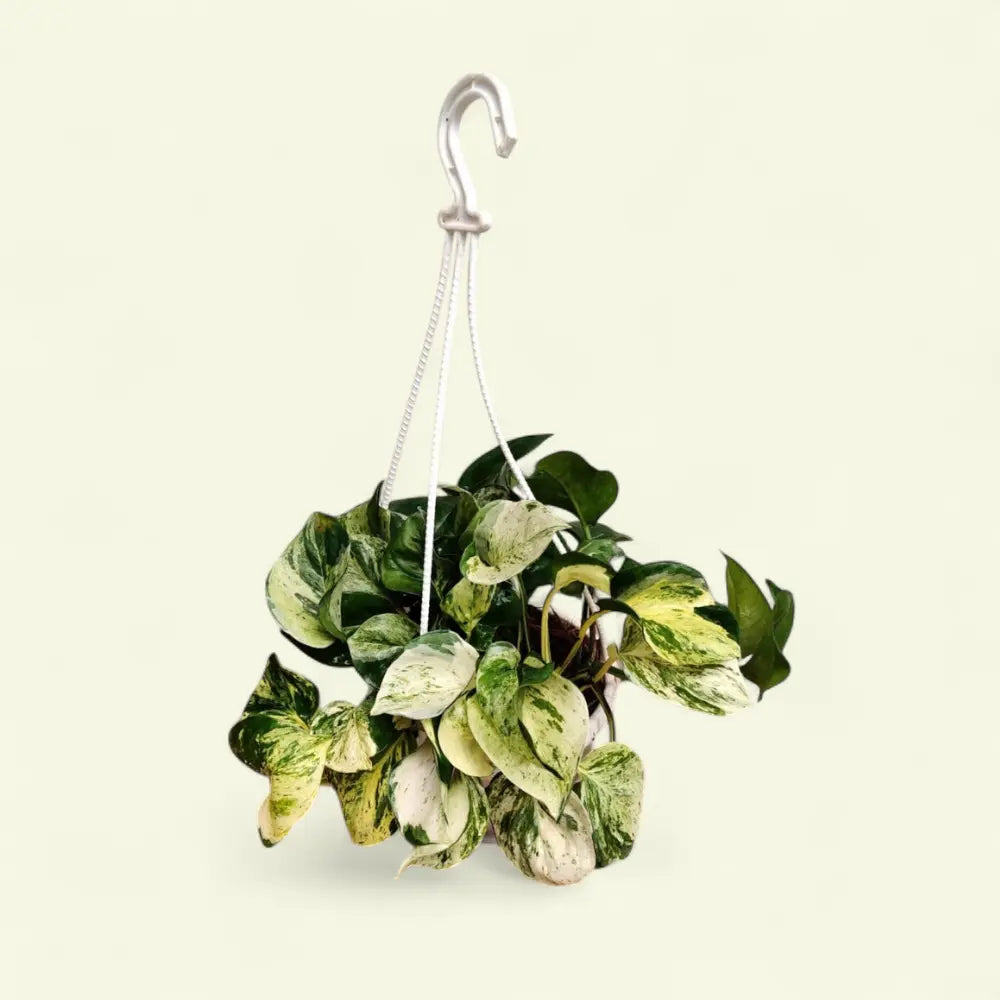
manjula money plant Money Plant 'Manjula' – Large Size Rare Variegated PothosThe Money Plant 'Manjula' is a rare variegated Pothos with a provenance worth knowing: it was discovered in 2010 by Ashish Arvind Hansoti at a commercial greenhouse near Mumbai a natural branch mutation that emerged from over a thousand carefully selected parent plants, tested across 25 generations before being patented as HANSOTI14. The name Manjula is Sanskrit for beautiful or charming and the leaves earn it. Each large, heart shaped leaf is a five
The Money Plant 'Manjula' is a rare variegated Pothos with a provenance worth knowing: it was discovered in 2010 by Ashish Arvind Hansoti at a commercial greenhouse near Mumbai — a natural branch mutation that emerged from over a thousand carefully selected parent plants, tested across 25 generations before being patented as HANSOTI14. The name Manjula is Sanskrit for beautiful or charming — and the leaves earn it. Each large, heart-shaped leaf is a five-colour composition: deep green, light green, lime, cream, and silver-white, all in a softly marbled, blotched pattern unique to every leaf — with wavy, gently frilled edges that no other Pothos variety shares. Growth is compact and mounding before it trails, with short internodes that produce a denser, fuller habit than most Pothos. An Indian plant, born in Mumbai, that belongs in Indian homes.
Light
▾
Medium to bright indirect light — 4–6 hours daily. An east-facing window or 1.5–2 m from a bright south or west-facing window is ideal. In low light, white and cream sections revert to green and the plant loses its multi-colour character. In harsh direct sun, the same reversion happens but also with leaf scorch on the cream sections. A grow light at 10–12 hours is excellent for maintaining vivid variegation year-round.
Watering
▾
Allow the top 3–5 cm of soil to dry before watering thoroughly — more conservative than plain Golden Pothos because the higher variegation means less chlorophyll and slower water uptake. The Manjula is prone to root rot if kept consistently moist. Water with filtered or room-temperature water and empty the saucer after watering. In winter, extend the interval to every 2–3 weeks.
Humidity
▾
40–70% — more adaptable than most collector plants, though it thrives in higher humidity. Average Indian indoor conditions are generally fine. The cream and white leaf sections are the first to show brown tips in very dry air — a pebble tray or humidifier helps in air-conditioned rooms. Do not mist the leaves; keep moisture coming from below and around rather than directly on the foliage.
Growing Media
▾
Light, well-draining mix: 50% quality potting soil or coco coir, 30% perlite, 20% orchid bark. pH 6.0–6.5. Never dense, moisture-retentive soil alone. Repot every 1–2 years in spring, one pot size up. Do not repot into an oversized pot — excess soil holds moisture the roots cannot use and causes rot. Can also be grown in water — a clean vase with node submerged changes easily.
Feeding
▾
Balanced liquid fertilizer at half strength once a month in spring and summer. Apply to moist soil. The high variegation makes leaves slightly more sensitive to over-fertilizing — half strength is always safer than full. Stop feeding in autumn and winter. Flush soil every 3 months to prevent salt build-up.
New Leaves Coming Out All Green
▾
Either too much direct sun (triggering excess chlorophyll production) or too little light. First, rule out direct sun exposure — move to pure indirect light. If the plant is already in indirect light, it may need more brightness. Find the middle ground: bright but filtered, and never harsh. Reversion usually corrects within a few leaf cycles once light is dialled in.
Yellow Leaves or Root Rot
▾
Overwatering — the most common Manjula problem. Allow the top 3–5 cm to dry before each watering. If soil is persistently soggy: unpot, trim blackened roots, repot in fresh well-draining mix, and water much less going forward.
Brown Crispy Tips on White or Cream Sections
▾
Low humidity or tap water mineral build-up. Switch to filtered water, boost humidity with a pebble tray or humidifier, and flush soil to clear salt accumulation. Move away from AC vents. Existing brown tips are permanent — trim neatly.
Leggy Growth or Long Gaps Between Leaves
▾
Insufficient light — the plant is reaching toward the light source. Move to a brighter position. Prune leggy stems just above a leaf node; this encourages branching and a fuller habit. The cut stem can be easily rooted in water for propagation.
Spider Mites, Scale or Mealybugs
▾
Inspect leaf undersides and stem joints regularly. Wipe with a soft damp cloth and treat with diluted neem oil or insecticidal soap every 5–7 days for 3 weeks. Maintaining humidity above 50% deters spider mites naturally.
📋 Quick Plant Profile
| Botanical Name | Epipremnum aureum 'Manjula' (syn. HANSOTI14) |
| Name Meaning | Manjula = Sanskrit for "beautiful" or "charming" |
| Origin Story | Discovered 2010 by Ashish Arvind Hansoti at a Mumbai greenhouse — a natural branch mutation; tested 25 generations before patenting |
| Common Names | Manjula Pothos, Happy Leaf Pothos, Money Plant Manjula |
| Family | Araceae |
| Signature Feature | 5-colour leaf: dark green, light green, lime, cream, silver-white — every leaf unique; wavy frilled edges unlike any other Pothos |
| Growth Habit | Mounding before trailing; compact and dense; shorter internodes than most Pothos |
| Light | Medium to bright indirect; no direct sun; too much sun also causes reversion to green |
| Watering | Top 3–5 cm dry; root rot prone — water less frequently than plain Pothos |
| Humidity | 40–70%; adaptable; pebble tray helpful in AC rooms |
| Temperature | 18°C–30°C; thrives in Indian indoor conditions year-round |
| Growth Rate | Slower than plain Pothos — less chlorophyll = less energy for fast growth |
| Propagation | Stem cuttings in water — easy and reliable; node must be submerged |
| Display Options | Shelf, hanging basket, moss pole, tabletop, water vase |
| Ideal For | Beginners and Collectors, Shelves, Hanging Baskets, Offices, Gifting |
| Care Level | Easy to intermediate — avoid overwatering and direct sun; otherwise forgiving |
Shipping Notes
- Free Standard Shipping on $100+ Orders to the USA.
- Except Preorder products are shipped in 48 hours.
- Delivery to the USA:
- Standard Shipping : 3-10 business days
- If time is of the essence, please consider selecting expedited delivery for faster service.
Exchange/Return Notes
- We offer a 30-day return/exchange service after receiving.
- Final sale items are not eligible for returns or exchanges.
- To process your return/exchange, please contact us at [email protected]
- Please click here for more details>>> Return & Exchange Policy