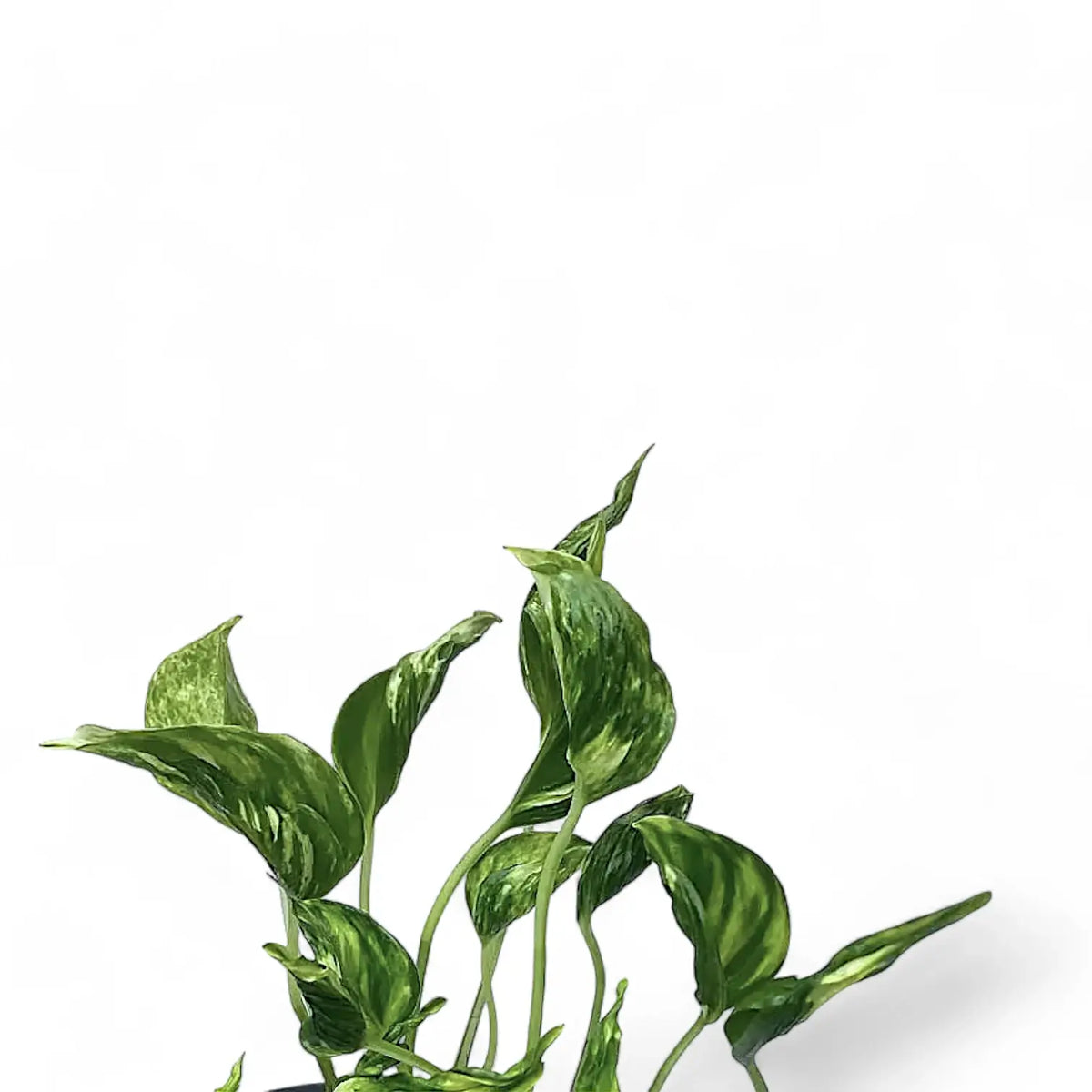
SKU: 72433911528
shangri la pothos plant care

shangri la pothos plant care Epipremnum aureum 'Shangri La' – Crinkled Sleeping Pothos

Sale price$24.55 Regular price$27.28
Save 10%

Pay in installments of $6.82 with ShopPay, AfterPay and Klarna

Shipping Estimate
USA
  • USA
  • CAN

Ships within 48 hours · Estimated delivery Jul 21 - Jul 26

Promo Codes Available:

For Your Every Summer RSVP, with Code: SUMMER15

Description

shangri la pothos plant care Epipremnum aureum 'Shangri La' – Crinkled Sleeping PothosEpipremnum aureum 'Shangri La' curled leaf pothos with a compact, sculptural look Epipremnum aureum 'Shangri La' is one of the strangest looking pothos forms in cultivation. Instead of flat, open leaves, it produces thick, twisted foliage that stays folded, crinkled, and curled as it matures. That gives the plant a tighter, more sculptural look than standard Epipremnum aureum and makes it stand out even before the vines begin to lengthen. This is why

Epipremnum aureum 'Shangri La' – curled-leaf pothos with a compact, sculptural look

Epipremnum aureum 'Shangri La' is one of the strangest-looking pothos forms in cultivation. Instead of flat, open leaves, it produces thick, twisted foliage that stays folded, crinkled, and curled as it matures. That gives the plant a tighter, more sculptural look than standard Epipremnum aureum and makes it stand out even before the vines begin to lengthen.

This is why 'Shangri La' works differently from other pothos on a shelf or in a hanging pot. It still trails or climbs over time, but the curled leaves make the plant look denser, more textured, and less flowing than broad-leaved forms such as 'Marble Queen' or standard golden pothos. The result is architectural rather than soft.

What makes Epipremnum 'Shangri La' look so different

  • Leaf form: Leaves stay twisted, curled, and partly folded instead of flattening out in the usual pothos way.
  • Surface texture: The foliage feels thicker and more structured than in standard Epipremnum aureum, with visible ridging and irregular contours.
  • Colour: Most plants stay deep green, sometimes with lighter green or yellow-green variation depending on the clone and growing conditions.
  • Plant shape: Young plants often look dense and upright at first, then become more trailing or climbing with age.
  • Growth character: Compared with typical pothos forms, the habit is usually more compact and visually tighter.
  • Indoor presence: Even a small plant looks distinct because the curled foliage changes the whole silhouette.

Species background and what the name 'Shangri La' refers to

  • Accepted species: Epipremnum aureum, a member of Araceae
  • Native origin of species: Mo'orea in French Polynesia
  • Natural habit of the species: Tropical climber that uses aerial roots to move across trunks and other surfaces.
  • Trade use: 'Shangri La' is commonly sold as a curled-leaf or “Sleeping Pothos” type of Epipremnum aureum.
  • Indoor flowering: Like other cultivated forms of Epipremnum aureum, it is grown for foliage and flowers are extremely rare indoors.
  • Toxicity: Plant tissue contains insoluble calcium oxalate crystals and is not safe for pets or people to chew.

Care priorities for Epipremnum aureum 'Shangri La' indoors

  • Light: Bright, indirect light keeps growth compact and helps the plant produce stronger, better-shaped leaves. It tolerates dimmer placement, but growth usually loosens and slows.
  • Watering: Water thoroughly, then let roughly the top 30–40% of the substrate dry before watering again. Constant wetness around the roots leads to more trouble than a short dry pause.
  • Substrate: Use a loose, airy mix that drains well but still holds some moisture. A blend based on potting mix or coco coir with bark and perlite works well.
  • Humidity: Average indoor humidity is usually enough, though around 40–60% helps new leaves develop more cleanly.
  • Temperature: Aim for 18–29°C and avoid prolonged cold, cold drafts, or a wet root zone in cool conditions.
  • Feeding: Apply a balanced liquid fertilizer at low to moderate strength every 4–6 weeks while the plant is actively growing.
  • Repotting: Repot when roots fill the pot heavily or when the substrate has broken down and no longer dries evenly. Increase pot size only slightly.

How 'Shangri La' behaves when trailing, climbing, or being cut back

  • As a trailing plant: Left unsupported, the stems eventually lengthen and hang, but the curled leaves keep the plant looking denser than flatter-leaved pothos.
  • As a climber: On a pole, plank, or trellis, aerial roots can attach and support stronger upward growth over time.
  • Pruning: Cutting just above a node helps maintain a fuller shape and keeps long, bare stretches from developing.
  • Propagation: Stem cuttings with at least one node root readily in water or lightly moist substrate when kept warm.
  • Water culture and mineral substrates: This form can adapt to water culture or inert mineral substrates if the transition is gradual and the nutrient supply stays steady.
  • Routine upkeep: Because the leaves stay folded, check hidden surfaces regularly for dust, trapped debris, or early pest activity.

Problems that are easy to misread on Epipremnum 'Shangri La'

  • Naturally curled leaves: The twisted foliage is the defining feature of the cultivar and should not be mistaken for dehydration by default.
  • Yellow leaves: Usually point to roots staying wet too long, poor drainage, or a potting mix that has compacted.
  • Soft stems or blackened nodes: Commonly indicate rot after wet and cold conditions around the roots.
  • Drooping growth: Often linked to drought stress, root trouble, or sudden temperature drop rather than the curled leaf form itself.
  • Small, weak new growth: Usually caused by low light, depleted substrate, strong root congestion, or missed feeding over time.
  • Pests: Mealybugs, spider mites, thrips, and scale can hide more easily in the folded foliage, so regular inspection matters more than on flatter-leaved forms.

Name notes for Epipremnum aureum 'Shangri La'

Epipremnum comes from Greek and refers to growth upon a trunk, matching the species’ natural climbing habit. aureum means “golden,” referring to the yellow-marked wild type rather than the deep green look usually seen in this form. The name 'Shangri La' is used commercially for this curled-leaf selection, while “Sleeping Pothos” refers to the way the leaves appear folded or half-closed.

Choose 'Shangri La' if you want texture instead of ordinary trailing foliage

If you want an easy indoor climber with unusual leaf structure rather than standard flat pothos foliage, Epipremnum aureum 'Shangri La' is a strong choice. With bright indirect light, an airy mix, and a sensible watering rhythm, it stays compact, distinctive, and much more sculptural than typical Epipremnum forms.

Shipping Notes
  • Free Standard Shipping on $100+ Orders to the USA.
  • Except Preorder products are shipped in 48 hours.
  • Delivery to the USA:
  1. Standard Shipping : 3-10 business days
  • If time is of the essence, please consider selecting expedited delivery for faster service.
Exchange/Return Notes
  • We offer a 30-day return/exchange service after receiving.
  • Final sale items are not eligible for returns or exchanges.
  • To process your return/exchange, please contact us at [email protected]
  • Please click here for more details>>> Return & Exchange Policy
SKU: 72433911528

Discover Niche Categories That Outsell shangri la pothos plant care

Top-Converting Item to Boost Your Average Order

4.3 ★★★★★
Based on 6 reviews
Sort
Highest Rating
Newest First
Oldest First
Product Reviews
N
Verified Purchase
Niki
Pawtucket, US
★★★★★ 5
Every parent should read this
What an eye opening book, not even just for how to understand the different ways to love your children, but on how people in general feel and express love differently. I firmly feel that every parent should be sent home with one of these books after having a baby. It has helped me understand things from my childhood and the lack of love I received, it has helped me understand my husbands love language and of course my sons. This book has revealed so much in so many different levels. It is any easy read and hooked me right away.
WAS THIS REVIEW HELPFUL?YesReportShare
Reviewed in the United States on January 26, 2025
M
Verified Purchase
M. Heiss
Bozeman, US
★★★★★ 4
I'll admit I was skeptical
Ordinarily, the follow-on books are kind of flat. The Elizabeth George "After God's Own Heart" books seemed this way, although the first one, "A Woman After God's Own Heart" was excellent. I was expecting the same sort of flatness from this book. I found a lot to apply in the original Love Languages book, and I'm still sneaking it into my marriage. It's one thing to tell your Quality-Time husband that you are a TOUCH wife, and a whole different thing to gently convince him to touch touch touch touch touch touch. It has brought me to a whole new level of positive reinforcement. So I figured this one for kids would be a couple of hundred pages of telling parents that kids need *every* love language. And indeed, there was some of that. But the book was full of clues for how to recognize your child's love language, how it may change over time, and how to communicate. The book offered a lot. I thought the chapters on conflict were very worthwhile, and even on how to discipline in the different love languages. My kids are so different that I needed all the pointers I could get. And surprise -- thinking about love languages across generations has helped me communicate better with my parents, too -- off to a good start, anyway. I read this 6 months ago. My eldest started talking more, to me and to other people, NOTICEABLY more, and it's bringing me some relief from one of my biggest parenting worries -- how remote this child has been. That has been the biggest and most immediate change in our family recently, and I can trace it to this book. I would recommend you read the first Love Languages book first, and then this one to think specifically about your kids. Oh, and for moms, definitely read A Woman After God's Own Heart by Elizabeth George. It's family-enhancing.
WAS THIS REVIEW HELPFUL?YesReportShare
Reviewed in the United States on June 13, 2008
S
Verified Purchase
Seeker
Bozeman, US
★★★★★ 5
You Love Your Child, But Does Your Child Feel Loved?
I rarely read a book from cover to cover twice, but when I was given the opportunity to receive a free copy of the 2012 Edition of The 5 Love Languages of Children by Gary Chapman and Ross Campbell for review, I was eager to do so, particularly since my daughter was so young the first time I read it that I could not determine her love language at the time. To be honest, even with the Love Language Mystery Game to help determine a child's love language, I still cannot be sure of my daughter's even though she is old enough that I should be able to do so. There is nothing wrong with the concepts described in the book, I think it is just that my daughter seems pretty balanced as she receives all five gratefully and gives all five as well, which I believe suggests that her father and I successfully have been keeping her "love tank" full most of the time. The book proposes that as loving as parents may try to be, a child may believe his parents love him, but may not feel loved because the parents are not speaking in the child's love language. While one child may be happy with a gift when the father comes home from a business trip, another child may not feel loved by getting a gift because his love language is quality time. This book helps parents to determine which of the five love languages--physical touch, words of affirmation, quality time, gifts, or acts of service--a child appreciates and needs the most as well as how the parent can help the child to feel loved. It also stresses that every child needs all five, but one will be predominate. I highly recommend this book for all parents, particularly those who are having difficulties with their children, but it is beneficial even to those who think they have happy, loving children. Probably just as important as understanding how to speak in the child's love language is how to discipline with love without causing damage to the parent-child relationship by using a type of punishment that empties the emotional tank; a chapter is devoted to this subject. If you are like me and have a 1997 Edition, let me explain the main differences I noticed between the two books, besides the change in the cover. The earlier edition often referred to keeping the emotional tank full would help to avoid drug use and teenage promiscuity, which was not in the latest edition. In the 2012 Edition, there were some updated statistics and reference to a book Battle Hymn of the Tiger Mother by Amy Chua that was published in January 2011. Some of the names in the stories had been changed to more popular names at the time of the rewrite. The most notable addition was the list of suggestions to speak the child's love language at the end of each corresponding chapter. Otherwise, there were only minor editing changes here and there. I did think that the hand print in the heart on the cover of the first edition was a better depiction than the green rubber boots with flowers, but that is a minor point. I received this book for free from Moody Publishers in exchange for my honest review.
WAS THIS REVIEW HELPFUL?YesReportShare
Reviewed in the United States on September 24, 2012
F
Verified Purchase
Frequent Customer
Los Angeles, US
★★★★★ 5
I love this book! Helped me with the kids, my parents and my boyfriend.
I bought this book in preparation for becoming a stepmother. Knowing the kids involved had experience some difficulties in their relationship with their biological mother I wanted to make sure I could bring something positive to the table. We have already utilize some of the lessons in this book to ensure that the kids are happy and healthy in the decisions that by boyfriend was making with them on his own. We have also used information provided in this book to help his ex-wife better understand what the right decisions for the kids are to best meet their needs. I have actually sent multiple copies of this book to family members who I feel would benefit from its information. I frequently talk about the love languages of children as it relates to friends family and romantic relationships as well as co-worker or boss employee relationships. I think at this point everyone I know is sick of hearing about this book. I purchased the love languages of teenagers book to prepare for the next stage in the kids lives. I also plan to purchase the love languages for couples book so that my boyfriend and I can learn to communicate even better since we got some helpful information out of this book unexpectedly. I highly recommend reading this book. As a child who did not feel loved by her parents I think it would be important for every parent to read this and have an understanding of the different needs that each child has so that they can show the love that they have in a way that their child can understand.
WAS THIS REVIEW HELPFUL?YesReportShare
Reviewed in the United States on August 8, 2018
T
Verified Purchase
594 Tuff
Birmingham, US
★★★★★ 5
Favorite treat of all time for our Maltese pup.
Pattern Name: Lollipop, Size: 0.53 Ounce (Pack of 4)
These are my Maltese dog’s favorite treat. I don’t know if it is the whole combination of shape, taster, tendon location, or that they are from a Turkey, but they are an absolute winner when we have them. Since they are quite expensive, we only get them on occasion. If they were less expensive, even by 10%, I would justify regular purchases of them to myself. I highly recommend them for any size, breed, or reason. They are an exceptionally wonderful treat for my pup. I think I have just found the reason for ordering another order of these Turkey Tendon lollipops for my best friend. Especially since he eats them quite quickly, even though he is only four pounds. And they seem to be quite digestible.
WAS THIS REVIEW HELPFUL?YesReportShare
Reviewed in the United States on May 3, 2026

recommand products