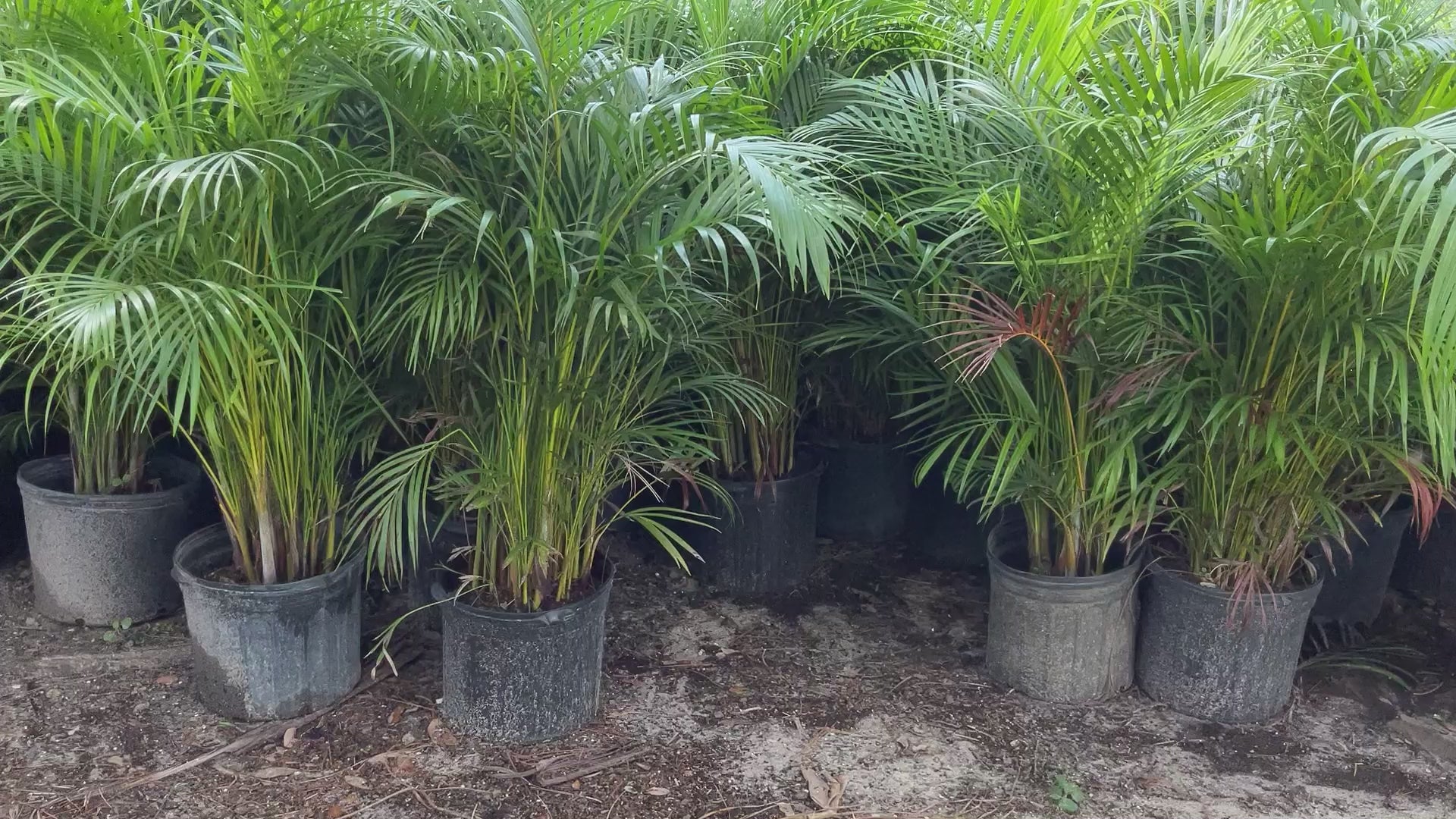
SKU: 72596331277
areca palm oil

areca palm oil Areca Palm

Sale price$26.17 Regular price$29.08
Save 10%

Pay in installments of $7.27 with ShopPay, AfterPay and Klarna

Shipping Estimate
USA
  • USA
  • CAN

Ships within 48 hours · Estimated delivery Sep 11 - Sep 16

Promo Codes Available:

For Your Every Summer RSVP, with Code: SUMMER15

Description

areca palm oil Areca PalmAreca Palm The Areca palm trees are a favorite palm for privacy, screening and garden backdrops in many Cape Coral landscaping projects. We recommend using the Butterfly Palm Trees as a living fence to provide privacy from neighbors, or block the view from the street into your home. Once they reach a taller height, with a little trimming they can be thinned out to display their bamboo looking trunks. Either left completely full and lush, or a little

Areca Palm

The Areca palm trees are a favorite palm for privacy, screening and garden backdrops in many Cape Coral landscaping projects. We recommend using the Butterfly Palm Trees as a living fence to provide privacy from neighbors, or block the view from the street into your home. 

Once they reach a taller height, with a little trimming they can be thinned out to display their bamboo-looking trunks. Either left completely full and lush, or a little manicured, the Areca palm tree is a beautiful addition to a tropical landscape.

  • These palms are a great choice for natural privacy screening.
  • Not just another pretty face, the dramatic areca palm can double duty as a spectacular tropical privacy screen.
  • It is sometimes called the "Butterfly Palm"-because they are full and dense.
  • Areca palms are slow to moderate growers for sun and shade and can reach heights of 15 to 20 feet. 
  • Zone 10 is best, though winter in warmers areas or Zone 9B that border 10A, you can use an Areca in a protected spot. You may see leaf tip burn after most winters, even in Zone 10. Areca are clustering palms.
WE ONLY SHIP TO LOCAL FL COUNTIES (Hillsborough, Pinellas, Manatee and Pasco Counties ONLY)

    More Details


    Advantages:

    Easy To Grow

    Low Maintenance

    Good For Containers

      Grows Best:

        Landscape

        House Plant

        House Plant

      Ideal position:

      Full Sun

      6 + Hours best

      Growth Outlook:

      Height : 10-30

      Wide: 8 - 10'

      Growth Rate: Fast

      Plant Spacing: 12' - 18'

      Pet Friendly - yes

      Toxicity: Safe for pets

      Caring For:

      Position Water Temps Food


      Caring for an Areca Palm tree involves several important steps to ensure its health and vitality:

      1. Sunlight: Areca Palms thrive in bright, indirect sunlight. Place your palm near a window with filtered light or provide it with dappled shade outdoors. Avoid exposing it to direct sunlight, as it can scorch the leaves.

      2. Watering: Keep the soil consistently moist but not waterlogged. Water your Areca Palm thoroughly when the top inch of soil feels dry to the touch. Ensure proper drainage to prevent root rot. During winter, reduce watering frequency slightly as the plant's growth slows down.

      3. Humidity: Areca Palms prefer high humidity levels. Mist the leaves regularly with water or place a humidifier nearby to create a humid environment. This helps prevent the tips of the leaves from turning brown.

      4. Fertilization: Feed your Areca Palm with a balanced, water-soluble fertilizer specifically formulated for indoor plants. Apply the fertilizer every two to three months during the growing season (spring and summer). Follow the package instructions for proper dilution and application.

      5. Pruning: Remove any yellow or brown fronds as they age or become damaged. Trim off any dead or brown leaf tips to maintain the plant's appearance. Avoid excessive pruning, as it can stress the palm.

      6. Pests: Monitor your Areca Palm for common pests like spider mites and mealybugs. If you notice any infestations, treat them promptly with an appropriate insecticidal soap or neem oil spray.

      7. Repotting: As the Areca Palm grows, it may require repotting every two to three years. Choose a pot that is one size larger and use well-draining soil. Repotting in spring allows the palm to establish itself before the active growing season.

      By following these care guidelines, you can ensure that your Areca Palm remains healthy, vibrant, and a beautiful addition to your indoor or outdoor space. Regular attention to watering, light, and humidity will help your palm thrive for years to come.

      Shipping Notes
      • Free Standard Shipping on $100+ Orders to the USA.
      • Except Preorder products are shipped in 48 hours.
      • Delivery to the USA:
      1. Standard Shipping : 3-10 business days
      • If time is of the essence, please consider selecting expedited delivery for faster service.
      Exchange/Return Notes
      • We offer a 30-day return/exchange service after receiving.
      • Final sale items are not eligible for returns or exchanges.
      • To process your return/exchange, please contact us at [email protected]
      • Please click here for more details>>> Return & Exchange Policy
      SKU: 72596331277

      Discover Niche Categories That Outsell areca palm oil

      Top-Converting Item to Boost Your Average Order

      4.1 ★★★★★
      Based on 5 reviews
      Sort
      Highest Rating
      Newest First
      Oldest First
      Product Reviews
      M
      Verified Purchase
      Matthew Nations
      Carnegie, US
      ★★★★★ 5
      Excellent Introduction to Hemodynamics for a Resident or Fellow
      Format: Paperback
      Background: PGY-2 Internal Medicine Resident with no prior hemodynamic monitoring experience Overall: Fantastic introduction to the field. The author will assume you know the following prior to starting the book: - Moderate understanding of EKG’s - Anatomical arrangement of the heart and its vessels - Understanding some of the practical effects of atrial fibrillation (lack of an atrial contraction, etc) Specifics: The book can be picked up without significant prior knowledge of hemodynamic monitoring. I initially tried to read Hemodynamic Rounds, and the authors of that book did not introduce significant pieces of information, such as the normal pressures of the heart chambers, what each wave means on the monitor, and how is each chamber of the heart/vessel represented on the monitor (where do I look to see the left ventricular pressure?). In contrast to that, Dr. Hanna provides a book that appears to be intended for residents/cardiology fellows or zealous pre-cardiology interns who are looking for an introduction to the field that maintains enough depth to be practical. Its first section goes over the relevant physiology and pathophysiology and the mechanical/hemodynamic representation. The second section is a series of practice problems with excellent explanations which reviews all of the prior concepts and helps to solidify them in the reader’s mind. The reader will learn to appreciate the relevant waveforms and their relevant representations, the normal values for the cardiac chambers and vessels, and eventually the changes to these normal values during pathologic states. As others have mentioned, it is concise, but this also makes it a bit dense initially when the reader encounters the basic four waveforms and attempts to memorize the normal pressures. Once you get over that initial learning curve, the rest of the first section goes a bit faster. Overall, I’m very happy I purchased this book, and I feel that it has prepared me very well for time spent in the cardiac ICU.
      WAS THIS REVIEW HELPFUL?YesReportShare
      Reviewed in the United States on July 25, 2019
      J
      Verified Purchase
      john c wynsen
      San Leandro, US
      ★★★★★ 5
      Info not to be found elsewhere ...
      Format: Paperback
      I am a cardiologist in my 50s. I have long been interested in hemodynamics and have an extensive home file system and library of Cardiovascular related books and journal articles. I thought I understood hemodynamics and tracings very well. However this book is a treasure trove of info that simply cannot be found in other publications. It has been a very worthwhile purchase. Highly recommended. This is best suited for cardiology fellows and beyond in my opinion. This info is simply not to be found elsewhere. It is as if a grey haired attending is pointing out minutiae to you that you had not realized was buried in the tracings. Well written and easy to digest. It is best to have a good understanding of hemodynamics and waveforms before reading this though. The correlation with ECHO and diastolic issues is also very good. (This book should be required reading for all cardiology fellows - invasive or noninvasive)
      WAS THIS REVIEW HELPFUL?YesReportShare
      Reviewed in the United States on February 7, 2016
      I
      Verified Purchase
      Items not received
      Natrona Heights, US
      ★★★★★ 5
      Hemodynamics
      Format: Paperback
      Very good book for students and residents of cardiology who want to learn from basic to adavence hemodynamics! Im strongly recommending it to everyone ! Its like a bible for hemodynamics!!
      WAS THIS REVIEW HELPFUL?YesReportShare
      Reviewed in the United States on June 11, 2024
      C
      Verified Purchase
      C Hwang
      Los Angeles, US
      ★★★★★ 5
      Excellent
      Format: Paperback
      As a second-year cardiology fellow, I used to get very confused with hemodynamics during my cath and CCU rotations. This book is a gem, it is clear and logically written, has great explanations of waves and great illustrations. The constrictive pericarditis, valvular disease, and FFR chapters are impressive with echocardiographic and physiologic correlations. I actually liked everything I read, like the nice differentiation between the pressure tracings of various chambers. Some of it requires multiple reads but it is worth it. I realized that I had missed a great deal of the basic understanding of pressure tracing configuration, wedge pressure, shunts. There are also over 50 cases in a test-answer format probably covering and reviewing most hemodynamic topics. It is like 2 books in 1.
      WAS THIS REVIEW HELPFUL?YesReportShare
      Reviewed in the United States on March 14, 2013
      A
      Verified Purchase
      Aziz A
      Lexington, US
      ★★★★★ 3
      Black and white
      Format: Paperback
      Bought this book. Good content. However my copy is in black and white. There are references to colored arrows. I later learned that others have a colored copy.
      WAS THIS REVIEW HELPFUL?YesReportShare
      Reviewed in the United States on January 30, 2026

      recommand products