SKU: 7275944210
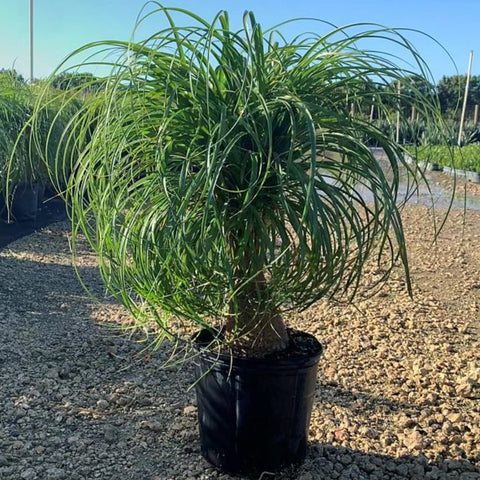
plant similar to ponytail palm

plant similar to ponytail palm Ponytail Palm for Sale

Sale price$22.73 Regular price$25.25
Save 10%

Pay in installments of $6.31 with ShopPay, AfterPay and Klarna

Shipping Estimate
USA
  • USA
  • CAN

Ships within 48 hours · Estimated delivery Oct 18 - Oct 23

Promo Codes Available:

For Your Every Summer RSVP, with Code: SUMMER15

Description

plant similar to ponytail palm Ponytail Palm for SalePonytail Palm Discover the enchanting world of Beaucarnea guatemalensis, affectionately known as the Ponytail Palm. With its captivating silhouette and unique features, this plant stands as a testament to nature's artistry. Embrace the beauty and resilience of the Guatemala Pony Tail, a striking addition to any space. Cultivation Caring for Beaucarnea guatemalensis is a gratifying journey. Position it in a bright spot, allowing it to bask in filtered

Ponytail Palm

Discover the enchanting world of Beaucarnea guatemalensis, affectionately known as the Ponytail Palm. With its captivating silhouette and unique features, this plant stands as a testament to nature's artistry. Embrace the beauty and resilience of the Guatemala Pony Tail, a striking addition to any space.

Cultivation

Caring for Beaucarnea guatemalensis is a gratifying journey. Position it in a bright spot, allowing it to bask in filtered sunlight. Water the plant thoroughly, then let the soil dry out before rewatering, as it thrives in slightly dry conditions. Its distinctive swollen trunk serves as a water reservoir, making it wonderfully adaptable to various environments.

Sizing

Discover our premium offering: the "Grower's Pick.” This exceptional plant selection stands out as the most sizable option available, featuring the tallest and most robust plant we can ship. Each “Grower’s Pick” is meticulously chosen for its advanced maturity, ensuring a developed root structure for superior growth and vitality.

Care Tips

To ensure your Ponytail Palm flourishes, avoid overwatering, as it's more tolerant of drought than excess moisture. Use a well-draining soil mix and allow proper airflow around the plant. Fertilize sparingly during the growing season to enhance its growth and vibrant appearance. Regularly dust off its long, cascading leaves for a polished look.

Versatile Décor and Stylish Placement

The Beaucarnea guatemalensis, with its striking form, effortlessly elevates any space. Adorn your living rooms, hallways, or even patios with this elegant specimen. Its graceful appearance, reminiscent of a cascading ponytail, lends an air of sophistication and natural beauty to your surroundings.

Planting and Display Tips

When potting or repotting, opt for a container with proper drainage and use a cactus or succulent mix. Keep in mind that the Ponytail Palm's growth is slow, so choose a pot that allows room for development. As it matures, its distinctive base will add to its overall charm, making it an attention-grabbing centerpiece.

Effortless Maintenance for Timeless Appeal

Maintaining the Beaucarnea guatemalensis is refreshingly simple. Water only when the soil has dried out, usually every 2-4 weeks, and ensure excess water can escape the pot. During winter months, reduce watering to prevent potential issues. Its natural resilience to pests and diseases adds to its appeal as a low-maintenance treasure.

Guarding Against Potential Challenges

While the Ponytail Palm is generally sturdy, watch for signs of overwatering or mealybugs. Promptly address any concerns by adjusting your care routine and employing suitable treatments. Your commitment to its well-being ensures that Beaucarnea guatemalensis continues to be a timeless symbol of elegance.

Shipping Notes
  • Free Standard Shipping on $100+ Orders to the USA.
  • Except Preorder products are shipped in 48 hours.
  • Delivery to the USA:
  1. Standard Shipping : 3-10 business days
  • If time is of the essence, please consider selecting expedited delivery for faster service.
Exchange/Return Notes
  • We offer a 30-day return/exchange service after receiving.
  • Final sale items are not eligible for returns or exchanges.
  • To process your return/exchange, please contact us at [email protected]
  • Please click here for more details>>> Return & Exchange Policy
SKU: 7275944210

Discover Niche Categories That Outsell plant similar to ponytail palm

Top-Converting Item to Boost Your Average Order

4.5 ★★★★★
Based on 7 reviews
Sort
Highest Rating
Newest First
Oldest First
Product Reviews
G
Verified Purchase
gloine36
Massapequa, US
★★★★★ 4
Outstanding exploration of the Confederacy's domestic divisions which helped contribute to its ultimate defeat.
Format: Paperback
This is an extremely powerful interpretation of the political forces at play in the Civil War South. Like it or not, Stephanie McCurry delivers a careful exploration of the domestic forces which were occurring during the Civil War in the Confederacy. The result is illuminating and exposes issues with great depth that have been overlooked in the study of the conflict. Much as domestic issues influenced government policies in the United States during the war as well as constantly in US history, domestic issues played an important role in influencing the actions of the Confederate government. Despite the Confederacy being an attempt to create an elite class system of rule, those without a voice in government found a way to be heard partly through their own actions, but also due to the democratic nature of American government. McCurry, the Christopher H. Browne Distinguished Professor of History at the University of Pennsylvania has definitely opened a can of worms with the release of this book. It was a finalist for the Pulitzer Prize for History in 2011 losing out to Eric Foner’s The Fiery Trial: Abraham Lincoln and American Slavery, itself a great work on the Civil War. Just how important were the actions of women and slaves in the Confederacy during the Civil War? McCurry states that their actions helped drive government policies. Based upon her work as well as others I would say she was correct. Others disagree. I think the thing to consider here is that the Confederacy, despite setting up a government ruled by the elite class of slave owners, was still responsive to the majority of the people inhabiting it. While it was an attempt to create a new nation, it was still required to adhere to some of the principles of the American Revolution. In order to establish the nation, the slave owners were going to have to wage an insurrection and for that they needed the help of the non-slave owners who would compose the majority of its armies. McCurry notes this and shows that this was just the first example of the elites compromising to achieve their goals. No matter what the elites desired, it could only happen with the support of the people in the Confederacy. It would be that support which was critical for the survival of the Confederacy. Without it, the Confederacy had no chance. This is often overlooked. First, many people think the Confederacy enjoyed the support of the people of the slave states. They did not. Of the 15 slave states in 1860, only 11 would join the Confederacy. Of those 11 states, a full third of the white men in them actually opposed secession. From the very beginning, the Confederacy had to deal with an active resistance inside its borders from whites who rejected their authority and slaves who would contribute as little as possible to the Confederate war effort. Later, soldier wives would riot as well as shield deserters. McCurry wrote extensively about these features. Just how much these factors played in the ultimate defeat of the Confederacy is going to be a guess and is open to debate. Did they cause the Confederacy to lose? Not of their own accord, but they did contribute to the defeat of the South over time. There is no doubt that the use of slaves by the Confederate armies was challenged from the very beginning of the war to the final end of it. The facts are undeniable on this matter and McCurry is not the first historian to note this nor will she be the last. The inability of the Confederacy to use its manpower to the maximum capacity was a crippling factor. The issue of slave labor and slave soldiers reflects the deep divisions within the Confederacy and exposes the rotten foundation which the slave owners tried to build their nation upon. All in all I liked the book. As some of the other comments show, the writing style could have been better. She repeated herself in multiple spots. This I think is a reflection of her still emerging writing style. Confederate Reckoning is only her second published book. She has written many articles, but those are different methods of writing compared to books. It takes some time for historians to really find their voice when writing monographs. She does have a Coursera course available, “The History of the Slave South,” which was offered in both 2014 and 2015. I think McCurry does a good job in opening up our eyes to the domestic issues on the Confederate home front. The real question which will be debated is just how much impact they had. I suspect that will be the argument for many.
WAS THIS REVIEW HELPFUL?YesReportShare
Reviewed in the United States on December 13, 2015
L
Verified Purchase
Lydia E. York
West Palm Beach, US
★★★★★ 5
Hidden History
Format: Paperback
Dr. McCurry has no dog in this fight. She is Irish by birth, and raised in Canada. However, she brings a fresh perspective to the Confederate enterprise. From its foundation to the bitter end, the life of the Confederate state is documented in the words of the people who lived it. Dr. McCurry includes all the people embraced by the Confederacy, even if they weren't considered "citizens." This includes women and the enslaved people; two thirds of the Confederacy's population. The only battles documented are the struggles of an infant state professing to have perfected the US Constitution that had birthed into war. It didn't all work out as planned. But there are important lessons to be learned that aren't usually taught about the Civil War.
WAS THIS REVIEW HELPFUL?YesReportShare
Reviewed in the United States on September 18, 2020
W
Verified Purchase
White Crow
Lake Worth, US
★★★★★ 5
Excellently written behind the scenes history
Format: Paperback
This is one of the best books on the irony of the Civil War. It is a different perspective that focuses on the misjudgement and arrogance of the confederacy. Food wars and manipulation of the slaves they were not part of their ill-conceived strategy to establish a states based totally on inequality. Too bad that today's politicans are trying to repeat the same mistakes. I would highly recommend this book to students of the Civil War and anybody who looks at today's politics and wonders where their southern strategy got its roots.
WAS THIS REVIEW HELPFUL?YesReportShare
Reviewed in the United States on April 21, 2013
V
Verified Purchase
Van
Waukegan, US
★★★★★ 5
Women and slave power in the C.S.A.
Format: Paperback
Fascinating, well documented description of the influential roles played by women and slaves in the Confederated States of America. The author demonstrates that the principal focus of the C.S.A. was first and foremost on the preservation of its 'peculiar institution', i.e., slavery, and the how this, along with the increasing politization of women, undermined its viabilty in many ways. The author's style is a bit turgid and academic at times, but well worth the effort to gain a better understanding of the Civil War from the South's perspective.
WAS THIS REVIEW HELPFUL?YesReportShare
Reviewed in the United States on August 6, 2014
K
Verified Purchase
KDelphi
Carnegie, US
★★★★★ 3
I really enjoyed the premise of this book
Format: Hardcover
It seems to me that, it was a book just waiting to be written. The author covers topics very rarely considered in any detail in other books on the Civil War. She helps cut through some of the romantic mysticism and points out reasons why, as we all suspected, that most of the South (especially the poor) were very much victims of the Confederacy. She also explains in greater detail the way of thinking of the Planter class of the Old South, which still exists today--you can even hear it in the speech of the elites of the Deep South today. The problem I had with this book, is that the author repeats herself. Some here have said that they don't understand why people are saying that. Let me paraphrase just a couple examples of what I mean. She says , in one paragraph, that "soldiers wives started to become a political constituency for the first time" and explains how. A paragraph later, she ends the paragraph with "becoming a political entity was something new for poor white soldiers' wives". On the next page it says "for poor soldiers' wives, the Civil War was a huge burden, and they came into their own politically". In three pages she might say, "the term soldiers' wives' began to take on political meaning for the first time". Now, that is not repeating yourself with the same words, exactly. But it is repeating concepts that are not that hard to grasp. The book could have been much shorter and, IMHO, much better. I am not sure why the author feels the need to repeat certain points over and over. Another concept "done to death" was how the Planter class had not considered that a full 1/3 of their population would not only not be soldiers, but also would , in all likelihood, be opposed to them. Now, this would seem obvious to us now, so it is important that she point it out. But once is enough. I hope I am explaining the "repetition problem" a little better here....the topic and concepts were great. Repeating concepts over and over made for, in some places, a very long read.
WAS THIS REVIEW HELPFUL?YesReportShare
Reviewed in the United States on June 6, 2013

recommand products