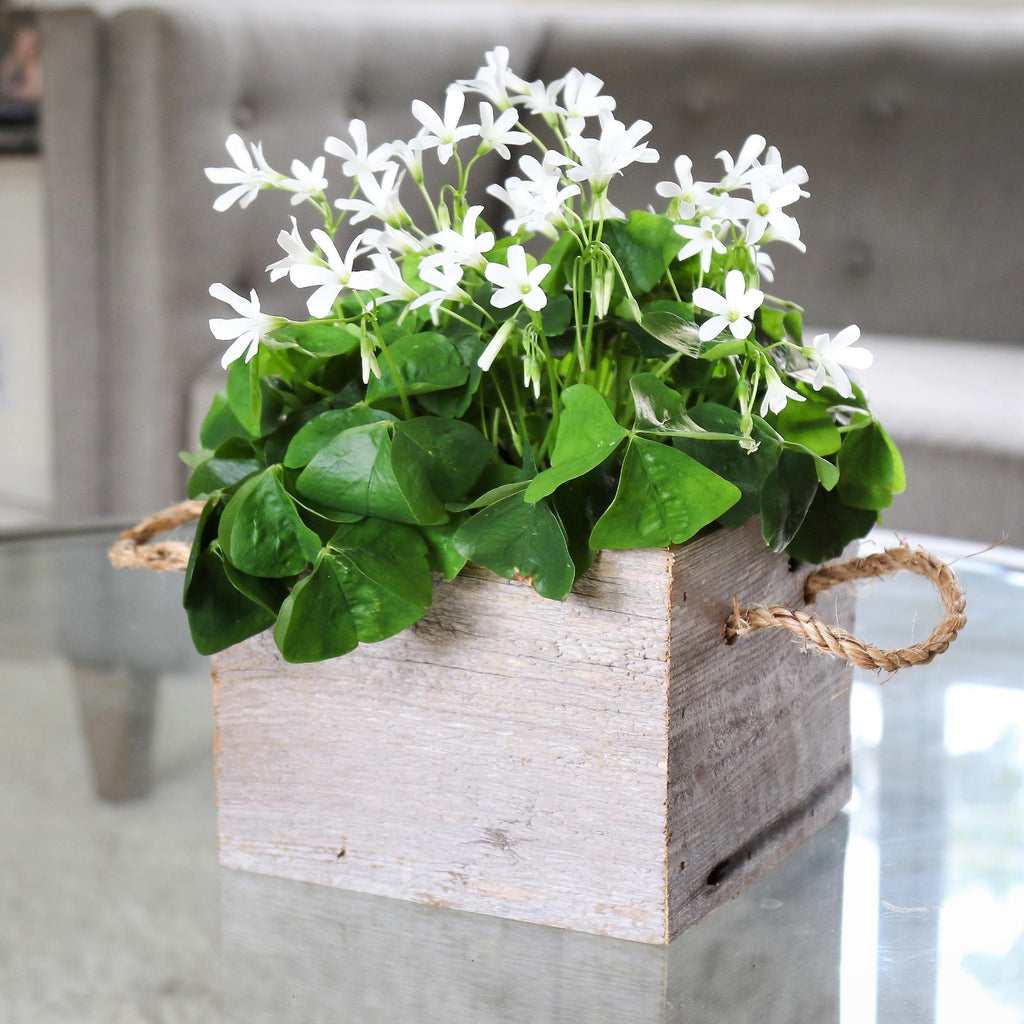
SKU: 73877236481
shamrock plant seeds

shamrock plant seeds Seedsplant A0021 Oxalis Regnellii Wood Sorrel Shamrock Perennial Growing Bonsai Roots Rhizomes Corms Tubers Potted Planting Reblooming Fragrant Garden Species Blooms Flower Seeds Plant Gardening

Sale price$23.54 Regular price$26.15
Save 10%

Pay in installments of $6.54 with ShopPay, AfterPay and Klarna

Shipping Estimate
USA
  • USA
  • CAN

Ships within 48 hours · Estimated delivery Sep 4 - Sep 9

Promo Codes Available:

For Your Every Summer RSVP, with Code: SUMMER15

Description

shamrock plant seeds Seedsplant A0021 Oxalis Regnellii Wood Sorrel Shamrock Perennial Growing Bonsai Roots Rhizomes Corms Tubers Potted Planting Reblooming Fragrant Garden Species Blooms Flower Seeds Plant GardeningAbout this item OXALIS BASICS Botanical name: Oxalis species. Common names: Wood sorrel, false shamrock, shamrock plant, good luck plant, love plantPlant type: Tender bulb, often grown as an annual or indoor plant. Zones: USDA Zones 7 10, although some varieties can tolerate colder temperatures. Exposure: Full sun to partial shadeBloom time: Virtually ever blooming, with the heaviest flower production in the cooler temperatures of early spring and

About this item

  • OXALIS BASICS

    Botanical name:Oxalis species.
    Common names:Wood sorrel, false shamrock, shamrock plant, good luck plant, love plant
    Plant type:Tender bulb, often grown as an annual or indoor plant.
    Zones:USDA Zones 7-10, although some varieties can tolerate colder temperatures.
    Exposure:Full sun to partial shade
    Bloom time:Virtually ever-blooming, with the heaviest flower production in the cooler temperatures of early spring and autumn. Plants tend to rest in the summer when temperatures exceed 85°F.
    Flower colors:There are white, pink, rose, lavender, or yellow-flowered varieties, as well as some with two-toned flowers.
    Foliage colors:Green, purple, silver, or variegated
    Is oxalis toxic?
    All members of the Oxalis genus contain oxalic acid, which can be toxic when ingested in large quantities. Keep plants away from children and pets. See more Common Poisonous Plants for Dogs and Cats.
    Is oxalis invasive?
    Some native species of oxalis, such as yellow wood sorrel (O. stricta) and creeping wood sorrel (O. corniculata), are common weeds and considered to be invasive. However, the ornamental varieties featured here are easily contained and will not spread out of bounds.

  • PLANTING OXALIS

    Where to plant:
    In full sun or light shade in well-drained, fertile soil. If you live in a hot climate, plants will do best in a location with afternoon shade.
    When to plant:
    Plant bulbs outdoors in late spring, after all danger of frost has passed. The foliage typically emerges 3 to 4 weeks after planting, with the flowers appearing approximately 8 to 10 weeks later.
    How to plant:
    In garden beds, plant bulbs approximately 2 inches deep and 4 to 6 inches apart, covering lightly with soil. If necessary, dig a little compost or organic matter into the soil before planting to improve soil quality.
    For container plantings, plant the bulbs about an inch deep in a well-draining potting mix, using about 6 to 8 bulbs for a 6-inch pot.
    Forcing oxalis bulbs:
    You can also force potted oxalis bulbs indoors before moving them out to the garden by placing them in bright light in a room with cool temperatures (about 55° to 60°F). Keep the soil evenly moist, but not drenched. Once blooms begin to appear, they will often continue for several months. Unlike hardy bulbs, oxalis bulbs don’t need a cooling period (or vernalization) in order to grow.

  • OXALIS CARE AND MAINTENANCE

    Watering:
    Oxalis plants will wilt if the soil is allowed to dry out, so keep the soil evenly moist but not soggy. The bulbs will rot in overly wet soil.
    Fertilizing:
    If grown in well-composted soil, oxalis rarely needs additional plant food. Container-grown plants will benefit from the application a slow-release fertilizer at planting time. Withhold fertilizing if plants enter a resting or dormancy period in midsummer.
    Pruning and deadheading:
    Plants are self-cleaning, so no deadheading is necessary, but you can lightly prune the foliage at any time to control plant size and shape. If your plants go dormant in the summer and the leaves begin to turn brown, you can trim back the dying foliage to about an inch from base of the plant.
    Overwintering:
    In areas colder than zone 7, dig up bulbs planted in garden beds before the first frost and store them in a cool, dry place until they can be replanted in the spring. For shamrock plants grown in pots, move them indoors and stop watering them. Store them in a cool, frost-free place to keep them dormant. At the beginning of the next growing season, you can repot the bulbs and resume watering and fertilizing.
    Pests and diseases:
    Oxalis have few pests, but be on the lookout for aphids, whiteflies, and spider mites, which may occasionally be a nuisance. Other potential problems include fungal leaf spot, rust, and powdery mildew.

  • GROWING OXALIS INDOORS

    Light requirements:
    Give bright, indirect light, such as from a south- or west-facing window. Under low-light conditions, plants may become spindly and fail to bloom.
    Ideal room temperature:
    Cool night temperatures (around 50° to 65°F) and warm daytime temperatures (around 70° to 75°F).
    Humidity:
    Average household humidity levels are fine.
    Watering:
    Keep soil evenly moist, watering when the surface of the soil feels dry. Pots should have drainage holes to prevent soggy soil.
    Fertilizing:
    Feed every 2 to 3 weeks with a balanced liquid house plant fertilizer while plants are actively growing.
    Dormancy:
    If your indoor oxalis begins to lose all of its leaves, don’t panic. It’s just entering a period of dormancy (which usually lasts for a month or two) so it can conserve energy for a new flush of growth. During this time, move your plant into a dark place, reduce watering, and stop fertilizing until you see new growth begin. This dormancy period is a good opportunity to divide plants by separating some of the bulbs and replanting them in new pots.    

  • USING OXALIS IN THE GARDEN

    There are many ways to use oxalis in the garden, including: rock gardens, groundcover, edging or front of border, or in containers and hanging baskets.
    Fun fact:
    Ever wondered why some oxalis are called "butterfly shamrocksâ€? That’s because their leaves are photophilic, which means they respond to light intensity by folding up at night or on overcast days and reopening when the sun shines. During the day, they may even stretch or change the position of their leaves to capture as much sunlight as possible.                     

    Why Seedsplant ?

    • Experts in the field
    • Family owned and operated - 100 years
    • Rigorous quality control
    • We strive for your success by offering the bulb size you need
    • Affordable quality

    Flower Bulb Facts of Life

    Bulbs: Beauty In a Bottle:

    Bulbs are a natural product. And, as such, follow a natural cycle of growth and rebirth. Enjoying their fabulous flowers means planting ahead in one season then results the next. Bulbs are among the easiest flowers to grow, not only are they affordable, but bulbs offer the most stunning colors available. Even the most novice gardener can create a breathtakingly beautiful spring garden with bulbs.

    What's a Bulb?

    A flower bulb is really a self-contained flower factory. Within this marvelous little package is nearly everything the flower needs to come to life! Split a bulb open, for instance, and you'll see its baby flower bud, leaves, roots, stem and food supply. All bulbs need from you is to be placed in the ground at the appropriate season of year, given a liberal drink of water then left to work their magic.

    Variety:

    Flower bulbs come in seemingly limitless varieties which makes them perfectly suitable for any garden design you can dream up.

    Is It a bulb ?

    The Difference Between Bulbs, Corms, Tubers, Roots,Today, people commonly us the term 'bulb' to refer to any plant that stores its own food underground. But, in truth, many popular 'bulbs' are not true bulbs at all. These include corms, tubers and roots and, while they all produce beautiful flowers, technically the plants are different

    When To Plant

    In fall, after soil temperatures are below 50ºF/10ºC. These bulbs bloom the following spring and require the cold winter temperatures for development. But let's say winter arrives and your bulbs are still in their bag. Not to worry! Bulbs are pre-programmed to grow so even if you have to plant through snow, plant your bulbs!

    How To Plant

    Most bulbs thrive in either full or partial sun and in almost any location with good drainage. Avoid planting at the base of hills or under drainage pipes where water collects and will rot the bulbs.

    • Dig a hole
    • Drop in the bulb
    • Water thoroughly

    Tips For success

    • A larger grouping of flower bulbs are far more fab than just a few planted here and there. Think clumps of color.
    • Buy the largest bulbs you can find.
    • Note the flowering times. Not all bulbs will bloom at the same time. A little planning will greatly increase the number of months you will enjoy bulb flowers.

    Passionate About bulbs

    Generally speaking, the best predictor for gardening success is bulb size. Almost always, the larger the initial bulb size planted, the larger and stronger the plants will be, producing more flowers. The first year end result will be noticeable to anyone.The best predictor for gardening success is bulb size.

    Shipping

    All items are shipped usually within 2 working days (usually sooner) except plug plants. Plants only dispatch Monday-Thursday to avoid problems with live plants sitting in a postal depot over the weekend. During busy periods , due to the nature of product and extra care needed when packing and preparing for post, please allow up to 7 days for delivery (depending on day purchased). Plants are only dispatched when crops are ready to travel , therefore some multi orders may be delivered separately and occasionally it may be necessary to hold back dispatch until plants are ready. Shipping is either via Post  or 24/48 Hour courier depending on order size/weight etc. at our discretion. Please be patient when ordering plants as you cannot rush nature. Please be aware delivery dates shown by Seedsplant are estimates only and do not apply to live plant orders. Any orders returned to us by Post or Courier will incur a further postage charge to resend.

    Returs

    You may return all unopened items within 14 days of delivery for a full refund less P&P charges. Any items received damaged in transit must be notified in writing/email within 24 hours of receipt. Live plants should arrive in perfect condition , If however for some reason they do not please contact us immediately upon receipt. A full refund including original P&P will be made for any items not as described or wrong part no etc. All returns must include your full details with a copy of original receipt. You may cancel any transaction as long as notice is received before item(s) are / have been dispatched.

    Contact us

    You can message us through Seedsplant messages , otherwise You can write to us by email :[email protected]

    Shipping Notes
    • Free Standard Shipping on $100+ Orders to the USA.
    • Except Preorder products are shipped in 48 hours.
    • Delivery to the USA:
    1. Standard Shipping : 3-10 business days
    • If time is of the essence, please consider selecting expedited delivery for faster service.
    Exchange/Return Notes
    • We offer a 30-day return/exchange service after receiving.
    • Final sale items are not eligible for returns or exchanges.
    • To process your return/exchange, please contact us at [email protected]
    • Please click here for more details>>> Return & Exchange Policy
    SKU: 73877236481

    Discover Niche Categories That Outsell shamrock plant seeds

    Top-Converting Item to Boost Your Average Order

    4.1 ★★★★★
    Based on 15 reviews
    Sort
    Highest Rating
    Newest First
    Oldest First
    Product Reviews
    T
    Verified Purchase
    TigerSwan
    Battle Creek, US
    ★★★★★ 5
    works
    Item Package Quantity: 1, Size: 100 Count (Pack of 1)
    I work night shift and these keep me energize without jitters. Also, I do not crash. They last a good 6 hours and I'm able to sleep when I get home.
    WAS THIS REVIEW HELPFUL?YesReportShare
    Reviewed in the United States on December 1, 2025
    A
    Verified Purchase
    Anthony R
    Houston, US
    ★★★★★ 1
    They don't work
    Item Package Quantity: 1, Size: 100 Count (Pack of 1)
    Used to work, useless now. It seems they reformulated things. I used to wake up on this guarana, and the most recent batch not only does nothing, I can take two and need a nap within an hour.
    WAS THIS REVIEW HELPFUL?YesReportShare
    Reviewed in the United States on March 15, 2026
    P
    Verified Purchase
    Patrick Neary
    Grantham, US
    ★★★★★ 5
    This can be the best for some people and potential trouble for others. BP warning:
    Item Package Quantity: 1, Size: 100 Count (Pack of 1)
    It triggers my bipolar mania. Even though this detrimental effect is short-lived - only a few hours before coming back to normal... I don't feel right taking this ever again in supplement form. It's ok in a Monster Energy Drink or a Starbucks Tripleshot coffee or something for me personally. Really it's in my opinion the best herbal supplement for energy that is somewhat adventurous and flexitive. For me more like go outside and play, climb pine trees or something. In contrast, I'll suggest this term: "GNC-type herbal stimulants" - they feel more oriented toward focus and less towards locomotive behavior.
    WAS THIS REVIEW HELPFUL?YesReportShare
    Reviewed in the United States on May 21, 2025
    C
    Verified Purchase
    Craig Matteson
    Port Orchard, US
    ★★★★★ 5
    This wonderful biography focuses on what the contemporary records actually tell us.
    Format: Paperback
    I am very grateful to Richard Bushman for this book. Writing about Joseph Smith invites a storm of criticism because skeptics only want him debunked and believers want their faith supported. Each wants their pre-conceived image of who Joseph was to be proven correct. Bushman takes a strong stance that lets the evidence we have speak for itself, preferably as close to Joseph himself and contemporary witnesses as possible, and tell the story of his life to high scholarly standards. For me the book read somewhat sparer than a biography that includes anecdotes as if they are history. Many familiar stories that I learned growing up are simply not here. However, relying as much as possible on contemporary accounts and what Joseph himself wrote or said provides a a biography more consistent in its view of Joseph than the books that either extol him or those that tend to attack him and try to debunk him. For example, the famous Brodie biography seemed to me to want Joseph to be both a genius and a dolt, a highly energetic man yet lazy, a crazed believer and a cynical con man, and on and on with similar contradictions. Bushman achieves a more consistent lens on Joseph, despite the complications of the man and his life. I think this is both a great achievement and a real help in trying to understand Joseph. I mean it as high praise for the book when I say that I think that almost everyone who reads this book thoughtfully will take away a broader and deeper conception of who Joseph Smith was and what he did. Rather than try to recount the book to you I want to share several things that I learned from the book and really value. I could list dozens more, but you can read the book for yourself (which I encourage you to do). Yes, I am a believing member of the LDS Church, but I think the book is intelligent and honest and complete enough to provide interesting and thought provoking material for both the believer and the skeptic and for someone who comes with no knowledge of Joseph at all. Believers will have to consider the complications of the man and his flesh and blood temperament and the misjudgments he made in his life about the people he trusted and some of the actions he took. Skeptics will have to deal with the reality of the man and his achievements. Simply dismissing him as a con man or a crazed visionary will not work because that is not what the actual evidence says. Joseph did not run the Church as the single central figure nor did he turn it into a cult of Joseph Smith. Bushman showed me the power and genius of the organization of the Church and its balancing mechanisms of being flat with a broadly held male priesthood with a hierarchical leadership with doctrine of keys and how the later addition of women in the operation, governing of the Church, and caring of the needs of the Saints strengthened and enriched it. And while Joseph was the President of the Church and its Prophet and Seer he really did let local leadership govern itself according to the principles taught through the revelations. I think Bushman's focus on the development of the organization and its role in preserving the Church and its ongoing growth after Joseph's murder is spot on and helped deepen my appreciation of its dynamism and adaptability. I also like the compromise language Bushman achieved in dealing with the realities of the revelations of Joseph Smith. The author always refers to them as Joseph's revelations. For believers, we accept them as revelations from God through Joseph Smith, but I can see them as "Joseph's" in that they were given through him. And skeptics who reject anything divine about the revelations can accept that, whatever they are, Joseph spoke them. I also liked learning how many of the revelations were given in the presence of others in meetings, how matter of fact they were, how they were immediately copied and circulated, and how difficult it was to get them collected and printed for a variety of reasons until we finally got them published as the Doctrine and Covenants. Another thing I gained a deeper appreciation of was the utter daring and the monumental nature of building the Kirtland Temple so early in the Church's life. Most Mormon congregations (wards) have around 500 members. Kirtland at the time they were building the temple was growing, but only had around 600 members when the project began. I can't fathom taking on such a project with so few people and for a people living in log structures and less it is even more incredible. Yet they built it in that rugged frontier town. I also thought that Bushman handled the sense of the miraculous around the dedication of the temple very sensitively. I also did not realize that when Joseph and Oliver were receiving the visitation of the Savior, Moses, Elijah, and Elias on the altar of the temple that up to 1,000 members were in the temple on the other side of the curtain. When I was growing up I did not understand clearly how early the Saints arrived in Missouri and how much larger the settlement there was than in Kirtland even though the temple in Kirtland was built and the proposed temple for Zion was not. Bushman also does a good job of giving a clear picture of the dynamics of the persecutions in Missouri and how the growing political power and anti-slavery stance of the Mormons antagonized the locals. The so-called Mormon War is also more critical to the rest of Joseph's life than I had realized. The constant hounding from Missouri and Joseph having to fear for his life from then on was something I had not truly appreciated. I also think Bushman handles the issue of plural marriage as well as it can be handled. And I think I gained a deeper understanding of John C. Bennett's role in the persecution of the Mormons in Illinois than I had before. I think the actual martyrdom is given a little too light a treatment here, but it is well covered material, and as Bushman notes, a great deal of faith promoting stories have accumulated around that event over the years. And I think he was probably wise in not opening up his book to attacks because he debunked someone's favorite story about Joseph's last days. Just laying out what is actually documented from the time is very helpful. Even with all the praise I have given, I could heap a great deal more if I had the space and time. But I do want to share an honest perspective I have of the book. It is superior, truly marvelous, from Joseph's early life through the dedication of the Kirtland Temple. That is the zenith of the book. From that point on, while good, the author himself cites difficulty in getting to Joseph directly after that point because his life and the nature of the work of the Church and the lives of the Saints changed. The rest of the book is not as exquisite. Very good, interesting, and informative, but not quite equal to the previous material. It becomes more of a narrative than it had been probably for the reason Bushman cites. I did find the footnotes and bibliography quite useful. They enriched my reading and sent me on to other reading I found illuminating and will help me in selecting other directions for study for years to come. So, I am especially thankful for the hard work in putting all that material together, as well. This is a monumental work and a treasure. Read it. Evaluate it for yourself no matter your present attitude or judgments of Joseph Smith. You will have a more considered and informed view for having read it. And, I don't know why this is in the paperback section. I bought and read the hardcover of the book. Reviewed by Craig Matteson, Saline, MI
    WAS THIS REVIEW HELPFUL?YesReportShare
    Reviewed in the United States on May 15, 2012
    R
    Verified Purchase
    R. Mckissick
    Alexandria, US
    ★★★★★ 5
    Candid Honesty from a great American Historian
    Format: Hardcover
    Reading Puritans to Yankees, a Bancroft Prize history, I moved to this tome. Professor(full) Bushman is a great American historian. This book follows tradition. One look at Prof. Bushman's on-line student sylabuses or awards at Columbia illustrates his leadership ofhistory students. Years I've spent trying to better understand ancient Pauls revelations; in particular the one with Christ on the road. How can one get closer to Christ without understanding revelation? At the third read of Rough Stone, and lots of redlines, I think this book is about revelation. Also what a rare thing revelation has been; heaven is open modernly for revelation. I wish I could understand the Bible without a guide to communicaton form God. Rough Stone has opened a new understanding of revelation. Maybe the most important thing is that God is all powerful and supreem, and will talk to us when He wants and we are able to understand. Bushman's honest facts include the unknown. Cited notes and end references indicate ratio of 20 to 1, focusing on issues not defense. His knowledge quest is aparent, like an intelligent friend who relates and lays out the reasons for his analysis. The evidence historians rely on, shows that Smith himself spoke and acted consistently with God. All true history I have read has good and bad - same here - the voice is one of personal knowledge. Whether or not you accept Bushman's conclusions on various issues, it is clear that Bushman himself has come historically to his conclusions. Very powerfull statement for an eminent historian. Dissecting a paragraph on prayer, washings and annointings leading up to the 1836 Kirtland Temple dedication is illustrative. After a summary, each person involved is organized into groups (priests, bishops presidents etc.). Concise background connects mental states. Bushman conveys the visions and revelations. Each hammered paragraph a razor sharp sword of truth, accompanied by the Spirit of Christ. May I someday write like this. This book does not attempt reader placement in contextual cultural affinity. The 1840's Latter-day Saints were persecuted, we are not. The Holocost Jews, read pogrom, are culturally atuned, and able to sympathize, we are not. Conveying instructions on getting revelation to unsympathetic readers like us was a challenge beyond comprehenson; study brings some understanding. Bushman has become sympathetic. His out-of-book descriptions of Lincoln defending on the Illinois circuit court clearly depict Bushmans cultural affinity. After three reads, I am becomming sympathetic. My wife calls me a bit crazy with the the 10 mile walks to Church, and baking bread from hand ground wheat, and almost loosing my job from sticking up for "no discussions of dating activities by the student interns at work". A good book should motivate action - maybe I should be less motivated (so she says). The highest recommendation, this is what I would give this book. I A guide to me, it sits with Bushmans other books and essays. I seem better able to understand conference talks. I listened to N. Eldon Tanners talk on Christ from the 147th conference (1982). He went over the first vision. But it became clear Tanner was talking from personal revelation, relating the 1832 description of Joseph Smith. Characteristics of revelation I learned reading Bushmans book jumped out at me during Tanners' talk.
    WAS THIS REVIEW HELPFUL?YesReportShare
    Reviewed in the United States on January 3, 2011

    recommand products