SKU: 74882393955
spider mite spray for plants

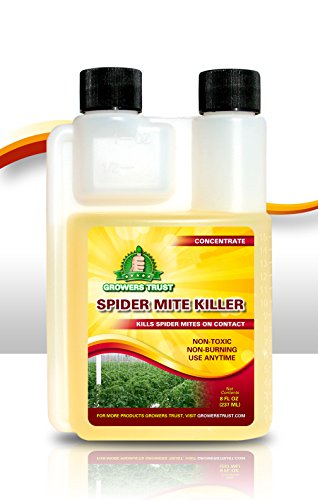
spider mite spray for plants Spider Mite Killer

Sale price$23.45 Regular price$26.05
Save 10%

Shipping Estimate
USA
  • USA
  • CAN

Ships within 48 hours · Estimated delivery Jul 11 - Jul 16

Promo Codes Available:

For Your Every Summer RSVP, with Code: SUMMER15

Description

spider mite spray for plants Spider Mite KillerChoose your Size Above! Immediate Results Naturally Derived from Plant extracts, Effective and Safe 100% Organically sourced ingredients Non Toxic Non Burning* Anytime use from germination to harvest Zero synthetic chemicals No need for protective gloves or masks Leaves no residue, odor or taste Safe for People, Pets and Plants Laboratory tested What Pests Does It Kill? Growers Trust Spider Mite Killer effectively targets and eliminates a variety of

Choose your Size Above!

  • Immediate Results
  • Naturally Derived from Plant extracts, Effective and Safe
  • 100% Organically sourced ingredients
  • Non-Toxic
  • Non-Burning*
  • Anytime use from germination to harvest
  • Zero synthetic chemicals
  • No need for protective gloves or masks
  • Leaves no residue, odor or taste
  • Safe for People, Pets and Plants
  • Laboratory tested

What Pests Does It Kill?

Growers Trust Spider Mite Killer™ effectively targets and eliminates a variety of pests beyond simply spider mites. Use Spider Mite Killer to control and eliminate the following pests:

Spider Mites Two-Spotted Spider Mites Mole Crickets Red Spider Mites
Broad Mites
Southern Red Mites
Mosquito Larva
Thrips
Aphids
European Red Mites
Chiggers Whitefly


What Plants Can It Be Used On?

Spider Mite Killer™ works on the following plants and vegetables plus many more- 100% Guaranteed! Spider Mite Killer™ can be used on any plant that has a mite infestation. Here are some common ones that get affected. 

Cucurbits Medical Marijuana Tomatoes Grass/Lawns
Squash Grapes Pumpkins Basil
Roses Cucumbers Zucchini Hibiscus
Peonies Inpatients Cannabis  Strawberries
Houseplants Peppers Shrubs Succulents


What Trees Can It Be Used On?

Spider Mite Killer™ works on the following trees and shrubs. It can be used effectively on any tree that has a mite infestation. Here are some common ones that get affected. 

Apple Arborvitae Cedar Spruce
Cherry Christmas Trees Citrus Conifer
Cyprus Evergreen Juniper Pine
Italian Cyprus

 Scientifically engineered, Spider Mite Killer™ is truly the ultimate, natural solution to safely eliminating spider mite infestations.

Made from a combination of natural plant extracts, Spider Mite Killer™ can be used at any time from germination through harvest. Using absolutely no dangerous chemicals.


How Does It Work?

Spider Mite Killer™ successfully kills spider mites on contact. Growers Trust utilizes its exclusive formula to offer an immediate solution to spider mite infiltration of plants and other valuable crops. Harmful chemicals have the potential to damage your crops;

Spider Mite Killer™ also causes reproductive disruption among female spider mites, leading to infertility or mites that don't develop to an adult stage. It also deactivates any eggs and prevents them from hatching.

Spider Mite Killer™ is the most effective and safest spider mite treatment on the market!

When & How Do I Apply It?

Spider Mite Killer™ can be used at any time from germination through harvest. It is safe to use when plants are flowering or on buds and it won't affect the taste of your harvest. 

It can be used directly on the leaves of any plant such as roses, tomatoes, herbs, marijuana, cannabis, etc. It can also be used as a soil drench to effectively kill any mites that have made it into the soil. 

Apply before or during a spider mite outbreak. Spray a light mist to thoroughly wet upper and lower leaf surfaces, stems and branches where pests are found. 

It is best not to apply during wet conditions as this may reduce product effectiveness. If it does rain, then re-apply once the plants are dry.

For the best results, apply every 3-5 days during an outbreak to make sure to kill all adult mites and to prevent any eggs from hatching. 

Spider Mite Killer™ won't burn your plants, however, it is most effective when used during low light hours or with grow lamps turned off.

*Avoid applying product during peak sunlight, as oil-based products can cause phytotoxic effects on some plants. 

Is It Safe?

Harmful chemicals have the potential to damage your crops or ruin the taste of your plants or buds.

Spider Mite Killer™ is completely safe due to its natural yet powerful ingredients. Growers Trust uses only the highest quality concentrated food grade oils. 

It won't affect the purity of the fruit, flowers, or buds of the plants you are growing. 

We harvest and extract: Geraniol, Citronella, Peppermint, Cottonseed, and Rosemary oils using the cold-press method in order to retain purity of ingredients. The oils then go through our patented process called micronization and high shearing, giving our products the  ability to cover a larger surface area and enabling deeper penetration into the soil, crevices of plants, insects, and pathogens. The filaments in the plant absorb our products faster compared to conventional products.  Today, thanks to our patented micronization process, Growers Trust manages to provide products that work faster and more effectively. We do not use heat or chemical solvents to process any of our products . We source our ingredients  from right here in the USA to guarantee the highest quality.

We do not use products called Ionic or non-Ionic surfactants. 

Surfactants are compounds that lower the surface tension (or interfacial tension) between two liquids, between a gas and a liquid, or between a liquid and a solid. Surfactants may act as detergents, wetting agents, emulsifiers, foaming agents, and dispersants, Fatty Acids. Basically it is a chemical that allows the manufacturer to use less of the active ingredients to make a cheaper product. 

Video


        Shipping Notes
        • Free Standard Shipping on $100+ Orders to the USA.
        • Except Preorder products are shipped in 48 hours.
        • Delivery to the USA:
        1. Standard Shipping : 3-10 business days
        • If time is of the essence, please consider selecting expedited delivery for faster service.
        Exchange/Return Notes
        • We offer a 30-day return/exchange service after receiving.
        • Final sale items are not eligible for returns or exchanges.
        • To process your return/exchange, please contact us at [email protected]
        • Please click here for more details>>> Return & Exchange Policy
        SKU: 74882393955

        Discover Niche Categories That Outsell spider mite spray for plants

        Top-Converting Item to Boost Your Average Order

        4.6 ★★★★★
        Based on 2330 reviews
        Sort
        Highest Rating
        Newest First
        Oldest First
        Product Reviews
        L
        Verified Purchase
        LPThomas
        New York, US
        ★★★★★ 4
        Interesting and important book
        Format: Hardcover
        This book looks at the motivations and demographics of the first wave of English immigrants to flee to what was to become the USA. Interestingly written, it explores the educations, positions of and the relationships of the earliest settlers to our east coast. I read it while researching our Family Tree and finding the people connected before coming, and for generations after. The endless Indian wars were a revelation, as was the tale of the oppressed becoming the oppressors as Quaker families fled Massachusetts for New Netherlands.
        WAS THIS REVIEW HELPFUL?YesReportShare
        Reviewed in the United States on March 9, 2013
        R
        Verified Purchase
        RobCargill
        Waukegan, US
        ★★★★★ 5
        The Barbarous Years: The Peopling of British North America: The Conflict of... Bernard Bailyn
        Format: Hardcover
        A remarkable book!!! I have never read such a comprehensive book on early United States history that contained so much information I had never read before. How the status of "indentured servant" existed alongside the origins of slavery in Virginia and Maryland (along the Chesapeake Bay) was both remarkable and horrible. That a white man (typically, landowner) could have a child with a (black) slave who would become a free person at adulthood (earliest laws) created problems (they needed the "help"), so this law of the 1650s-1660s was changed! And if a white (free) woman had a child with a (black) slave, the resulting child would remain a slave! Matrilineal or patrilineal human rights, that is the question. Indentured servant, but with no expiration date. I had never before read how people in this country were real "pioneers" in the creation of slavery - at least with slavery of humans captured from the continent of Africa! It seems that whatever voices of "Christian" decency there might have been at the time - church based values or ones simply based in the hearts of people living here - they were drowned out by commercial interests or those who simply couldn't be bothered by such concerns. I hope you read this book and recommend it to your friends! Sincerely, Bob Cargill, Minneapolis
        WAS THIS REVIEW HELPFUL?YesReportShare
        Reviewed in the United States on April 19, 2013
        K
        Verified Purchase
        k
        Fort Morgan, US
        ★★★★★ 3
        A decent primer -- no more.
        Format: Hardcover
        This is an odd book for one of America's premier historians. It isn't a bad book -- a person of Bailyn's erudition couldn't write a bad book -- but it doesn't hang together well. The author does not really have anything new to say and a historian of the Early Colonial Period will quickly recognize the usual sources. It is hard to see exactly what historiographical niche this book fills. Even the title is misleading. Sure, Jamestown was barbarous enough by our standards and New Amsterdam was plenty harsh. But, the Bay Colony was, by the rough-and-ready standards of 17th century Europe, pretty civilized. (Compare it with the contemporaneous English Civil War or the Thirty Years War.) As for "Conflict of Civilizations," there was certainly enough of that but the most interesting part of the book, the last third or so on the Bay Colony, is largely an account of Puritan theological quarrels. In fact, one senses that Bailyn felt like he was "home" when he wrote about the Bay Colony. He has, after all, written about New England since 1955 ("Merchants.") He gives the reader a clear account of the theological duels between Winthrop, Cotton, Hooker, Williams, Hutchinson and others. But, others have done this as well or better. Bailyn all but ties himself in a knot to be politically correct toward the Native Americans. For every Indian atrocity he finds a matching atrocity in European civilization. Still, if captured in war one was likely to be a lot better off among the English, French or Dutch than the Pequods. A LOT better off! This volume is part of a series that explores the settling of North America and hardly anyone is better equipped for this than the author. But, what begins as a good account of the horrors of Jamestown drifts into a twice-told tale of the niceties of Puritan disputation. It is almost as if Bailyn got bored half-way through and started channeling Perry Miller. A good book in its way and quite useful for an upper division course or first-year graduate seminar. But, not well-written enough to snare the casual reader and not original enough to snare the professional historian. An odd number.
        WAS THIS REVIEW HELPFUL?YesReportShare
        Reviewed in the United States on February 19, 2013
        G
        Verified Purchase
        Goldry Bluzco
        Lowell, US
        ★★★★★ 5
        Sheds Light On A Dimly Perceived Period
        Format: Kindle
        This book is clearly intended for those of us (non-historians) curious about what is a dimly perceived period of North American colonial history. Living as I do in Tidewater Virginia, I consider myself fairly well versed with the earliest years of English settlement or invasion, depending on your point of view. But, I was wrong. I had, of course, read about the wretched first two years of the Jamestown enterprise, but I had no idea just how ghastly the conditions of the first twenty years of the English colonial period were. Wave after wave of newcomers simply starved or died of disease in those years. The mortality rate was shocking. So many people were dying off that the local Indians did not even think it necessary to kill these newcomers (which proved a mistake, of course). And this was not just at Jamestown. For example, the author says that in any given year in one county 30 to 40% of the children under the age of eight were orphans. And the origins of many of these earliest colonists -- orphans dumped by local churches, beggars snatched off of urban streets, prisoners marched from gaol to waiting ships, many poor people literally kidnapped or tricked into emigrating -- was eye-opening. Talk about the refuse of British society. (As an aside, anyone whose humble immigrant ancestors came to Virginia in those years can forget about doing any genealogical research. You will never find the answers to your questions.) This does tend to be a bleak read. One of the things that jumped out at me was the sad, repetitive tale of European-Indian relations. It mattered not where one was. Virginia, Maryland, Delaware, New Amsterdam, New York, the pattern is always the same. Trade and early friendly relations were quickly undermined by misunderstandings, stupidity, devious tricks, alcohol, and land disputes that led to attack and counter attack and massacres on both sides. One of the things I did enjoy was the Indians' views of Christianity. Those mentioned by the author viewed it as little more than a strange dream. When the concept of a universal god was explained to them they laughed and called it a silly fable. I can only agree. My respect for their powers of reasoning and perspicacity rose immeasurably. Just who was the savage?
        WAS THIS REVIEW HELPFUL?YesReportShare
        Reviewed in the United States on July 30, 2013
        J
        Verified Purchase
        J. Grattan
        Pawtucket, US
        ★★★★★ 4
        Interesting, but a little scattershot (3.75*s)
        Format: Paperback
        One thing is for certain, in this highly detailed work by the author, there is no attempt to sugarcoat the European experience in emigrating to America in the 17th century. He examines Virginia, the Chesapeake area, New York, and New England. In the initial stages merely surviving was an accomplishment. Most of the early settlers were clueless about overcoming the harsh conditions that they found, not to mention the savagery that the natives unleashed upon them without warning. A large supply of the weak and vulnerable facilitated this peopling of America, despite the dreadful conditions. In addition, as the author shows in great detail, are the conflicts among the settlers. America was settled during a time of great political and religious clashes in England. Most of the settlers were Protestants, but held widely differing, contentious views about religious practice. Much of the governance of the colonies was autocratic, inept, and harsh. A good many of the settlers were indentured by contract for years and thereby were practically slaves, in contrast to the well connected who were granted huge estates. But even then, the author points out that the living standards for even the rich were terrible by European standards. The book is definitely more sociology than historical. One learns about the origins of the settlers across America and the implications for the possibility of robust communities. The author definitely does not hold back on naming thousands of settlers across the colonies; it is difficult to slog through all of that. The book does seem a little scattershot in its organization and subject matter.
        WAS THIS REVIEW HELPFUL?YesReportShare
        Reviewed in the United States on June 10, 2017

        recommand products