SKU: 74993396658
indoor real tree plants

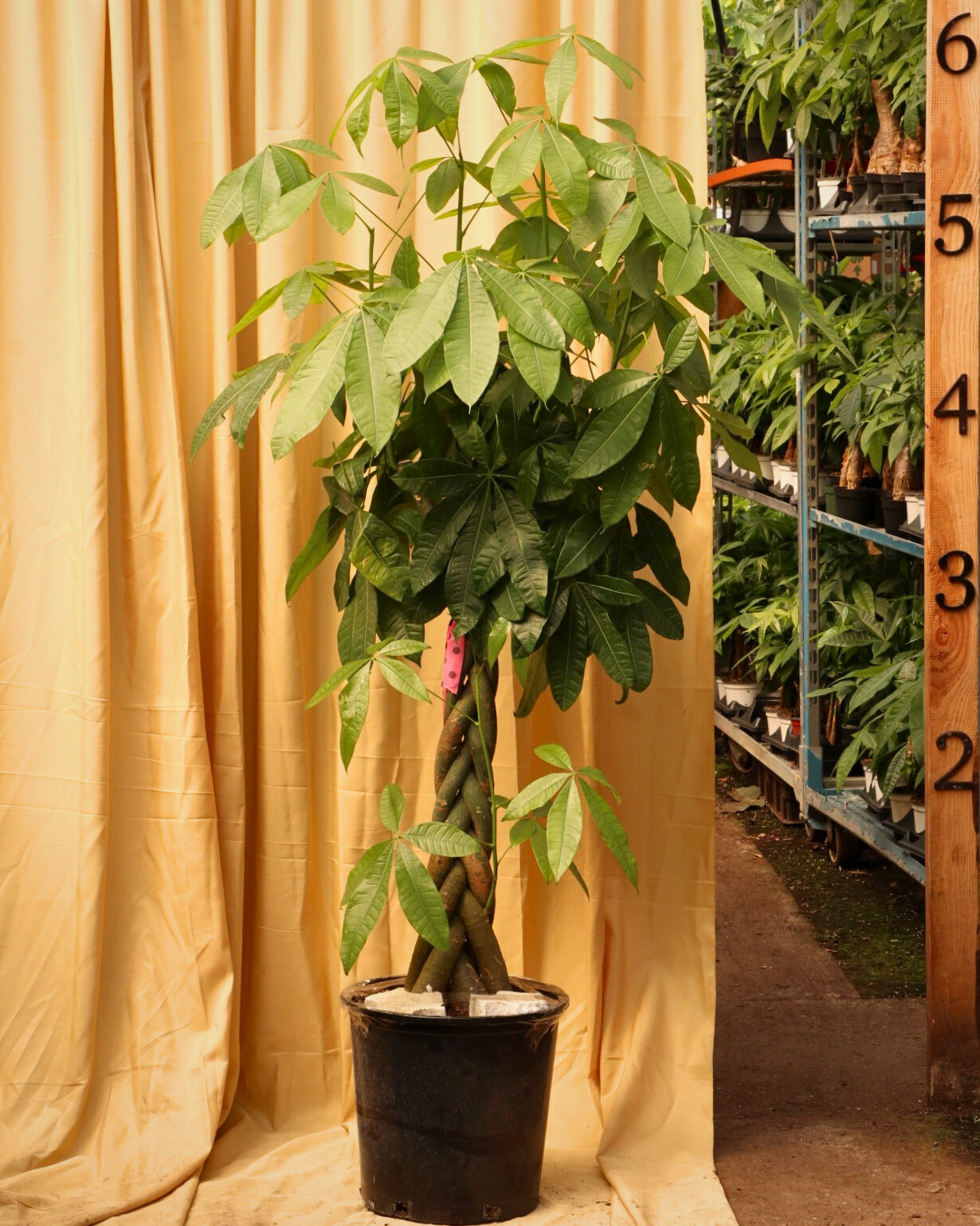
indoor real tree plants 5-7ft Tall Money Tree: Good Luck and Great Looks

Sale price$19.22 Regular price$21.35
Save 10%

Pay in installments of $5.34 with ShopPay, AfterPay and Klarna

Shipping Estimate
USA
  • USA
  • CAN

Ships within 48 hours · Estimated delivery Aug 31 - Sep 5

Promo Codes Available:

For Your Every Summer RSVP, with Code: SUMMER15

Description

indoor real tree plants 5-7ft Tall Money Tree: Good Luck and Great LooksIf youre looking for good luckand a large houseplantthen look no further. Mr. Money Trees beautifully braided, swirling trunk traps good fortune. Not just good luck, but also a good income. Its leaves grow in groups of six, possibly representing six figures. Plus, the whole thing just looks striking. Money Tree benefits Some say a Money Tree can even promote healthier sleep, reduce stress, and decrease conflict in the home. We cant confirm the science

If you’re looking for good luck—and a large houseplant—then look no further. Mr. Money Tree’s beautifully braided, swirling trunk traps good fortune. Not just good luck, but also a good income. Its leaves grow in groups of six, possibly representing six figures. Plus, the whole thing just looks striking.


Money Tree benefits

Some say a Money Tree can even promote healthier sleep, reduce stress, and decrease conflict in the home. We can’t confirm the science behind those beliefs, but research does suggest that the Money Tree is an effective air purifier.


Place this adorable plant beside your bed at night, and take a deep breath. You just might sleep better and feel at ease, and you’ll definitely be breathing in cleaner air!


The Money tree looks cool

Scientifically known as the Pachira Aquatica, the Money Tree is a wetland plant native to Central and South America. Each “Money tree” is actually made up of multiple Pachira Aquaticas, gently hand woven together as they grow to maturity. Thanks to the Money Tree’s umbrella-like foliage, the plant’s swirling trunks look like they’re dancing in the rain, adding whimsy and romance to your indoor garden.


The Money Tree is pet-friendly and non-toxic

Money Trees are non-toxic to cats and dogs. We can’t stop your pet from nibbling on your precious Money Tree, but it won’t end in their demise. (We’ll send all the good vibes to your devoured Money Tree, though).


Lighting

Money Trees love low-light spots, even really low light, and they’ll bring you joyful thoughts even from a shady corner—or in bright indirect light. Money can’t buy happiness, but it can buy plants, which is almost the same thing?


Watering

Most houseplants can’t tolerate much trial and error when it comes to watering. But the Money tree is flexible! Money trees kinda like damp soil (they’re native to swampland after all), so overenthusiastic watering generally won’t kill them.


Pick your exact Money tree 


Now that you're an expert with the Money Tree, order this plant by 7pm ET to get this plant shipped out of our greenhouse in New Jersey tomorrow. (Wondering when it will arrive? Check with the zip code validator on top of the “Add To Cart” button.) We’ll deliver your Money Tree in our sustainable, super-secure packaging system, no matter where you live in the U.S. Your plants will arrive safe and intact!


Hop on a video call to select your Money Tree, and we WILL send out the EXACT plant that you picked out, just like if you picked it up at a local nursery or garden center. Except we have more and fresher plants to choose from, and you can't find our PAFE fine ceramic planter options anywhere other than our website. :)


For any other questions or concerns, please don't hesitate to reach out to us at [email protected] or call/text (609)-968-7063! Or if you want to learn more about the Money Tree, keep scrolling!


Money tree benefits


What is a Money tree good for?

The Money tree looks awesome, purifies the air, brightens your home, and—maybe—brings good fortune. That’s a legend, but nobody said legends can’t be based on truth! You should probably test it out, to be on the safe side.


Does the Money tree clean the air or give oxygen?

The Money tree cleans carbon dioxide from the air and replaces it with nice fresh oxygen for us to breathe. It also sucks up chemicals like formaldehyde and benzene, plus other synthetic chemicals from cleaning products, leaving the air cleaner.


Are Money trees easy to keep alive?

Money trees are very low maintenance. They’re not too fussy about their watering schedules or their lighting. However, everyone has something, and Money trees do prefer a narrow range of temperatures (65-75). They also want some humidity. But that’s all.


Money tree care


How often should I water my Money tree?

Water your Money tree every week or two—more often during the spring and summer, and less often in the fall and winter. The Money tree tolerates overwatering better than underwatering, but make sure you’re using well-draining soil.


How do I keep my Money tree happy?

It’s pretty easy to keep a Money tree happy! Water every week or two. Put it anywhere indoors except in direct sun. And sing it a lullaby every night at bedtime. Even easy-care plants don’t mind a little pampering.


Where should a Money tree be placed in the house?

Most importantly, place the Money tree wherever it can get the right lighting—anywhere from bright indirect light to truly low light. But traditionally, for the best luck, the Money Tree is placed in the southeast section of your home.


Do I need to fertilize my Money tree?

Fertilize your Money tree once a month during spring and summer, when it’s really growing. You can use a general-purpose fertilizer—it’s not a picky eater—but dilute it to half-strength and make sure the soil is wet before applying.


What temperature do Money trees like?

The Money tree is a bit fussy, liking a narrow range of indoor temperatures: 65 to 75 degrees. So keep your home at moderate temps year-round. (Finally, you can tell your spouse or Dad to turn up the heat.)


Can Money trees grow without sunlight?

Money trees can live happily in a dark room with little natural light. So if you have a room with teeny tiny windows, or your neighbor’s way-too-close apartment blocks the sun always, it’s ok—Mr. Money tree will be fine.


Should I spray water on my Money tree?

The Money tree does enjoy humidity, and its leaves will get crinkly in low humidity. However, there’s some debate over whether misting helps or not. To be on the safe side, if you live in low humidity, get a humidifier.


Money tree factoids


Why does the Money tree have 6 leaves?

Some say the six leaves symbolize six figures—in other words, the luck from the Money tree might lead to your next promotion. (It’s us, we’re the ones who say that.) No promises, but work really hard just in case.


What is the superstition about Money trees?

Legend says that having a Money tree in your home will bring good luck and possibly even financial fortune. We prefer “legend” over “superstition” because it sounds fancier and makes us look cooler for believing in it.


Is there a difference between a Money tree and a Money plant?

Yes, the Money tree and the Money plant are totally different species. The Money tree is officially Pachira Aquatica, and the most common money plant, the Chinese Money plant, is Pilea Peperomioides—and it’s a small plant, not a tree.


Is the Money tree good for feng shui?

The Money tree is powerful and meaningful in feng shui, especially if you place it in the southeast area of your home. It symbolizes personal and professional growth and is said to bring good fortune to you and your family.


Do Money trees bloom?

In the wild, Money trees often boast glorious fluffy orange blossoms. But that only happens because they’re pollinated by bats. Assuming you don’t keep any bats inside (weirdo), your Money tree is very unlikely to bloom indoors.


How often do Money trees grow money?

Sadly, the legend that Money trees bring wealth and fortune is more of a metaphor than a practical promise. None of our Money trees have ever grown cash, and if they start, we won’t sell them to you anymore!


Why is it called a Money tree?

The Money tree gets its name from the legend, myth, or superstition that it brings financial luck to its owner or household. However, it’s not literal; Money trees don’t grow money (and no one will pay you to own one).


How long do Money trees live indoors?

Even indoors, a Money tree can live ten years or even longer. Of course, it requires TLC, but it’s an easy-care plant so that’s not a tall order. The Money tree will be your botanical companion for a decade.

Shipping Notes
  • Free Standard Shipping on $100+ Orders to the USA.
  • Except Preorder products are shipped in 48 hours.
  • Delivery to the USA:
  1. Standard Shipping : 3-10 business days
  • If time is of the essence, please consider selecting expedited delivery for faster service.
Exchange/Return Notes
  • We offer a 30-day return/exchange service after receiving.
  • Final sale items are not eligible for returns or exchanges.
  • To process your return/exchange, please contact us at [email protected]
  • Please click here for more details>>> Return & Exchange Policy
SKU: 74993396658

Discover Niche Categories That Outsell indoor real tree plants

Top-Converting Item to Boost Your Average Order

4.7 ★★★★★
Based on 22 reviews
Sort
Highest Rating
Newest First
Oldest First
Product Reviews
B
Verified Purchase
BostonProfessionalCouple
Carnegie, US
★★★★★ 4
Fabulous book but seems a little biased
Format: Hardcover
I read a lot on the healthcare system and also have a biology PhD and a healthcare-related career, so I read 'How We Do Harm' with real interest and found that I tremendously enjoyed it, largely due to its distinctive and refreshing down-to-earth, no-holds-barred, friend-of-the-people style attack on many different sacred cows of the healthcare system. He exposes ignorance, shysterism, laziness and other commonplace human failings AMONG HIS FELLOW PHYSICIANS, where these everyday human foibles have an enormous impact on the life and death and quality of life of the patients treated by them. And he is not just any physician, he is the Chief Medical and Scientific Officer of the American Cancer Society. It reads like the system has turned on itself. This is a 'People's History' of the current healthcare system. The language is carefully unacademic and the cases he chooses are heart-wringing for the most part. I think there is much to learn from the diverse cases he selects, and he goes after problems originating with patients and their families as well as doctors and the system. If each of the problems that Dr. Brawley characterizes were systematically addressed, we would have a somewhat better and MUCH cheaper system - I think essentially a Canadian system, even if there were multiple payors. Once everyone followed the same rules and there was little role for physician discretion, and little role for new therapies until massive clinical studies achieved definitive conclusive results, inefficiencies in the system would be dramatically reduced, and many patients would receive better care. The problem with this objective, IMHO, is that the heterogeneity of cancer and the rate of advance in this particular field would not be well-served by a system where no new therapies were paid for until they had achieved p values of <0.05 in clinical trials IN THE PRECISE PATIENT POPULATION of the patient who needs treatment. Some cancers are so rare that this would never happen. In other cases, new research information evolves in small case series that wouldn't meet Dr. Brawley's standards but would provide vital information for selection of therapy. All-in-all, Dr. Brawley appears overly philosophically committed to the concept of clinical certainty, iron-clad treatment paradigms, and saving the system money. I'm all for saving the system money, but Dr. Brawley goes after cancer screening with the dedication of a hero confronting his nemesis. He barely acknowledges the potential for good to come from screening. For example, he is dismissive of the value provided by lung cancer screening, in spite of a roughly 50,000 patient randomized controlled study that showed a 20% reduction in cancer mortality in heavy smokers who received screening! This was without even specifying how these patients were treated - the 20% reduction in the leading cause of cancer mortality was simply from looking for a spot on the lung, and then letting the doctor and patient decide what treatment to pursue. I see that as a tremendous breakthrough. Dr. Brawley sees it as a roughly even set of risks and benefits that the system presumably should hesitate to fund. (Updated August 2013 to note that the U.S. Preventive Services Task Force has now issued a strong recommendation for CT screening of heavy smokers for early detection of lung cancer, based primarily on the data above. "As many as 20,000 deaths a year could be prevented by screening", according to Michael LeFevre, MD, co-vice chair of the task force). The book is well worth reading; but there are other intelligent, reasonable viewpoints on the burning thesis presented by this book, and one unfortunately comes away with the impression that Dr. Brawley would not acknowledge this. I found myself comforted by the fact that other checks and balances in the system will limit Dr. Brawley's impact on cancer treatment paradigms, even with his role at the ACS.
WAS THIS REVIEW HELPFUL?YesReportShare
Reviewed in the United States on June 20, 2012
T
Verified Purchase
Thomas M. Loarie
Lake Worth, US
★★★★★ 5
Intellectual Dishonesty, Malfeasance, and Conflicts of Interest...
Format: Hardcover
In "How We Do Harm,' author Otis Webb Brawley, M.D., shares his healthcare system experience from his early days at the Pritzker School of Medicine (University of Chicago), as a resident at University Hospitals of Cleveland, as a fellow at the National Cancer Institute, and as a physician specializing in medical oncology at Grady Hospital in Atlanta. Brawley has both the experience and credentials to call our attention to the systemic failures of a system that our politicians call the "best in the world (ignorance is elegant)." He is recognized as an outstanding physician-scientist who serves today as the chief medical and scientific officer of the American Cancer Society, and as professor of hematology, oncology, medicine, and epidemiology at Emory University In this book, the author takes the reader on a "guided tour of the back rooms" of the American healthcare system. He charges that "no incident failure in American medicine should be dismissed as an aberration...failure is the system, a system in which helping patients is not the point. Economic incentives dictate that the patient be ground up as expensively as possible with the goal of maximizing the cut of every practitioner who gets involved." Brawley's view is that of skeptic and health-reform advocate. Brawley uses his personal experience and stories to show how our system "fails to provide care when care is needed and fails to stop expensive, often unnecessary, and frequently harmful interventions." He feels one antidote to sure the ills of the system would be to base the system on science. His stories include: 1. The treatment provided to a woman whose breast fell-off due to cancer. 2. Misguided collegiality among physicians. "Should I tell the patient that the previous doctor was incompetent? And get hauled into court for slander?" 3. The saving of Mr. Huzjak whose daughter, despite his condition, wants everything to be done to save his life. "We never give up" when the humane thing is to give up. 4. The Wallet Biopsy - the reason why people are turned away from private hospitals and end up at public hospitals like Grady. 5. Treating colon cancer Colon Cancer. "If you are poor, black, and uninsured, you get no care until its too late. But if you are rich, white, and insured, you face another deadly menace, doctors (some socially prominent) who are just plain bad. Expensive drugs and tests that patients don't need." 6. The implantable defibrillator, and the growing disparity between the insured and the uninsured which increases as technology improves. 7. Procrit, Nexium, Vioxx, Intensity Modulation Radiation Therapy and other approved drugs and therapies that are leading patients to serious complications, and/or a worsening of disease, or death. And how overtreatment may be beneficial to everyone but the patient - doctors, hospitals, and the pharmaceutical industry. 8. The perverse incentive system in which has extended the standards of care enormously from three decades ago due to the willingness of insurance companies to pay and the willingness of private physicians to make a buck. Brawley, by "breaking the ranks about being sick in America," points to his Jesuit education as a foundational experience for his life journey. A Jesuit teacher, Fr. Richard Polakowski, early in his life taught "Say what you know, what you don't know, and what you believe - and label it accordingly." Along the way, Brawley developed a set of maxims what would shape his life: 1. Be a man for others. Find work where you can make a difference. Use your God-given gifts to improve the lot of others. Always focus on improving the lot of others. Do this for the greater glory of God. 2. Be binary, know right and wrong. Be truthful. Have the courage to speak truth to power. 3. Never worry about people thinking you are different. Realize, people, both black and white, will try to discourage you. They will try to get at your self- confidence. 4. You will be tested. Always know your subject matter better than anyone else. You must be good. You must stand up to scrutiny. 5. Do not let the naysayers make you feel you cannot do something. They will call you arrogant. They will call you aloof. They will question your intelligence...spite them by succeeding. 6. Do not tolerate fools. Don't compromise on excellence. 7. Never let people put you down. 8. Feel sorry for people who see no challenges to overcome. Feel sorry for the selfish. Feel sorry for the fools. Remember you have character they cannot understand. Relish you have overcome challenges they could never overcome. As someone who has worked for over 40 years in healthcare, Brawley's book resonated with some of my own experiences. His perspective, while not inclusive, has great value. However, he fails to note the role of government in shaping the system we have today - diagnosis related groups (DRGs), resource-based relative value scale (RBRVS), CMS CP codes, Medicare and Medicaid cost shifting, and, for me personally, the role of the FDA in driving up the cost of medical innovation. Much of what he describes as systemic failure can be attributed to government intervention. The private sector's greediness is a response, much like Wall Street's and the public's greedy response to the government's "everyone should own a home" policy which led to the Great Recession of 2007-2009.
WAS THIS REVIEW HELPFUL?YesReportShare
Reviewed in the United States on October 30, 2012
T
Verified Purchase
T. Burns
Alexandria, US
★★★★★ 5
A MUST read for any patient with cancer or for a physician
Format: Kindle
I would give this book 6 stars if I could. The book talks about medical care and cancer care in the United States. The care that many receive is very limited for the poor and poorly managed for the rich or well insured. We need treatments that have a scientific basis and a proven track record. Often Patients get pushed into testing that has not been shown to prolong life or decrease morbidity. A good example is PSA testing. The potential therapies can kill you or drastically take away quality of life. Would you take a test that might lead to wearing diapers for the rest of you life and not prolong your life ? If Your PSA is elevated does your doctor offer you 3 or 4 possible treatments and compare possible and likely outcomes? Is there any financial incentives for the proposed therapy? Is there an expensive piece of equipment that needs to be paid for? Have you been given a list of alternatives and expected outcomes? Unfortunately the current medical health care system is flooded with ignorance, apathy and often greed. Consumers (patient) need to know something about their disease. They must become active players. They should ask for proof that this therapy is better than another therapy. They also need to be able to ask their doctors "how many of these have you done and what outcomes have you had?" They need real expectations. If you have localized prostate disease that has a low risk of metastasis then why get the prostate ripped out ? Maybe it can be watched for 4 - 5 years before surgery and diapers and impotence. Greed? Yes boys and girls somebody has to pay for that 3 million dollar particle accelerator at your local hospital. Why should it be your life and body for some unproven therapy? Unfortunately education is a very difficult thing to do. You can tell I loved this book. Why is it the USA has such poor health outcomes? Over treatment can cause harm. Bone Marrow transplants for breast cancer is proof of the harm.
WAS THIS REVIEW HELPFUL?YesReportShare
Reviewed in the United States on July 7, 2014
N
Verified Purchase
NoName
New York, US
★★★★★ 5
This book will educate and inform! A+
Format: Paperback
Now in my 7th decade, I spent my entire career in the pharmaceutical manufacturing industry. I can attest to the veracity of Dr. Brawley's dissertation. The maxim that all physicians and surgeons promise is the essential promise to "First, do no harm." Dr. Brawley teaches that not all who purport to care for us and our loved ones adhere to this promise. Just ask a vet. On the battlefield virtually all medical care is superb. Here at home, alas, it is not so. Too often, not always, but way too often he is right. Here's the bottom line. If you're not comfortable with what your being told about your health, or that of a loved one, don't hesitate, find another MD who though you may not like what they may say to you, you trust them with your life. That is exactly what you're doing. Much of the seeming heroics in medicine/surgery are really about making or saving money for the drug industry, or hospital, or doctor, or insurance carrier, and not about saving your backside. Certainly not always, perhaps not even most of the time, but way too often. Read this book and you'll be radically better equipped to understand just what may be driving the responses of the health care systems to your malady, and how you can assure the appropriate care for yourself or a loved one. Are there great doctors and hospitals out there? You bet there are. There are also those who couldn't care less about quality health care for you and are only focused on their own backside. This book will educate and inform you.
WAS THIS REVIEW HELPFUL?YesReportShare
Reviewed in the United States on August 20, 2016
M
Verified Purchase
memyselfandi
Birmingham, US
★★★★★ 5
"More" is not "better"
Format: Kindle
I had the privilege of working with Otis during part of his training at the National Cancer Institute at a time that policies on PSA and mammography screening were being newly scrutinized with respect to risk/benefit. The notion that screening might actually do more harm than good was seen as absolute heresy and I fondly remember the wonder and amazement in Otis' eyes as he unraveled to me just how this counter-intuitive idea could be so. Twenty years later, the truths I learned from Otis back then are still not widely appreciated among patients, indeed even doctors more sadly. I eagerly snatched this book up not only because I knew Otis and expected a riveting review of healthcare but because my experience in pharmaceutical development has led me to participate unintentionally in some of the perverse systems of conflicts of interest that characterize our healthcare system. I am at a personal watershed and this book is a strong antidote for what ails me, i.e. I feel emboldened to take my career in the direction of a solution rather than continue to contribute to the problem. Written for the general audience, We Do Harm breaks the ranks of legions of doctors who are invested in perpetuating a broken but remunerative healthcare system by introducing specific and by no means isolated instances where patients have been harmed. This book is at once disparaging of blind trust of one's physician and optimistic in that some stars like Otis and microcosms like Grady Memorial can and do avoid patient-disadvantaged conflicts of interest. This book provides evidence and motivation for every person in every role they engage in in the healthcare system: patient, consumer, provider, insurer, politician. No one can escape the relevance and import of the key message of this book that "more" is not always "better." Until such time, if ever, that our healthcare system operates under transparency, this is a must read for all. That means you! Now! It can't wait! I am a believer that healthcare quality will come from the bottom up and not the top down and this book exemplifies this spirit; read it and be empowered to ask the hard questions as to who is motivated to provide what care and at what personal gain.
WAS THIS REVIEW HELPFUL?YesReportShare
Reviewed in the United States on January 14, 2013

recommand products