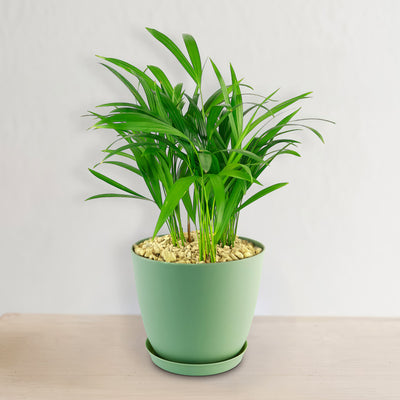
SKU: 76801173304
areca palm toxic to pets

areca palm toxic to pets Areca Palm ‘Dypsis lutescens’

Sale price$21.03 Regular price$23.37
Save 10%

Pay in installments of $5.84 with ShopPay, AfterPay and Klarna

Shipping Estimate
USA
  • USA
  • CAN

Ships within 48 hours · Estimated delivery Jul 19 - Jul 24

Promo Codes Available:

For Your Every Summer RSVP, with Code: SUMMER15

Description

areca palm toxic to pets Areca Palm ‘Dypsis lutescens’Key Highlights Areca Palm Tree Areca Palm grows in dense clumps, with multiple smooth, golden yellow stems emerging from the base and narrow fronds like bamboo leaves, creating a full and bushy appearance. Recognized by NASA, this palm removes toxins like formaldehyde and benzene, improving indoor air quality. One of the most widely grown indoor palms, it thrives in homes and offices, adding a tropical touch with its graceful, feathery fronds. Areca

Key Highlights – Areca Palm Tree

  1. Areca Palm grows in dense clumps, with multiple smooth, golden-yellow stems emerging from the base and narrow fronds like bamboo leaves, creating a full and bushy appearance.
  2. Recognized by NASA, this palm removes toxins like formaldehyde and benzene, improving indoor air quality.
  3. One of the most widely grown indoor palms, it thrives in homes and offices, adding a tropical touch with its graceful, feathery fronds.
  4. Areca Palm can withstand short dry periods, making it relatively low-maintenance.
  5. This palm adapts well to bright, indirect light, requires minimal pruning, and is non-toxic to pets, making it an excellent choice for beginners.

The Areca Palm, known as Dypsis lutescens, is one of the most beloved indoor clumping  palms, known for its graceful, feathery fronds and ability to enhance indoor spaces with a tropical feel. The plant is also known for its ability to improve air quality by filtering out toxins such as formaldehyde and benzene.  Unlike some palms that require extensive care, Areca Palm is relatively simple to grow and responds well to consistent watering and humidity, making it an excellent choice for beginners. 

Native to Madagascar, this palm has gained worldwide popularity as both a houseplant and an outdoor landscape feature in warm climates. Its attractive appearance, air-purifying properties, and low-maintenance nature make it a favorite choice for homes, offices, and commercial spaces. It is also known as a butterfly palm, golden cane palm, and yellow palm. 

Areca Palm is a clustering palm, meaning multiple stems emerge from the base, creating a full and bushy appearance.

The leaves are long, arching, and pinnate, with a lush green color that adds vibrancy to any setting. 

When grown indoors, the plant remains relatively compact, while outdoor specimens can develop into tall, striking features in tropical gardens.

When growing indoors, your Areca Palm typically grows up to 7 feet tall in height, making it an excellent floor plant for homes and offices.

When grown outdoors, this Areca palm tree can reach an impressive height of 30 feet, with a spread of about 12 feet wide. 

Indoor Areca Palms rarely bloom, but outdoor plants may produce small, yellowish-white flowers from late spring to summer. These flowers grow in clusters along the base of the fronds and are followed by small, oval-shaped fruits that transition from green to yellow and eventually turn black when fully mature. The fruits contain seeds but are not typically used for propagation, as division or offsets are preferred methods for growing new plants.

Recognized by NASA’s Clean Air Study, Areca Palm helps remove toxins like xylene, toluene, and carbon dioxide, improving indoor air quality. This palm releases moisture into the air, making it ideal for homes with dry air, especially during winter. 

When and How to Water Your Areca Palm

The Areca palm is drought-tolerant once established, making it an excellent choice for those looking for a low-maintenance tropical plant. While it prefers consistent moisture, it can survive short dry spells without severe damage. Overwatering is a more significant risk than underwatering, as excessive moisture can lead to root rot. Ensure the soil dries slightly between waterings to maintain the right balance. 

In the spring and summer, during its active growing season, the Areca palm tree requires more frequent watering. In warm temperatures, watering once every 5–7 days is ideal, depending on humidity levels. If it is grown outdoors, rainfall can supplement its needs, but manual watering should be adjusted accordingly. Always check the top 1–2 inches of soil before watering to prevent oversaturation. 

In fall and winter, when growth slows down, the watering frequency should be reduced. Watering once every 10–14 days is sufficient to prevent dehydration while avoiding waterlogging. Indoor plants may require slightly more frequent watering if exposed to dry air from heating systems, so monitoring humidity levels is essential. 

Light Requirements – Where to Place Your Areca Palm Tree 

For indoor growth as a houseplant, your Areca palms thrive in bright, indirect light for at least 4-6 hours a day.

A location near an east- or south-facing window with filtered sunlight is ideal. It can tolerate lower light conditions, but growth may slow down, and the leaves may become less vibrant.

To promote healthy foliage, rotating the plant occasionally ensures even exposure to light.

Artificial grow lights can also supplement light if natural brightness is insufficient.

For outdoor cultivation, the Areca palm tree prefers partial to full sun, requiring 4–6 hours of bright, indirect light daily.

Morning sunlight is ideal, while intense afternoon rays may scorch the fronds, especially in hotter climates. If grown in a container, moving it to a shaded area during peak summer months can prevent leaf damage. 

Optimal Soil & Fertilizer Needs 

Areca palms grow best in well-draining, slightly acidic to neutral soil with good aeration. A high-quality potting mix with peat, sand, and perlite ensures proper drainage. Planet Desert has specialized potting soil that includes an organic substrate with mycorrhizae to help with the growth of a healthy root system to help your succulents thrive.

A balanced liquid NPK fertilizer at a 5-10-5 ratio applied once a year in the spring during the growing season promotes lush foliage and robust growth. Slow-release palm fertilizers with essential micronutrients like magnesium and iron also help prevent yellowing leaves. During the dormant season, fertilization should be stopped to avoid unnecessary growth that may weaken the plant in cooler months. 

Hardiness Zones & More 

When growing indoors as a houseplant, the Areca palm plant thrives in temperatures between 65–75°F with humidity levels above 40%. Dry air can cause leaf browning, so misting or using a humidity tray can maintain optimal moisture levels. Avoid placing the plant near cold drafts or heating vents, as sudden temperature fluctuations can cause stress. 

For outdoor cultivation, Areca palm is hardy in USDA zones 10–11, thriving in warm, humid conditions.

It can tolerate brief temperature drops but should be protected from frost.

The ideal outdoor humidity level is 50% or higher, making it best suited for tropical or subtropical environments.

For those in cooler climates, container-growing allows for seasonal relocation indoors. 

Wildlife – Areca Palm Flowers Attract the Following Friendly Pollinators 

The Areca palm produces small, yellowish-white flowers that attract a variety of pollinators such as bees, hummingbirds, butterflies, and other beneficial pollinators. While not a primary pollinator plant, its presence in a tropical garden can support local insect populations.

Butterflies
Bees
Hummingbirds
Lady Bugs
Multi Pollinators
Other Birds

According to the ASPCA, the Areca palm is non-toxic to humans, cats, dogs, and birds, making it a safe choice for pet owners. Unlike some palms that pose toxicity risks, Areca palm does not contain harmful compounds that could endanger household animals. 

How to Propagate Areca Palm 

Areca palms can be easily propagated through division or by planting seeds. To propagate through division, carefully separate the offshoots from the main plant and replant them in well-draining soil. Root division is best done in spring or early summer when growth is most active. If propagating from seeds, soak them in warm water for 24 hours before planting them in a mixture of peat moss and perlite. Keep the soil consistently moist and provide bright, indirect light for optimal growth.

The Bottom Line 

Overall, the Areca Palm (Dypsis lutescens) is a stunning, easy-to-care-for plant that thrives both indoors and outdoors. It is a clustering palm tree with multiple stems, produces a full, bushy appearance with long, arching, pinnate leaves in lush green, adding vibrancy to any setting. Its elegant fronds, air-purifying benefits, and adaptability make it a favorite among plant enthusiasts. Whether placed in a bright living room corner, an office, or a tropical garden, this palm adds beauty and a refreshing touch of greenery. With its elegant feathery fronds, ability to purify air, and pet-friendly nature, it’s a popular choice among plant enthusiasts. Proper care, including adequate watering, indirect sunlight, and occasional fertilization, ensures vibrant growth and longevity. Order your very own Areca Palm for sale today! 

Shipping Notes
  • Free Standard Shipping on $100+ Orders to the USA.
  • Except Preorder products are shipped in 48 hours.
  • Delivery to the USA:
  1. Standard Shipping : 3-10 business days
  • If time is of the essence, please consider selecting expedited delivery for faster service.
Exchange/Return Notes
  • We offer a 30-day return/exchange service after receiving.
  • Final sale items are not eligible for returns or exchanges.
  • To process your return/exchange, please contact us at [email protected]
  • Please click here for more details>>> Return & Exchange Policy
SKU: 76801173304

Discover Niche Categories That Outsell areca palm toxic to pets

Top-Converting Item to Boost Your Average Order

4.3 ★★★★★
Based on 14 reviews
Sort
Highest Rating
Newest First
Oldest First
Product Reviews
S
Verified Purchase
Stephanie McCall
Louisville, US
★★★★★ 4
A Remarkable Book--I Want More Like It!
Format: Kindle
I stumbled on Remarkably Bright Creatures among my recommendations. As often happens, the premise intrigued me enough to read it even though I didn't know the author. Well, if Shelby Van Pelt often writes like this, I definitely want more of her books. The friendship between Tova the aquarium cleaning lady and Marcellus the giant Pacific octopus is a definite selling point in this book. It's a great twist on the "A Kid and Their X" trope (the kind of thing you see in stuff like Where the Red Fern Grows, Old Yeller, Free Willy, and so forth). This one, I am pleased to report, is far less cheesy and saccharine. Tova is a multifaceted character whose life may seem small in her estimation, and probably is if we go by what is a "normal" life in a small seaside town. Yet that life has been stuffed with complex emotions, unanswered questions, and a longing for "more" that I think everybody can relate to. At least, I certainly could. As for Marcellus, he's multifaceted, too. A part of me did stick with his point of view, and story, because it is a story of a "remarkably bright," underestimated creature trapped and controlled in a world he doesn't understand. I have cerebral palsy and was diagnosed as level 1 autistic this spring; I'm still looking back and trying to heal from a lot of the latter's implications. So in a visceral way, yeah. I'm not a captive animal or mistreated, but I understood how Marcellus felt. What I liked even better about his story though, is that Marcellus' story doesn't stop there. Marcellus actually has a life and a history that Shelby Van Pelt, Tova, Cameron, and other characters dig into. He's not just a captive yearning for freedom and mourning lost opportunities, as often happens with similar stories. He makes wry, witty, yet quiet, non-snarky observations about humans. He cares deeply for Tova because she took time to know him as a "person," but also because she's the only human who has ever stopped long enough for Marcellus to know as a real "person." Marcellus gets to be the conduit of real revelation and change for people inside and outside his world. That's amazing, and frankly, it's a lot more than many human characters get. Remarkably Bright Creatures couldn't succeed with just Tova or Marcellus though, or at least not as well as it did, I think. The other characters pop off the page as well. Cameron is my favorite, precisely because I didn't expect to like him at first. By his own admission, he comes off as a burnout and a loser, and I admit, that's how I saw him to begin with. But as with Tova and Marcellus, Cameron is hiding a lot of layers, a lot of depth. He's got a great heart, but he's still a typical, kinda clueless 30-year-old guy (and I'm still a 30-something so I say that tongue in cheek). He's vulnerable but not pitiful; he plays the victim sometimes, but then he gets mad at being called out on that and wants to do better. He struggles and is a burnout, but he's got good, solid friends and some real interests and potential. In other words, I got really into his arc, especially once Tova, Marcellus, and even Ethan got involved. As for Ethan, he's unexpectedly cool, as well. I admit some brownie points with him, as I love all things Scottish or Irish and he is of Scottish descent. But I also didn't expect a shopkeeper in his '70s with a gruff edge to be a Grateful Dead fan or to get along so well with a neat and tidy, tiny Swedish aquarium cleaner, so brownie points on plot and character there. In fact, Ethan's role in the story, in particular, went all kinds of unexpected places, so without spoiling anything, I'll tell you to keep an eye on it. Finally, Shelby wins some extra brownie points for a lot of the "little" things that "pop" out at me when reading a book like this one. For instance, I love cats and love the reluctant yet affectionate relationship Tova develops with a stray cat. I love Marcellus' Collection and the pride and care he takes in it. I love and felt some heartbreak over Tova's reminiscing about the attic playroom that never got to be a playroom. But I think the thing I loved most about Remarkably Bright Creatures is how remarkable Shelby showed readers humans--and creatures--can be, without getting heavy-handed or cheesy. There are some romances here, so to speak, but this is a relationship novel, and those are, have been for the past several years, some of my favorite ones. There is some language here, so caveat emptor if that's not your thing. From a writer's perspective, I also wondered how much some threads or characters were actually needed. For instance, looking back, I understand why Tova had a brother, but I'm unsure how much he furthered the plot. Similarly, I understand the roles of Avery and Marco but again, am unsure how much they furthered the plot. Also, I almost hate to say it, and I could be wrong about this. After all, I know about as much concerning octopi as the average person who watches Jeopardy (which I do). But while Marcellus' plot thread is great, and while I definitely understand suspension of disbelief, I did wonder along with Cameron how much those boundaries were pushed. I mean, I buy Marcellus getting out of his tank, and with the right Collection items, I guess Tova and Cameron could've figured out whatever they needed to know. But...there's a logical shard of me that isn't quite sure she buys how everything lined up, I guess. All that aside though, Remarkably Bright Creatures is still a remarkable book. As often happens, I'm now eager to find more like it. And yes, it does get a hearty recommendation. At the very least, I'll want to take closer looks next time I go to an aquarium.
WAS THIS REVIEW HELPFUL?YesReportShare
Reviewed in the United States on January 22, 2025
K
Verified Purchase
Kindle Customer
Belleville, US
★★★★★ 5
Beautiful!
Format: Kindle
I heard about this book in a conversation at a craft party and ordered it the same night. I was not disappointed. I fell in love with Marcellus and Tova and their delightful relationship, and with all the ancillary characters that made this book so special. The ending was so very sweet and satisfying as well. Great 1st book!
WAS THIS REVIEW HELPFUL?YesReportShare
Reviewed in the United States on May 27, 2026
C
Verified Purchase
Carolyn Ellis
Natrona Heights, US
★★★★★ 5
It was as good as I'd hoped.
Format: Kindle
Marcellus McSquiddles, the giant Pacific Octopus who has lived at the Sowell Bay Aquarium for going on four years, is often exasperated with the humans who stare at him all day. But there is one human who is different. She speaks to him and more importantly, she keeps his nocturnal escapes from his tank, a secret. Tova is a gentle woman, a widower and still dealing with the loss of her son, more than thirty years ago. When someone new strolls into town, Cameron Cassmore, looking for his dead beat father, he and Tova's lives will become inextricably linked, if they're not already. And Marcellus sees all of this and does his best to assist, where he can, since for the most part, he notices that haumans can be rather dull. But though, sometimes, especially in the case of Tova, there a a few who are remarkably bright. This was a sweet, genuine, heartfelt and beautifully written, fun read. Van Pelt has created a delightfully jaded and long-suffering, sighing character in the form of Marcellus and he and Tova's story is told in such a unique and imaginative way. I'd been meaning to read this for so long and I'm so glad I finally did.
WAS THIS REVIEW HELPFUL?YesReportShare
Reviewed in the United States on May 17, 2026
T
Verified Purchase
T. Sparks
Birmingham, US
★★★★★ 5
A remarkable story
Format: Hardcover
What a wonderful surprise this was! I thought Remarkably Bright Creatures was a story about a woman and an octopus, but it turned out to be so much more than that. This is Shelby Van Pelt’s first book, and I don’t think a debut has affected me like this since I read Hollow Kingdom, another story that unfolds through the eyes of an animal. The story has a bit of magical realism to it, in the sense that parts of it are told from the octopus’s point of view, but otherwise it’s simply a delightful tale about family and connections that had me ugly crying by the end of the book. In the first chapter we meet Marcellus, a giant Pacific octopus on display in the Sowell Bay Aquarium near Puget Sound. Marcellus has been in captivity for 1,299 days, and based on his life expectancy of about four years, he believes he only has a handful of days left to live. His dreary days in a small glass enclosure are broken up by secret nighttime excursions, as Marcellus is extremely smart and has found a way out of his tank. Tova Sullivan is a seventy-year-old woman who has been working nights at the aquarium as a cleaning lady for the past two years. Tova knows how to remove the hundreds of fingerprints on the tank walls and can polish the floors to a brilliant shine. She’s also quite fond of the sea creatures she encounters each night, especially Marcellus, and the two have formed an unusual bond since Tova saved Marcellus one night after he escaped and became entangled in a bunch of electrical cords. Next, we meet Cameron Cassmore, a thirty-year-old man who is drifting through life with no real purpose. Cameron lives in California, and one day his aunt gives him a box of his estranged mother’s things. Inside the box he finds a photo and an old class ring, clues that could lead to the identity of his father, a man he never knew. Cameron hops on a plane to Washington state, convinced the man he thinks is his father—a rich real estate tycoon—will be so distraught over abandoning his son, he’ll shower Cam with money. At least that’s the plan. Finally, Ethan Mack is the owner of Sowell Bay’s Shop-Way, the local grocery store. Ethan has known Tova for years and secretly has a crush on her, but Tova is much too distant to notice his interest. When Cameron shows up at the Shop-Way looking for a job, Ethan directs him to his friend who manages the aquarium, which is how Cameron and Tova meet. Tying all these characters together is Marcellus, a remarkably bright octopus with a penchant for stealing and hoarding the treasures he finds after hours on the aquarium floor, and who just might be able to bring two people together who need each other—but don’t yet realize it. Van Pelt’s chapters alternate among all these characters and introduce a slew of side characters as well, each one vitally important to the story. At first, we don’t realize how each character is connected to the next, but slowly the author reveals her secrets until the stunned reader begins to understand the depth of these connections. Each character is given a detailed backstory that becomes very important to the plot. Tova’s story in particular was heart wrenching, as she has experienced quite a bit of loss in her life and finds herself mostly alone in her twilight years. Luckily she belongs to a group of women who call themselves the Knit-Wits, and the four of them meet weekly to eat, drink, gossip and support each other. Tova came to America from Sweden as a little girl, so the story is filled with details about growing up with her Swedish mother and father. Even the Dala horses her mother collected play a part in the story, and I found these little details added so much richness. At first I couldn’t figure out how Cameron fit it, but once he arrives in Sowell Bay and meets Ethan and Tova, his story takes on new meaning. Cameron meets a woman named Avery who also plays a vital part in filling in some of the missing pieces about Cameron’s father, and I loved the way the author gave even the most insignificant side characters meaning and purpose. Van Pelt infuses her story with so many emotional moments and themes. We see how the Knit-Wits are going through the aging process, as their numbers have dwindled over the last few years. Tova is facing being alone in her old age, with no children or husband to take care of her, and so she makes the rash decision to sell her beloved house and move into a retirement community. I don’t want to give too many details about Tova’s past and her losses, because I think it’s better to discover those revelations for yourself. Let’s just say that I felt Tova’s pain and wanted nothing more than for her to be happy. And Van Pelt includes so many funny moments in her story that kept the tone light, despite some of the more heavy themes. There’s an ongoing bit about Cameron’s lost luggage that was hysterically funny, and Tova inherits a stray cat at one point, which was a delightful side plot. I also loved the story about the t-shirt that Tova uses to clean Ethan’s kitchen—you’ll just have to read the book so you can experience the hilarity too! And of course, I can’t forget the star of the story, Marcellus the octopus. As the days tick by—each of his chapters starts with a marker (“Day 1,299 of my captivity”, etc)---the tension builds as Marcellus gets closer to his impending death (at least that’s what he thinks). Marcellus understands human nature more than most humans, and I loved the way he wisely intuits each character’s needs. Ultimately, this is a story about creatures—both human and animal—saving each other. The way Marcellus’s story plays out was absolutely perfect—heartbreaking and heartwarming at the same time. This is a very special book, and I’m so glad I was able to finally read it. Highly recommended!
WAS THIS REVIEW HELPFUL?YesReportShare
Reviewed in the United States on January 25, 2024
K
Verified Purchase
Kristie
Battle Creek, US
★★★★★ 4
loved it!
Format: Kindle
Really enjoyed this book! My coworker begged me to read it for years but I didn't think I'd like it. I thought it would be a fantasy with talking creatures - if you're not into that, don't worry, it's not. Very good storyline that moved along quickly. Hallmark, feel-good book, but wasn't cheesy or overdone. Would definitely recommend (just like my coworker said)
WAS THIS REVIEW HELPFUL?YesReportShare
Reviewed in the United States on May 19, 2026

recommand products