SKU: 77364143775
plante zz feuille jaune

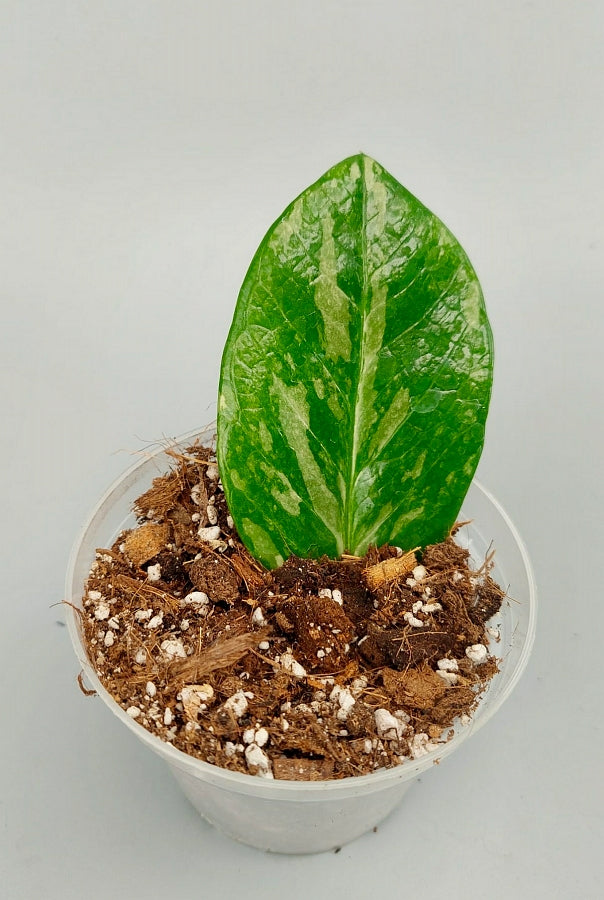
plante zz feuille jaune Zamioculcas zamiifolia Variegated (1 leaf cutting)

Sale price$26.26 Regular price$29.18
Save 10%

Pay in installments of $7.29 with ShopPay, AfterPay and Klarna

Shipping Estimate
USA
  • USA
  • CAN

Ships within 48 hours · Estimated delivery Sep 11 - Sep 16

Promo Codes Available:

For Your Every Summer RSVP, with Code: SUMMER15

Description

plante zz feuille jaune Zamioculcas zamiifolia Variegated (1 leaf cutting)Le Zamioculcas zamiifolia Variegatedest une raret parmi les plantes d'intrieur. Cette varit panache de la populaire ZZ plante attire immdiatement l'attention avec ses teintes crme jaune tendre sur les feuilles vertes fonces. Robuste et ncessitant peu d'entretien plante qui s'adapte bien une varit d'intrieurs. Origine L'origine Zamioculcas zamiifolia est originaire d'Afrique de l'Est, o elle pousse dans des zones rocheuses avec des priodes de scheresse

Le Zamioculcas zamiifolia ‘Variegatedest une rareté parmi les plantes d'intérieur. Cette variété panachée de la populaire ZZ-plante attire immédiatement l'attention avec ses teintes crème à jaune tendre sur les feuilles vertes foncées. Robuste et nécessitant peu d'entretien plante qui s'adapte bien à une variété d'intérieurs.

Origine

L'origine Zamioculcas zamiifolia est originaire d'Afrique de l'Est, où elle pousse dans des zones rocheuses avec des périodes de sécheresse variables. Les variegated-est le résultat d'une mutation spontanée qui a été préservée dans la culture en raison de ses marques foliaires uniques. Cette variante est une rareté très recherchée.

Caractéristiques

Ce qui fait de cette plante le distingue de la norme ZZ-plante sont les motifs spectaculaires des feuilles. Aucune feuille n'est identique : certaines feuilles sont semi-vertes, d'autres présentent une marbrure de vert clair et de crème, et il arrive même qu'une feuille soit presque entièrement blanche. En raison de ces variations, chaque plante a un caractère unique.

Les plante pousse un peu plus lentement que la version "normale", notamment en raison de l'absence de chlorophylle dans les parties claires de la feuille. Elle est donc plus chère, mais convient également très bien aux personnes qui recherchent une plante compacte et nécessitant peu d'entretien. plante avec une apparence frappante.

Entretien

Léger

Les couleurs Zamioculcas a besoin de plus de lumière que son homologue tout vert pour maintenir sa panachure. Placez-la de préférence dans un endroit bénéficiant d'une lumière claire et indirecte. Évitez la lumière directe du soleil, surtout en été, pour éviter les brûlures des feuilles.

La température

La plante se développe le mieux à une température ambiante constante comprise entre 17 et 28 °C. Les courants d'air froid et les températures inférieures à 15 °C peuvent lui nuire. Les courants d'air froid et les températures inférieures à 15 °C peuvent lui nuire.

Substrat

Utilisez un substrat bien drainé à base de fibre de coco, d'écorce et de fibre de bois grossière. Un mélange aéré prévient la pourriture des racines, où les Zamioculcas dans l'eau stagnante.

L'humidité

L'humidité plante n'est pas exigeant en matière d'humidité. L'humidité moyenne de la maison est suffisante. Pour les boutures de feuilles, une humidité minimale de 55 % est recommandée.

L'alimentation

Nourrissez-la une fois par mois pendant la période de croissance (printemps et été) avec un engrais dilué et équilibré pour plantes d'intérieur. Ne pas utiliser d'engrais pendant la période de dormance en automne et en hiver.

Arrosage

Laissez sécher complètement le terreau entre deux arrosages. Cette espèce n'aime pas les pieds mouillés. En hiver, ses besoins en eau peuvent diminuer considérablement. Utilisez de préférence de l'eau déminéralisée ou de l'eau de pluie propre pour éviter la décoloration des feuilles.

La floraison

La floraison Zamioculcas peut présenter une floraison discrète dans des conditions idéales, sous la forme de petites inflorescences en forme de flacon. Au moment de la floraison, le variegated-cette floraison est rare et le plante principalement appréciée pour son feuillage.

Shipping Notes
  • Free Standard Shipping on $100+ Orders to the USA.
  • Except Preorder products are shipped in 48 hours.
  • Delivery to the USA:
  1. Standard Shipping : 3-10 business days
  • If time is of the essence, please consider selecting expedited delivery for faster service.
Exchange/Return Notes
  • We offer a 30-day return/exchange service after receiving.
  • Final sale items are not eligible for returns or exchanges.
  • To process your return/exchange, please contact us at [email protected]
  • Please click here for more details>>> Return & Exchange Policy
SKU: 77364143775

Discover Niche Categories That Outsell plante zz feuille jaune

Top-Converting Item to Boost Your Average Order

4.2 ★★★★★
Based on 17 reviews
Sort
Highest Rating
Newest First
Oldest First
Product Reviews
G
Verified Purchase
Glenda Carrara
Natrona Heights, US
★★★★★ 3
Strong and Bitter flavor.
Size: 28 Ounce (Pack of 1)
This tastes like extremely bitter and strong coffee I can't taste any mushroom and it whatsoever (not sure if there is even mushroom in it) but I definitely recommend using some form of creamer, honey, or cinnamon or maybe even hot chocolate to help out with a very strong and bitter flavor. But the bag is very large and a very good price. It was delivered as promised and very quickly.
WAS THIS REVIEW HELPFUL?YesReportShare
Reviewed in the United States on March 7, 2026
A
Verified Purchase
Amazon Customer
Charlottesville, US
★★★★★ 5
Excellent LXX
Format: Hardcover
The NETS is the single best translation of the Septuagint on the market (at least at the moment). The translation follows an ultra-literal method of translation they call "interlinear". The reason for this is that the LXX follows the same pattern and is very jarring. So, where the Hebrew and LXX agree, they translate the Hebrew text and translate it as literally as possible following the LXX at the same time. Where it disagrees, they follow the LXX. It has as a "boiler-plate" the NRSV, but it eschews many NRSV translation principles like gender-inclusive language. All gender-inclusive language except when the LXX's language is itself gender-inclusive (and this happens). The method of translation further removes it from its English parent. In the end, the only way you can know that it started as an NRSV would be to read the introduction. It really only has a few drawbacks. First, because the Bible is written for scholarly study, it is not useful for liturgical use or for private devotional use. Its language would also be too hard for the average reader because of its audience. This, however, is its stated goal. It may be a draw-back, but that's a side-effect of what it set out to do. I do not like the way they translated "pnevma theou" as "divine wind" in Genesis. It's justifiable to a point (it means "breath" and "wind" as much as it does "spirit), but everywhere else I checked they translated translated "pnevma" as "spirit". It should be consistent. The reason for this is plainly obvious: it was produced by an inter-religious committee of Christians and Jews. Since Jews are not Trinitarians, and that would be a valid understanding of the Hebrew and to a degree of the Greek, they would naturally not want anything like this. Christians, almost from the beginning, have made the connection between "Spirit of God" in Genesis and "Holy Spirit". The connection is further exasperated in English, because "spirit" for us does not have the same range of meaning as it does in Greek or Hebrew. So, the only fault I can give them is that it is an inconsistent translation, not that it's an invalid one. The prefaces also almost invariably favor the theory that the LXX is a translation with liberties over that it has a different parent text. Both are truly present, but we generally cannot tell when the LXX reading cannot be derived from repointing or re-dividing the Hebrew words (at that time, they had not yet pointed the text or put spaces in it, and so there were more ways to interpret the consonants than in its current form). Again, however, they do not say anything that is invalid regarding the relation of the LXX and its parent text. I simply divide the text differently than they do and so do not always like the introductions' emphasis. Going back to its strengths, its production standards were exceptional. The binding is excellent, the font is excellent, and it has generous margins. It even does this by being as cheap as the "cheap" Bibles. Short of going back to rag paper, this is about as good as I would normally expect. Overall, if you have good reading skills, I would reccomend this translation hands-down over any other English translation.
WAS THIS REVIEW HELPFUL?YesReportShare
Reviewed in the United States on December 22, 2008
K
Verified Purchase
Kindle Customer
Natrona Heights, US
★★★★★ 5
Second best.
Format: Hardcover
It's not for daily reading or devotion, or like memorisation. For that, I switched to the Lexham Septuagint ( more smoother). Still beautiful, accurate to represent the Greek text. And no, it's not merely a NRSV modified as some claim. You feel it's a Greek based translation. I keep it for reference, intro on the books, and maybe for some reading. It's based on Ralhf Septuagint, but nothing too different to the Lexham (Sweete edition). Font too small, but great cover. Not my go to Septuagint in English. The Lexham has taken that place.
WAS THIS REVIEW HELPFUL?YesReportShare
Reviewed in the United States on May 9, 2026
E
Verified Purchase
Eduardo
Port Orchard, US
★★★★★ 5
Importance of the Septuagint
Format: Hardcover
I write as a Christian layperson. The Septuagint translation of the Hebrew scriptures (the Old Testament) into Greek was produced by Jewish scholars in Alexandria in the late third and second centuries before the Common Era. It had incalculable influence on the development of Christianity. Before the important Christian writings were gathered together in the second century of the Common Era to form the New Testament, the Septuagint was THE Bible of the new Church. It has been said that quotations from the Septuagint appear in every book of the New Testanent except the letters of John. As Christianity spread through the Roman Empire, few of its adherents could read Hebrew or Aramaic. Many could read Greek, if they could read at all. Pietersma and Wright have put together the first good English translation of the Septuagint since the nineteenth century. It is a literal translation, very close to the original Greek, and therefore often somewhat awkward in English, and this is good. Readers with even a modicom of biblical Greek, say a New Testament Greek course from college days, can use this hand-in-hand with the Greek Septuagint text (available from the American Bible Society), and do quite well. One experiences a very ancient text of the Old Testament even if one has little or no Hebrew. In the past few weeks I have thus worked through the Greek text of the first chapter of Genesis, several psalms, and selections from Second Isaiah, and this has been revivifying and enlightening. I am in debt to Pietersma and Wright. Even with no command of ancient languages, one can taste the flavor of the Septuagint text with this book. Oxford University Press, with its five hundred-plus years of experience in printing bibles, has laid out the text in 1,027 double-column pages with one minor fault--the margins are too narrow to write notes. This inexpensive and well produced translation should be on the bookshelf of every serious bible reader no matter what the level of scholarship.
WAS THIS REVIEW HELPFUL?YesReportShare
Reviewed in the United States on October 7, 2011
P
Verified Purchase
Patrick Ramsdell
Boise, US
★★★★★ 4
Septuagint LXX Codex Alexandrinus finally in English!
Format: Hardcover
This is the overall accurate and most complete collection of books of the original covenant scriptures, (the Old Testament.) For the average English reader who doesnt know or care much to learn the spiritual gems of the bible through the languages of modern Hebrew and Ancient pictoral Hebrew, this will be your best version of the O. T. to have by far! Its all in English, translated out of the LXX, Codex Alexandrinus, which is the most ancient and most accurate septuagint text available so far, despite what modern scholars and pastors are wrongly telling you. Why the hell does every church have colies of the NIV Nearly Inspired version, for everyone to use, when they could buy this along with the Greek- English Interlinear N.T with NKJV along the side as well!?? Many scholars will say that the LXX V or Codex Vaticanus is dated earlier and is therfore more accurate but that is not completely true. It is still another great version to use also, as found in Brentons English version and the amazing Apostolic Bible Polyglot but it is still a translation made later in time from out of the Masoretic Hebrew Text. But this NETS version of the septuagint is from the original source Greek O.T. which was made originally around 250 B.C and was made out of Ezras authentic and most accurate Hebrew copy of the Tanakh or O.T., given to him directly by God again, when he was in Babylon. (See 4 Esdras 14 in the Good News Bible with deuterocanonicals/Apochrypha! $8 FROM AMAZON, of which I also did a brief review of a while ago!)You will get the most out of this version of the O.T set of scriptures. But don't forget to also get the other missing scriptures and restore many other lost and forgotten books, and verses of scripture like 4th Esdras, 1st and 2nd Adam and Eve, Jasher and 1st and 2nd Enoch, and the testament of the twelve patriarchs! Plus you will need a separate Set of the Renewed Covent scriptures or (the N.T.) because this bound package of scriptures does still not contain the whole counsel of God. There is no New testament in here in case you were wondering. But this version is still the closest to having the most of Gods words, than any other English O.T version in one bound package, that I have found and this is more accurate in more places than not. But there are a few errors still from the Greek, which get carried over into English, like Genesis 4:26 of which the Aramaic versions, and Hebrew Masoretic text and Jasher have, when the letters are respaced correctly. This verse should tell us that Enosh profaned the name of God, not worshiped or called upon or hoped to call upon God. Some of the Greek text's flaws in which the Hebrew M.T. is superior are: Zechariah 5:1- 2, 12:10 and Genesis 1:1 (of which the Aleph and Tav is present and is unjustly left out and equals The Messiah/God, as in Revelation 1:8!) And psalm 138:2 to name a few. But over all without other deeper study, the Greek O.T. text has more to offer as a whole than the Hebrew version left preserved for us. And there is no finished English translation and bound book yet, of the Aramaic Targumim O.T. TIthat will be the next masterpiece, when someone gets it done. It is still being worked on. See Andrew Gabriel Roth's Aramaic Eastern Peshitta N.T. as well as David Bausher's western peshitta N. T. Interlinear pr plain English. Hopefully one of these guys or both will do the correct smd more co ete Aramaic Targumim for the O. T. and not he later made syriac translation but we will ha e ro wait and see.? Also, some verses in which the LXX is superior over the late made Hebrew M.T. are found in verses like Genesis 11:13- 14, which are missing completely from the Hebrew!!! See Luke 3:36 to verify Kainan or Caianan's existence in the genealogical bible lineage of the Patriarchs! Cainan's existence also makrs creation 565 years earlier then 4004 bc that bishop Ussher wrongly dated from the Hebrew Masoretic Text. And see Ezekiel 21:3- which shows God only killing the unrighteous in the two LXX versions and never the righteous with the wicked, like Abraham pleaded with God in Genesis 18:23. Sadly the late Masoretic Hebrew Text erroneously has God killing both the righteous with the unrighteous! Also see DANIEL 12:4 in this LXX, which has a superior English translation, even though the same better meaning is hidden in the Hebrew. This verse should say the knowledge of evil and cunning to harm us, will increase, not the knowledge of the gospel or technology increasing, like many commentators have said.. Also DANIEL 12:4 should be translated as saying that many people will run away in apostasy and violent madness, not just running to and fro!?? Any serious students can contact me at AnswersInGenesis at live dot com. Every disciplined learned who wishes to mature, needs a copy of this and should read this as their main version of the Tanakh or O.T. I will also be happy to further translate and teach this along with the Hebrew Masoretic Text and both Aramaic Targumim to serious literal minded people, as I am already doing chronologically, through the whole bible, in my own bible study in Tucson on Shabbat (friday) evenings. Enjoy!😊
WAS THIS REVIEW HELPFUL?YesReportShare
Reviewed in the United States on September 7, 2016

recommand products