SKU: 78096876794
plant tamarind seeds

plant tamarind seeds Tamarind Tree Seeds - For 2026 Planting Tamarindus Indica Tamarindo

Sale price$22.81 Regular price$25.34
Save 10%

Pay in installments of $6.33 with ShopPay, AfterPay and Klarna

Shipping Estimate
USA
  • USA
  • CAN

Ships within 48 hours · Estimated delivery Jul 21 - Jul 26

Promo Codes Available:

For Your Every Summer RSVP, with Code: SUMMER15

Description

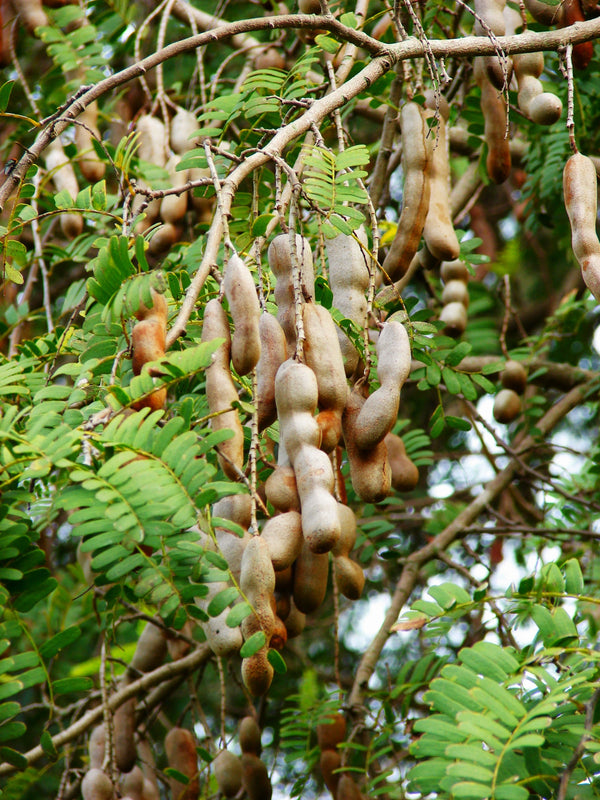
plant tamarind seeds Tamarind Tree Seeds - For 2026 Planting Tamarindus Indica TamarindoTamarind features long, brown pods with a delicious sweet tart, sticky, tangy pulp that is essential in many culinary dishes worldwide! Used in favorite dishes and drinks like Pad Thai, Sambar, Chutneys, Agua de Tamarindo, Pho, and Som Tam. Tamarind is a key ingredient in Indian, Thai, Mexican, and many other global cuisines. This exquisite fruit grows on evergreen trees with a broad, dense canopy and small, bright green pinnate leaves that yellow and

Tamarind features long, brown pods with a delicious sweet-tart, sticky, tangy pulp that is essential in many culinary dishes worldwide! Used in favorite dishes and drinks like Pad Thai, Sambar, Chutneys, Agua de Tamarindo, Pho, and Som Tam. Tamarind is a key ingredient in Indian, Thai, Mexican, and many other global cuisines. This exquisite fruit grows on evergreen trees with a broad, dense canopy and small, bright green pinnate leaves that yellow and fall during the dry season. Tamarind Trees can reach height of 30 to 60 feet, with a spread of 30 to 40 feet. Its leaves, bark, and fruit have a long-standing role in herbal remedies. The Tamarind Tree's fruit pulp is often used as a natural remedy for digestive issues and is known for its high levels of antioxidants and vitamins. The Tamarind Tree makes for an attractive addition to tropical and sub-tropical gardens with the added benefit of producing nutritious tangy fruit year after year.

Also Known As: Tamarind Tree, Tamarindus Indica, Tamarindus, Indian Date, Tamarindo, Tamrind, Imli Tree, Assam Tree, Asam Jawa, Javanese Tamarind Plant, Indian Tamarind, Pulp Tamarind.

Plant Name: Tree, Tamarind
Latin Name: Tamarindus indica
Days to Germinate: 14-28
Years to Fruit: 2 - 3 Years
Plant Height: 30 - 60 Feet
Spread: 30 - 40 Feet
Growth Habit: Upright
USDA Zones: 9-11
Lifespan: Perennial
Brand: TomorrowSeeds
Sunlight: Full Sun, Partial Shade
Pollination: Heirloom, Open-Pollinated
GMO: No
Fungicide-Treated Seeds*: No
Seeds Packed For**: 2026
*Fungicide-treated seeds protect the seedlings from diseases until they are up and growing. Do not eat treated seeds.
**Seeds are freshly packed for the growing season of the year listed. Seeds are still viable beyond pack date. Store in a cool and dry location such as the refrigerator or basement to best preserve germination rates.


Planting Instructions:

Soil Preparation:

Choose a clear, sunny location that is not in the shade of other trees and receives at least 6 hours of sunlight each day. Trees establish roots better in sandy, well-drained soils rather than heavy, poorly drained soil. Remove weeds, large rocks, and litter from the planting area. Leave small weeds and dead grass, they will enrich the soil when turned under. Spade or till the soil 6-8 inches deep. Loosening the soil will help the plant establish strong roots. If the soil is heavy or clay-like, mix in some sand or compost to improve drainage. Optionally, either form rows of soil beds or hills 4-6 inches high and at least 40 feet apart. This formation of ridges will help with drainage, ensure good airflow, and make harvesting or maintenance easier.

Planting:

Tamarind thrives in warm, tropical to subtropical climates, preferring temperatures between 75F-95Fand are highly drought-tolerant once established.

Starting Indoors: Tamarind Tree seeds do not require cold-stratification to germinate but may benefit from soaking. To germinate seeds, soak seeds 24 hours in hot tap water prior to sowing. Roll seeds in a damp paper towel and place in a resealable bag and place bags in 70F-90F area for 1-2 weeks. Plant indoors in small pots with moist potting soil 1 month before the last expected frost in spring, and place the pots in a warm, sunny location that is at least 65F. Keep the soil moist, allowing the top inch of soil to dry in between waterings.

Once the seedlings have developed a few sets of leaves and are at least 6 inches in height, harden off seedlings then transplant outdoors in the spring, in a sunny location when temperatures are consistently above 65F. To transplant seedlings, prepare a transplant hole outdoors in a sunny, permanent location. Remove the plants carefully from the pots or flats and set them in the transplant holes, burying some of the stem in the ground. Pack the soil loosely around the plant and leave a slightly sunken area around each plant to hold water. Water the plants after transplanting.

Directly Sowing: If directly sowing outdoors, plant in spring in a sunny location when temperatures are consistently above 70F. Soak seeds 24 hours in hot tap water prior to sowing. Roll seeds in a damp paper towel and place in a resealable bag and place bags in 70F-90F area for 1-2 weeks. To plant, make holes 1 inch deep and spaced 30 feet apart down the rows of raised beds. Plant 1 seed per hole, then cover thinly with soil. Seedbeds can be covered with plastic film to promote germination. Water after planting.


Planting Depth: 1 inch
Within-Row Spacing: 30-40 feet
Between-Row Spacing: 40 feet


Care During the Season:

Tamarind is a resilient, long-lived tree that produces abundant, high-quality fruit for culinary and medicinal use year after year with care. While young trees benefit from regular deep watering, mature trees require minimal irrigation. Fertilization can optionally be done twice a year, in early spring and mid-summer, using a balanced fertilizer. Pruning is generally minimal but can be beneficial.

Harvesting:

Tamarind pods are ready for harvest when they turn brown and brittle, around late winter to early spring, 6-9 months after flowering,. The outer shell hardens and becomes dry, while the pulp inside transforms from sour and green to a sticky, brown, and sweet-sour consistency. If the pods are still green or soft, they are not fully ripe and should be left on the tree longer to ripen. To harvest, simply pluck the mature pods by hand or use pruning shears if they are hard to reach. After harvesting, tamarind pods can be dried in the sun for a few days to further harden the shell and concentrate the flavors. The pulp can be stored inside the shell for long-term use or extracted and preserved as a paste.

Shipping Notes
  • Free Standard Shipping on $100+ Orders to the USA.
  • Except Preorder products are shipped in 48 hours.
  • Delivery to the USA:
  1. Standard Shipping : 3-10 business days
  • If time is of the essence, please consider selecting expedited delivery for faster service.
Exchange/Return Notes
  • We offer a 30-day return/exchange service after receiving.
  • Final sale items are not eligible for returns or exchanges.
  • To process your return/exchange, please contact us at [email protected]
  • Please click here for more details>>> Return & Exchange Policy
SKU: 78096876794

Discover Niche Categories That Outsell plant tamarind seeds

Top-Converting Item to Boost Your Average Order

4.2 ★★★★★
Based on 11 reviews
Sort
Highest Rating
Newest First
Oldest First
Product Reviews
C
Verified Purchase
Chris Morton
Chelsea, US
★★★★★ 5
Excellent!!!
Format: Kindle
A wonderfully refreshing argument for "the living constitution". Most surprisingly is that much of the argument is based in the philosophy of Edmund Burke, father of modern conservatism.
WAS THIS REVIEW HELPFUL?YesReportShare
Reviewed in the United States on February 22, 2017
M
Verified Purchase
Matt Cockerill
Fort Morgan, US
★★★★★ 5
Five Stars
Format: Hardcover
Strauss demolishes originalism in a concise and accessible volume.
WAS THIS REVIEW HELPFUL?YesReportShare
Reviewed in the United States on November 11, 2014
S
Verified Purchase
Stephen J. Jaros
Carnegie, US
★★★★★ 3
Ultimately disappointing .. but still a good read
Format: Hardcover
This book does have a few commendable features. It is written in laymen's language, you don't have to be a constitutional law scholar like David A. Strauss to comprehend the arguments. And it's short. Won't take more than a couple of hours to read. But as a critique of the "originalist" constitutional doctrine, it is hit and miss. For example, Strauss argues that originalism has three major flaws (p.18): 1) the impossibility of determining what the understanding of the founding fathers was on a particular issue. 2) the impossibility of translating an original understanding so that it addresses today's problems. 3) no answer for Thomas Jefferson's question about why we, the living, should be governed by the "dead hand" of past generations, including the founders. Of these three, the first is the most telling, because it is indeed sometimes the case that we do not know what the founders would have thought about a particular issue, because that issue simply did not exist at the time of the enactment of the constitution or a particular amendment, or because that original meaning could be lost to history. The patent-ability of new life forms as a result of genetic engineering being a good example (but, other technological examples, like cases related to airplanes and cars, are NOT good examples, since while the founders were unaware of these technological advances, it's safe to assume they would recognize them as transportation vehicles, so their understanding of ships and horse carriages would apply to them). That's why i am what Strauss might call a "sometimes originalist" - my view is that IF there is no reasonable doubt about what the enactors of a constitutional provision would have thought about a case, then that should control the decision a court arrives at. But obviously, if the issue was unknown to the enactors, or if their views are forever lost to us due to the passage of time, then there is no "original understanding" of that particular issue, and some other method of constitutional interpretation must be relied on. The second and third objections are far less compelling to me. The second objection is IMO a non-issue. To ask "well, we know that in 1880 the enactors of the 14th amendment did not believe its equal protection clause outlawed employment discrimination against women, but would they believe that if they were living in the year 2000, with all the economic/cultural/technological changes that have developed over those 120 years?" is an irrelevant question. It's like asking if the 1969 Congress that enacted the Clean Air Act would still enact it if that Congress were to debate the issue in 2010: it's purely speculative and ungermane, since neither statutes nor constitutional provisions have expiration dates on them. Likewise, the 3rd objection is both shallow and disingenuous. Shallow because Jefferson clearly understood that the constitution, like laws enacted by the legislature, are subject to change by later generations, who can amend the constitution or pass new legislation to supersede what previous generations have accomplished. Disingenuous, because the invocation of Jefferson seems to be a tactical decision by Strauss, a way to tweak originalists by citing one of the very greatest of our founding fathers. Yet Jefferson can also be quoted to support an originalist view. For example, in 1801 he said: "The Constitution on which our union rests, shall be administered by me according to the safe and honest meaning contemplated by the plain understanding of the people of the United States, at the time of its adoption....These explanations are preserved in the publications of the time, and are too recent in the memories of most men to admit of question." (Writings of Thomas Jefferson, quoted from a letter dated 3/27/1801). The first part of this quote clearly indicates that Jefferson believed that constitutional provisions should be interpreted according to original understanding, not "modern, evolved" standards of meaning as David Strauss would contend. The second part speaks to the need i identified before, that of knowing within the bounds of reasonable doubt what the enactors understood a provision to mean. Beyond all this, though, is David Strauss's contention that a "living constitution", as defined by a common-law like accretion of judicial precedent in constitutional matters that leave the original meaning of the text behind, is necessary because otherwise our constitution would become an archaic relic unable to meet the demands of a changing society, and that the formal amendment process is too slow and cumbersome. Professor Strauss correctly notes that Jefferson believed that our institutions must evolve with the development of society; however, he crucially fails to note that to Jefferson, the primary mechanism of such innovation was to be the actions of the legislature. Constitutional provisions are expounded in broad, general language not to enable future judges to interpret them in light of changing societal conditions, but to permit elected bodies, like legislatures and congress, wide latitude to address the problems of today. Legislative bodies, which directly reflect the ebbs and flows of societal change and are accountable to the people, were Jefferson's preferred vehicle of constitutional innovation, not the decisions of insulated, life-tenured court judges. On this point, unlike on many others, Jefferson was in agreement with John Marshall. As Jean Edward Smith (1996) writes "When (in McCulloch v. Maryland) Marshall spoke of the Constitution as "intended for ages to come" and of the need to adapt it "to the various crises of human affairs", he was alluding to the responsibility of Congress, not the Court. And the limits on Congress were defined by the political process, not the judiciary" (p. 445). Thus, for example, while the enactors of the 14th amendment did not intend for it to ban employment discrimination against women, it also was not intended to prevent Congress or the state legislatures, at the time of the enactment or in the future, from enacting legislation that does protect women from employment discrimination should that type of legislation be deemed necessary or advisable. Jefferson was far more wary of "innovative" actions by judges, exemplified by his belief that "if federal judges have the final word over its meaning, the Constitution would be a mere thing of wax in the hands of the judiciary, which they may twist and shape into any form they please". Yet it is exactly this type of judicial activism that Strauss means when advocates a "living constitution". Strauss's fundamental error is revealed on page 103 when he says that "We cannot say that the text of the constitution does not matter ... no (textual) provision of the constitution can be overruled in the way a precedent can, or disregarded the way original understandings often are". What Strauss is saying here (well, he wouldn't put it this way, but this is my view of the matter) is that when a judge wants to be activist, to impose his/her personal policy preferences on a case, it's very important that the judge somehow, through clever verbal gymnastics, no matter how convoluted, "ground" that ruling in some actual constitutional-textual language. This is very important for achieving the political purpose of maintaining respect for the court in the eyes of the public. But to me, Strauss creates a false dichotomy: The text of the constitution is ONE AND THE SAME with its "original understanding". The 'text', the actual words of the constitution, does not exist independent of the original understanding of those words, the text is merely the communicative vessel used to convey that original understanding. That's the way language works. It's a method to convey meaning. Thus, to invoke the Due Process Clause of the 5th amendment to outlaw Federal segregation laws (as the Court did in 1955) when the enactors of the 5th amendment clearly (as Strauss admits) did not intend for it to mean that, is the SAME THING as ignoring the "text" of the constitution, since the text and original understanding are one and the same. Overall, i recommend this book. One will learn alot about constitutional history, and Professor Strauss is surely correct in that the "living constitution" view is in fact the dominant way in which the Court has gone about its business in practice, regardless of what legal theoreticians have thought. But, don't expect to be convinced by much Professor Strauss has to say about why this is a good thing.
WAS THIS REVIEW HELPFUL?YesReportShare
Reviewed in the United States on May 18, 2010
R
Ross L. Meyer
Lexington, US
★★★★★ 5
Originalist v Living Document , 5 - 4
Format: Hardcover
I found the author's arguments to be logical and compelling. Those who embrace the so-called originalist view of the Constitution, for example Supreme Court Justice Antonin Scalia, claim that they know - with great certainty - the absolute intent of the Constitution's authors. Further they claim that the Constitution provides specifics and principles which of course it does. It is simple to understand the specifics, but what about the principles? Principles, it seems to me, can and do have differing interpretations. One of the definitions of the word principle found in Merriam-Webster states, "a moral rule or belief that helps you know what is right and wrong and that influences your actions." As we all know, rules and beliefs frequently mean different things to different people. If it were not so, Supreme Court decisions would inevitably be decided 9 - 0. Many are familiar with the Supreme Court's case District of Columbia v. Heller in which Justice Scalia opined that the Second Amendment shouldn't stop the U.S. from barring certain weapons. While his opinion certainly seems reasonable to me, I cannot find that principle in the Constitution. Rather it seems to be a logical conclusion based on modern society, mores, and laws - perhaps, as Professor Strauss argues, Common Law. Whether one accepts the originalist view of the Constitution or, as I, believes a living interpretation of the great document is preferable, the one thing we can all agree on is that our nation is one of laws. To that end, it is incumbent on all citizens to accept and abide by the pronouncements of our judges, agree with them or not.
WAS THIS REVIEW HELPFUL?YesReportShare
Reviewed in the United States on November 18, 2014
B
Verified Purchase
Brenda B.
Waukegan, US
★★★★★ 5
My Grandchildren LOVED this!
Format: Hardcover
I read this out loud to my two grandchildren ages 4 and 6 at bedtime. They're so excited to be reading a chapter book and they LOVED it! The book's quirky sense of humor is great and it was fun to hear the kids giggle. We loved how the sloth appears in each story. They couldn't wait for the next night to read. Mr Angleberger- please write more!!!
WAS THIS REVIEW HELPFUL?YesReportShare
Reviewed in the United States on October 24, 2017

recommand products